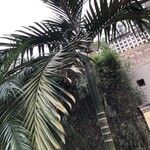
Chambeyronia macrocarpa
Red-leaf palm · Blushing palm · New Caledonia palm · Flame Thrower Palm
Description
Source: leafsnapChambeyronia macrocarpa is a species of palm tree commonly known as the red leaf palm. It is sometimes called the flamethrower palm. The species is endemic to New Caledonia.
Care Guide
💧 Water
The Red Leaf Palm is native to the rainforests of New Caledonia, where it thrives in humid environments and requires consistent moisture. Although it can tolerate moderate drought, it should be watered every 1-2 weeks to maintain lush foliage. Well-suited for indoor growth, the Red Leaf Palm benefits from higher humidity levels, which support its evergreen growth and keep its leaves vibrant.
How should I water my Red leaf palm plant?
Your Red leaf palm is not particular about how you water it. You can use any common watering tool, such as watering cans, hoses, or even cups. No matter which tool you choose, make sure to water the soil directly. It's important to evenly moisten all areas of the soil to ensure that all parts of the root system receive enough water. Using filtered water is recommended, as tap water may contain harmful particles. Additionally, it's best to use water at or slightly above room temperature, as extreme cold or hot water can be a bit of a shock for the Red leaf palm. Nevertheless, the Red leaf palm generally responds well to any kind of water you give it.
What should I do if I give my Red leaf palm too much or too little water?
Outdoor plants, especially newly planted ones or seedlings, are susceptible to lack of watering. It's important to water them adequately for the first few months when they are small or recently planted. This is because once the roots are established, Red leaf palms can rely on rain for hydration most of the time. When Red leaf palms are planted in pots, overwatering is more likely. If you accidentally overwater your Red leaf palm, it's important to take immediate action to rectify the situation. Firstly, stop watering the plant right away to minimize the negative effects. Then, remove the Red leaf palm from its pot and inspect the roots. If no root rot is found, you can return the plant to its container. However, if root rot is present, trim away any affected roots and consider applying a fungicide to prevent further damage. Lastly, repot the Red leaf palm in well-draining soil. In the case of underwatering, simply water the Red leaf palm more frequently. Underwatering is usually an easy problem to fix. If you notice drooping, drying out, or falling leaves, increasing the watering frequency will quickly restore the leaves to their fullness. Make sure to adjust your watering schedule promptly when you notice signs of underwatering.
How frequently do I need to water my Red leaf palm?
To ensure proper growth and care for your outdoor plants, it is important to consider the amount of rainfall in your area. If there is a lack of rainfall, you should water your plants every 2 weeks in the spring and fall, and more frequently in the summer. During the winter, when growth is slower and water needs are lower, you can water your plants less often or not at all. However, if you have a young or newly planted Red leaf palm, it is recommended to water it more frequently to help it establish and grow. When it comes to potted plants like the Red leaf palm, there are two main ways to determine how often to water. The first approach is to follow a predetermined watering schedule, such as once a week or every other week. However, this may not be suitable for your specific plant and growing environment. Alternatively, you can gauge watering frequency based on soil moisture. It is generally advised to wait until the top two to four inches of soil, about one-third to one-half depth of the pot, have dried out completely before watering again. This method takes into account the unique conditions of your Red leaf palm and allows for adjustments based on seasonal water needs.
How much water does my Red leaf palm require?
To properly water your Red leaf palm, you don't always need to use a lot of water. If only a few inches of soil have dried up since your last watering, you can give the plant about five to ten ounces of water each time. You can also determine how much water to give based on the moisture of the soil. Pay attention to how many inches of soil have dried between waterings. To ensure the plant gets enough moisture, make sure to water all the layers of dry soil since the last watering. If more than half of the soil is dry, it's a good idea to give more water than usual. Keep adding water until it starts draining from the pot's holes. If your Red leaf palm is placed in an area that receives sufficient rainfall, it may not need extra watering. When the plant is young or still establishing itself, aim for 1-2 inches of rain per week. As it grows and establishes, it can rely solely on rainwater. Only during hot weather or when there is no rainfall for 2-3 weeks should you consider giving it a full watering to prevent stress.
How do I know if I'm giving enough water to my Red leaf palm?
The Red leaf palm is often overwatered, which can be identified by yellowing leaves, leaf dropping, and a shriveled plant structure that may lead to root rot. Conversely, an underwatered Red leaf palm will wilt and have brown or brittle leaves. Whether you observe signs of overwatering or underwatering, it is crucial to take action and restore your Red leaf palm's health.
☀️ Light Full sun
Red leaf palm grows best when it gets direct sunlight for most of the day, though it can tolerate periods of reduced light. In its natural habitat it develops beneath a canopy that softens intense sun. Too little or too much light can restrict its growth and prevent proper color development.
What are the sunlight requirements for Red leaf palm?
Red leaf palm thrives under full sun, requiring more than 6 hours of sunlight daily, but it can also grow in partial sun, receiving about 3-6 hours of sunlight. In its natural habitat, it grows beneath a canopy that diffuses strong sunlight, indicating its ability to adapt to varying light conditions. However, both too much and too little sunlight can affect its growth and color development adversely. It's essential to watch how sunlight moves through your garden and choose spots that offer a perfect balance of light and shade to ensure the wellbeing of your plants.
How does artificial lighting support the growth of Red leaf palm indoors?
Indoor plants, including the Red leaf palm, often need supplementary lighting, especially in less sunny spaces or during winter when natural sunlight is scarce. Artificial lights can significantly promote healthier and faster growth by providing the required wavelengths of light. LED lights are especially beneficial as they can be tailored to meet specific needs of plants. For full sun plants, 30-50W/sq ft of artificial light is recommended, while partial sun plants need 20-30W/sq ft, and full shade plants require 10-20W/sq ft. The light source should be placed 12-36 inches above the plant to simulate natural sunlight conditions, for about 8-12 hours per day.
What are the symptoms of inadequate light in Red leaf palm?
When Red leaf palm is subjected to insufficient light, especially indoors during winter, several symptoms may appear. These include smaller new leaves, leggy or sparse growth, faster leaf drop, and halted or no new growth, indicating that the plant is in survival mode due to poor light conditions. Additionally, lighter-colored new leaves, chlorosis (leaf yellowing), sunscald, leaf curling, wilting, and leaf scorching are common symptoms. These signs suggest either too little or too much light exposure, stressing the importance of monitoring and adjusting the plant's light environment for optimal health.
How can I address light-related issues for Red leaf palm?
To mitigate light-related issues for Red leaf palm, a combination of strategies for indoor, outdoor, and ground planting is effective. Indoors, gradually relocate the plant to sunnier locations to receive at least 6 hours of direct sunlight daily or use artificial light for at least 8 hours daily. Outdoors, adjust the plant's location gradually to avoid sunburn, seeking spots with optimal sunlight. If sunlight is obstructed, consider pruning or transplanting to reduce shading. Notably, while adjustments can enhance new growth health, parts of the plant already affected by poor light may not recover fully.
🌡️ Temperature 20–37.8°C
The red leaf palm is indigenous to areas where temperatures range from 68 to 100 °F (20 to 38 ℃). It thrives in that warmth, and in colder months it may require additional heating.
What is the native climate for Red leaf palm?
The Red leaf palm, or Chambeyronia macrocarpa, is native to regions where temperatures range between 68 to 100 °F (20 to 38 °C). It thrives in warm climates and is extremely heat-loving. The plant requires supplementary heating during colder months to maintain optimal growth conditions. It is important to keep the plant in temperatures above 20°C during winter, and it should be protected from any temperatures approaching 0°C to avoid damage.
How should I care for my Red leaf palm during cold weather?
During colder weather, it is crucial to protect your Red leaf palm from the cold. If you've been growing it outdoors, it's recommended to bring the plant indoors in autumn and place it near a bright window, keeping it at a safe distance from heaters to avoid excessive dryness. Ensure the plant is kept in temperatures above 20°C through the winter. If temperatures fall below this threshold, especially down to 0°C or lower, the Red leaf palm can suffer harm. For plants affected by frost, trim off the frost-damaged parts and immediately move the plant to a warmer indoor setting, preferably near a south-facing window for ample sunlight, while avoiding placement near heaters or air conditioning vents.
What to do if my Red leaf palm suffers from high temperature or sunburn?
If your Red leaf palm is exposed to temperatures above its tolerance level, especially during the summer where temperatures should ideally remain below 38°C, care steps need to be taken to prevent and treat sunburn. When temperatures exceed 43°C, the leaves may lighten and the plant can suffer from sunburn. To manage this, trim away the sunburned and dried parts. Relocate the plant to a spot where it can receive shade during the most intense midday and afternoon sun. Watering the plant in the morning and evening can also help keep the soil consistently moist, providing additional relief from high temperatures.
💨 Humidity
🪴 Soil 5-6
🌱 Fertilizer
The best time to fertilize a Red leaf palm is in early spring, when it is coming out of dormancy. Doing so stimulates overall growth and supports flower development. Fertilization improves the leaves, stems, and branches, and encourages flowers that are larger, more vibrant, and longer-lasting. It also helps transport nutrients from the roots to the flowers and enhances the plant's health and resistance to disease.
Why should I add fertilizer to my Red leaf palm?
Regular fertilization is crucial for Red leaf palms due to their energy-intensive production and maintenance of showy leaves. Not only do they need sufficient energy to keep their leaves healthy, but they also require it for the growth of stems, branches, roots, and other essential structures. Neglecting fertilization can lead to two probable outcomes. Firstly, the leaves may gradually lose their natural color and texture, appearing unhealthy and significantly diminishing the plant's ornamental appeal. Secondly, the growth of the Red leaf palm may slow down or result in weak growth that is susceptible to breakage.
When should I fertilize my Red leaf palm tree?
Red leaf palm does not require a regular feeding schedule, but it will benefit from occasional feedings. One way to fertilize it is by applying the fertilizer when watering the plant. During the growing season, it also needs a sufficient amount of water. To ensure the plant's healthy growth, you should feed it once every two to three weeks consistently.
When is it not a good idea to add fertilizer to my Red leaf palm?
For most of the year, you can stick to a regular fertilization schedule for your Red leaf palm, specifically during spring, summer, and early fall. However, when winter comes around, it's important to note that this plant should not be given any fertilizer. During this season, the Red leaf palm enters a phase of dormant growth, where little to no new growth occurs. As a result, the plant's overall energy consumption decreases, and therefore, there is no need for fertilization during this time.
What kind of fertilizer does my Red leaf palm tree need?
When fertilizing a Red leaf palm, it's important to use a specific blend of nutrients, each of which is present in relatively low amounts. The ideal fertilizer for this palm has an N-P-K ratio of 3-1-2, but in some cases, a general-purpose fertilizer with an even blend of nutrients can also work well. Regardless of the type of fertilizer you choose, it's important to ensure that the ratio number representing the volume of each nutrient is at 3 or lower. There are two options for the type of fertilizer you can use: granular or liquid-based. If you opt for a liquid-based fertilizer, it is often recommended to dilute the strength by half. On the other hand, using granular fertilizer has few downsides, but in general, it is more practical to use liquid fertilizer, especially if you water your Red leaf palm while feeding it.
How can I give nutrients to my Red leaf palm?
One of the easiest ways to fertilize a Red leaf palm is to feed it whenever you water it. To do this, gather your fertilizer and a water container, such as a watering can. Dilute the fertilizer by mixing it with water. Then, pour the water with the fertilizer onto the soil and let it soak down to the roots. Alternatively, you can use a granular fertilizer. Simply sprinkle some of the fertilizer on the soil where your Red leaf palm is planted. Granular fertilizers are slow-release, so you don't need to fertilize as frequently as with liquid fertilizers. Regardless of the type of fertilizer you use, it's beneficial to water your Red leaf palm while feeding it.
🪴 Pot & Repot Every 12 months
✂️ Pruning
To maintain the health and appearance of your red leaf palm, it is best to prune it in early spring. Focus on removing any dead or damaged fronds, but avoid cutting any green fronds since they are important for nutrient storage. Pruning not only helps with nutrient retention but also improves light and air circulation, which promotes the plant's growth. Additionally, promptly removing any brown or frail fronds will help prevent pests and diseases, keeping your red leaf palm in optimal condition.
🌿 Propagating
🐛 Diseases & pets
☠️ Toxicity
Characteristics
- Plant Type
- Tree
- Life Cycle
- Perennial
- Genus
- Chambeyronia
- Family
- Arecaceae
- Hardiness Zone
- 9-11
- Mature Height
- 3.05 m to 6.1 m
- Mature Spread
- 3.05 m to 3.66 m
- Leaf Color
- Green
- Leaf Type
- Evergreen
- Flower Color
- Red
- Flower Size
- 0.51 cm to 0.76 cm
- Bloom Time
- All year round
- Planting Time
- Spring, Summer, Autumn
- Harvest Time
- All year round