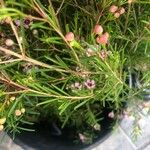
Chamelaucium uncinatum
Geraldton-wax · Geraldton wax flower
Description
Source: leafsnapChamelaucium uncinatum, commonly known as Geraldton Wax or Waxflower, is a flowering plant native to Western Australia. Belonging to the Myrtaceae family, it can grow up to 2 meters tall. The plant features small, narrow leaves and produces clusters of waxy flowers in shades of pink, purple, or white. These flowers, with their five petals, are highly fragrant. Geraldton Wax is popular as an ornamental plant because of its attractive appearance and long-lasting blooms. It can be cultivated both in gardens and in pots for indoor decoration. The plant thrives in well-drained soil with full sun exposure but can also tolerate partial shade. Beyond its ornamental value, Chamelaucium uncinatum has been used medicinally by indigenous Australians to treat various ailments, such as coughs and colds. In summary, Chamelaucium uncinatum is a beautiful flowering plant that enhances the aesthetics of any garden or indoor space while also holding cultural significance in traditional medicine practices.
🌳 Geraldton waxflower's appeal extends beyond its ornamental value, becoming a valued element in aromatherapy and the craft industry. The essential oils derived from Geraldton waxflower are prized in perfumery for their distinctive and pleasant aroma. Moreover, its stiff branches are used for detailed crafts, and its evergreen habit makes it popular for festive decorations year-round.
Care Guide
💧 Water Every 7 days
The Geraldton waxflower is native to Australia's dry regions and is known for its ability to thrive with minimal moisture due to its high drought tolerance. To care for this plant, water it once every 1-2 weeks, plant it in a spot with full sun, and ensure the soil is well-draining to prevent root rot. Proper watering and soil conditions are crucial for maintaining the plant's health.
How should I water my Geraldton waxflower?
Your Geraldton waxflower is not particular about how you water it. You can use any common watering tool, such as a watering can, hose, or even a cup, to moisturize the soil. Regardless of the tool you use, make sure to directly apply the water to the soil, ensuring equal moisture distribution throughout the root system. It's best to use filtered water, as tap water may contain harmful particles. Also, it's beneficial to use water at or slightly above room temperature, as extremely cold or hot water can shock the plant. However, the Geraldton waxflower generally responds well to any type of water.
What should I do if I give my Geraldton waxflower too much or too little water?
For outdoor plants, especially newly planted ones and seedlings, lack of watering can be a problem. It's important to water them consistently for a few months while they are small or newly planted. Once the roots are established, Geraldton waxflower can rely on rain most of the time. When Geraldton waxflower is planted in pots, overwatering is more likely to happen. If you accidentally overwater your Geraldton waxflower, there are steps you can take to fix it. First, stop watering the plant immediately to minimize the impact of overwatering. Then, remove the plant from its pot to inspect its roots. If you find that none of the roots have root rot, you can return the plant to its container. However, if you see signs of root rot, trim the affected roots and consider applying a fungicide to prevent further damage. Finally, repot the Geraldton waxflower in well-draining soil. In the case of underwatered Geraldton waxflower, simply water it more frequently. Underwatering is usually easy to fix. If the leaves are drooping, drying out, and falling off, increase the frequency of watering and the leaves will return to fullness quickly. It's important to correct the watering frequency as soon as underwatering is noticed.
How often do I need to water my Geraldton waxflower?
Most outdoor plants can rely on rainfall for their water needs. However, if your area doesn't get enough rain, you should water them every 2 weeks in the spring and fall, and more frequently in the summer. In the winter, when plants grow slower and require less water, you can water them less often, or even not at all. However, if your Geraldton waxflower is young or newly planted, it will need more frequent watering to help it establish and become drought-tolerant. For potted plants, there are two ways to determine how often to water your Geraldton waxflower. One way is to follow a predetermined watering schedule, such as once a week or every other week. However, this method doesn't consider the specific growing conditions for your plant. Another option is to check the moisture level of the soil. It's best to wait until the top two to four inches of soil have completely dried out before watering again, usually about ⅓ to ½ depth of the pots. This approach ensures that you're not overwatering the plant.
How much water does my Geraldton waxflower require?
When watering your Geraldton waxflower, it's important to understand that it doesn't always require a lot of water. If only a few inches of soil have dried since your last watering, providing about five to ten ounces of water each time should be sufficient for healthy growth. You can gauge the amount of water needed based on the moisture level of the soil. Take note of how many inches of soil have dried out between waterings. To ensure your Geraldton waxflower receives the right amount of moisture, water enough to moisten all the dry layers of soil since the last watering. If more than half of the soil has become dry, it's best to give more water than usual and continue until excess water begins to drain from the pot's holes. If your Geraldton waxflower is situated in a rainy outdoor area, it may not require additional watering. However, when it's young or newly planted, provide 1-2 inches of rainwater per week. As it matures, it can survive solely on rainwater, but during hot weather without any rainfall for 2-3 weeks, consider giving it a thorough watering to avoid stressing the plant.
How do I know if I am giving enough water to my Geraldton waxflower?
Overwatering is a common issue for the Geraldton waxflower, and there are clear signs to watch out for. When overwatered, the plant's leaves will turn yellow and possibly fall off. Overwatering can also cause the plant to shrivel and promote root rot. On the other hand, an underwatered waxflower will start to wilt and have brown or brittle leaves. If you notice any signs of over or underwatering, take action to restore your plant's health.
☀️ Light Full sun
The Geraldton waxflower performs best with plentiful sunlight throughout the day, though it also copes well with areas that receive only moderate sun. Its native habitat, which has abundant sunshine, supports its vigorous growth. Insufficient light can restrict its development, while too much light may cause the leaves to discolor.
What are the sunlight requirements for Geraldton waxflower?
The Geraldton waxflower requires full sun exposure, which means it should receive above 6 hours of sunlight daily, but it can also manage well with partial sun, getting about 3-6 hours of sunlight. It's essential to watch how sunlight moves through your garden to ensure plants get a balance of light and shade for their optimal growth.
How does the origin of Geraldton waxflower affect its growth?
Originating from a habitat with plentiful sunshine, the Geraldton waxflower thrives when exposed to ample sun throughout the day. This ample exposure contributes to its robust growth. Both shortages and excesses of light can have adverse effects, such as stunting growth or causing leaf discoloration.
What artificial lighting requirements do indoor Geraldton waxflowers have?
Indoor Geraldton waxflowers require adequate lighting to ensure optimal growth, especially when natural sunlight is insufficient. Using artificial lights like LEDs tailored to provide specific wavelengths can promote healthier, faster growth. For full sun plants, 30-50W/sq ft is needed; partial sun plants require 20-30W/sq ft; and full shade plants should have 10-20W/sq ft. The light source should be placed 12-36 inches above the plant, mimicking natural sunlight for 8-12 hours per day.
What are the common symptoms of inadequate light in Geraldton waxflowers?
When Geraldton waxflowers receive inadequate light, they may exhibit symptoms such as smaller new leaves, leggy or sparse growth, faster leaf drop, slower or halted growth, lighter-colored new leaves, and symptoms of both chlorosis and sunscald. Chlorosis shows as leaves turning yellow due to a breakdown of chlorophyll, while sunscald results in pale, bleached areas on the plant tissue. Additionally, leaf curling, wilting, and leaf scorching may occur with too much sunlight.
What solutions can be applied to address Geraldton waxflower's light issues?
To ensure optimal growth, gradually exposing plants to more sunlight is key. For indoor plants, moving them to a south-facing window or using artificial lighting like desk or ceiling lamps for at least 8 hours a day can help. Outdoor plants should be gradually moved to sunnier spots to avoid sunburn. Pruning obstructing branches or transplanting to better-lit locations can benefit. Unfortunately, parts of the plant damaged by insufficient light may not recover, but new growth should be healthy with improved light conditions.
🌡️ Temperature 20–37.8°C
Geraldton waxflower is fairly adaptable to temperature, able to withstand higher heat and wide temperature fluctuations. In hot weather, attention should be given to watering and providing adequate shade to prevent sunburn. However, it is relatively poorly tolerant of low temperatures. While it can handle some cold, very cold conditions can cause frost damage.
💨 Humidity
🪴 Soil 5-6
🌱 Fertilizer
Proper timing is important when fertilizing Geraldton waxflower. Apply fertilizer in early spring and continue once a month until early summer. The fertilizer promotes attractive blooms and supplies energy both during dormancy and in active growth phases.
Why do I have to put fertilizer on my Geraldton waxflower?
No matter which type of Geraldton waxflower you have, regular fertilization is crucial for its overall health. By providing the proper nutrients, your plant will grow stronger and become more resilient to harsh growing conditions. This will also help it fend off diseases and pests. The foliage of the waxflower is particularly beautiful, so it's important to maintain its integrity. Ensuring a regular fertilization schedule specifically tailored to your waxflower will promote vibrant, colorful leaves and a lush appearance.
What is the best time to add fertilizer to my Geraldton waxflower?
To help your Geraldton waxflower grow well, fertilize it for the first time in late winter or early spring. This will give it the nutrients it needs to start growing when the weather warms up. If you live in a warm climate, it's also beneficial to fertilize again in early fall. This will provide extra nutrients for the following growing season and make the waxflower more capable of surviving winter without damage to its foliage. Fertilizing earlier will give the new branches enough time to grow strong before the cold sets in.
When is the best time to not fertilize my Geraldton waxflower?
There are specific times when you should avoid fertilizing your Geraldton waxflower. First, in the early and mid-winter months, this plant is dormant and does not require feeding. Additionally, it is not advisable to fertilize it during late spring and summer when the weather is hotter and potentially drier. These conditions can have negative consequences if you fertilize the plant during this time. To prevent any problems, it is recommended to only fertilize in early spring and early fall.
What kind of fertilizer does my Geraldton waxflower require?
A Geraldton waxflower mostly relies on nitrogen as its primary nutrient, but that doesn't mean that phosphorus and potassium are not important. In fact, all three main nutrients are essential, so a balanced fertilizer like a 10-10-10 can be effective. Nonetheless, a more precise nutrient ratio often promotes optimal growth for a Geraldton waxflower, with slightly higher nitrogen content, such as a ratio of 10-6-4. You can use either granular or liquid-based fertilizers when feeding your plant.
How can I make my Geraldton waxflower grow better?
To fertilize your Geraldton waxflower, you have two options: granular fertilizer or liquid fertilizer. If you choose granular fertilizer, simply sprinkle it on the soil at the right time. The slow-release feature of granular fertilizer ensures that nutrients are gradually released into the soil over time. Before applying the fertilizer, it's a good idea to lightly water your plant. As for liquid fertilizer, it is less commonly used. To use this method, mix the fertilizer with water and then pour it around the base of your Geraldton waxflower. Occasionally, it's helpful to conduct a soil test before fertilizing to determine if any adjustments to the pH are necessary.
🪴 Pot & Repot 2-3 years
Repot the Geraldton waxflower every 2 to 3 years in the spring. Use a medium-sized, well-draining pot to accommodate its bushy growth, which can reach up to 2 meters. After repotting, water the plant sparingly and place it in bright, indirect light. To prevent root rot, make sure the soil remains loose and not compacted.
✂️ Pruning
The Geraldton waxflower, an evergreen shrub, should be pruned from early to late winter. Remove up to one-third of its growth to encourage denser, more compact growth and to increase flower production. To minimize stress and the risk of disease, avoid heavy pruning while the plant is flowering.
🌿 Propagating
🐛 Diseases & pets
☠️ Toxicity
Characteristics
- Plant Type
- Shrub
- Life Cycle
- Perennial
- Genus
- Chamelaucium
- Family
- Myrtaceae
- Hardiness Zone
- 9-12
- Mature Height
- 2.13 m
- Mature Spread
- 2.13 m
- Leaf Color
- Green
- Leaf Type
- Evergreen
- Flower Color
- Pink, White
- Flower Size
- 1.02 cm to 2.03 cm
- Bloom Time
- Mid spring, Late spring, Early summer
- Planting Time
- Spring, Autumn
- Harvest Time
- Mid summer