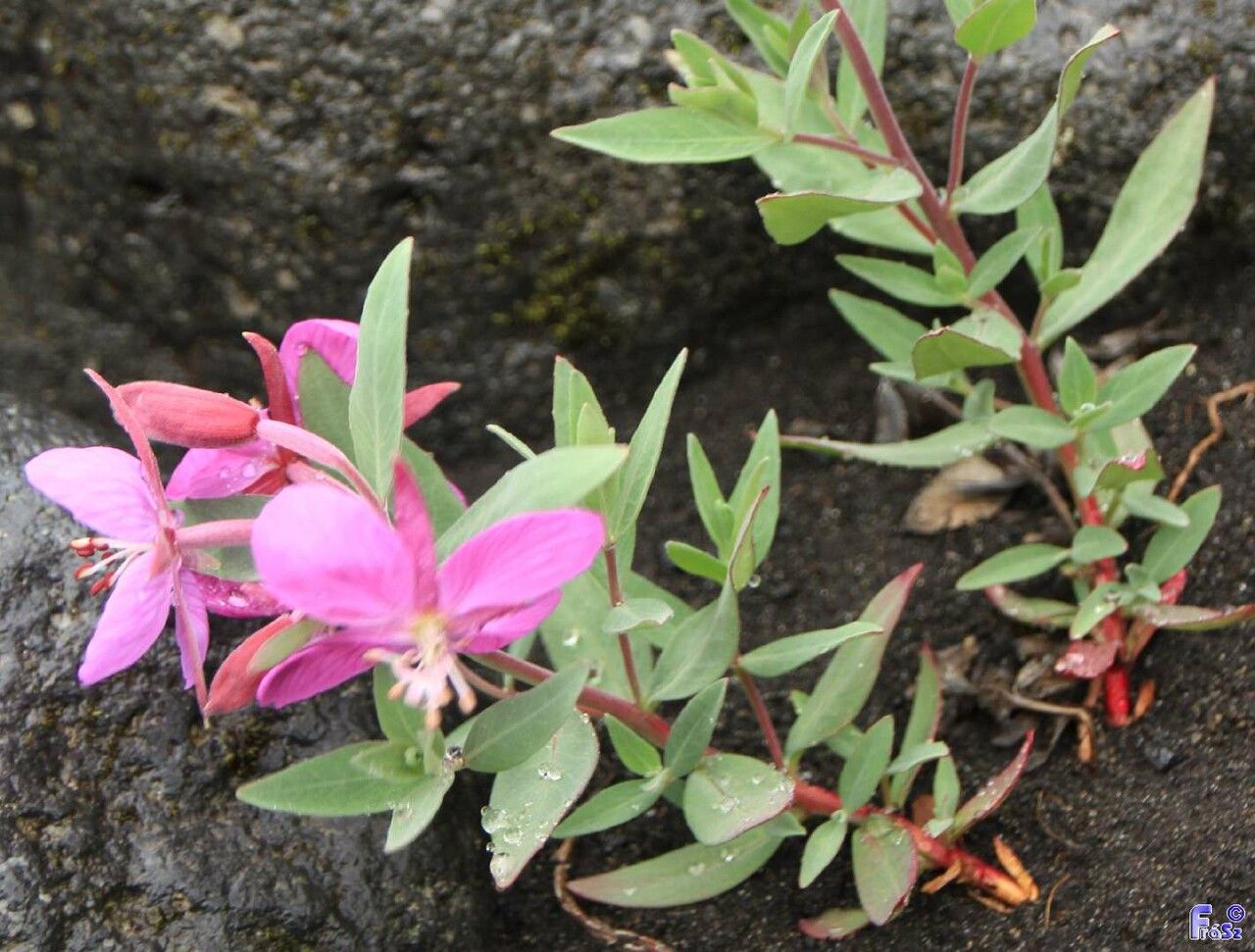
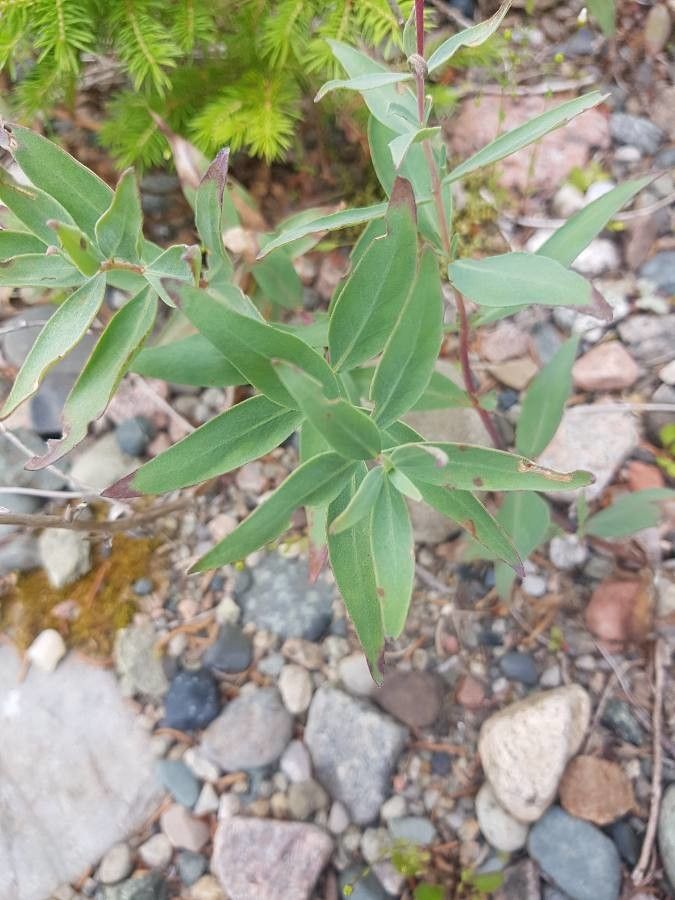
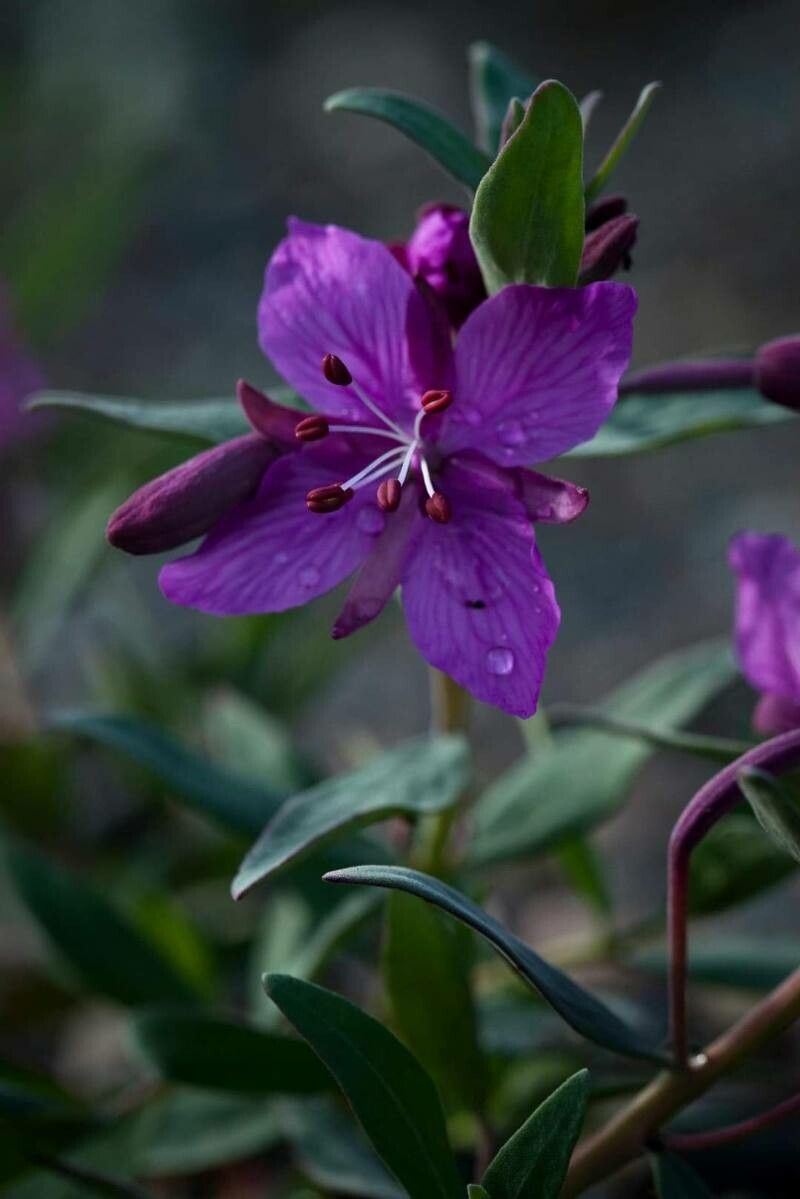
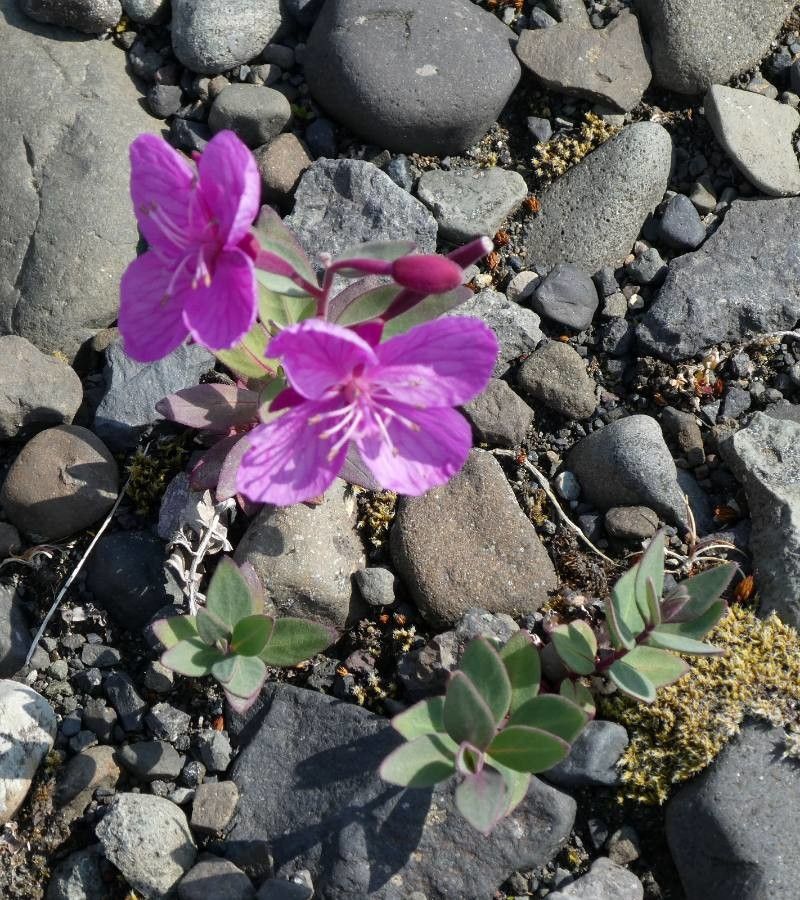
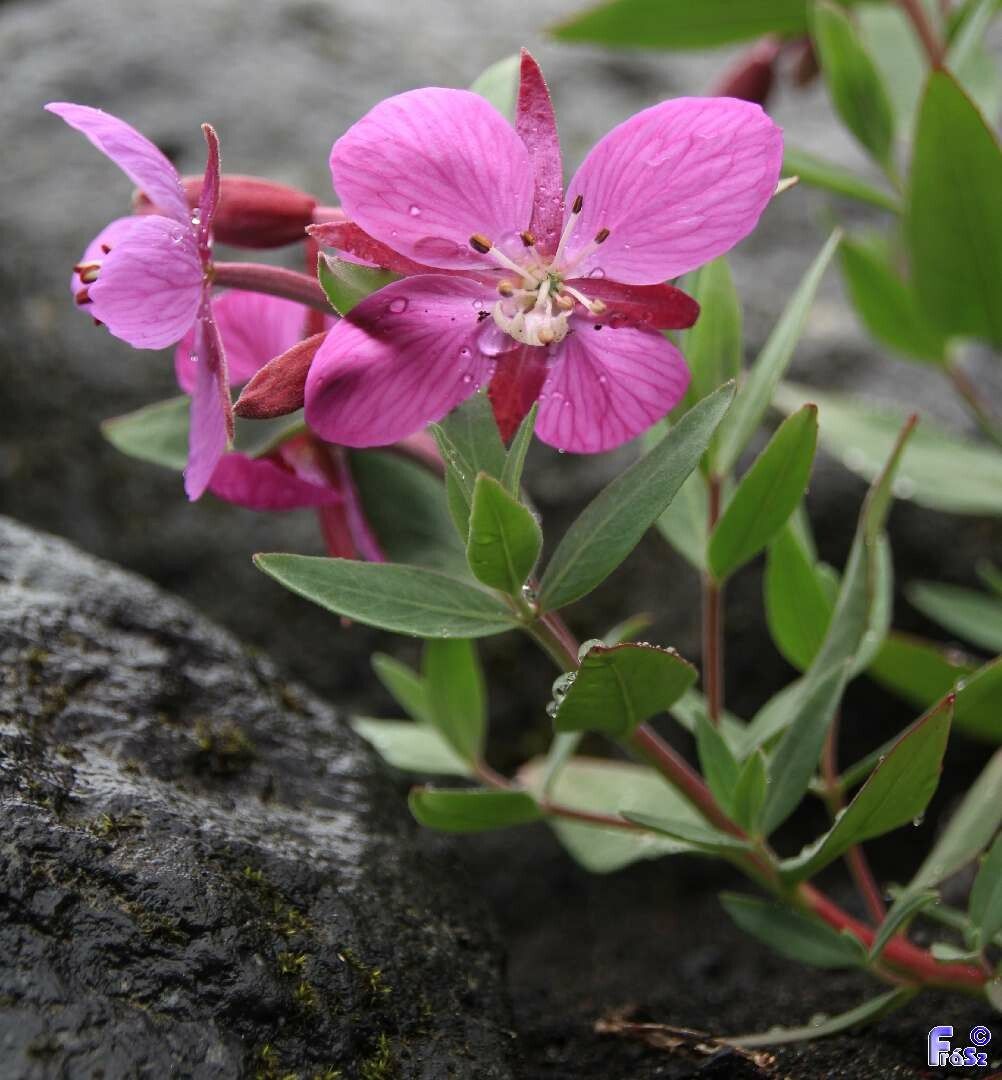
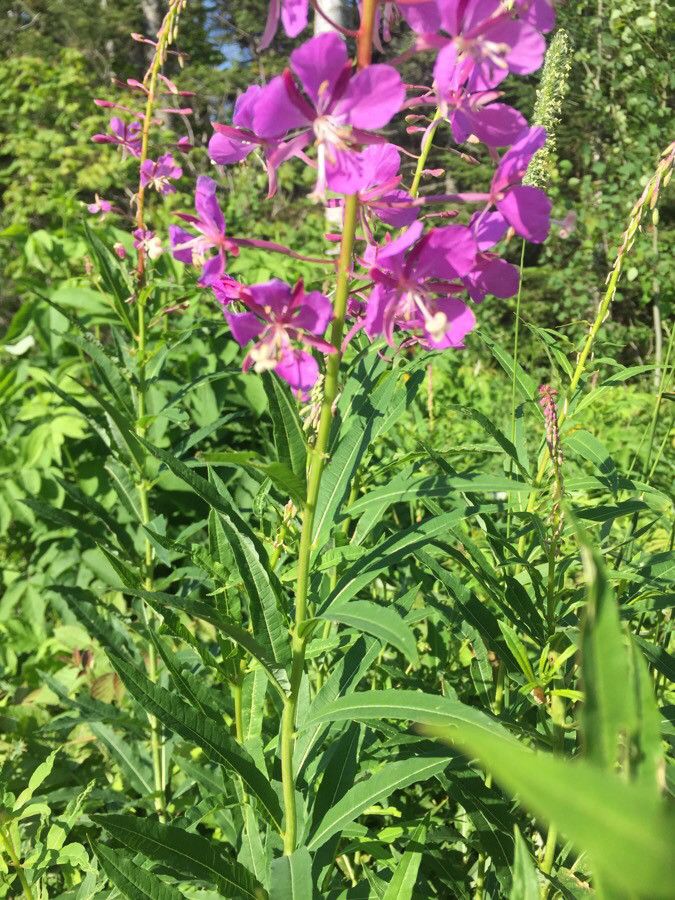
Chamaenerion latifolium (formerly Epilobium latifolium, also called Chamerion latifolium) is a species of flowering plant in the evening primrose family known by the English common names dwarf fireweed and river beauty willowherb. It has a circumboreal distribution, appearing throughout the northern regions of the Northern Hemisphere, including subarctic and Arctic areas such as snowmelt-flooded gravel bars and talus, in a wide range of elevations. This is a perennial herb growing in clumps of leaves variable in size, shape, and texture above a woody caudex. The leaves are 1 to 10 centimeters long, lance-shaped to oval, pointed or rounded at the tips, and hairy to hairless and waxy. The inflorescence is a rough-haired raceme of nodding flowers with bright to deep pink, and occasionally white, petals up to 3 centimeters long. Behind the opened petals are pointed sepals. The fruit is an elongated capsule which may exceed 10 centimeters in length. This arctic plant provides valuable nutrition for the Inuit, who eat the leaves raw, boiled with fat, or steeped in water for tea, the flowers and fruits raw, and as a salad with meals of seal and walrus blubber. The leaves and shoots are edible, tasting much like spinach, and is also known in the Canadian tundra as River Beauty.It is the national flower of Greenland with the Greenlandic name niviarsiaq ("young girl").
Dwarf fireweed is fairly disease-resistant and typically does not suffer from illnesses. However, it can be affected by pests and diseases found in its environment. Such problems are usually not severe. Regarding care, this plant has moderate maintenance needs. It should be pruned regularly to preserve a neat appearance and support healthy growth. Fertilizing can also encourage flowering. Dwarf fireweed is well suited to anyone with outdoor space like a garden or patio and does not demand extensive gardening experience. It may need extra attention when grown indoors.
How to keep Chamerion Latifolium.
Light
Dwarf fireweed prospers with plentiful sunlight, though it can tolerate moderate light. This hardiness reflects its original habitat, which provides abundant sun. Too little or too much light can impede its growth and result in stunted development.
Fertilizer
For Dwarf fireweed, the primary time to fertilize is in early spring when the flowers are forming. Using the appropriate fertilizer promotes better blooms and helps Dwarf fireweed produce attractive flowers. Fertilizing in early spring ensures excellent flowers throughout the season and supplies energy for dormant phases of growth.
Botanical profile.
- Plant Type
- Herb
- Life Cycle
- Perennial
- Genus
- Chamerion
- Family
- Onagraceae
- Hardiness Zone
- 3-5
- Mature Height
- 5 cm to 40 cm
- Mature Spread
- 61 cm
- Leaf Color
- Green, Blue, White, Bronze
- Leaf Type
- Deciduous
- Flower Color
- Pink
- Flower Size
- 2.03 cm to 4.06 cm
- Bloom Time
- Early summer, Mid summer
- Planting Time
- Autumn
- Harvest Time
- Mid summer
Other names.