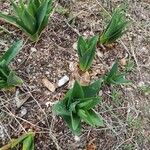
Charybdis maritima
Red Squill · Sea Onion · Sea Squill · Mededicinal squill · Squill
Description
Source: leafsnapCharybdis maritima, commonly known as sea holly, is a perennial plant species belonging to the Apiaceae family. Native to the Mediterranean region, it thrives in coastal areas and sandy soils. The plant features spiky blue-green leaves and striking blue flowers that bloom in the summer, giving it a unique and eye-catching appearance. Sea holly can grow up to 60 cm tall and possesses a deep taproot system, enabling it to withstand harsh coastal environments. Its deeply lobed leaves have spiny edges, adding to its distinctive look. The flowers, surrounded by bracts that resemble metallic blue thistle heads, further enhance its visual appeal. Renowned for its medicinal properties, sea holly contains compounds such as flavonoids, alkaloids, and terpenes, which exhibit anti-inflammatory effects. Traditionally, it has been used to treat various ailments, including arthritis, rheumatism, and digestive disorders. Besides its medicinal uses, Charybdis maritima is valued for its ornamental qualities. Its unique appearance makes it an attractive addition to gardens or landscaping projects, especially in coastal areas or sandy soils. In summary, Charybdis maritima is a fascinating plant species with both medicinal benefits and ornamental value. Its significance extends to biodiversity conservation efforts in the Mediterranean region, emphasizing its role in maintaining the area's flora.
🌳 Sea squill is known for its role as a bioindicator, particularly for revealing heavy metals in soil. Some researchers use this characteristic to monitor environmental pollution, demonstrating the plant's usefulness beyond ornamental purposes.
Care Guide
💧 Water Every 7 days
☀️ Light Full sun
Sea squill prefers locations that receive plentiful sunlight for most of the day. This preference promotes its healthy development. Inadequate light can limit its growth, while too much exposure may cause damage or wilting. Having originated in sun-drenched habitats, it displays the same preference throughout its various growth stages.
🌡️ Temperature 15–37.8°C
Sea squill is native to a climate where temperatures range from 59 to 100°F (15 to 38°C). It does best in those conditions, although slight seasonal adjustments may be needed due to its temperate nature.
💨 Humidity
🪴 Soil 6-7
🌱 Fertilizer
For Sea squill, the primary time to apply fertilizer is in early spring, when flowers are forming. The proper fertilizer promotes better blooms and helps Sea squill produce attractive flowers. Fertilizing in early spring ensures excellent flowers during the season and supplies energy for dormant growth phases.
🪴 Pot & Repot 2-3 years
When repotting Sea squill, select a pot 1–2 inches (2.5–5.1 cm) larger with good drainage. Use a well-draining potting mix. Repot in spring or fall, placing the root ball slightly below the rim of the flower pot. Water thoroughly after repotting and keep it in a warm spot with indirect sunlight.
✂️ Pruning
🌿 Propagating
🐛 Diseases & pets
☠️ Toxicity
Characteristics
- Plant Type
- Herb
- Life Cycle
- Perennial
- Genus
- Charybdis
- Family
- Asparagaceae
- Hardiness Zone
- 8-11
- Mature Height
- 30 cm to 61 cm
- Mature Spread
- 30 cm to 61 cm
- Leaf Color
- Green
- Leaf Type
- Semi-evergreen, Deciduous
- Flower Color
- White
- Flower Size
- 1.52 cm
- Bloom Time
- Mid summer
- Planting Time
- Winter, Spring, Autumn
- Harvest Time
- Early spring, Mid spring, Late summer, Fall, Winter
- Native Area
- Libya, Tunisia, Portugal, Italy, Spain, Montenegro, Algeria, Croatia, Morocco, France