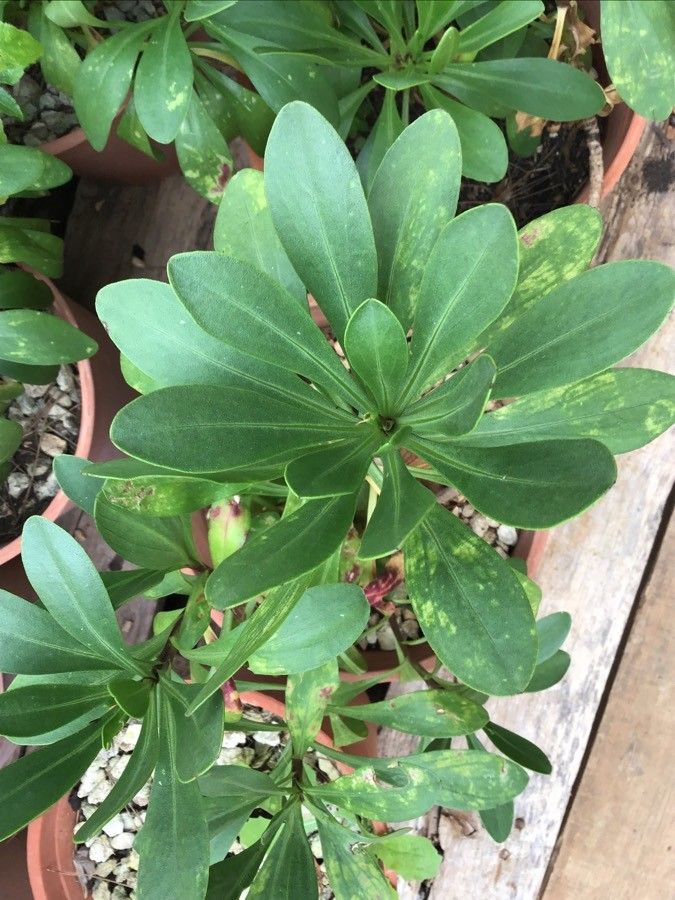
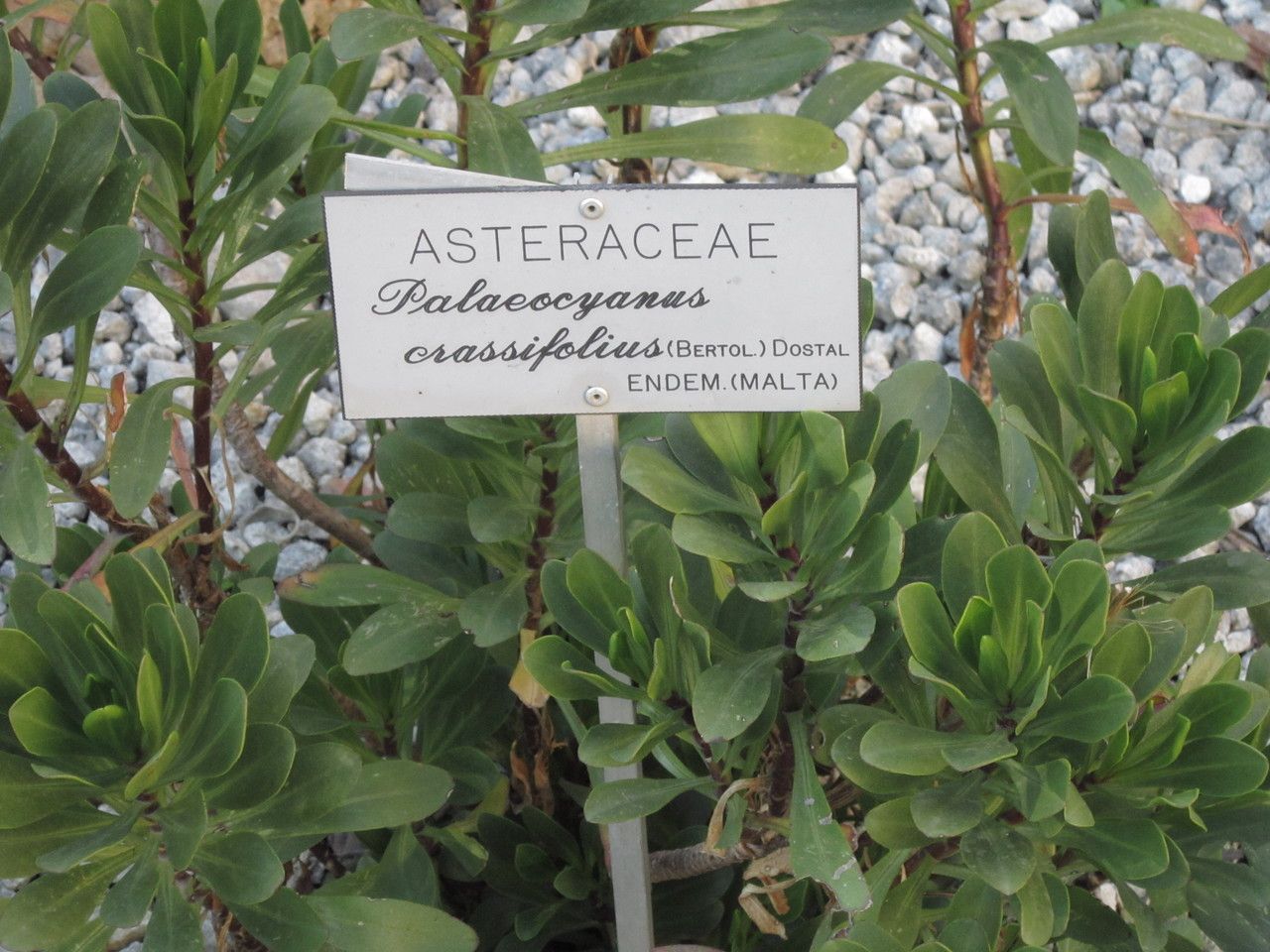
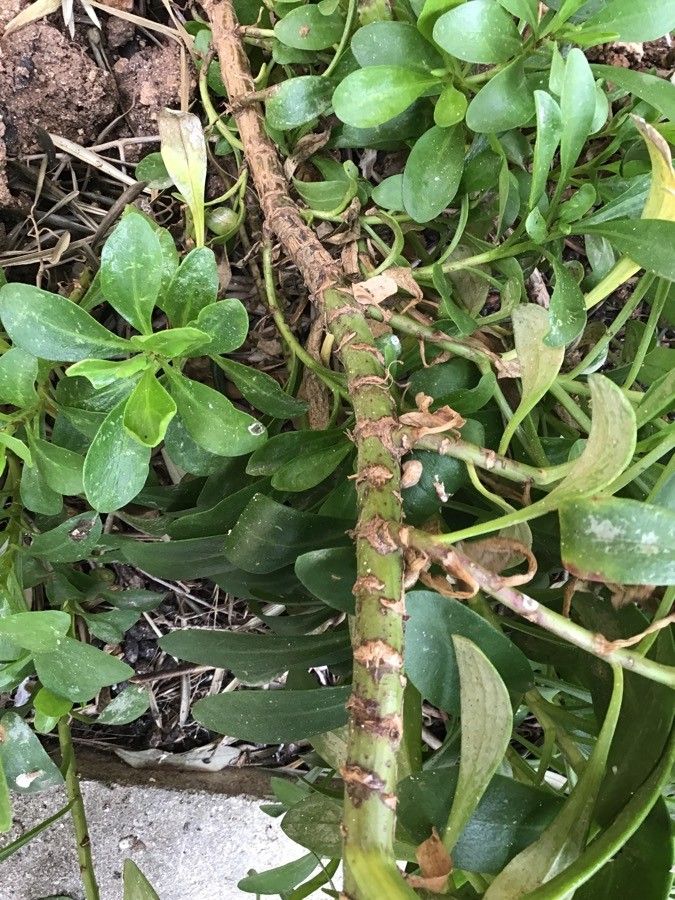
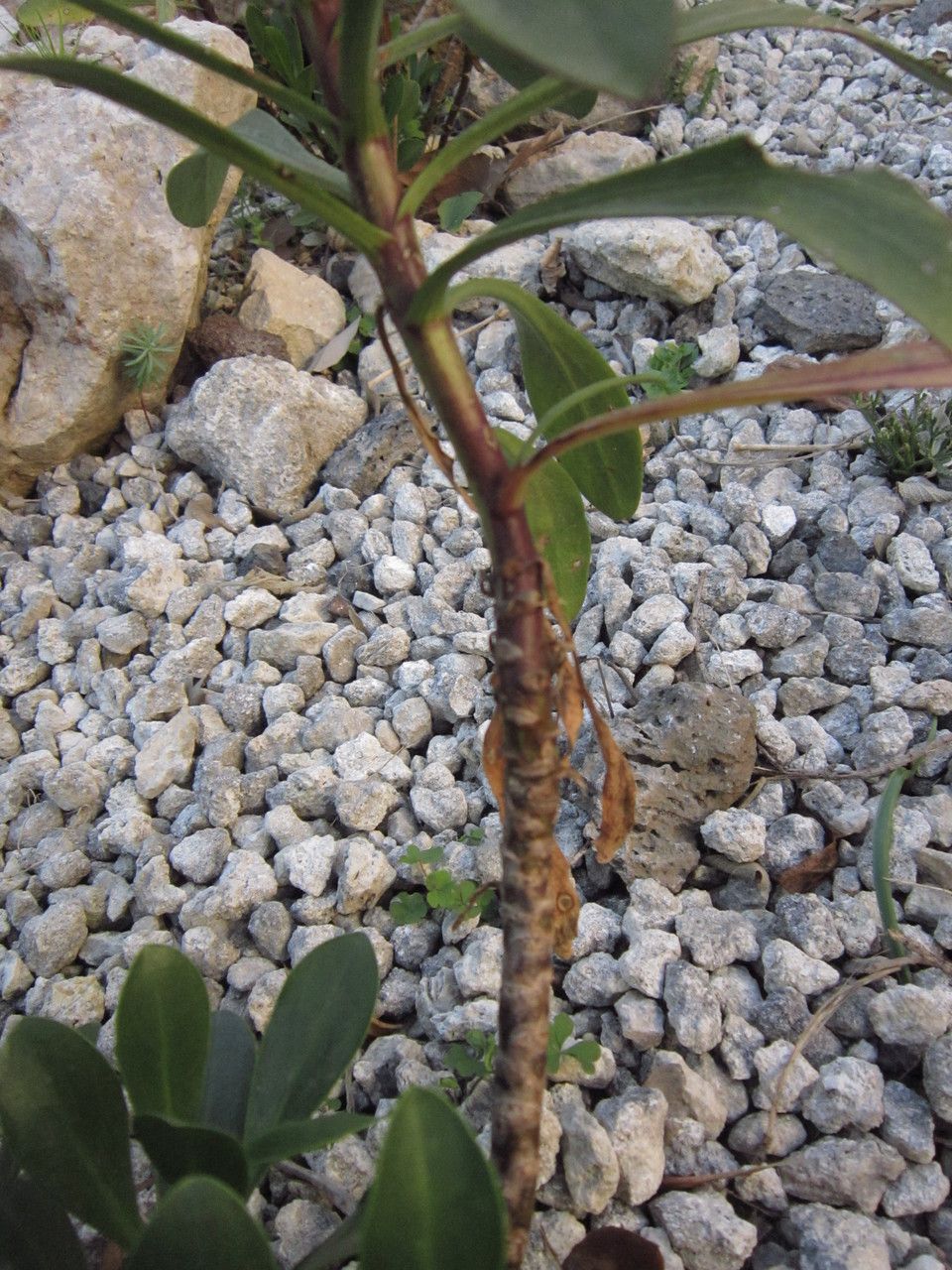
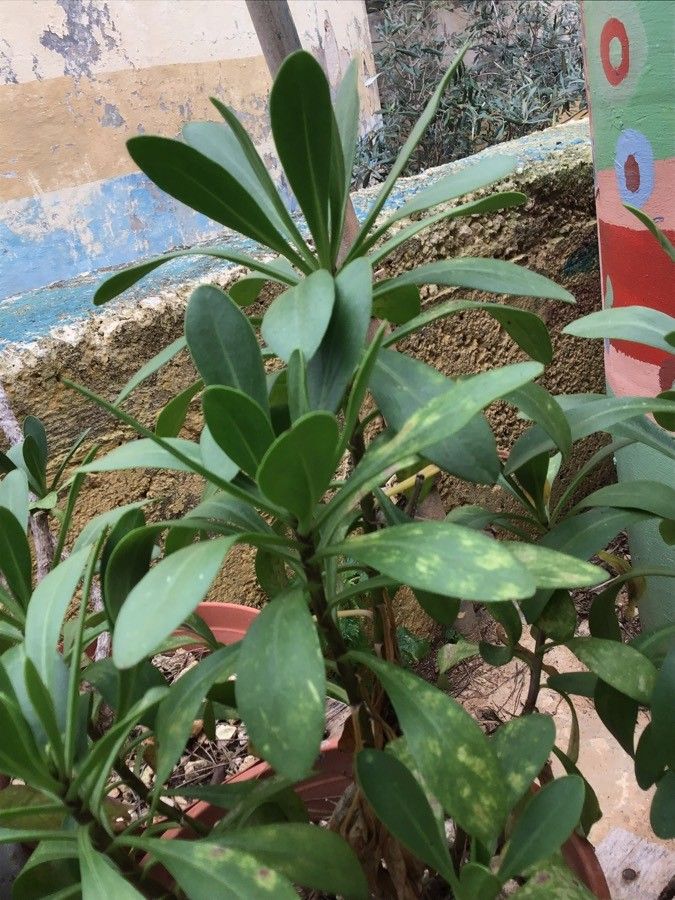
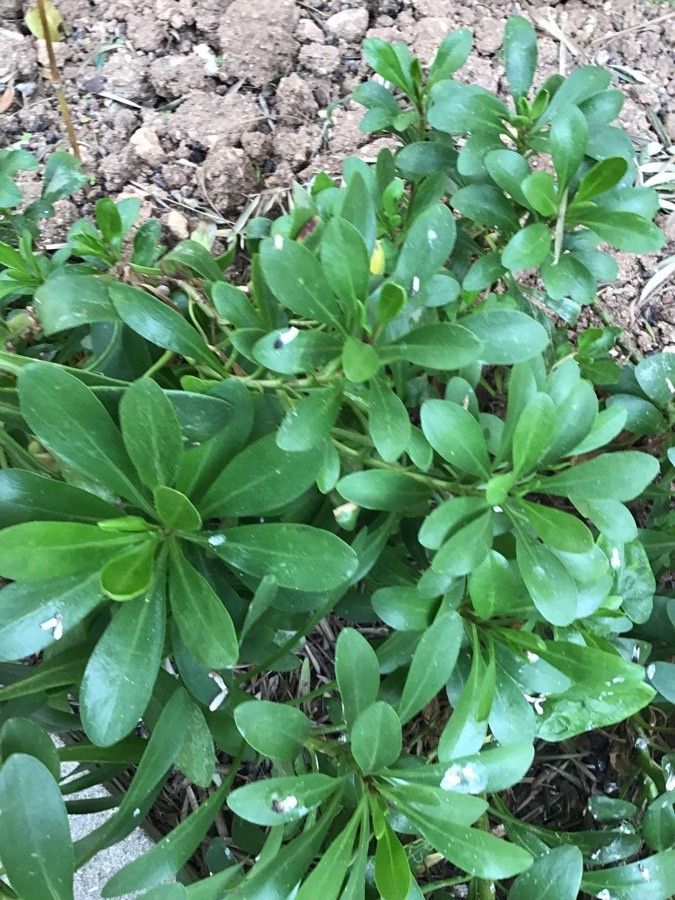
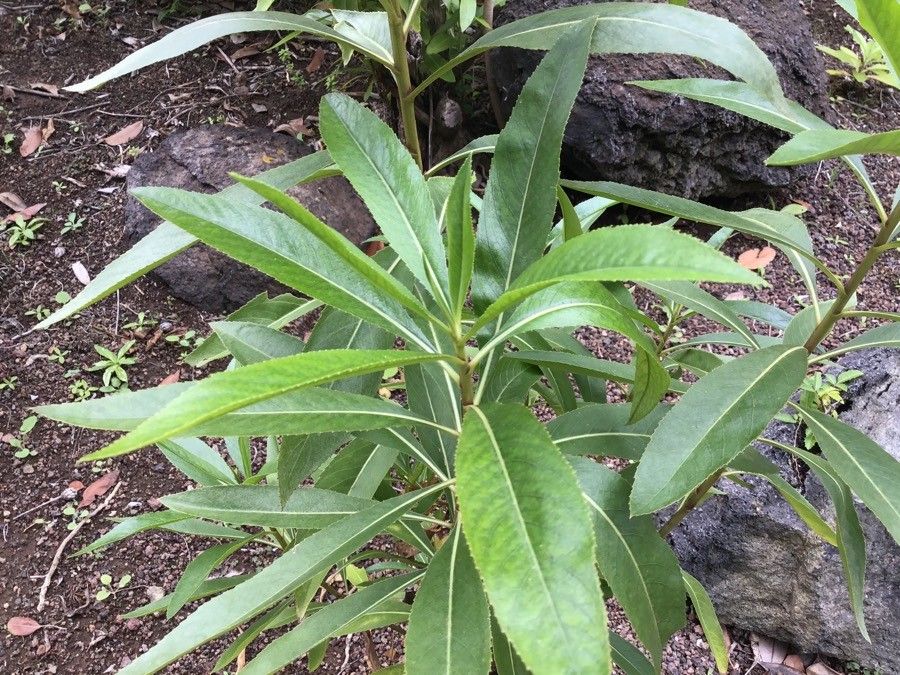
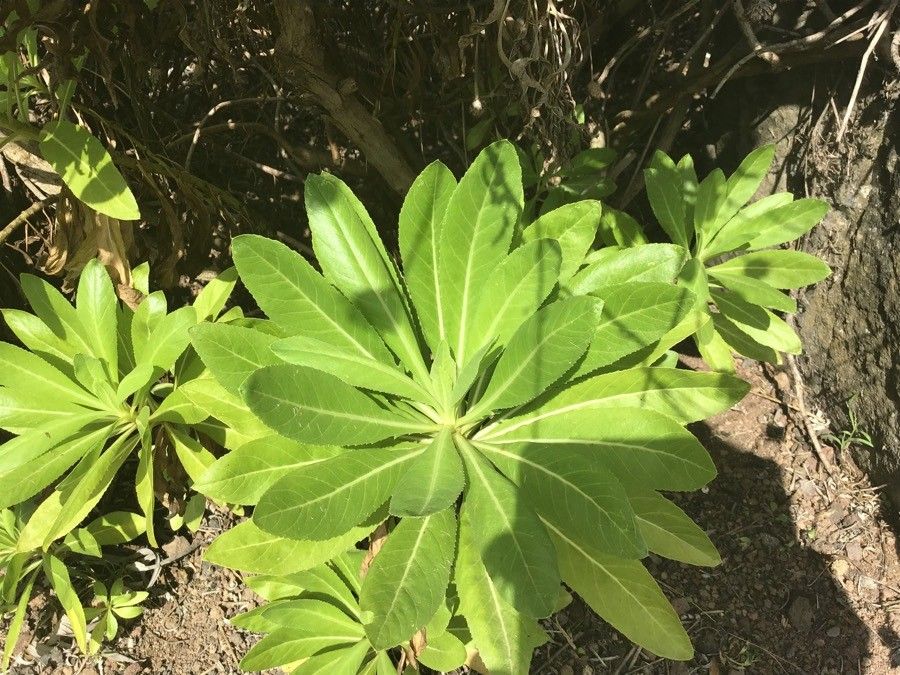
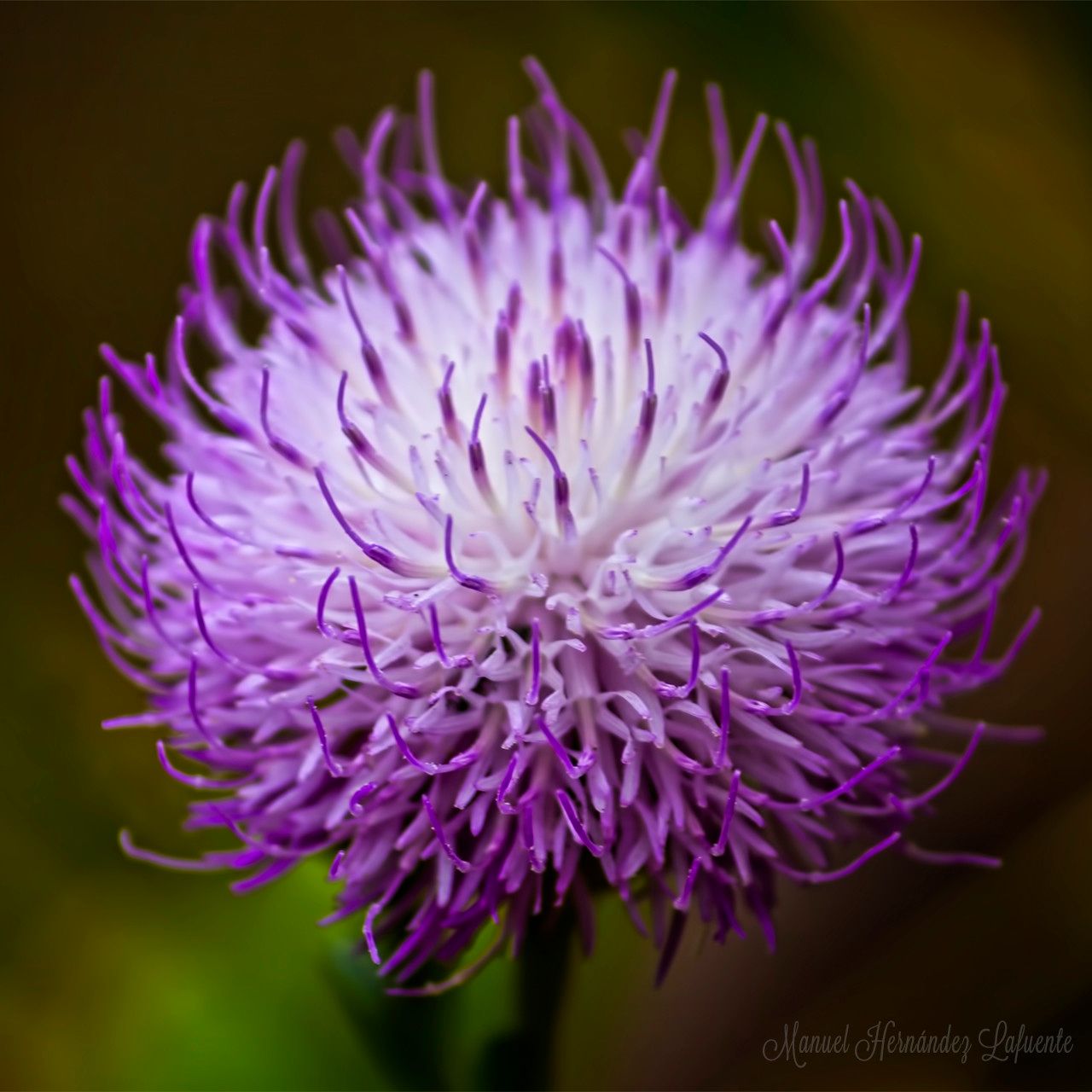
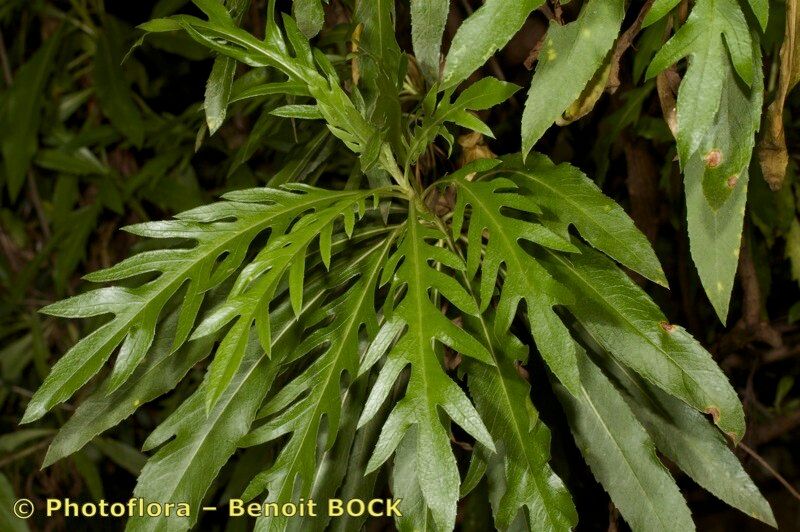
Cheirolophus crassifolius, the Maltese centaury, Maltese rock-centaury or Widnet il-Baħar, is a species of flowering plant in the family Asteraceae. It is endemic to Malta, where it has been the national plant of Malta since 1973. Its natural habitats are cliffs and coastal valleys. It is threatened by habitat loss. It is scarce but widespread in the wild on the western cliffs of Malta, rare on the southern cliffs of Gozo, but frequent as a cultivated species in roundabouts. It is quite common in the limits of Wied Babu in the south east of Malta. It was first described by Stefano Zerafa, around 1830, as the only species of the monotypic genus Palaeocyanus. However, around the year 2000, it was transferred to Cheirolophus, in the light of genetic studies done in that year. The name Cheirolophus means hand-crest, referring to the hand-shaped bract tips of the most species in this genus, while crassifolius mean thick leaves. The leaves are succulent and spoon shaped. The variety serratifolia (serrated leaves) is very rare, and only known from Gozo. This species is cultivated due to its national importance. They are purple and have green stems. The top of the stem looks like a rock and that's why it is called the Maltese rock-century.
Cheirolophus crassifolius is resistant to disease and is generally unlikely to develop health problems. Regarding care, the plant is fairly low-maintenance. When grown outdoors it needs only light watering, and larger specimens typically do not need pruning. Smaller plants, however, should be trimmed after they finish blooming. Cheirolophus crassifoliust is suitable for anyone with an outdoor area, such as a garden or deck, and does not require much gardening experience.
How to keep Cheirolophus Crassifolius.
Light
Cheirolophus crassifolius comes from open habitats, such as sunny meadows and forest edges, which offer abundant light. It does best in Full Sun but can tolerate Partial Sun, showing good adaptability to different sunlight levels.
Temperature
Cheirolophus crassifolius displays strong adaptability to temperature, able to tolerate higher heat and wide temperature swings. In hot weather, attention should be paid to watering and providing appropriate shade to avoid sunburn. Conversely, Cheirolophus crassifolius has relatively limited cold tolerance: it can endure some chill, but overly cold conditions may result in frost damage.
Fertilizer
Fertilize your Cheirolophus crassifolius in early spring to encourage healthy growth. Regular feeding improves overall health, leading to vigorous growth, increased resilience to harsh conditions, and enhanced resistance to pests and diseases. Keep a specific fertilization schedule for your Cheirolophus crassifolius to preserve vibrant, deeply colored foliage and a lush appearance.
Botanical profile.
- Plant Type
- Shrub
- Life Cycle
- Perennial
- Genus
- Cheirolophus
- Family
- Asteraceae
- Hardiness Zone
- 9-11
- Mature Height
- 49 cm to 91 cm
- Mature Spread
- 40 cm to 61 cm
- Leaf Color
- Dark Green
- Leaf Type
- Evergreen
- Flower Size
- 3.05 cm to 5.08 cm
- Bloom Time
- Early summer, Mid summer
- Planting Time
- Spring, Summer, Autumn
- Harvest Time
- Late summer, Early fall
Other names.