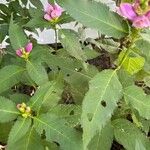
Chelone lyonii
Pink Turtlehead · Turtlehead · Lyon's turtlehead
Description
Source: leafsnapChelone lyonii, commonly known as pink turtlehead, is a herbaceous perennial plant in the family Plantaginaceae. Native to the eastern United States, it thrives in wetlands, along streams, and in moist meadows. The plant typically reaches a height of 2 to 3 feet and features dark green leaves arranged oppositely on the stem. Its distinctive flowers, which resemble a turtle's head, come in pink or white and bloom from mid-summer through early fall, attracting pollinators like bees and butterflies. Pink turtlehead is relatively easy to cultivate in moist soil with partial shade but can also tolerate full sun provided it receives adequate water. Historically, Native Americans utilized its medicinal properties to treat ailments such as fever, coughs, colds, and sore throats. However, due to its potential toxicity if not properly prepared or administered, it should be used under medical supervision.
Care Guide
💧 Water Every 7 days
Pink turtlehead thrives in its native woodland habitat, where consistent moisture is key. It flourishes in damp environments. To ensure its well-being during the growing season, weekly watering is essential to prevent prolonged dryness. This regular watering enhances both its blooming potential and overall health.
☀️ Light Partial sun
Pink turtlehead is native to habitats like forest understories and rocky areas, where it grows in natural shade. It prefers partial sun but can tolerate full sun or full shade, reflecting its versatile and hardy nature.
🌡️ Temperature 0–32.2°C
Pink turtlehead can tolerate a wide range of temperatures, but its distribution may still be restricted by different combinations of moisture and heat. It does best in warm summer conditions with adequate rainfall or watering. Extended periods of cloudy, rainy weather or prolonged high temperatures can increase the chances of Pink turtlehead dying. In winter, protecting it properly from cold can enhance the plant’s survival.
💨 Humidity
🪴 Soil 6-7
🌱 Fertilizer
The ideal time to fertilize a Pink turtlehead is in early spring, as it comes out of dormancy and begins active growth. Fertilizing supplies essential nutrients needed for healthy growth. Although Pink turtlehead has relatively low fertilizer requirements, annual fertilization can improve its survival and encourage better, longer-lasting flowers.
🪴 Pot & Repot Every 12 months
✂️ Pruning
Pink turtlehead is known for its distinctive pink flowers and benefits from pruning early to late in the spring. To promote healthy growth and improve air circulation, be sure to trim spent flowers and leggy stems. This will help maintain the plant's vigor and enhance the quality of its blooms. Regular pruning also helps control its spread, making it a resilient and beautiful addition to your garden.
🌿 Propagating
🐛 Diseases & pets
☠️ Toxicity
Characteristics
- Plant Type
- Herb
- Life Cycle
- Perennial
- Genus
- Chelone
- Family
- Plantaginaceae
- Hardiness Zone
- 3-8
- Mature Height
- 0.61 m to 1.22 m
- Mature Spread
- 46 cm to 76 cm
- Leaf Color
- Dark Green
- Leaf Type
- Deciduous
- Flower Color
- Pink
- Flower Size
- 2.54 cm to 7.62 cm
- Bloom Time
- Mid summer, Late summer, Early fall
- Planting Time
- Spring, Summer
- Harvest Time
- Mid fall, Late fall
- Native Area
- Eastern North America