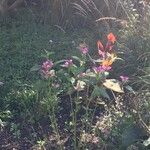
Chelone obliqua
Red Turtlehead
Description
Source: leafsnapChelone obliqua, commonly known as the pink turtlehead, is a herbaceous perennial plant belonging to the family Plantaginaceae. Native to North America, it thrives in wetlands, meadows, and along stream banks. Typically, the plant grows to a height of 2-3 feet and features dark green leaves arranged in opposite pairs along the stem. The most distinctive feature of Chelone obliqua is its unique flowers, which resemble a turtle's head. These blooms are pink or white, with two lips that open like a mouth, revealing a white throat with yellow spots. Flowering occurs from mid-summer through early fall, attracting bees, butterflies, and other pollinators. Chelone obliqua prefers moist soil conditions but can tolerate some drought once established. It flourishes in partial shade but can also grow well in full sun if provided with adequate moisture. Historically, Native Americans have used Chelone obliqua for medicinal purposes, treating ailments such as fever, coughs, and colds. However, it is important to note that all parts of the plant are toxic if ingested by humans or animals. Overall, Chelone obliqua is an attractive perennial that adds vibrant color to wetland areas, while also providing valuable habitat for pollinators during its blooming season.
🌳 Red turtlehead serves an important ecological function as a nectar source for pollinators. While it is not extensively used in commerce, it attracts many bees, butterflies, and birds, thereby supporting biodiversity and helping pollinate nearby plants.
Care Guide
💧 Water Every 7 days
Red turtlehead thrives in moist, consistently watered soil that mimics its natural woodland environment. Once it is established, the plant can tolerate moderate drought. To maintain moisture during its growing season, it is crucial to water it weekly and apply mulch.
What's the best way to give water to my Red turtlehead?
To properly water the Red turtlehead, it is recommended to use filtered water at room temperature. Tap water may contain harmful particles, so using filtered water is preferable. Since the Red turtlehead thrives in warm environments, it is important to use water that is not too cold to avoid shocking the plant. Additionally, overhead watering should be avoided as it can cause issues with the foliage. Instead, pour the filtered room temperature water directly onto the soil until it is completely soaked. This helps to moisturize the roots and support their growth and nutrient absorption.
What should I do if I give my Red turtlehead plant too much or too little water?
Overwatering is a more common issue than underwatering for the Red turtlehead plant. When the plant receives too much water, its stems and leaves may wilt and turn yellow. Prolonged overwatering can also lead to diseases like root rot, mold, and mildew, which can kill the plant. Underwatering is less common due to the plant's drought tolerance, but it can still happen. Signs of underwatering include brittle and brown leaves. It's important to notice the signs of overwatering early on, as some diseases may become irreversible if not addressed promptly. If you see signs of overwatering, reduce watering and check the soil drainage. If the soil does not drain well, replace it with a loose, well-draining potting mix. If signs of underwatering are observed, increase watering until the plant recovers.
How frequently do I need to water my Red turtlehead?
If your Red turtlehead plant is in a pot, the most precise way to determine if it needs water is to dip your finger into the soil. Once the top two to three inches of soil are dry, it's time to water it. If your Red turtlehead is growing outdoors in the ground, you can do a similar soil test. Once the top few inches of soil have dried out, it's time for watering. Typically, during spring and early fall, you may need to water this plant about once a week using this method. However, during extreme hot weather, you may need to increase the watering frequency to twice a week or more. It's worth noting that mature and well-established Red turtlehead plants have a remarkable ability to withstand periods of drought.
How much water does my Red turtlehead plant need?
When watering your Red turtlehead, don't hold back on the amount of water you provide. Wait until the top two to three inches of soil are dry, and then give the plant a good, thorough soaking. Make sure to add enough water that it seeps through the drainage holes at the bottom of the pot. If you don't see any excess water coming out, then you haven't watered enough. However, be careful not to let the water accumulate in the soil, as this can be harmful to the plant. On the other hand, if water is not draining properly, it could be a sign of poorly draining soil, which can negatively impact the health of the plant. If the plant is outdoors, about 1 inch of rainfall per week should be sufficient.
How do I water my Red turtlehead plant at different stages of growth?
The water needs of the Red turtlehead can vary depending on its growth stages. When the Red turtlehead is young or has been recently transplanted, it requires more water than usual. During these stages, the plant focuses on growing new roots, which need extra moisture to support future growth. As the plant matures, its water needs reduce. Additionally, the bloom period is another stage where the Red turtlehead may require more water, as flower development requires significant moisture.
☀️ Light Partial sun
The red turtlehead thrives best with moderately intense sunlight but can tolerate more intense sun when needed. Native to areas with varied light conditions, it has become adaptable. However, too much sun can cause damage, while too little sunlight may inhibit its growth. Its light requirements remain largely the same throughout different stages of development.
What are the sunlight requirements for red turtlehead plants?
Red turtlehead plants flourish best under semi-intense sun exposure but can endure stronger sunlight if necessary. They originate from regions with diverse light conditions which have enabled them to adapt to various sunlight intensities. While they can withstand excessive sun exposure to some extent, too much sunlight may cause harm, and too little sunlight can stunt their growth. Their sun exposure requirements do not significantly change across different growth stages. For optimal growth, they require about 3-6 hours of sunlight, classifying them between partial and full sun requirements.
How to use artificial lighting for red turtlehead plants indoor?
For indoor red turtlehead plants where natural sunlight is insufficient, especially during winter or in less sunny spaces, artificial lights provide a crucial growth support. LED lights are recommended for their ability to be customized to the specific light wavelengths needed by plants. For full sun plants, 30-50W/sq ft of artificial light is needed, partial sun plants require 20-30W/sq ft, and full shade plants need 10-20W/sq ft. The light source should be placed 12-36 inches above the plant, mimicking natural sunlight conditions, and kept on for 8-12 hours per day to simulate natural daylight hours.
What are the symptoms of inadequate sunlight in red turtlehead plants?
When red turtlehead plants grow indoors with insufficient light, several symptoms may appear. New leaves might grow smaller than mature ones, and the plant may experience leggy or sparse growth, characterized by longer spaces between leaves or stems. Faster leaf drop can occur as the plant sheds older leaves to conserve resources for new growth, which slows down or halts when light conditions are poor. Leaves may develop irregular color patterns, appear pale, or in cases of excessive sunlight, show signs of chlorosis with leaves turning yellow. Sunscald, leaf curling, wilting, and leaf scorching are additional symptoms indicating too much sunlight, showing as damaged or necrotic areas on leaves, or brown, dry, and crispy leaf edges.
How can you manage light exposure for red turtlehead plants?
To optimize light exposure for red turtlehead plants, gradually shift them to sunnier spots each week until they receive 3-6 hours of direct sunlight daily, which helps them adapt to changing light conditions. If your plant is large or not easily movable and needs additional light, consider using artificial light sources such as desk, ceiling lamps, or professional plant grow lights for at least 8 hours daily. For outdoor plants, avoid sudden changes in light intensity to prevent sunburn. Note that parts of the plant affected by insufficient sunlight may not recover, but new growth will be healthy once light exposure increases. Furthermore, minimize obstructions by pruning branches or leaves that block sunlight and consider transplanting smaller plants during their dormant period to locations with ample sunlight and good drainage.
🌡️ Temperature 5–35°C
The red turtlehead prefers a temperate climate, doing best in temperatures from 41 to 95 ℉ (5 to 35 ℃). In its native habitat, it occurs in areas that undergo a broader range of temperatures. In colder seasons, it is advisable to give the plant extra protection, such as applying mulch and covering it with a blanket to keep the soil from freezing. In warmer seasons, provide shade and ensure it is well-watered.
What temperature is best for Red turtlehead?
The best temperature for Red turtlehead depends on the time of year. Let's discuss the two primary seasons - the growing season and the dormancy season. During the growing season, when the plant is sprouting, the ideal temperature range is 65-80℉ (18-27℃). If it gets colder than 15℉ (-10℃), the plant may suffer, its leaves may brown and wilt. However, if it's a short cold snap, Red turtlehead may survive with some help. On the other hand, during the warmer parts of the year, Red turtlehead needs protection from high temperatures. Anything above 95-105℉ (35-40℃) can compromise the foliage and blooms. Hotter temperatures can cause wilting, drooping, and sunburn on the leaves, which are difficult for Red turtlehead to recover from. Luckily, there are quick and easy ways to combat this issue.
We need to know the temperature needs of baby Red turtlehead plants in their first year.
If it's the first year of your Red turtlehead plant being outside, it may require some extra care during the coldest months. Frost can cause severe damage to a first-year Red turtlehead and prevent it from regrowing in the spring. To protect the plant, it needs to be kept at or above 40℉ (5℃) until it becomes established. This can be achieved by either bringing the plant inside for a month or two or using mulch or fabric barriers to shield it from frost. During the initial year or two, it's advisable to plant the Red turtlehead in a shadier location as smaller and weaker plants struggle to regulate their temperature in hot weather. To prevent overheating, the first-year Red turtlehead should receive no more than five hours of direct sunlight per day, especially if the temperature exceeds 80℉ (27℃). Using shadecloth and providing frequent watering or misting are essential for controlling heat during the summer.
How do I keep Red turtlehead safe from very hot or very cold weather?
During the growing season, if temperatures drop below 15℉(-10℃), there are ways to protect Red turtlehead from frost or cold damage. If you're growing it in a container, bring it indoors with bright, indirect light until temperatures rise. For ground-planted Red turtlehead, use mulch or horticultural fabric to create a barrier and shield it from frost and cold wind. On the other hand, if temperatures exceed 80℉(27℃) in the shade during the day, take precautions. Limit the plant's exposure to sunlight to six hours or less, preferably in the morning. Use shade cloth or fine plastic mesh to reduce direct sunlight during the hottest parts of the day. Additionally, consider installing a misting system to release cooling mist around the plant's base, thus lowering ground temperatures.
Suggestions for the best temperature during the dormant season for Red turtlehead.
During the winter, Red turtlehead needs cold temperatures to stay dormant until it's time to sprout. Sprouting too early, especially if there's a frost, can be fatal. Ideally, winter temperatures should stay below 32℉(0℃), but up to 40℉(5℃) is generally safe. In some climates, like woodland rainforests, there may be unexpected warm spells that trigger premature sprouting. If there's still a risk of frost, covering the sprout with clear plastic on stakes can protect it. This can be removed once the danger of frost has passed. While Red turtlehead may naturally sprout at the right time, using this method increases the chances of a successful second sprouting.
💨 Humidity
🪴 Soil 6-7
🌱 Fertilizer
One fertilizer application in spring is generally enough for Red turtlehead, though repeated feedings can boost growth to its fullest. Feed every month to every month and a half. Fertilizing improves the leaves' appearance and function, maintaining uniform color and a healthy texture. It also encourages root development and nutrient uptake, supporting the plant's long-term health.
Why should I put fertilizer on my Red turtlehead?
Proper fertilization is important for Red turtlehead plants as it helps maintain the leaves' appearance and functionality. It ensures consistent color and a healthy texture, while also supporting root growth below the surface. Fertilizing not only keeps the plant healthy currently but also improves its ability to absorb nutrients from the soil in the future.
When should I fertilize my Red turtlehead plant?
If you grow your Red turtlehead outdoors, the plant will send new growth in early spring. This is the time to start fertilizing it for the year. A single application of fertilizer can be sufficient, but if you want to maximize growth, you can feed it multiple times during the spring and early summer. In this case, feed it about once every month to a month and a half.
When is it not a good idea to add fertilizer to my Red turtlehead plant?
During late fall and winter, Red turtlehead goes into a dormant phase and stops growing. Therefore, do not fertilize it during this time. In spring and summer, if you choose to fertilize, gradually decrease the fertilization rate as summer approaches since the growth rate slows down. In general, do not fertilize during hot weather or when the soil is exceptionally dry, as this can stress the Red turtlehead and lead to premature death.
What kind of fertilizer does my Red turtlehead plant need?
Choosing the best fertilizer for a Red turtlehead is thankfully a simple task. These plants thrive on a general-purpose garden fertilizer with equal amounts of nitrogen, phosphorus, and potassium. A fertilizer with a ratio of 10-10-10 or similar will be highly effective. Avoid fertilizers with high nitrogen content if unsure. Granulated fertilizers are typically the best choice for Red turtleheads. These fertilizers should be slow-release and easy to apply to the soil. Additionally, using an organic soil amendment like compost can be beneficial for feeding your Red turtlehead.
How should I fertilize my Red turtlehead plant?
To ensure optimal growth, wait until your Red turtlehead plant starts showing its first leaves in early spring. Once you see this, apply a balanced slow-release fertilizer to the soil around the base of the plant. You can repeat this process later in the season if desired. Remember to apply the fertilizer to the soil, not the plant itself, which may require moving some leaves aside to access the root area. It's also beneficial to water your Red turtlehead before and after applying fertilizer.
🪴 Pot & Repot Every 12 months
✂️ Pruning
The Red Turtlehead is known for its vibrant pink flowers and flourishes in aquatic environments. To maintain its health and appearance, prune the plant from early to late spring. Begin by removing any dead stems and thinning out the branches to improve air circulation and reduce the risk of disease. After the flowers have bloomed, perform additional pruning to prevent self-seeding, which will enhance both the plant's aesthetic appeal and its vigor. Always use clean, sharp tools during pruning to prevent infections.
🌿 Propagating
🐛 Diseases & pets
☠️ Toxicity
Characteristics
- Plant Type
- Herb
- Life Cycle
- Perennial
- Genus
- Chelone
- Family
- Plantaginaceae
- Hardiness Zone
- 5-9
- Mature Height
- 61 cm to 91 cm
- Mature Spread
- 30 cm to 61 cm
- Leaf Color
- Green
- Leaf Type
- Deciduous
- Flower Color
- Pink
- Flower Size
- 2.54 cm
- Bloom Time
- Mid summer
- Planting Time
- Spring
- Harvest Time
- Mid summer, Late summer
- Native Area
- Swampy areas of U.S. Midwest and Southeast