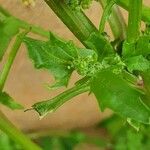
Chenopodium album
سلمک · Lambs quarters · Fat-hen · White Goosefoot · Lamb's-quarters
Description
Source: leafsnapChenopodium album, commonly known as lamb's quarters or pigweed, is an annual plant in the Amaranthaceae family. Originally native to Europe and Asia, it has now spread worldwide and thrives in many regions. The plant can reach up to 1 meter in height and features a branching stem with green leaves that are triangular or diamond-shaped with toothed edges. The flowers of Chenopodium album are small, greenish-white, and inconspicuous. They bloom from June to September and yield small seeds that are edible for both humans and birds. These seeds have a nutty flavor similar to quinoa. Lamb's quarters are often regarded as a weed by many gardeners due to their rapid growth in disturbed soils, such as those found in gardens or fields. However, this plant has been used for centuries in various cultures for its medicinal properties, such as treating digestive disorders like diarrhea. Moreover, the leaves of Chenopodium album are rich in vitamins A and C, as well as minerals like calcium, making them an excellent source of nutrition. They can be consumed raw or cooked, similar to spinach. Overall, Chenopodium album is a versatile plant that offers both medicinal benefits and nutritional value, making it an important component of traditional medicine practices around the world today.
💡 Archaeological evidence shows that lambsquarters (Chenopodium album) were part of human diets during the Iron Age. Even today, the plant is widely cultivated in northern India, where it is known as bathua, and used as a food crop.
🌳 Often written off as a mere weed, the plant called lamb's quarters actually enriches cuisines worldwide. In India, Nepal, and Pakistan, its seeds frequently take the place of grains in savory dishes. Its leaves, similar to spinach, are used as a nutritious leafy vegetable. However, caution is warranted, since it can provoke allergic reactions in some people. Its historical, widespread use as a food undermines its modest reputation.
🎭 Resilience, perseverance, plenty, recovery
Care Guide
💧 Water Every 7 days
Lambsquarters thrives in a variety of habitats due to its adaptability to different water conditions. While it is drought-tolerant, it grows best with consistent moisture, ideally needing weekly watering to maintain optimal health. When grown outdoors, lambsquarters is resilient across various soil types, and proper hydration encourages stronger foliage and stem growth during the growing season.
When should I water my Lambsquarters?
Determining when to water Lambsquarters involves observing several key indicators. The moisture level of the soil is crucial; insert your finger about 1-2 inches into the soil, and if it feels dry, it's time to water. Wilted, droopy, or curling leaves signal that the plant urgently needs water, while pale or yellow leaves suggest a lack of hydration. Slow growth or smaller new leaves are indications of insufficient water, as is the wilting or dropping of flower buds. The plant's water needs also increase in higher temperatures and lower humidity, so adjust your watering schedule accordingly. Avoid watering too early when the soil is still moist to prevent waterlogging and root rot, and don't wait too long as this can lead to irreversible damage from dehydration. Proper water management encourages the plant's growth, flowering, and overall health.
How should I water my Lambsquarters?
Lambsquarters prefers moderately moist soil despite its drought tolerance. Utilize a watering can with a narrow spout to control the amount of water and focus on watering the base of the plant to avoid flooding. A moisture meter can aid in determining the optimal watering time. It's important to prevent water from getting on the leaves to avoid diseases or pests. The soil should be kept evenly moist but not waterlogged, and excess water should be drained off. To prevent root rot and encourage healthy root development, let the soil surface dry out between watering. Watering in the morning promotes efficient water use by the plant.
How much water does Lambsquarters really need?
Lambsquarters can adapt to various water conditions but thrives in consistently moist soil without being waterlogged. Watering needs depend on factors like root depth and pot size, but generally, 1-2 inches of water per week is recommended when the top 1-2 inches of soil are dry. Proper hydration is indicated by green, healthy leaves and upright, firm stems. Underwatering results in wilted or yellowish leaves and stunted growth. Overwatering can lead to root rot, indicated by yellowing leaves at the bottom of the plant, soft roots, and a wilted appearance despite wet soil. Adjust watering based on these indicators to maintain optimal plant health.
What kind of water is best for Lambsquarters?
Lambsquarters grows well with both rainwater and tap water, thanks to its adaptability to various conditions. Rainwater is ideal due to its lack of chemicals present in tap water. Although Lambsquarters isn't very sensitive to water quality, using fresh, clean water is best for its health. It can tolerate chlorine in tap water, but for best results, let chlorinated water stand for a few hours before use to allow the chlorine to evaporate. Avoid using extremely hard water with high mineral content as it might lead to nutrient imbalance. Using water at room temperature can prevent shock to the plant's system.
How do Lambsquarters's watering needs change with the seasons?
In spring, during the seed stage, Lambsquarters needs ample moisture for healthy growth, so keep the soil evenly moist but avoid waterlogging. Watering needs escalate in summer due to active growth, and soil moisture should be closely monitored to prevent it from drying out too much. In autumn, as growth slows, reduce watering frequency due to reduced evaporation rates and lower plant growth activity. During winter, with the plant in dormancy, minimize watering, but ensure the soil doesn't completely dry out to keep the plant healthy. Seasonal adjustments in watering are crucial for the plant's health throughout the year.
☀️ Light Full sun
Lamb's quarters grows best in places that get strong sunlight and can tolerate areas with scattered sun. It comes from habitats exposed to intense solar glare, which promotes its vigorous growth. Too little or too much solar radiation can hinder its healthy development.
What are the sunlight requirements for Lambsquarters?
Lambsquarters requires full sun, meaning it thrives best with above 6 hours of sunlight daily. However, it can also grow in partial sun, which amounts to about 3-6 hours of sun exposure. Observing how sunlight moves through your garden helps in choosing the right spots that offer a good balance of light and shade, ensuring your plants' well-being.
How essential is sunlight for the growth of Lambsquarters?
Sunlight plays a crucial role in the growth and development of Lambsquarters. This plant prospers in areas that receive intense exposure to sunlight, and it is well-adapted to environments with strong solar glare, which aids in its vigorous growth. Both an infra-optimal amount of sunlight and excessive exposure can hinder its healthy development. Additionally, when natural sunlight is insufficient, especially for indoor plants during winter or in less sunny spaces, artificial lighting becomes essential. Artificial lights should be specifically chosen and managed to provide optimal growth conditions, including the right type of light, proper distance, and duration of exposure.
What are the symptoms of inadequate sunlight in Lambsquarters?
When Lambsquarters is grown indoors or in conditions of inadequate sunlight, it may exhibit symptoms such as small new leaves, leggy or sparse growth, faster leaf drop, slower or no new growth, lighter-colored new leaves, chlorosis, sunscald, leaf curling, wilting, and leaf scorching. These symptoms indicate that the plant is not receiving enough light for healthy growth or is being exposed to excessive direct sunlight.
How can I address the symptoms of inadequate sunlight for Lambsquarters?
To enhance the growth of Lambsquarters facing inadequate sunlight, gradually increase its exposure to sunlight or utilize artificial lighting. For indoor plants large or not easily movable, consider using artificial light for at least 8 hours daily. For outdoor plants, move them gradually to sunnier locations each week, avoiding sudden changes that could cause sunburn. If obstructions like trees block sunlight, you may need to prune them or transplant smaller plants to locations with more sunlight and good drainage. Although parts of the plant already affected may not recover, new growth should be healthy once the light conditions improve.
🌡️ Temperature 5–37.8°C
Lamb's quarters is native to climates with temperatures between 68 to 100 °F (20 to 38 ℃). It prefers those temperatures, so adjust accordingly during seasonal fluctuations.
What are the ideal growing temperatures for Lambsquarters?
Lambsquarters thrives in climates with temperatures ranging from 68 to 100°F (20 to 38°C). These specific temperature ranges are preferred by the plant, so it's essential to adjust care accordingly during seasons with fluctuating temperatures. Despite its strong cold resistance, which usually negates the need for special frost protection measures during winter, care should be taken if temperatures are expected to drop below its growth limit. In such cases, protecting the plant with soil or straw coverings is recommended. Additionally, watering the plant abundantly before the first freeze of autumn to ensure the soil remains moist can help prevent drought and water scarcity during winter and early spring.
How does low temperature affect Lambsquarters and what are the solutions?
Lambsquarters shows a remarkable tolerance to cold and flourishes best when temperatures are maintained above its minimum suitable growth temperature. During winter, it’s important to keep the plant above its tolerable growing temperature minimum. If temperatures fall below its growth limit, there may not be noticeable changes immediately, but there can be a decrease in sprouting, or in some cases, no sprouting at all during spring. If parts of the plant fail to sprout in the spring, it's advisable to remove these unsprouted portions to encourage new growth.
What impact does high temperature have on Lambsquarters, and how can it be managed?
Lambsquarters should be kept below its maximum suitable growth temperature during summer. Exceeding its tolerable growing temperature maximum can cause the leaves to lighten in color, become prone to curling, and susceptible to sunburn, which in severe cases, can result in the entire plant wilting and drying out. To manage this, trim away the sunburned and dried-up parts of the plant. It's also beneficial to move the plant to a location with shade during the midday and afternoon sun or use a shade cloth to provide protection. Ensuring the plant is watered in the morning and evening will help keep the soil moist and reduce heat stress.
💨 Humidity
🪴 Soil 6-7
🌱 Fertilizer
Lamb's quarters respond well to regular, dilute fertilizer applications to encourage healthy leaf development. You should feed Lamb's quarters about once a month during the summer. Nitrogen is important for foliage, and supplying nitrogen-rich sources helps the plants thrive.
🪴 Pot & Repot
✂️ Pruning
This plant is not thought to require much pruning. Removed dead, damaged, or yellowing leaves as required.
🌿 Propagating
🐛 Diseases & pets
☠️ Toxicity
Characteristics
- Plant Type
- Herb
- Life Cycle
- Annual
- Genus
- Chenopodium
- Family
- Amaranthaceae
- Hardiness Zone
- 4-12
- Mature Height
- 0.1 m to 1.52 m
- Mature Spread
- 20 cm
- Leaf Color
- Green, White, Gray, Silver
- Leaf Type
- Deciduous
- Flower Color
- Green
- Flower Size
- 2.54 cm
- Bloom Time
- Late spring, Early summer, Mid summer
- Planting Time
- Spring, Autumn
- Harvest Time
- Mid summer
- Native Area
- Libya, Djibouti, Egypt, Turkey, India, Austria, Pakistan, Morocco, Yemen, Belarus, Uzbekistan, Russia, Iraq, Germany, Oman, Ethiopia, Romania, Belgium, Netherlands, Nepal, Saudi Arabia, Portugal, France, Tunisia, Georgia, Cyprus, Bulgaria, Poland, Bangladesh, Greece, Ukraine, China, Afghanistan, Italy, Kazakhstan, Spain, Switzerland, Japan, Mongolia, Israel, Iran, Albania, Ireland, United Kingdom, Hungary, Kuwait, Algeria, Turkmenistan