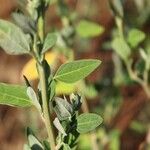
Chenopodium berlandieri
Pigweed · Pit-seed goosefoot · Pitseed goosefoot · Netseed Lambsquarters · Pigseed Goosefoot
Description
Source: leafsnapChenopodium berlandieri, commonly known as pitseed goosefoot or huauzontle, is a plant species in the Amaranthaceae family. Native to North America, it has been a food source for indigenous peoples for thousands of years. This plant can grow up to 1 meter tall and features green, triangular or diamond-shaped leaves with toothed edges. Its flowers are small and greenish-white, while the seeds are tiny and black. For centuries, the seeds of Chenopodium berlandieri have played a significant role in traditional Mexican cuisine. They can be ground into flour or cooked like rice, offering a nutritious source of protein, fiber, vitamins B1 and B2, iron, calcium, and phosphorus. Beyond its culinary uses, Chenopodium berlandieri is also known for its medicinal properties. Traditionally, it has been used as an anti-inflammatory agent for treating arthritis pain. Today, Chenopodium berlandieri is commercially cultivated in Mexico, where it continues to be an important crop due to its nutritional value and cultural significance in traditional Mexican cuisine.
Care Guide
💧 Water Every 7 days
Pitseed goosefoot does well in a variety of moisture conditions. It prefers consistent hydration but can tolerate short periods of drought. It's best to water it twice a week. This plant thrives outdoors, and during dry spells, it benefits from additional watering, especially in areas that do not receive regular rainfall.
☀️ Light Full sun
Pitseed goosefoot comes from bright, open habitats and performs best in full sun. It can tolerate partial sun but favors direct sunlight for optimal growth. This annual or biennial plant is noted for its sun-loving character.
What are the sunlight requirements for Pitseed goosefoot?
Pitseed goosefoot, known botanically as Chenopodium berlandieri, requires specific sunlight conditions to thrive. For full sun exposure, it needs above 6 hours of sunlight daily, while for partial sun, it requires about 3-6 hours of sunlight. When cultivating Pitseed goosefoot, it's important to observe how sunlight moves through your garden throughout the day. Selecting the optimal locations that offer a balance of light and shade is crucial to ensuring the plant's health and happiness. Keep in mind that understanding the sunlight patterns in your garden is key to meeting these requirements.
🌡️ Temperature 5–37.8°C
Pitseed goosefoot can tolerate a wide range of temperatures, yet its distribution may nevertheless be restricted by various combinations of moisture and heat. It performs best in warm summer climates with sufficient rainfall or irrigation. Extended periods of cloudy, rainy weather or prolonged high temperatures can raise the risk of Pitseed goosefoot dying. In winter, adequate protection from cold can increase the plant’s survival rate.
What is Pitseed Goosefoot?
Pitseed Goosefoot, scientifically known as Chenopodium berlandieri, is a plant species belonging to the Chenopodium genus. This entry does not include specific details on its essential characteristics, symptoms of its presence, or any additional information.
💨 Humidity
🪴 Soil 6-7
🌱 Fertilizer
Pitseed goosefoot does well with regular, dilute fertilizer applications to encourage healthy leaf development. Fertilize Pitseed goosefoot about once a month during the summer. Nitrogen is important for foliage, and providing nitrogen-rich sources helps Pitseed goosefoot thrive.
🪴 Pot & Repot
✂️ Pruning
Pitseed goosefoot features broad, triangular leaves and thrives in well-drained soil. For optimal growth and improved air circulation, prune the plant from early to late spring by removing any dead stems. This practice helps reduce the risk of fungal diseases. Be sure to use clean, sharp tools for more effective pruning and quicker recovery.
🌿 Propagating
🐛 Diseases & pets
☠️ Toxicity
Characteristics
- Plant Type
- Herb
- Life Cycle
- Annual
- Genus
- Chenopodium
- Family
- Amaranthaceae
- Hardiness Zone
- 4-12
- Mature Height
- 0.1 m to 1.07 m
- Mature Spread
- 30 cm to 91 cm
- Leaf Color
- Green, Dark Green
- Leaf Type
- Deciduous
- Flower Size
- 0.10 cm to 0.20 cm
- Bloom Time
- Summer
- Planting Time
- Spring, Summer, Autumn
- Harvest Time
- Late summer, Early fall, Mid fall
- Native Area
- Honduras, Mexico, Georgia