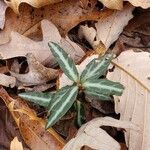
Chimaphila maculata
Spotted Wintergreen · Spotted pipsissewa · Striped prince's-pine · Mottled Pipsissewa · Striped Prince's-plume
Description
Source: leafsnapChimaphila maculata, commonly known as spotted wintergreen or striped prince's pine, is a perennial herbaceous plant in the Ericaceae family. Native to North America, it thrives in diverse habitats, including forests, meadows, and wetlands. The plant typically grows up to 30 cm tall and features a creeping rhizome that produces multiple stems. Its evergreen leaves are glossy green with white stripes or spots on the upper surface. The flowers, which bloom from June to August, are white or pinkish and consist of five petals. Chimaphila maculata has been used in traditional medicine for its diuretic properties and as a treatment for rheumatism. It contains several compounds, including arbutin, which has antibacterial properties. Additionally, the plant serves as an important food source for wildlife. Deer, for example, feed on its leaves during the winter months when other food sources are scarce. Overall, Chimaphila maculata is a fascinating plant with medicinal properties that also plays a crucial role in the ecosystem by providing nourishment for wildlife.
🌳 Although it has limited general popularity, spotted wintergreen shows promise for areas like horticulture because of its evergreen foliage and contrasting leaf pattern. Its capacity to grow in low-nutrient conditions could inform studies on sustainable plantings and conservation landscaping, but at present it remains mainly a botanical curiosity with few uses developed outside traditional medicine.
🎭 Protection and healing: it is used to soothe fears and to calm the nerves.
Care Guide
💧 Water Every 7 days
Spotted wintergreen flourishes in moist forest understories but can also withstand short periods of dryness. To mimic its natural environment, it's best to water it weekly. This evergreen plant keeps its foliage all year long and needs consistent moisture during the growing season to stay healthy. However, be careful not to overwater, as it doesn't tolerate waterlogged conditions well.
How should I water my Spotted wintergreen plant?
To properly care for the Spotted wintergreen, it's best to use filtered water at room temperature. Tap water may have harmful particles, so filtering it is important. This plant is used to warm environments, so avoid using cold water as it can be a shock. It's also recommended to avoid overhead watering, as it can cause problems with the foliage. Instead, apply the filtered room temperature water directly to the soil until it is fully soaked. This helps the roots stay moist and spread throughout the soil to gather nutrients.
What should I do if I give too much or too little water to my Spotted wintergreen plant?
Overwatering is a more common problem for Spotted wintergreen plants and can cause wilting and yellowing of the stems and leaves. Prolonged overwatering can also lead to root rot, mold, and mildew, which can be fatal. While underwatering is less common, it can still occur and result in brittle and brown leaves. To prevent overwatering, it is important to be vigilant for early signs and reduce watering immediately. Assessing the soil's drainage and replacing it with a well-draining mix can also help. If underwatering is detected, simply increase the watering frequency until the plant recovers.
How frequently should I water my Spotted wintergreen plant?
If your Spotted wintergreen plant is in a pot, the best way to determine if it needs watering is by checking the soil. Stick your finger into the soil and if the top two to three inches feel dry, it's time to water it. For Spotted wintergreen plants grown outdoors in the ground, you can use a similar method to test the soil. Once the first few inches of soil have dried out, it's time to water them. Typically, during the spring and early fall, you'll need to water these plants about once per week. However, during extremely hot weather, you may need to increase watering to twice or more per week. That being said, mature and well-established Spotted wintergreen plants have a good ability to withstand drought.
How much water does my Spotted wintergreen plant need?
To ensure your Spotted wintergreen gets enough water, don't hesitate to water it generously. Wait until the top layer of soil is about two to three inches dry before giving it a deep watering. Make sure to soak the soil completely, allowing excess water to flow out of the drainage holes at the bottom of the pot. If there is no excess water draining, it means you haven't given enough water. However, be cautious not to let the water accumulate inside the soil, as it can harm the plant. On the other hand, if you notice that water is not draining properly, it could indicate that the soil doesn't have good drainage, which can negatively affect the plant's health. If the plant is outdoors, one inch of rainfall per week should be sufficient.
How do I water my Spotted wintergreen as it grows?
The water needs of the Spotted wintergreen can vary at different growth stages. In the first few years of its life or after transplanting, it requires more water. During these stages, it focuses on developing new roots for future growth, which need extra moisture. As it matures, it will require less water. Additionally, during the blooming period, it may need more water to support flower development.
☀️ Light Partial sun
The spotted wintergreen does well in moderate light and also tolerates lower-light settings. It can acclimate to places where sunlight is intermittent, reflecting its origin on the forest floor. While abundant light isn't essential, it does promote healthier growth. Conversely, too much or too little light can interfere with development, resulting in stunted growth or discoloration.
What are the sunlight requirements for Spotted Wintergreen?
Spotted Wintergreen, or Chimaphila maculata, thrives in conditions that range from partial sun, which is about 3-6 hours of sunlight, to full shade, with less than 3 hours of sunlight. It is important to observe the movement of sunlight through your garden to select the ideal locations that ensure the perfect balance of light and shade for your plants. Managing the light conditions carefully ensures the plants' health and happiness.
What essentials should I know about Spotted Wintergreen's light needs?
The Spotted Wintergreen plant performs well under moderate-light conditions but can also adapt to lesser lit environments, reflecting its natural habitat on the forest floor. Although it appreciates sunlight, it does not require constant exposure. The right amount of light contributes to healthier growth, though too much or too little can hinder its development, leading to issues like stunted growth or discoloration. In situations where natural light is insufficient, artificial lighting can be a vital solution. Indoor plants can benefit from LED lights, which can be adjusted to provide the specific wavelengths needed. The light intensity required varies depending on the type of plant, with full sun plants needing 30-50W/sq ft, partial sun plants 20-30W/sq ft, and full shade plants 10-20W/sq ft. The light source should be placed 12-36 inches above the plant for 8-12 hours per day to mimic natural conditions.
What are the symptoms of inadequate lighting in Spotted Wintergreen?
Inadequate lighting can trigger several symptoms in Spotted Wintergreen, including smaller new leaves, leggy or sparse growth, faster leaf drop, slower or no new growth, and lighter-colored new leaves. Excessive sunlight might lead to symptoms like chlorosis, sunscald, leaf curling, wilting, and leaf scorching. These symptoms help identify if the plant is experiencing light-related stress, either from too little or too much light exposure.
What solutions can help manage light conditions for Spotted Wintergreen?
Managing light conditions for Spotted Wintergreen involves multiple strategies. Indoor plants should be gradually moved to sunnier spots until they receive 3-6 hours of direct sunlight daily, or provided with artificial light for at least 8 hours a day if they are too large or difficult to move. Outdoor plants benefit from a gradual adjustment to brighter locations, avoiding sudden changes that could cause sunburn. Reducing obstructions like overhanging branches can also improve sunlight access. When necessary, transplant smaller plants during their dormant period to a location with better sunlight and drainage, ensuring healthier new growth and adaptation to the changing light conditions.
🌡️ Temperature 5–32.2°C
Spotted wintergreen originates in areas with cool, moist conditions. It prefers temperatures from 41℉ (5℃) to 90℉ (32℃). To cope with seasonal temperature shifts, it usually slows growth in extreme heat and enters dormancy during the colder winter months.
What are the essential care tips for Spotted Wintergreen?
Spotted Wintergreen, or Chimaphila maculata, thrives in cool and moist environments, preferring temperatures between 41℉ (5℃) to 90℉ (32℃). It adjusts its growth in response to seasonal temperature variations, slowing down in extreme heat and entering dormancy in cold winter months. Despite its strong cold resistance, if winter temperatures are expected to drop significantly, cold protection is recommended. This protection can involve covering the plant with soil or straw and ensuring the soil is moist before the first freeze of autumn to prevent drought and water scarcity during winter and early spring.
How does Spotted Wintergreen respond to low temperatures?
Spotted Wintergreen is quite cold-tolerant, thriving best when temperatures remain above its minimum suitable growth temperature. It should ideally be kept above its tolerable growing temperature minimum during winter. If temperatures fall below its growth limit temperature, there might not be noticeable changes during the winter, but this can lead to decreased sprouting or no sprouting in the spring. To combat this, any parts of the plant that have failed to sprout by spring should be removed.
What should I do if Spotted Wintergreen experiences high temperatures?
During the summer, it's crucial to keep Spotted Wintergreen below its maximum suitable growth temperature. Exceeding its maximum tolerable growing temperature can cause the leaves to lighten in color, curl, become prone to sunburn, or, in severe cases, the entire plant might wilt and dry out. If this happens, trim away the sunburned and dried parts of the plant, move it to a shaded location away from direct midday and afternoon sun, or use a shade cloth. Additionally, watering the plant in the morning and evening to maintain moist soil can help alleviate stress from high temperatures.
💨 Humidity normal (40-60%)
This plant will thrive in moderate humidity, which is probably the level in your home. However, misting it a few times a week can be very beneficial. Make sure the room has good ventilation.
🪴 Soil 4-6
🌱 Fertilizer
Typically, a single fertilizer application in spring is enough for Spotted wintergreen, though repeated feedings can enhance growth. Feed at intervals of about one to one and a half months. Fertilization improves leaf appearance and performance, helping maintain uniform color and a healthy texture. It also promotes root development and nutrient uptake for the plant's long-term health.
Why should I add fertilizer to my Spotted wintergreen?
The Spotted wintergreen is primarily made up of leaves, and fertilization is crucial for maintaining their appearance and function. Proper fertilization promotes consistent color and a healthy texture in the leaves. Additionally, fertilization supports the growth of new roots and maintains existing ones, ensuring the plant's long-term health and ability to absorb soil nutrients.
When should I fertilize my Spotted wintergreen plant?
If you grow your Spotted wintergreen outdoors, each year it will start sending out new growth in early spring. This is the signal that it's time to start fertilizing for the year. Usually, a single application of fertilizer in the spring is sufficient for the plant to thrive. But if you want to maximize its growth, you can feed it multiple times during the spring and early summer. In this case, you can fertilize your Spotted wintergreen approximately once every month to a month and a half.
When is the best time to not fertilize my Spotted wintergreen?
During late fall and winter, your Spotted wintergreen goes into a dormant phase and stops growing. Therefore, you should avoid fertilizing it during this time. In spring and summer, if you choose to fertilize, gradually decrease the amount of fertilization as summer approaches because the growth rate of your Spotted wintergreen also slows down. It's not advisable to fertilize your Spotted wintergreen during unusually hot weather or when the soil is exceptionally dry. Fertilizing in such conditions can stress your Spotted wintergreen and cause premature death.
What kind of fertilizer does my Spotted wintergreen plant need?
Choosing the best fertilizer for a Spotted wintergreen is fortunately a straightforward task. These plants thrive on a general-purpose garden fertilizer with equal amounts of nitrogen, phosphorus, and potassium, such as a ratio of 10-10-10 or similar. It's important to avoid fertilizers with high nitrogen levels when uncertain. Most of the recommended fertilizers for a Spotted wintergreen are granular and should be slow-release, making them easy to apply to the soil. Additionally, using an organic soil amendment like compost can be beneficial for feeding your Spotted wintergreen.
How should I feed my Spotted wintergreen?
To care for your Spotted wintergreen, wait until early spring when the first leaves start to appear. Once you see this sign, apply a slow-release fertilizer with a balanced formula to the soil around the base of the plant. You can repeat this process later in the season if desired. When reapplying fertilizer, make sure to apply it to the soil at the base of the plant rather than directly on the plant itself. Sometimes, you may need to move some leaves to access the soil above the roots. It's also a good idea to water your Spotted wintergreen before and after fertilizing.
🪴 Pot & Repot 2-3 years
When repotting Spotted wintergreen, select a pot 1–2 inches (2.5–5.1 cm) larger with good drainage. Use a well-draining potting mix. Repot in spring or fall, making sure the root ball sits slightly below the rim of the flower pot. Water thoroughly after repotting and place in a warm spot with indirect sunlight.
✂️ Pruning
Spotted wintergreen, known for its glossy, mottled leaves, thrives in shady, acidic woodlands. To encourage healthy growth, perform light pruning between early and late spring, but avoid heavy pruning, as this plant grows slowly. Always use sanitized tools to prevent disease and maintain its vitality and ornamental value.
🌿 Propagating
🐛 Diseases & pets
☠️ Toxicity
Characteristics
- Plant Type
- Herb
- Life Cycle
- Perennial
- Genus
- Chimaphila
- Family
- Ericaceae
- Hardiness Zone
- 5-8
- Mature Height
- 15 cm to 20 cm
- Mature Spread
- 30 cm to 91 cm
- Leaf Color
- Green, White
- Leaf Type
- Evergreen
- Flower Color
- Pink, White
- Flower Size
- 0.51 cm to 0.76 cm
- Bloom Time
- Early summer, Mid summer
- Planting Time
- Spring
- Harvest Time
- Mid summer
- Native Area
- Honduras, Mexico, Guatemala, El Salvador, Nicaragua, Costa Rica, Panama