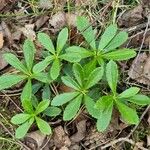
Chimaphila umbellata
Pipsissewa · Prince's Pine · Umbellate Wintergreen · Common Pipsissewa · Common Prince's Pine
Description
Source: leafsnapChimaphila umbellata, commonly known as pipsissewa or prince's pine, is a perennial evergreen plant in the Ericaceae family. Native to North America, it thrives in various environments including coniferous forests, bogs, and rocky slopes. The plant reaches up to 30 cm in height and features shiny dark green leaves arranged in a whorl around the stem. From June to August, it produces small white or pink flowers that bloom in an umbrella-like cluster at the top of the stem. For centuries, Native Americans have harnessed the medicinal properties of Chimaphila umbellata. The leaves contain compounds such as arbutin, which have diuretic properties useful for treating urinary tract infections. Additionally, the plant's anti-inflammatory properties make it effective for treating rheumatism. Beyond its medicinal uses, Chimaphila umbellata is also prized as an ornamental plant due to its attractive foliage and delicate flowers. It prefers moist soil with partial shade but can tolerate full sun if adequately watered. Overall, Chimaphila umbellata is a versatile plant that serves both aesthetic and medicinal purposes, adding beauty to its surroundings while providing valuable health benefits when used properly.
🎭 Optimism, Sympathy
Care Guide
💧 Water Every 7 days
Pipsissewa flourishes in the understories of temperate forests, where it prefers soil that remains consistently moist. Once the plant is established, it can withstand moderate drought but benefits from weekly watering. To ensure optimal growth, it needs humidity levels akin to its natural habitat. With sufficient water to support photosynthesis, Pipsissewa maintains its foliage throughout the year.
How should I water my Pipsissewa plant the proper way?
To properly water the Pipsissewa plant, it is best to use filtered water at room temperature or slightly warmer. Tap water may contain harmful particles that can negatively impact the plant's health. The Pipsissewa plant is accustomed to warm environments, so using cold water could be a shock to its system. It is also recommended to avoid overhead watering as it can cause problems with the foliage. Instead, you should water the plant by applying filtered room temperature water directly to the soil until it is completely soaked. This method benefits the plant by providing moisture to the roots and aiding in the spread and absorption of necessary nutrients.
If I give my Pipsissewa plant too much or too little water, what should I do?
Overwatering is a common issue that can harm your Pipsissewa plant. Too much water can cause wilting, yellowing leaves, and even diseases like root rot and mold, which can be fatal. Underwatering is less common, but still possible. It can make the leaves brittle and brown. It's important to recognize the signs of overwatering early and reduce watering immediately. Checking the soil drainage is also important, and if it's poor, replace it with well-draining potting mix. If you notice signs of underwatering, simply increase your watering frequency until the signs disappear.
How often should I water my Pipsissewa plant?
If your Pipsissewa plant is in a pot, you can check if it needs water by putting your finger in the soil. If the top two to three inches of soil are dry, it's time to water it. If you're growing the plant outdoors, you can use the same method to test the soil. Once the top few inches have dried out, it's time to water. Usually, during spring and early fall, you'll water the plant about once a week. However, in extremely hot weather, you may need to water it two or more times a week. It's worth noting that mature Pipsissewa plants can handle drought well.
How much water does my Pipsissewa plant need?
When watering your Pipsissewa plant, it's important to be generous with the amount of water you give. Make sure the top two to three inches of soil are dry before watering so that the plant can benefit from a thorough soaking. The water you add should be enough to completely saturate the soil, causing any excess water to drain out through the holes at the bottom of the pot. If you don't see water draining out, it means you haven't watered enough. However, be cautious not to let water accumulate in the soil, as this can harm the plant. On the other hand, if there is no water draining through the pot, it could mean that the soil is not draining properly, which is not good for the plant's health. If the plant is outdoors, 1 inch of rainfall per week should be sufficient.
How should I water my Pipsissewa plant as it grows?
The water requirements of the Pipsissewa can vary at different growth stages. In the first few years or after transplanting, it is important to provide more water than normal because the plant is focused on growing new roots. These roots need extra moisture to support future growth. As the Pipsissewa matures, it will require less water. Additionally, during the bloom period, the plant may require more water as flower development requires a significant amount of moisture.
☀️ Light Partial sun
Pipsissewa needs a moderate amount of sunlight to do well; however, it can still grow without any direct sun. Having originated in a mixed forest habitat, it is adapted to cope with limited daylight. Low light does not greatly hinder its growth, while too much light can produce stress in the plant.
What are the sunlight requirements for Pipsissewa (Chimaphila umbellata)?
Pipsissewa thrives in conditions of moderate solar exposure, typically needing about 3-6 hours of sunlight per day. It originated in diverse forest environments where it adapted to grow without extensive daylight exposure. While optimal growth is observed with sufficient natural light, the plant can manage in lesser light without severe consequences; however, excessive light could lead to stress. It is advisable to monitor the movement of sunlight in your garden to ensure that Pipsissewa gets a balance of light and shade, which is crucial for its growth and happiness.
Is artificial lighting beneficial for indoor Pipsissewa plants?
Yes, artificial lighting can be extremely beneficial for Pipsissewa plants grown indoors, especially in conditions where natural sunlight is insufficient. Choosing the right type of artificial light, such as LED lights, is important as they can be tailored to provide specific wavelengths needed by plants. Depending on the plant's sunlight needs, artificial lighting should range from 10-50W/sq ft. The distance between the light source and the plant should be around 12-36 inches to mimic natural sunlight, and the duration should aim to replicate the plant's natural daylight hours, generally between 8-12 hours per day. This aids significantly in promoting healthier and faster plant growth.
What are the symptoms of insufficient or excessive light exposure in Pipsissewa?
Insufficient light exposure in Pipsissewa may lead to smaller leaves, leggy or sparse growth, faster leaf drop, slower or halted growth, and lighter-colored or pale new leaves. Excessive light can cause chlorosis, where leaves turn yellow due to chlorophyll breakdown, sunscald resulting in pale or necrotic areas on the plant, leaf curling as a defense mechanism against excessive sunlight, wilting from loss of water due to transpiration, and leaf scorching characterized by brown, dry edges on leaves. These symptoms indicate the plant's struggle to adapt to its light environment, either seeking more light or being overwhelmed by too much of it.
How can I address light-related issues in my Pipsissewa plant?
To optimize Pipsissewa's growth based on light needs, gradually adapt it to changing light conditions. For indoor plants requiring more light, gradually shift them to sunnier spots or use artificial lighting for at least 8 hours daily. Outdoor plants can also be moved to sunnier locations weekly, taking care not to expose them suddenly to intense light that could cause sunburn. If sunlight is obstructed, prune nearby trees or consider transplanting smaller plants to sunnier spots, especially during their dormant periods for better growth adaptation. Keep in mind that parts of the plant affected by previous light conditions may not recover, but new growth should be healthy following these adjustments.
🌡️ Temperature 5–32.2°C
Pipsissewa naturally occurs in habitats where temperatures range from 41 to 89.6 °F (5 to 32 °C). When cultivating pipsissewa, it is essential to reproduce this temperature range, particularly during growing seasons.
What is the native temperature range for cultivating Pipsissewa?
Pipsissewa thrives in environments where temperatures fluctuate between 41 to 89.6 °F (5 to 32 °C). To successfully cultivate Pipsissewa, it's critical to replicate this temperature range during the growing seasons. Given its strong cold resistance, special frost protection measures are usually not necessary. However, in regions where winter temperatures might dip below -30°C, providing protection by covering the plant with soil or straw is advisable. Additionally, watering the plant abundantly before the first freeze to ensure the soil remains moist can prevent drought and water scarcity during the winter and early spring.
How does Pipsissewa respond to low temperatures?
Pipsissewa exhibits notable cold tolerance, flourishing best when the temperature remains above 5°C. During the winter months, it's recommended to keep the environment above -25°C. Although the plant shows no apparent changes when temperatures fall below -30°C, such conditions can lead to a decrease in sprouting or even a complete lack of sprouting come springtime. To mitigate this, it is suggested to remove any parts of the plant that have failed to sprout in the spring.
What should I do if Pipsissewa is exposed to high temperatures?
During summer, it's important to ensure that Pipsissewa is kept in conditions below 32°C. Exposure to temperatures exceeding 35°C can cause the plant's leaves to lighten in color, become prone to curling, suffer from sunburn, and in severe cases, lead to wilting and drying of the entire plant. To address these issues, trim away the sunburned and dried-up parts of the plant. Relocating the plant to a shaded area, especially from midday and afternoon sun, or using a shade cloth can be beneficial. Additionally, watering the plant in the morning and evening will help keep the soil moist and prevent the plant from drying out.
💨 Humidity
🪴 Soil 4-6
🌱 Fertilizer
The optimal time to fertilize a Pipsissewa is in early spring, as it comes out of dormancy and begins active growth. Fertilizing supplies essential nutrients for healthy development. Although Pipsissewa has relatively low fertilization needs, applying fertilizer once a year can enhance its survival and promote better, longer-lasting flowers.
🪴 Pot & Repot
✂️ Pruning
Pipsissewa is known for its leathery, evergreen leaves and its medicinal properties. To promote healthy growth, prune the plant in early to late spring by removing any dead or damaged stems. Light thinning helps improve air circulation, while minimal pruning maintains a compact shape. This not only enhances the plant's ornamental appeal but also its ecological value.
🌿 Propagating
🐛 Diseases & pets
☠️ Toxicity
Characteristics
- Plant Type
- Herb
- Life Cycle
- Perennial
- Genus
- Chimaphila
- Family
- Ericaceae
- Hardiness Zone
- 4-8
- Mature Height
- 15 cm to 37 cm
- Mature Spread
- 49 cm
- Leaf Color
- Dark Green
- Leaf Type
- Evergreen
- Flower Color
- Pink, White
- Flower Size
- 2.54 cm
- Bloom Time
- Early summer, Mid summer
- Planting Time
- Spring, Summer, Autumn
- Harvest Time
- Late summer, Early fall, Mid fall