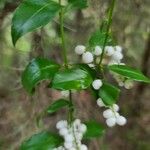
Chiococca alba
Milkberry · West Indian snowberry · David's milkberry · David's-root · Davisroot
Description
Source: leafsnapChiococca alba is a species of flowering plant in the coffee family (Rubiaceae) native to Florida and the extreme southern tip of Texas in the United States, Bermuda, Mexico, Central America, the Caribbean, the Galápagos, and tropical South America. Common names include David's milkberry, West Indian milkberry, cahinca and West Indian snowberry. The specific epithet, alba, means "white" in Latin and refers to the color of its fruits.
Care Guide
💧 Water
The West Indian milkberry flourishes in high humidity and can withstand drought conditions. It should be watered every 2 to 3 weeks, allowing the soil to dry out slightly between waterings. As an evergreen plant, it requires consistent moisture, making it well-suited for outdoor cultivation in areas where rainfall can support its needs.
How should I water my West Indian milkberry plant?
Your West Indian milkberry is not demanding when it comes to watering. You can use any common watering tool, such as watering cans, hoses, or even cups, to moisten the soil. Make sure to water directly onto the soil and evenly moisten all areas to provide adequate hydration to the entire root system. It is preferable to use filtered water, as tap water may contain harmful particles. Additionally, using water at or slightly above room temperature is best, as extreme temperature water can be stressful for the plant. Nevertheless, the West Indian milkberry typically thrives with any type of water.
What should I do if I give too much or too little water to my West Indian milkberry plant?
When it comes to outdoor plants, especially newly planted ones or seedlings, they are susceptible to not getting enough water. It's important to remember to water them adequately for the first few months, especially when the plant is small or recently planted. Once the roots are established, West Indian milkberry plants can usually rely on rainfall for hydration. When West Indian milkberry plants are grown in pots, overwatering becomes more likely. If you accidentally overwater your plant, you need to take immediate action to fix the situation. First, stop watering the plant right away to minimize the effects of overwatering. Then, carefully remove the plant from its pot and inspect the roots. If you find no signs of root rot, you may be able to return the plant to its container. However, if there are indications of root rot, trim away any affected roots and consider applying a fungicide to prevent further damage. Lastly, repot the West Indian milkberry in well-draining soil. On the other hand, if you underwater your West Indian milkberry, the solution is simpler. The leaves of the plant will start to droop, dry out, and eventually fall off. However, after sufficient watering, the leaves will quickly regain their fullness. Therefore, make sure to adjust your watering frequency as soon as you notice signs of underwatering.
How often do I need to give water to my West Indian milkberry?
Most plants growing outdoors can rely on rainfall for their water needs. However, if your area doesn't receive enough rainfall, you should water your plants adequately every 2 weeks in the spring and fall, and more frequently in the summer. In the winter, when plants grow slower and require less water, you should water them sparingly or not at all. However, if your West Indian milkberry plant is young or newly planted, it will require more frequent watering to help it establish and mature. For potted West Indian milkberry plants, there are two main approaches to determine watering frequency. The first method is to follow a predetermined watering schedule, such as watering once every week or every other week. Keep in mind that this approach may not always be suitable for the unique conditions of your plant's environment. The other approach is to monitor the soil moisture and water accordingly. Ideally, you should wait until the top two to four inches of soil (about ⅓ to ½ depth of the pots) have completely dried out before watering again.
How much water does my West Indian milkberry plant need?
When watering your West Indian milkberry, you might be surprised to learn that it doesn't always require a large amount of water. Instead, if only a few inches of soil have dried since the last watering, giving it about five to ten ounces of water each time will promote healthy growth. You can also adjust the amount of water based on the moisture content of the soil. To determine this, take note of how many inches of soil have dried out between waterings. To ensure your West Indian milkberry gets enough moisture, it's best to water until all the soil layers that dried out since the last watering are moistened. If more than half of the soil has dried out, it's a good idea to provide extra water. In such cases, continue watering until you see excess water draining from the pot's drainage holes. If your West Indian milkberry is planted in an area that receives ample rainfall, it may not require additional watering. When the plant is young or still establishing itself, aim for 1-2 inches of rain per week. As it grows and matures, it can rely solely on rainwater. Only in extremely hot weather with no rainfall for 2-3 weeks should you consider giving the West Indian milkberry a thorough watering to prevent stress.
How can I know if I'm giving enough water to my West Indian milkberry?
The West Indian milkberry is more commonly affected by overwatering. There are clear signs to look out for in such cases. Typically, an overwatered plant will have yellowing leaves and may even shed some leaves. Overwatering can also cause the overall structure of the plant to shrink and may lead to root rot. Conversely, an underwatered West Indian milkberry will also show signs of distress - it may start to wilt and its leaves may become brown or brittle. Regardless of whether you notice signs of overwatering or underwatering, it's important to take action and restore the plant's health.
☀️ Light Full sun
The west indian milkberry grows best with plenty of light, similar to the bright conditions of its native habitat. Nevertheless, it has an unusual ability to tolerate lower light levels when necessary. In doing so, its growth may slow, and the possibility of harm from insufficient light should be considered.
What are the sunlight requirements for West Indian Milkberry?
West Indian Milkberry requires more than 6 hours of sunlight daily to thrive best, symbolizing the need for full sun. Bridging the gap between adequate light and shade in your garden ensures the right environment for your plants. The adaptability of the West Indian Milkberry to less intense light conditions does not diminish its necessity for ample light, mimicking its natural habitat. Insufficient light might slow down its growth and could potentially harm the plant.
How can artificial lighting benefit indoor plants like West Indian Milkberry?
Artificial lighting plays a crucial role, especially when natural sunlight is insufficient, for indoor plants including the West Indian Milkberry. It fosters faster and healthier growth by offering a significant alternative. LED lights are ideal because they provide specific light wavelengths needed by plants. Depending on the plant's sunlight needs, artificial light requirements vary; full sun plants need 30-50W/sq ft, partial sun plants 20-30W/sq ft, and full shade plants 10-20W/sq ft of artificial light. The optimal setup includes placing the light source 12-36 inches above the plants and ensuring they receive 8-12 hours of light daily to mimic natural daylight hours.
What are the symptoms of light deficiency in West Indian Milkberry?
Light deficiency in West Indian Milkberry can manifest through various symptoms. New leaves may appear smaller, and the plant might exhibit leggy or sparse growth due to elongated stems or spaces between leaves. An early leaf drop signifies the plant's conservation of resources, which also leads to slower or completely halted new growth. Leaves might develop lighter coloration or patterns indicating insufficient chlorophyll. Conditions such as chlorosis, where leaves turn yellow, sunscald characterized by pale or necrotic spots, leaf curling, wilting, and leaf scorching denote extreme sunlight conditions or improper exposure.
How can light exposure be optimized for West Indian Milkberry indoors and outdoors?
To optimize light exposure for West Indian Milkberry, gradual adaptation is key. Indoors, gradually relocating plants to sunnier spots till they receive at least 6 hours of direct sunlight, utilizing south-facing windows, or supplementing with artificial light for at least 8 hours daily can significantly benefit the plants. Outdoors, similarly, acclimatizing plants to sunnier locations incrementally helps prevent sunburn. For garden or ground plants, reducing obstacles like pruning branches or transplanting can ensure optimal sunlight exposure. Remember, while adjusting light conditions can promulgate new, healthy growth, parts already damage from light deficiency may not recover.
🌡️ Temperature 20–37.8°C
West indian milkberry is native to habitats where temperatures typically range from 68 to 100 °F (20 to 38 ℃). It favors warmer climates and grows best toward the upper end of that temperature spectrum. Adjust or monitor surrounding temperatures, especially during cooler seasons.
What is the native environment and preferred climate for West Indian Milkberry?
West Indian Milkberry, with its botanical name Chiococca alba, is native to environments where temperatures typically range from 68 to 100 °F (20 to 38 °C). It thrives in warmer climates, especially at the higher end of this temperature range. This plant is extremely heat-loving, making it sensitive to cold temperatures. During cooler seasons, it's crucial to adjust or monitor surrounding temperatures to ensure the plant's well-being. In regions experiencing autumn and winter seasons, it's recommended to bring the plant indoors and place it near a bright window, albeit not too close to heaters, to maintain an ideal temperature above 20°C. Temperatures reaching as low as 5°C can severely harm the plant.
What are the symptoms of low temperature exposure in West Indian Milkberry, and how can they be mitigated?
West Indian Milkberry is not tolerant of low temperatures and exhibits optimal growth when the temperature remains above 20°C. During winter, it's essential to keep the plant above 5°C. Exposure to temperatures below 1°C can cause the leaves to lose their color, which may turn brown or black after frost damage, alongside signs of wilting and drooping. To combat low temperature exposure, trim off the frost-damaged parts and move the plant immediately indoors to a warmer environment for cold protection. Placing the plant near a south-facing window will ensure it receives ample sunlight. Moreover, it's important to avoid placing the plant near heaters or air conditioning vents to prevent the surrounding air from becoming excessively dry.
How should West Indian Milkberry be cared for in high temperatures?
In the summer, it's critical to ensure that the temperature around West Indian Milkberry does not exceed 100°F (38°C). Exposing the plant to temperatures above 109°F (43°C) can cause the leaves to become lighter and increase the risk of sunburn. To address high temperature exposure, trim away the sunburned and dried parts of the plant and move it to a shade, particularly avoiding the midday and afternoon sun. Additionally, watering the plant in the morning and evening will help keep the soil adequately moist, thereby aiding in its care during high temperature periods.
💨 Humidity
🪴 Soil 6-7
🌱 Fertilizer
The best time to fertilize a West indian milkberry is in early spring, when it comes out of dormancy. This encourages overall growth and flower development. Fertilizing improves the foliage, stems, and branches, and promotes flowers that are large, vibrant, and long-lasting. It helps move nutrients from the roots to the flowers and enhances the plant's health and resistance to disease.
🪴 Pot & Repot
✂️ Pruning
The West Indian milkberry is an evergreen shrub known for its glossy leaves and fragrant white flowers. To maintain its health and shape, prune the shrub between early and late winter. This helps to remove dead branches and promotes better growth and air circulation. Be sure to use clean, sharp tools to make precise cuts, which will prevent damage to the plant and avoid legginess.
🌿 Propagating
🐛 Diseases & pets
☠️ Toxicity
Characteristics
- Plant Type
- Tree
- Life Cycle
- Perennial
- Genus
- Chiococca
- Family
- Rubiaceae
- Hardiness Zone
- 10-12
- Mature Height
- 7.62 m
- Mature Spread
- 0.91 m to 2.13 m
- Leaf Color
- Green
- Leaf Type
- Evergreen
- Flower Color
- White
- Flower Size
- 2.54 cm
- Bloom Time
- Summer, Early fall, Mid fall
- Planting Time
- Spring, Summer, Autumn
- Harvest Time
- Late summer, Fall, Early winter
- Native Area
- Belize, Honduras, Mexico, Guatemala, Peru, Panama, Jamaica, Colombia, Bahamas, Cuba, Bolivia, Venezuela, Guyana, El Salvador, Nicaragua, Ecuador, Costa Rica