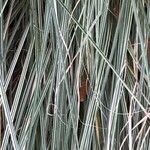
Chloris gayana
Abyssinian Rhodes grass · Rhodes grass · Gayana Windmill Grass · Rhodes windmill-grass
Description
Source: leafsnapChloris gayana is a species of grass known by the common name Rhodes grass. It is native to Africa but it can be found throughout the tropical and subtropical world as a naturalized species. It can grow in many types of habitat. It is also cultivated in some areas as a palatable graze for animals and a groundcover to reduce erosion and quickly revegetate denuded soil. It is tolerant of moderately saline and alkaline soils and irrigation.: 2
Care Guide
💧 Water
Rhodes grass thrives in savanna environments, adapting well to cycles of periodic rainfall and brief dry spells. It does best with consistent watering, ideally on a weekly basis, while avoiding oversaturation. As an outdoor grass, it depends on seasonal rain patterns to achieve lush growth and maintain its resilience.
What do I need to do if I give my Rhodes grass too much or too little water?
Proper watering is crucial for the health of this beautiful ornamental grass. If it is planted in the ground, watering issues can be resolved. However, in a container, it is important to avoid both overwatering and underwatering, as they can quickly lead to the death of Rhodes grass. Insufficient water can cause stunted growth, drooping leaves, weak seed production, and browning. On the other hand, overwatering can result in yellow leaves with brown tips. If you suspect that your Rhodes grass has been improperly watered, the first step is to determine whether it is receiving too much or too little water. If it is being overwatered, stop watering it immediately. Keep in mind that heavy soils may take weeks to dry out, so be patient. Once you notice new growth, check the soil for moisture and decide if more water is needed. In the case of underwatering, simply provide a thorough watering and observe if the grass becomes more vibrant. Remember, it is always better to water deeply and infrequently rather than giving frequent shallow waterings. Deep watering promotes the growth of deep roots, making the grass more resistant to drought and less susceptible to water-related issues.
How regularly should I water my Rhodes grass?
Rhodes grass has varying watering needs depending on its location. Generally, it should be watered weekly, but in hot climates, it may need watering once or twice a week during the summer. In moderate climates, watering once every seven days or more may be sufficient. Grass in containers usually requires more frequent watering than grass planted in the ground. The amount of shade also affects watering frequency, with shaded grass needing less water than grass in the ground. Water Rhodes grass only when the soil is dry. To determine if the soil is dry, you can press your finger into the soil or check the weight of potted grass. Lack of water may cause folded and thinner blades. Despite its drought tolerance, regular, deep waterings will result in beautiful color. Although Rhodes grass is drought-resistant, it still requires care and attention, including consistent watering. Newly planted Rhodes grass and grass in pots need more frequent watering until deep roots are established. The soil in pots dries out quicker, especially if exposed to hot, direct sun. Test the soil every 3 to 4 days and water only when it feels dry. Rhodes grass in the ground generally needs less watering, but it depends on the soil type. Clay soil retains moisture below the surface and might feel dry at the top, while sandy soil drains quickly and may require more frequent watering.
What do I need to watch out for when I water my Rhodes grass in different seasons, climates, or during different stages of growth?
To determine if you are watering enough, observe the rate of growth of your grass. Rhodes grass tends to double in size within a year, especially during the hottest months. If the weather is hot but the grass is not growing vigorously, you may need to adjust your watering schedule. In winter, you might only need to water once a month, but still check the soil for moisture. During the warmest months, the grass requires more water, while in winter and cooler months, the water needs are significantly lower. Remember to let the soil dry out completely before watering Rhodes grass.
☀️ Light Full sun
Originating in open habitats, Rhodes grass is a sun-loving perennial herbaceous plant that commonly thrives in meadows and grasslands. It prefers full sun but can also tolerate partial sun.
What are the sunlight requirements for Rhodes grass?
Rhodes grass, or Chloris gayana, is a perennial herbaceous plant that prefers full sun conditions, which means it thrives in areas receiving more than 6 hours of sunlight daily. It can also tolerate partial sun conditions, where it would receive about 3-6 hours of sunlight. The plant originates from open habitats such as meadows and grasslands, which naturally receive ample sunlight. It's important to watch how sunlight moves through your garden to choose spots that offer the right balance of light and shade, ensuring the optimal growth and health of your Rhodes grass.
What are the effects of insufficient sunlight on Rhodes grass, and how can they be addressed?
Rhodes grass exhibits several symptoms when exposed to inadequate lighting, including smaller new leaves, leggy or sparse growth, faster leaf drop, slower or no new growth, and discoloration, such as lighter-colored or yellowing leaves due to chlorosis. Overexposure can also lead to sunscald, leaf curling, wilting, and leaf scorching. To address insufficient sunlight indoors, gradually move plants to a sunnier location until they get at least 6 hours of direct sunlight, use south-facing windows, and consider artificial lighting if necessary. For outdoor plants, move them to sunnier spots gradually to avoid sunburn. Removing obstructions and transplanting can also improve sunlight exposure. Note that parts of the plant already affected may not recover, but new growth should be healthy.
How can artificial lighting be used to support the growth of Rhodes grass indoors?
Indoor Rhodes grass plants can benefit significantly from artificial lighting, especially in scenarios where natural sunlight is insufficient. Ideal artificial lighting includes choosing the right type of light, such as LED lights, which can be customized to provide specific wavelengths needed by the plants. For full sun plants, a range of 30-50W/sq ft is recommended, while partial sun plants need about 20-30W/sq ft, and full shade plants require 10-20W/sq ft of light. The light source should be placed 12-36 inches above the plant to mimic the natural sunlight, and the duration should mimic natural daylight hours, typically 8-12 hours per day. This tailored approach to artificial lighting promotes faster and healthier growth of Rhodes grass indoors.
🌡️ Temperature 20–35°C
Rhodes grass comes from tropical areas where the climate is generally warm and humid. As a result, it is well suited to high temperatures and humidity. It does not tolerate sudden temperature shifts and prefers a steady thermal environment, so it is important to avoid temperature fluctuations indoors. It usually cannot withstand cold conditions and requires relatively high temperatures to grow. If the surrounding temperature falls too low, the plant may stop growing or even die.
What is Rhodes grass?
Rhodes grass, known scientifically as Chloris gayana, is a species of grass.
💨 Humidity
🪴 Soil 6-7
🌱 Fertilizer
Rhodes grass needs extra nutrients to encourage healthy new growth. In spring, spreading compost around the plant's base can effectively supply the nutrition it requires. Fertilizing helps support vigorous growth and helps the plant resist diseases and pests.
🪴 Pot & Repot
✂️ Pruning
To ensure Rhodes grass thrives, it's important to prune it regularly. This involves removing dead leaves and thinning the grass to prevent overcrowding. The best time for pruning is early spring, as this encourages new growth and helps control its spread. Proper pruning is essential for maintaining the health and aesthetic appeal of Rhodes grass.
🌿 Propagating
🐛 Diseases & pets
☠️ Toxicity
Characteristics
- Plant Type
- Grass
- Life Cycle
- Perennial
- Genus
- Chloris
- Family
- Poaceae
- Hardiness Zone
- 9
- Mature Height
- 1.52 m to 3.05 m
- Mature Spread
- 30 cm to 61 cm
- Leaf Color
- Light Green, Pale Green
- Leaf Type
- Evergreen
- Flower Color
- Green, Gray
- Flower Size
- 15.24 cm
- Bloom Time
- Summer, Early fall, Mid fall
- Planting Time
- Spring, Summer
- Harvest Time
- Late summer, Fall, Early winter
- Native Area
- Burkina Faso, Djibouti, Somalia, Lesotho, Egypt, Angola, Namibia, Rwanda, Eritrea, Nigeria, Kenya, Niger, Uganda, Tanzania, Zimbabwe, Mali, Guinea-Bissau, Benin, Iraq, Cameroon, Burundi, Mozambique, Oman, Ghana, Ethiopia, Qatar, Botswana, Portugal, Central African Republic, Saudi Arabia, Malawi, South Africa, Zambia, Sudan, Guinea, Chad, Senegal, Eswatini, Côte d'Ivoire, Gambia