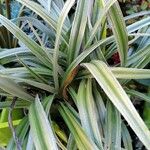
Chlorophytum comosum
کاپنس گندمی خانواده: لیلیاسه ها (سوسنی ها) · عنكبوتة · برگ گندمی، عنکبوتی · گل گندمی · گندمی
Description
Source: leafsnapChlorophytum comosum, commonly known as the spider plant, is a popular indoor plant native to South Africa. Belonging to the Asparagaceae family, it is recognized for its long, slender leaves that grow in a rosette pattern and are typically green with white or yellow stripes along the edges. Spider plants are easy to care for and can thrive in a variety of conditions. They prefer bright, indirect light but can also tolerate low light. Regular watering is essential, but it’s important not to overwater, as this can lead to root rot. A unique feature of spider plants is their ability to produce small white flowers on long stems that eventually develop into small plantlets, or "spiderettes." These spiderettes can be easily propagated by placing them in water until they develop roots, and then planting them in soil. Spider plants are not only aesthetically pleasing but also have air-purifying qualities. They remove harmful toxins from indoor air, such as formaldehyde and benzene. Overall, Chlorophytum comosum makes an excellent addition to any indoor space due to its low maintenance requirements and numerous benefits for both physical health and mental well-being.
💡 The spider plant is one of the most well-known and popular houseplants. Its name comes from the small plantlets that grow on long, trailing stems, which somewhat resemble spiders.
🌳 The spider plant is recognized as one of the leading air-purifying plants, efficiently removing common household toxins. Additionally, because it grows quickly and is non-toxic, the spider plant is used in educational settings to teach children about plant biology and the responsibility of caring for a living organism, demonstrating its value beyond horticultural contexts.
🎭 Care, relationships with others
Care Guide
💧 Water Every 7 days
The spider plant is well-suited to tropical understories, thriving in environments with high humidity and consistently moist soil. To keep it healthy, water it once a week and mist it occasionally to promote growth. Avoid waterlogging and prolonged periods of dryness to maintain its resilience and lush foliage.
When should I water my Spider Plant?
Watering your Spider Plant appropriately is key to its health, promoting vibrant growth and disease resistance. To know when to water, check if the top 1 to 2 inches of soil are dry. Wilting or droopy leaves, yellowing from the bottom, or brown, crispy leaf tips suggest it needs water. Conversely, overwatering can cause root rot, indicated by excessively damp soil or brown, dull roots. It’s particularly vital to water during the flower blooming stage and adjust for temperature and humidity. Avoid watering on a strict schedule; instead, look for these signs and water accordingly to prevent both over and under-watering issues.
How should I water my Spider Plant?
Water your Spider Plant ensuring you avoid overwatering and poor drainage, as it dislikes 'wet feet.' Employ top watering or bottom watering methods, avoiding direct water on the leaves. A moisture meter can help prevent overwatering, and a narrow-spout watering can direct water to the root areas efficiently. Spider Plants benefit from high humidity, so occasional misting or using a pebble tray can improve their hydration and overall health.
How much water does a Spider Plant really need?
A Spider Plant prefers consistently moist soil without being waterlogged, managing an ideal balance influenced by pot size, root depth, and plant size. Water until the soil is evenly moist when the top inch of soil feels dry. The right hydration is shown by upright, healthy leaves and bright green foliage. Overwatering leads to drooping or yellowing leaves and possibly root rot, while under-watering can result in wilted leaves and stunted growth. Hence, moderate, appropriate watering is crucial, avoiding both extremes.
What kind of water is best for Spider Plant?
Spider Plants are moderately sensitive to water quality. Distilled water, being free from impurities, is ideal. Rainwater is also suitable, while tap water should be used cautiously due to potential chlorine content. To mitigate chlorine effects, let tap water sit out for 24 hours before use or use a water filter. Spider Plants prefer their water at room temperature, around 68-72°F (20-22°C), to avoid shocking the plant.
How do Spider Plant's watering needs change with the seasons?
With seasons, the watering needs of Spider Plants vary. Spring invites increased watering as temperatures rise and growth resumes. Summer doesn’t necessarily require more water than spring, but allow the soil to dry slightly between waterings. In autumn, reduce watering frequency as growth slows. Winter sees the plant in dormancy, needing much less water. Adjust watering practices to ensure the soil moderately dries between watering, avoiding extremes to match seasonal growth patterns.
☀️ Light Partial sun
The spider plant does best in locations with moderate light. Excessive sun can harm it, while too little light may impede its growth. The plant is hardy and can adjust to lower light levels, reflecting its origin in forest undergrowth. Its light requirements remain the same throughout its different growth stages.
What are the sunlight requirements for a spider plant?
The spider plant, or Chlorophytum comosum, thrives in areas with moderate sunlight exposure. It requires about 3-6 hours of sunlight daily, fitting into the 'partial sun' category. While it can tolerate 'full shade' conditions, which are characterized by less than 3 hours of sunlight per day, too much sunlight might damage the plant, and too little could stunt its growth. It's essential to watch how sunlight moves through your garden or home and choose spots that provide a balance of light and shade, ensuring the plant's happiness. This balance mimics the spider plant's native environment, the forest undergrowth, where it is accustomed to lesser light conditions. Throughout different growth stages, this light requirement remains the same, ensuring consistent care.
How can artificial lighting be used for spider plants?
When natural sunlight is insufficient, particularly in winter or less sunny spaces, spider plants can benefit significantly from artificial lighting. Indoor plants require adequate lighting for optimal growth. LED lights are popular for indoor plant lighting due to their ability to be customized to provide specific wavelengths that plants need. The intensity required varies: full sun plants need 30-50W/sq ft, partial sun plants 20-30W/sq ft, and full shade plants 10-20W/sq ft. The artificial light source should be placed 12-36 inches above the plant to mimic natural sunlight and operated for 8-12 hours per day to replicate natural daylight hours, promoting faster and healthier plant growth.
What are some common symptoms of improper sunlight exposure in spider plants?
Spider plants can exhibit several symptoms if they're not getting the right amount of sunlight. Insufficient light can lead to leggy or sparse growth, characterized by longer spaces between leaves or stems, giving the plant a thin, stretched appearance. New leaves might also appear lighter in color or have irregular patterns, indicating a lack of chlorophyll and essential nutrients. Too much sunlight, on the other hand, can result in chlorosis, where leaves lose their green color and turn yellow, sunscald with pale or necrotic areas on leaves, leaf curling as a defense mechanism to reduce water loss, wilting due to increased transpiration, and leaf scorching, evident by brown, dry edges on leaves. These signs show how crucial it is to maintain the perfect balance of sunlight for a spider plant's health.
How can you address sunlight-related issues in spider plants?
To address sunlight-related issues in spider plants, gradual adaptation is key. For indoor plants, start by shifting them to increasingly sunnier spots each week until they receive the optimal 3-6 hours of direct sunlight daily. If the plant is large or not easily movable, consider using artificial lighting, such as desk lamps or professional plant grow lights, and keep them on for at least 8 hours daily. For outdoor plants, it's similarly important to gradually move them to sunnier locations each week to prevent sunburn, ensuring they adapt slowly to the change. If sunlight is obstructed by objects like trees, consider pruning to allow more light through. For smaller plants, transplanting them during their dormant period to a location with ample sunlight might be beneficial. Remember, parts of the plant that have suffered from insufficient light may not recover, but new growth following increased light exposure should be healthy.
🌡️ Temperature 20–37.8°C
The spider plant originates from tropical and subtropical areas, where temperatures commonly range from 20 to 38℃ (68-100℉). It prefers daytime temperatures around 24-27℃ (75-80℉) and nighttime temperatures of 16-21℃ (60-70℉), along with high humidity. In winter it can tolerate temperatures near 10-13℃ (50-55℉), but temperatures below 7℃ (45℉) should be avoided.
What is the native habitat and preferred temperature range of the Spider Plant?
The Spider Plant, scientifically known as Chlorophytum comosum, is native to tropical and subtropical regions. It thrives in temperatures ranging from 20 to 38°C (68-100°F), preferring daytime temperatures of 24-27°C (75-80°F) and nighttime temperatures of 16-21°C (60-70°F). The Spider Plant also enjoys high humidity. It can tolerate winter temperatures of 10-13°C (50-55°F) but should not be exposed to temperatures below 7°C (45°F). The plant is extremely heat-loving, and cold temperatures can cause harm. During autumn, it is advisable to bring outdoor-grown Spider Plants indoors, placing them near a bright window but away from heaters. Keeping the temperature above 20°C during winter supports the plant's growth, while temperatures approaching 0°C are harmful.
How does low temperature affect Spider Plants and what are the solutions?
Spider Plants prefer warm temperatures and are not tolerant of the cold, thriving best when the temperature is above 20°C. In winter, it's crucial to keep the temperature above 0°C. Exposure to temperatures below -5°C may cause the leaves to lighten in color, and frost damage can turn the foliage brown or black, leading to wilting and drooping. To combat frost damage, trim off the damaged parts and move the plant to a warm indoor space for protection. Placing the plant near a south-facing window ensures it receives ample sunlight. However, it's important to avoid placing it near heaters or air conditioning vents to prevent the air around it from becoming excessively dry.
What measures should be taken if a Spider Plant experiences high temperatures?
Spider Plants should be kept below 38°C during the summer months. Temperatures above 43°C can lighten the leaves' color and make the plant more susceptible to sunburn. If this occurs, trim away the sunburned and dried parts of the plant. Then, move the plant to a location that offers shade from the midday and afternoon sun, which will help to prevent further sun damage. To ensure the soil remains moist, water the plant in the morning and evening. This care helps mitigate the effects of high temperatures on Spider Plants.
💨 Humidity normal (40-60%)
This plant will thrive in moderate humidity, which is probably the level in your home. However, misting it a few times a week can be very beneficial. Make sure the room has good ventilation.
🪴 Soil 6-7
🌱 Fertilizer
The spider plant needs the most fertilizer during its active growth period, which occurs mainly in spring, summer, and early fall. Fertilization supplies essential nutrients that the soil may lack, encouraging healthy root and stem growth as well as the attractive foliage that is a primary characteristic of this plant.
🪴 Pot & Repot 2-3 years
When repotting Spider plant, select a pot 1–2 inches (2.5–5.1 cm) larger with ample drainage. Use a well-draining potting mix. Repot in spring or fall, ensuring the root ball sits slightly below the rim of the pot. Water thoroughly after repotting and place in a warm location with indirect sunlight.
✂️ Pruning
The spider plant is an excellent choice for homes, thanks to its arching green-and-white striped leaves. To keep your plant healthy and thriving, it's best to prune it from early to late spring. Pruning helps stimulate growth, removes dead leaves, and improves air circulation. For best results, use clean, sharp tools for light maintenance. This not only promotes fullness but also helps reduce pest problems.
🌿 Propagating
🐛 Diseases & pets
☠️ Toxicity
Spider plants are safe for humans. There is nothing to worry about if children are around them. However, it may have chemical compounds that might cause vomiting and diarrhea in pets and in humans if ingested.
Characteristics
- Plant Type
- Herb
- Life Cycle
- Perennial
- Genus
- Chlorophytum
- Family
- Asparagaceae
- Hardiness Zone
- 9-12
- Mature Height
- 15 cm to 61 cm
- Mature Spread
- 30 cm to 61 cm
- Leaf Color
- White, Green, Variegated
- Leaf Type
- Evergreen
- Flower Color
- White
- Flower Size
- 1.52 cm to 2.03 cm
- Bloom Time
- Mid spring, Late spring, Early summer, Mid summer
- Planting Time
- Spring, Summer, Autumn, Winter
- Harvest Time
- All year round
- Native Area
- South Africa, Sudan, Rwanda, Nigeria, Kenya, Uganda, Tanzania, Zimbabwe, Sierra Leone, Equatorial Guinea, Cameroon, Liberia, Mozambique, Burundi, Côte d'Ivoire, Eswatini, Ethiopia, Congo (DRC)