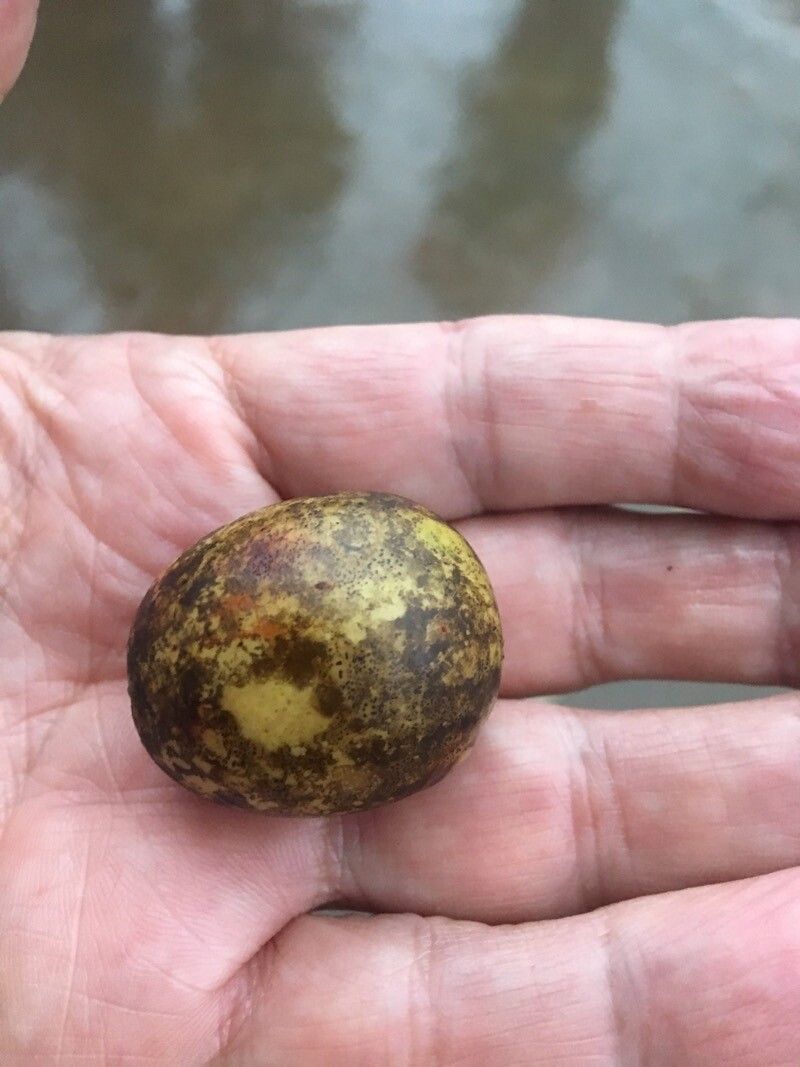
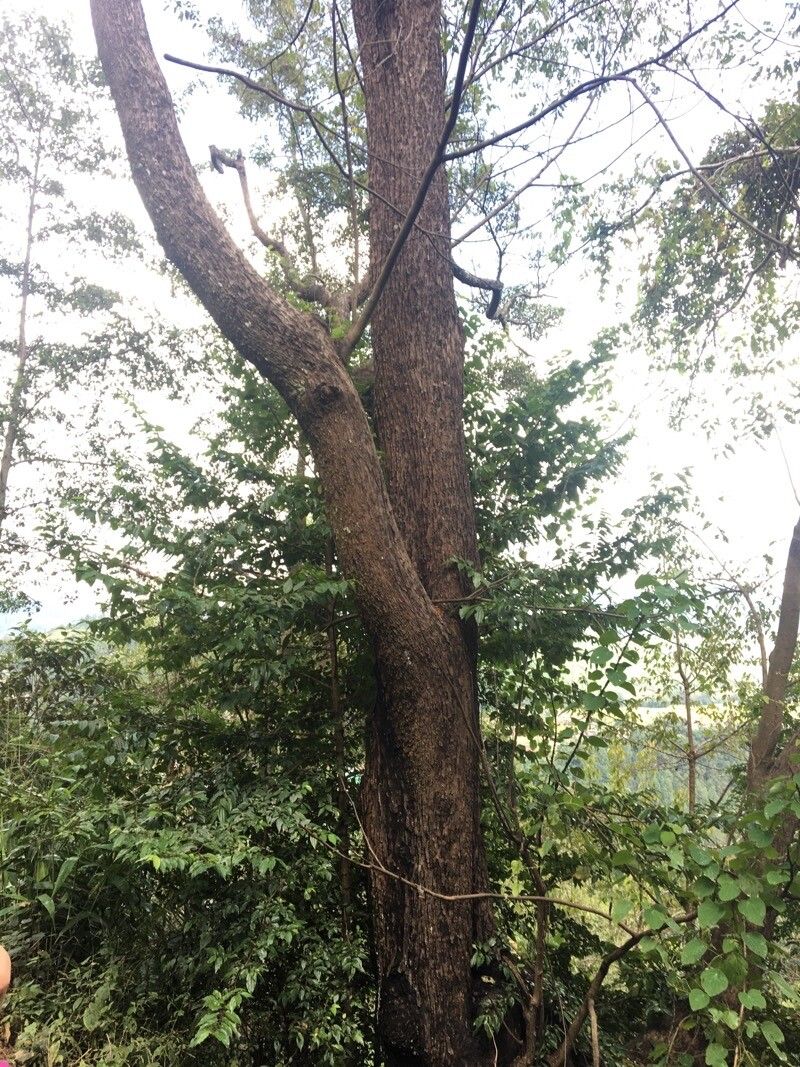
Choerospondias axillaris, known in English as the Nepali Hog Plum, is a tree in the family Anacardiaceae. It is a common fruit in Nepal and Bhutan, called lapsi and aamli in Nepali Speaking community. It is native to Nepal. Its fruit is about 3 centimeters long and has a soft whitish sour flesh and green to yellow skin. The fruit is made into pickles, fruit tarts, and sour, spicy candy. The tree has long been cultivated for its fruit. The fruit is nutritious and has a price comparable to the mandarin orange on the Nepalese market.This is a deciduous tree growing up to 20 meters tall. The smaller branches are purple-brown in color. The compound leaves are up to 40 cm (16 in) long and divided into 3 to 6 papery oval leaflets each up to 12 cm × 4.5 cm (4.7 in × 1.8 in). The tree is dioecious, with male and female trees producing different types of inflorescence. Male flowers occur in long clusters and have curving, brown-veined petals about 3 millimeters long. Female flowers are solitary in leaf axils at the tips of branches. They are larger than the male flowers and yield the edible drupe. The fallen fruits are consumed and dispersed by sambar and barking deer. The fruit is used in religious ceremonies as well, as an offering.Besides fruit, the tree yields valuable wood and hard seeds which are burned for fuel, and has parts used medicinally in Vietnam.Catechin-7-O-glucoside can be found in the stem barks of C. axillaris.
The Nepali hog-plum is resistant to disease and is generally not prone to illnesses. In terms of care, this plant is fairly low-maintenance. When grown outdoors it needs only minimal watering, and larger plants usually do not require pruning. Smaller plants, however, should be pruned after they finish blooming. The Nepali hog-plum is appropriate for anyone with an outdoor area, such as a garden or deck, and does not demand much prior plant-care experience.
How to keep Choerospondias Axillaris.
Light
Nepali hog-plum prospers in locations that receive abundant sunlight throughout the day. It can also persist in environments with reduced sun exposure. Light conditions significantly influence the plant's health and growth. However, too much or too little sunlight can lessen its vigour, despite the adaptability it has from its native habitat.
Water
The Nepali hog-plum, which originates from subtropical regions, thrives in moderately humid climates and can tolerate brief periods of dryness. For optimal growth, it should be watered sparingly, about every 2-3 weeks, to mimic its natural environment. As an outdoor plant, the Nepali hog-plum benefits from rainwater during the growing season, which enhances its resilience and adaptability.
Temperature
Nepali hog-plum is native to regions where temperatures typically range from 68 to 100.4 °F (20 to 38 ℃). It prefers warmer climates but can adapt to lower temperatures when necessary. During colder seasons, reduce its exposure to protect it from chill.
Fertilizer
Use organic fertilizer (e.g., fish emulsion, compost) instead of chemical fertilizers for Nepali hog-plum. Supply higher nitrogen and phosphorus to young plants in spring. Incorporate compost or fertilizer into the soil before and/or after planting. For mature plants, apply a balanced fertilizer or one aimed at specific deficiencies in spring. Nutrient deficiency causes small leaves, short branches, yellow/bronze leaves, acidic fruits, premature fruit fall, and splitting.
Pruning
The Nepali hog-plum is a fast-growing plant that produces edible fruits. For optimal growth and fruit yield, it is best to prune the plant in late winter. During pruning, remove any deadwood and thin out the branches to improve airflow. Proper shaping not only enhances the plant's vigor but also reduces the risk of pests. Always ensure you use clean, sharp tools for effective pruning.
Botanical profile.
- Plant Type
- Tree
- Life Cycle
- Perennial
- Genus
- Choerospondias
- Family
- Anacardiaceae
- Hardiness Zone
- 9-11
- Mature Height
- 20.12 m
- Mature Spread
- 10.06 m to 14.94 m
- Leaf Color
- Green, Dark Green
- Leaf Type
- Deciduous
- Flower Color
- Red, Brown
- Flower Size
- 0.25 cm to 0.51 cm
- Bloom Time
- Mid spring, Late spring
- Planting Time
- Spring, Summer
- Harvest Time
- Late summer, Early fall, Mid fall
- Native Area
- Nepal, India, Cambodia, Vietnam, Myanmar, Japan, Bhutan, Laos, Thailand, China
Reader questions.
What are the sunlight requirements for Nepali hog-plum?
Nepali hog-plum requires full sun, which means it should receive above 6 hours of sunlight daily, but it can also thrive in partial sun, about 3-6 hours of sunlight. It's vital to observe how sunlight moves through your garden to find spots that offer a good balance of light and shade, ensuring the plants' well-being. The amount of sunlight significantly affects the plant's health and development. Although the Nepali hog-plum is adaptable to various sunlight conditions, both excess and deficient sunlight can harm its vigor.
What are the ideal growing conditions for Nepali hog-plum?
Nepali hog-plum thrives in warm climates, with ideal temperatures ranging between 68°F to 100.4°F (20°C to 38°C). It is a heat-loving plant that can adapt to lower temperatures, but requires protection from the cold. During autumn, it's advisable to bring outdoor plants indoors, placing them near a bright window but away from direct heat sources like heaters to avoid damage. Maintaining the temperature above 20°C during winter supports its growth, while temperatures around 0°C can be harmful.
How does artificial lighting affect indoor Nepali hog-plum plants?
Indoor Nepali hog-plum plants require adequate lighting to grow optimally. In conditions where natural sunlight is insufficient, especially in winter or less sunny spaces, artificial lighting can be a crucial solution. It helps in promoting faster and healthier growth. LED lights are recommended for their ability to provide specific light wavelengths. Full sun plants need 30-50W/sq ft, partial sun plants 20-30W/sq ft, and full shade plants 10-20W/sq ft of artificial light. The light source should be placed 12-36 inches above the plant, mimicking natural sunlight for 8-12 hours per day.
How do you care for Nepali hog-plum in low temperatures?
Nepali hog-plum is sensitive to low temperatures and thrives best when the temperature stays above 20°C. It should be kept above 0°C during winter to avoid damage. If temperatures fall below -5°C, leaves may lighten and display symptoms like wilting and drooping after frost damage. To combat cold stress, trim off frost-damaged parts and move the plant to a warmer indoor spot, preferably near a south-facing window for ample sunlight. Also, ensure the plant isn't too close to heaters or air conditioning vents to avoid dry air.
What are the symptoms of light deficiency in Nepali hog-plum?
Symptoms of light deficiency in Nepali hog-plum include smaller new leaves, leggy or sparse growth, faster leaf drop, slower or no new growth, lighter-colored new leaves, chlorosis (leaves turning yellow), sunscald, leaf curling, wilting, and leaf scorching. These symptoms indicate that the plant is not receiving adequate sunlight, affecting its ability to photosynthesize and maintain health.
How should you care for Nepali hog-plum during high temperatures?
Nepali hog-plum should be protected from temperatures exceeding 38°C during the summer to prevent heat stress and sunburn, which can occur if temperatures go over 43°C, resulting in lighter leaf color. To mitigate damage from high temperatures, trim away sunburned or dried-up parts and relocate the plant to a shaded area, especially during peak sun hours. Ensuring adequate morning and evening watering maintains soil moisture, helping the plant cope with the heat.
What solutions exist for Nepali hog-plum experiencing light deficiency?
For indoor Nepali hog-plum plants experiencing light deficiency, gradually move them each week to a sunnier location until receiving at least 6 hours of direct sunlight daily, use a south-facing window, and consider using artificial light if necessary. For plants outdoors, it's important to gradually move them to sunnier spots avoiding sudden changes to prevent sunburn. Reducing obstructions by pruning trees and considering transplanting smaller plants during their dormant period to a location with ample sunlight and good drainage can also help alleviate the issue. Note that parts of the plant affected by insufficient sunlight may not recover, but new growth after adjusting light exposure will be healthier.
What is the botanical name of Nepali hog-plum?
The botanical name of Nepali hog-plum is Choerospondias axillaris.