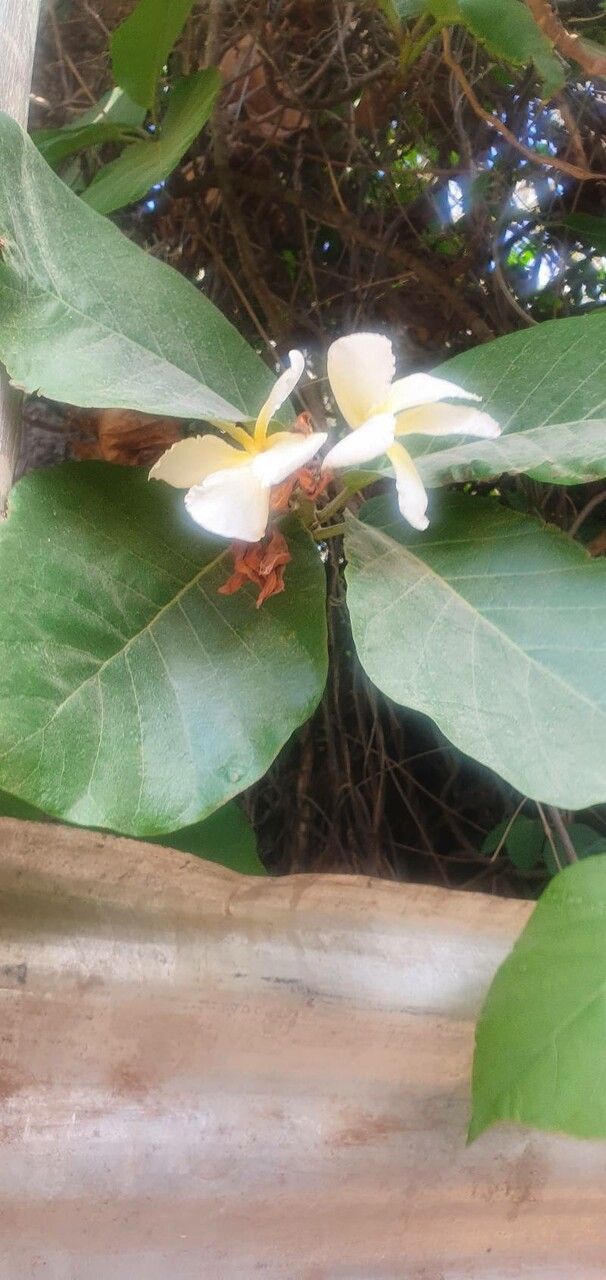
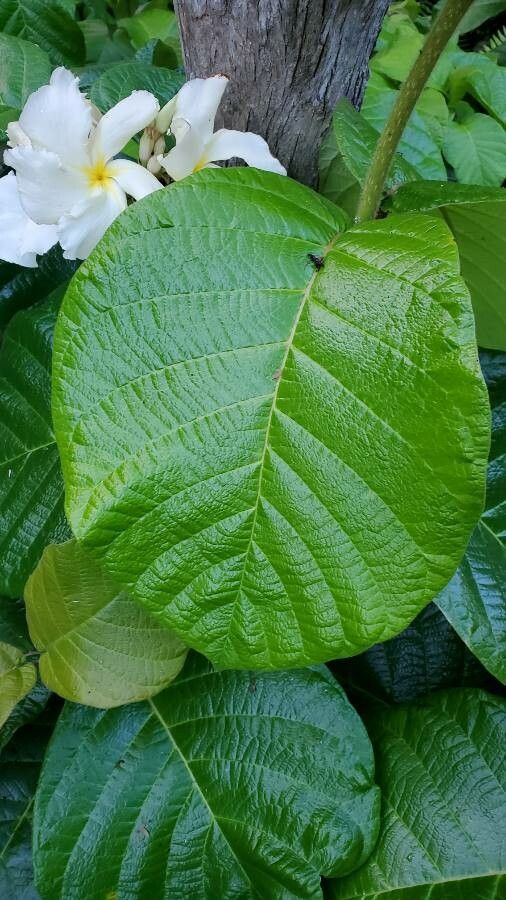
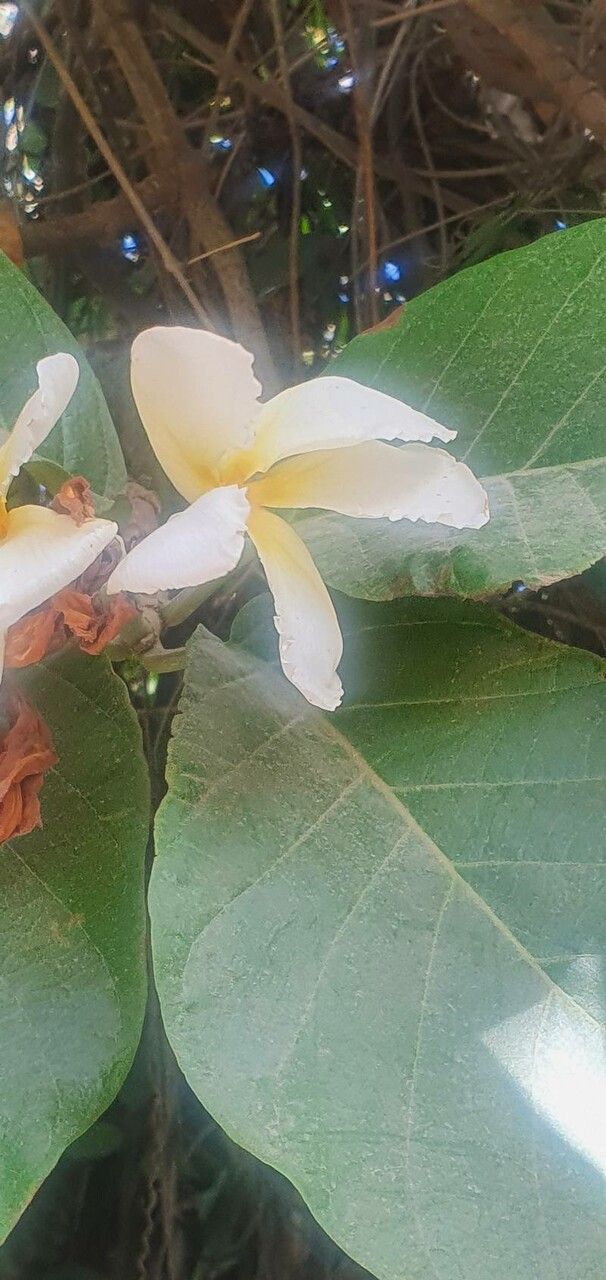
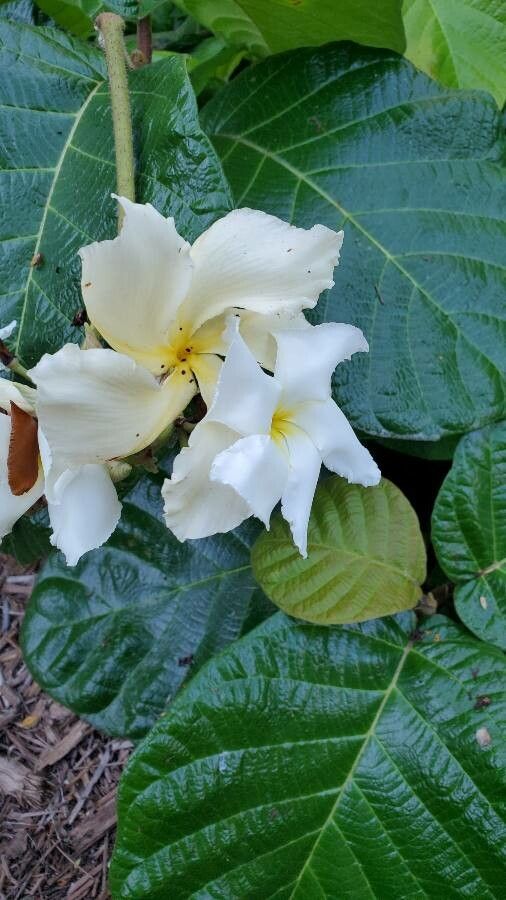
Chonemorpha fragrans, the frangipani vine or climbing frangipani, is a plant species in the genus Chonemorpha. It is a vigorous, generally evergreen, climbing shrub producing stems 30 m (98 ft) or more long that can climb to the tops of the tallest trees in the forests of Southeast Asia. It has scented, white flowers and large shiny leaves. and it is native to China, India, Indonesia, Malaysia, Myanmar, Sri Lanka and Thailand. It is very commonly used in Ayurveda (an Indian traditional medicine) and it is also cultivated mostly worldwide in frost-free places.
Frangipani vine is fairly disease-resistant and is generally unlikely to develop illnesses. Regarding care, this plant is relatively low maintenance. When grown outdoors it needs little watering, and larger specimens typically do not require pruning. Smaller plants, however, should be pruned after they finish blooming. Frangipani vine is suitable for anyone with an outdoor area, such as a garden or deck, and does not demand extensive gardening experience.
How to keep Chonemorpha Fragrans.
Light
The frangipani vine fares best when it gets substantial sunlight each day, which promotes healthy growth. Native to places with abundant sun, it can also acclimate to regions where sunlight is less plentiful. Too little or too much sun can hinder its development or cause discoloration.
Water
The Frangipani vine thrives in tropical climates, where it prefers consistent moisture but is also drought-tolerant. To maintain its hydration, water it weekly, taking care to avoid waterlogging. As an evergreen vine, it benefits from higher humidity and regular watering during its active growth season to encourage lush foliage and fragrant blossoms.
Temperature
The frangipani vine is native to tropical areas, where the climate is generally warm and humid. Consequently, it is adapted to high temperatures and humidity. It does not tolerate sudden temperature changes and prefers a steady thermal environment, so preventing temperature swings indoors is important. It typically cannot endure cold and requires warmer conditions for growth. If the surrounding temperature becomes too low, the plant may stop growing or even perish.
Fertilizer
The best time to fertilize a Frangipani vine is in early spring as it breaks dormancy. This encourages overall growth and the development of flowers. Fertilizing improves the foliage, stems, and branches, while encouraging large, vibrant, and long-lasting blooms. It assists in moving nutrients from the roots to the flowers and enhances the plant's health and its resistance to disease.
Pruning
To help your Frangipani vine thrive, it's best to prune it in the spring. This involves removing dead stems, thinning out crowded areas, and trimming long shoots to improve shape and air circulation. Pruning after the flowers have bloomed encourages healthier growth and more abundant blooms in the future. Always remember to use clean tools, and try to avoid heavy pruning during peak flowering to minimize stress on the vine.
Botanical profile.
- Plant Type
- Vine
- Life Cycle
- Perennial
- Genus
- Chonemorpha
- Family
- Apocynaceae
- Hardiness Zone
- 10-12
- Mature Height
- 29.87 m
- Mature Spread
- 7.01 m
- Leaf Color
- Green
- Leaf Type
- Semi-evergreen
- Flower Color
- White
- Flower Size
- 5.08 cm to 7.62 cm
- Bloom Time
- Late spring, Summer, Early fall, Mid fall
- Planting Time
- Spring, Summer, Autumn
- Harvest Time
- Late summer, Fall, Early winter
- Native Area
- Nepal, Sri Lanka, India, Malaysia, Indonesia, Cambodia, Vietnam, Myanmar, Philippines, Bhutan, Singapore, Bangladesh, Laos, Thailand, China
Other names.
Reader questions.
What are the sunlight requirements for Frangipani vine?
Frangipani vine requires full sun, defined as over 6 hours of sunlight, or partial sun, which is about 3-6 hours of sunlight, to thrive. The plant originates from habitats where sunlight is plentiful, but it can adapt to areas with less generous sun exposure. However, both insufficient and excessive sunlight can hinder its growth or cause discoloration. It's important to observe how sunlight moves through your garden to find spots that offer a perfect balance of light and shade for the plants.
How does artificial lighting benefit indoor plants?
Indoor plants need adequate lighting for optimal growth, especially when natural sunlight is lacking, such as during winter or in less sunny spaces. Artificial lights provide a vital solution, promoting faster, healthier growth. LED lights are commonly used because they can be customized to provide the specific wavelengths plants need. Full sun plants require 30-50W/sq ft, partial sun plants need 20-30W/sq ft, and full shade plants need 10-20W/sq ft of artificial light. The light source should be placed 12-36 inches above the plant to mimic natural sunlight, and most plants benefit from 8-12 hours of light per day.
What are the signs of insufficient light exposure in Frangipani vine?
Signs of insufficient light exposure in Frangipani vine include new leaves growing smaller, leggy or sparse growth, faster leaf drop, slower or no new growth, and lighter-colored new leaves. These symptoms indicate that the plant might not be receiving enough sunlight, essential for its health and growth.
How can excessive sunlight affect Frangipani vine?
Excessive sunlight can negatively impact Frangipani vine by causing chlorosis, where leaves lose their green color and turn yellow; sunscald, which damages leaves and stems; leaf curling, a defense mechanism to reduce surface area exposed to sunlight; wilting, due to increased water loss; and leaf scorching, characterized by brown, dry, and crispy leaf edges. These symptoms can reduce the photosynthetic capacity and overall health of the plant.
What solutions are available for Frangipani vine experiencing light-related issues?
Solutions for Frangipani vine light-related issues vary by setting. Indoors, gradually move plants to sunnier locations until they receive at least 6 hours of direct sunlight daily, or use artificial light if the plant is large or not easily movable. Outdoors, move plants gradually to avoid sunburn. To reduce obstructions outdoors, consider pruning or transplanting during the plant's dormant period, usually late winter or early spring, to a location with ample sunlight and good drainage. Note that affected parts of the plant may not recover, but new growth will be healthy.