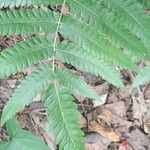
Christella dentata
Downy woodfern · Christella · Downy wood fern · Soft fern
Description
Source: leafsnapChristella dentata is a small fern with widespread distribution in Australia and islands in the south Pacific Ocean. There are many local common names. In New South Wales it grows north from the southern Illawarra region and is known as binung. Found on the margins of rainforest, by streams or in more open forests with adequate moisture. Sori are circular in shape, with a hairy closed covering. It was the first species of fern to become naturalised on the Hawaiian Islands, recorded initially in Oahu in 1887 and now found on all major islands there. There it interbreeds with the local species C. cyatheoides, with the resultant hybrid offspring sterile.Christella dentata is an edible fern, and also a folk remedy for skin diseases. Pharmacological study found that water extract of the fern was as toxic as anticancer drug 5-fluorouracil against human chronic myelogenous leukemia cell line (K562).
Care Guide
💧 Water Every 7 days
Downy wood fern flourishes in moist environments and thrives in evenly moist soil, needing to be watered weekly. Rainwater is particularly beneficial, as it supports the fern's natural growth cycle and helps preserve its lush appearance, emphasizing its preference for humidity over drought conditions.
How should I water my Downy wood fern?
To properly water the Downy wood fern, it is best to use filtered water at room temperature. Tap water may contain damaging particles that can harm the plant. The water should be at room temperature or slightly warmer because the fern prefers warmer conditions and cold water can be a shock to its system. Avoid watering from above as it can cause problems with the foliage. Instead, water the soil directly with the filtered room temperature water until it is completely soaked. This method benefits the plant by keeping the roots moist, allowing them to spread through the soil and gather necessary nutrients.
What should I do if I give my Downy wood fern too much or too little water?
Overwatering is a common issue for Downy wood ferns and can cause wilting, yellowing, and the development of diseases like root rot, mold, and mildew. Underwatering is less common, but can still occur and result in brittle and brown leaves. It is important to recognize signs of overwatering early to prevent irreversible damage. If signs are present, reduce watering immediately and consider improving soil drainage. If underwatering is suspected, increase watering until symptoms improve.
How many times should I water my Downy wood fern?
If your Downy wood fern is in a pot, you can determine if it needs water by checking the soil. Stick your finger into the soil and if the top two to three inches are dry, it's time to water. If you have the fern planted outdoors in the ground, you can use the same method to test the soil. When the top few inches of soil are dry, it's time to water. In the spring and early fall, you'll typically need to water once a week using this method. However, during hot weather, you may need to increase watering to twice a week or more. It's important to note that mature, well-established Downy wood ferns can handle periods of drought.
How much water does my Downy wood fern require?
When watering your Downy wood fern, don't be afraid to give it a generous amount of water. Make sure the top two to three inches of soil are dry before watering. Give enough water to completely soak the soil, allowing excess water to flow out of the drainage holes in the pot. If you don't see any excess water draining, it means you haven't watered enough. However, be careful not to let the water accumulate in the soil, as this can harm the plant. On the other hand, if water doesn't drain properly, it could mean the soil doesn't drain well, which is not good for the plant's health. If the fern is outdoors, around 1 inch of rain per week should be sufficient for watering.
How should I water my Downy wood fern as it grows?
The water needs of the Downy wood fern can vary depending on its growth stages. When the fern is young or has recently been transplanted, it requires more water than usual. This is because during these stages, the fern focuses its energy on growing new roots that will support future growth. To ensure optimal root performance, a slightly higher moisture level is necessary. As the fern matures over a few seasons, its water requirements decrease. Another stage when increased watering may be needed is during the blooming period. The development of flowers can utilize a significant amount of moisture, so it may be necessary to provide more water at this time.
☀️ Light Partial sun
Downy wood fern grows best in partial sun for optimal photosynthesis and growth. It also does well in cloudy or shaded settings. At any stage of growth, too much sun can be harmful, and too little light can weaken its vigor. Its natural habitat combines sunlight and shade, showing its adaptability to different lighting conditions.
What are the sunlight requirements for Downy Wood Fern?
Downy Wood Fern thrives best under partial sun conditions, which means it needs about 3-6 hours of sunlight per day. It can also grow in full shade areas where it receives less than 3 hours of sunlight. The plant's well-being depends on finding the right balance of light and shade in your garden, ensuring spots that provide this mix for optimal growth.
What are the essential growth conditions for Downy Wood Fern?
To flourish, Downy Wood Fern requires partially sunny conditions for optimal photosynthesis and growth. It can also adapt to cloudy or shadowy environments. Whether indoors or outdoors, the plant should be shielded from too much sun to prevent harm, while a lack of sunlight might stunt its growth. It naturally grows in environments that offer a mix of sunlight and shade, showcasing its adaptability. Artificial lighting, such as LED lights, can be used to supplement natural sunlight, especially in places that don't get enough sunshine or during winter. The amount of artificial light needed varies depending on whether the plant is considered full sun (30-50W/sq ft), partial sun (20-30W/sq ft), or full shade (10-20W/sq ft). The positioning of the lights should be 12-36 inches above the plant, and the duration should mimic natural daylight hours, typically between 8-12 hours per day.
What are the signs of insufficient light for Downy Wood Fern?
When Downy Wood Fern does not receive enough light, it may show several symptoms. These include new leaves growing smaller than mature ones, the plant exhibiting leggy or sparse growth, and a faster rate of leaf drop. There could also be a noticeable halt or slowdown in new growth, with leaves developing pale or irregular coloration. Chlorosis, where leaves lose their green color and turn yellow, may occur, indicating a breakdown of chlorophyll due to excessive sunlight. Other symptoms include sunscald, which shows as pale, bleached areas on the plant, leaf curling as a defense mechanism against sun overexposure, wilting due to increased water loss, and leaf scorching characterized by brown, dry edges.
How do I address light-related issues with Downy Wood Fern?
To optimize plant growth under insufficient light conditions, gradually shift the Downy Wood Fern to sunnier spots each week until it receives the ideal 3-6 hours of direct sunlight daily. For indoor plants that are too large or difficult to move, consider using artificial lighting, such as desk or ceiling lamps for at least 8 hours daily, or invest in professional plant grow lights. If the plant is outdoors, slowly move it to an area with more sunlight to avoid sunburn, adjusting its position weekly. If light obstruction is due to environmental factors, such as trees, pruning to allow more sunlight through might be necessary. For smaller plants, consider transplanting during the dormant period to a location with better sunlight exposure and drainage. Note that parts of the plant already affected by insufficient light may not recover, but new growth should be healthy with improved light conditions.
🌡️ Temperature 5–32.2°C
Downy wood fern comes from tropical areas, where the climate is generally warm and humid. Consequently, it is adapted to high temperatures and humidity. It is sensitive to sudden temperature changes and prefers a stable temperature environment, so avoid fluctuations indoors. It usually cannot tolerate cold and needs warmer conditions to grow. If the surrounding temperature falls too low, the plant may stop growing or even die.
What is the Downy wood fern?
The Downy wood fern, known botanically as Christella dentata, is a species of fern recognized by its distinct name. Unfortunately, the provided data does not include details on its characteristics, essential information, or symptoms related to the plant. Therefore, specifics about its appearance, habitat, or any other related information remain unspecified.
💨 Humidity
🪴 Soil 6-7
🌱 Fertilizer
Downy wood fern requires the most fertilizer during its active growth phase, primarily in spring, summer, and early fall. Fertilization supplies essential nutrients the soil may lack, supporting healthy root and stem development and producing the attractive foliage that is a notable feature of this plant.
🪴 Pot & Repot
✂️ Pruning
The Downy Wood Fern has finely divided fronds and benefits from pruning in early to late spring. By removing dead fronds, you promote healthy growth and improve airflow. Trimming not only enhances the plant's appearance but also helps prevent disease. This pruning aligns with the fern's active growth cycle, aiding in its recovery and overall health.
🌿 Propagating
🐛 Diseases & pets
☠️ Toxicity
Characteristics
- Plant Type
- Herb
- Life Cycle
- Perennial
- Genus
- Christella
- Family
- Thelypteridaceae
- Hardiness Zone
- 4-8
- Mature Height
- 15 cm
- Mature Spread
- 30 cm to 61 cm
- Leaf Color
- Green, Dark Green
- Leaf Type
- Evergreen
- Planting Time
- Spring, Autumn
- Native Area
- Sri Lanka, Burkina Faso, India, Madagascar, Pakistan, Nigeria, Morocco, Guinea-Bissau, Uganda, Tanzania, Fiji, Benin, Paraguay, Sierra Leone, Indonesia, Cameroon, Mozambique, Ethiopia, Portugal, Central African Republic, Saudi Arabia, Malawi, Peru, Philippines, Bangladesh, New Zealand, China, Colombia, Afghanistan, Italy, Togo, Papua New Guinea, Senegal, Eswatini, Iran, Ecuador, Côte d'Ivoire, Congo (DRC), Angola, Malaysia, Vanuatu, Namibia, Rwanda, Yemen, Kenya, Niger, Zimbabwe, Mali, Iraq, Equatorial Guinea, Burundi, Liberia, Ghana, South Korea, Congo, Nepal, Chile, South Africa, Zambia, Sudan, Greece, Guinea, Spain, Vietnam, Myanmar, Bhutan, Singapore, Thailand, Gabon