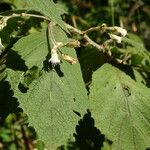
Chromolaena odorata
Hagonoy · Ki Rinyuh · Bitter bush · Jack in the bush · Siam weed
Description
Source: leafsnapChromolaena odorata, commonly known as Siam weed or Christmas bush, is a fast-growing perennial shrub belonging to the Asteraceae family. Originally native to Central and South America, it has spread across the tropics and subtropics of Asia, Africa, and Oceania. This plant can reach up to 3 meters in height and features a woody stem that branches into numerous parts, each covered with hairy leaves. The leaves are green on the top and purple underneath, with serrated edges. At the ends of its branches, the plant produces small white or purple flowers arranged in clusters. In traditional medicine, Chromolaena odorata is valued for its anti-inflammatory properties and is used to treat respiratory issues such as asthma and coughs. Additionally, its antimicrobial properties make it effective against various bacterial infections. Despite its medicinal benefits, Chromolaena odorata is considered an invasive species in many regions due to its rapid growth and ability to outcompete native plants for essential resources like water and nutrients. In summary, Chromolaena odorata is a plant of interest due to its medicinal properties, but it poses a significant threat as an invasive species when introduced into non-native ecosystems.
🎭 Inspiration, affection, and longing
Care Guide
💧 Water Every 3 days
Blue Mistflower thrives in environments with high humidity and consistently moist soil, needing weekly watering. Although it can tolerate moderate drought, it's essential to provide enough moisture during its active growing season to promote lush foliage and abundant flowering. Be sure to keep the soil adequately hydrated without letting it become oversaturated.
How should I water my Blue Mistflower?
To properly water the Blue Mistflower, it is recommended to use filtered water at room temperature. Tap water may contain harmful particles, so it's best to avoid it. The plant prefers warm water as it is accustomed to a warm environment. Cold water can be a shock to its system. In addition, avoid watering the plant from above as it can cause problems with its foliage. Instead, gradually soak the soil with filtered room temperature water until it is completely moistened. This helps the roots to spread and absorb nutrients effectively.
What should I do if I give my Blue Mistflower too much or too little water?
Overwatering and underwatering can both harm your Blue Mistflower, but overwatering is more common. Too much water can cause wilting, yellowing leaves, and diseases like root rot, mold, and mildew that may kill the plant. Underwatering is less likely, as the Blue Mistflower can tolerate drought. However, it can still happen, resulting in brittle, brown leaves. It is important to recognize the signs of overwatering early. Some diseases caused by overwatering, such as root rot, may be irreversible if not addressed promptly. Reduce your watering schedule if you see early signs of overwatering and consider replacing poorly draining soil. If your Blue Mistflower appears to not be receiving enough water, simply water it more regularly until the signs of dehydration disappear.
How often do I need to water my Blue Mistflower?
If your Blue Mistflower is in a pot, you can determine if it needs water by checking the soil. Stick your finger into the soil and if the top two to three inches are dry, it's time to water. If you have your Blue Mistflower planted outside, you can use the same method. When the top few inches of soil are dry, it's time to water. Typically, during spring and early fall, watering once a week is sufficient. However, during hot weather, you may need to water twice or more per week. Keep in mind that mature Blue Mistflowers are resilient and can tolerate drought well.
How much water does my Blue Mistflower require?
To water your Blue Mistflower effectively, make sure the first two to three inches of soil are dry. Give the plant a thorough watering that saturates the soil completely. It's important to add enough water so that it flows through the drainage holes at the bottom of the pot. If you don't see any excess water draining, you may have underwatered your plant, but be careful not to let the water accumulate in the soil as it can harm the plant. On the other hand, if water is not draining well from the pot, it could indicate poorly draining soil, which is not good for the plant's health. If your Blue Mistflower is outside, 1 inch of rain per week should be sufficient.
How do I water my Blue Mistflower as it grows?
The water needs of the Blue Mistflower can vary depending on its growth stages. In the first few years of its life or after being transplanted, you will need to water it more than usual. During this time, the plant focuses on developing new roots to support future growth, so it requires extra moisture. However, as the plant matures over a few seasons, it will need less water. Another stage that may require increased watering is during the bloom period when the flower development requires more moisture.
☀️ Light Partial sun
For healthy growth, blue Mistflower does best in a spot that receives plenty of sun each day, but not overly intense light. In its natural habitat it thrives in filtered sun, though it can tolerate extended sun exposure. Too much or too little sun can impede its growth.
What are the sunlight requirements for Blue Mistflower?
Blue Mistflower thrives in conditions where it receives an adequate amount of sunlight. The plant prefers partial sun, receiving about 3-6 hours of sunlight daily, but it can also flourish in full sun, which means it gets more than 6 hours of sunlight per day. It's essential to observe how sunlight moves through your garden to select spots that provide the perfect balance of light and shade, ensuring the plants' well-being.
How does filtered sun and prolonged sun exposure affect Blue Mistflower?
Blue Mistflower naturally prefers locations with filtered sunlight, allowing it to grow healthily without the intensity of direct, continuous sun. Despite its preference for filtered sun, Blue Mistflower can withstand prolonged exposure to direct sunlight. However, both too much and too little sunlight can hinder the plant's growth, so finding a balanced amount of sun exposure is key for optimal health.
What artificial lighting requirements do indoor Blue Mistflower plants have?
Indoor Blue Mistflower plants require adequate lighting to promote optimal growth, especially when natural sunlight is insufficient. Artificial lights can be a vital solution in providing the necessary light intensity. LED lights are recommended for their ability to be customized to specific wavelengths needed by plants. The required artificial light intensity varies: full sun plants need 30-50W/sq ft, partial sun plants need 20-30W/sq ft, and full shade plants need 10-20W/sq ft. The light source should be placed 12-36 inches above the plant, mimicking natural sunlight for 8-12 hours per day.
What are the symptoms of light deficiency in Blue Mistflower when grown indoors?
When grown indoors with insufficient light, Blue Mistflower may exhibit several symptoms indicating a lack of adequate sunlight. These symptoms include smaller new leaves, leggy or sparse growth, faster leaf drop, slower or no new growth, and lighter-colored new leaves. Such conditions suggest the plant isn't receiving enough light, leading to various growth and health issues.
How does excessive sunlight affect Blue Mistflower?
Excessive sunlight can adversely affect Blue Mistflower, leading to conditions such as chlorosis, where leaves lose their green color and turn yellow, and sunscald, which appears as pale or necrotic areas on the plant. Other symptoms include leaf curling as a defense mechanism, wilting due to increased water loss, and leaf scorching characterized by brown, dry edges on leaves. These symptoms indicate that the plant is receiving too much sunlight, negatively impacting its health.
🌡️ Temperature 20–37.8°C
Blue Mistflower grows best in warm, mild climates and is commonly found in tropical and subtropical regions. Its native growing conditions correspond to temperatures of 20 to 38 ℃ (68 to 100 ℉). In winter, it is important to keep temperatures above 10 ℃ (50 ℉) to prevent frostbite and to maintain the plant's vitality.
What is the preferred climate for Blue Mistflower?
Blue Mistflower thrives in a warm and mild climate, ideal for tropical and subtropical regions. The optimal temperature range for its growth is between 20 to 38°C (68 to 100°F). To maintain vitality, it is crucial to keep the plant's environment above 10°C (50°F) during winter to avoid frostbite. The Blue Mistflower is notably heat-loving, and exposure to cold can harm the plant. As autumn approaches, it is advisable to move outdoor plants indoors near a bright window, keeping them away from direct heat sources to ensure they stay above 20°C, as temperatures nearing 0°C can be harmful.
How does low temperature affect Blue Mistflower and what are the solutions?
Blue Mistflower's preference for warmth means it does not tolerate low temperatures well, thriving best when the mercury stays above 20°C. Temperatures dropping below 0°C, especially under -5°C, can lead to visible symptoms like leaf discoloration, turning lighter before becoming brown or black after frost damage, coupled with wilting and drooping. To combat these effects, affected parts should be trimmed off and the plant moved indoors to a warm spot, preferably near a south-facing window for ample sunlight, while avoiding placement near heaters or air conditioning vents to prevent air dryness.
How does high temperature affect Blue Mistflower and what are the solutions?
During the hotter months, Blue Mistflower should be kept at temperatures below 38°C to avoid stress. Exposure to temperatures above 43°C can cause the leaves to lighten and increases the risk of sunburn. Managing this involves trimming away the sun-damaged or dried parts of the plant, relocating it to a shaded area during the peak sun hours of midday and afternoon, and ensuring the soil remains moist through watering sessions in the morning and evening.
💨 Humidity
🪴 Soil 6-7
🌱 Fertilizer
Blue Mistflower needs the greatest amount of fertilizer during its active growth period, which occurs mainly in spring, summer, and early fall. Fertilizing supplies essential nutrients the soil may lack, supporting healthy root and stem development and promoting attractive foliage, a notable characteristic of this plant.
🪴 Pot & Repot
✂️ Pruning
The Siam Weed can be pruned at any time. It can be cut back severely to refresh its appearance.
🌿 Propagating
🐛 Diseases & pets
☠️ Toxicity
This plant is considered toxic to livestock animals. It may also cause allergic reactions to some people.
Characteristics
- Plant Type
- Herb
- Life Cycle
- Perennial, Annual
- Genus
- Chromolaena
- Family
- Asteraceae
- Hardiness Zone
- 9-11
- Mature Height
- 0.91 m to 1.83 m
- Mature Spread
- 0.91 m to 1.22 m
- Leaf Color
- Green, Dark Green
- Leaf Type
- Evergreen
- Flower Color
- White
- Flower Size
- 2.54 cm
- Bloom Time
- Mid summer, Late summer
- Planting Time
- Spring
- Harvest Time
- Mid summer, Late summer, Early fall
- Native Area
- Belize, Honduras, Mexico, Guatemala, Peru, Dominican Republic, Trinidad and Tobago, Panama, Jamaica, Colombia, Bahamas, Paraguay, Argentina, Haiti, Bolivia, Venezuela, Brazil, Guyana, El Salvador, Nicaragua, Ecuador, Suriname, Costa Rica