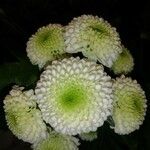
Chrysanthemum × morifolium
Hardy Garden Mum · Garden chrysanthemum · Common chrysanthemum · Florist’s Daisy · Juhua (China)
Description
Source: leafsnapChrysanthemum × morifolium (also known as florist's daisy and hardy garden mum, or in China, 菊花 júhuā) is a hybrid species of perennial plant from family Asteraceae.
💡 The chrysanthemum holds significant symbolism and is associated with nobility and truth. This flower is widely regarded as having a refined and distinguished character. In Japan, the chrysanthemum is especially revered, forming part of the imperial family’s crest. It symbolizes a longing for beauty, freedom, and nature. The Japanese also use chrysanthemums in rituals such as sweeping graves, honoring ancestors, and celebrating the New Year. Different varieties of chrysanthemums convey different meanings. Spring chrysanthemums signify love divination, winter chrysanthemums symbolize farewells, and yellow chrysanthemums represent success. In China, the flower stands for nobility and longevity, while in Europe, it signifies nobility. When choosing to give a chrysanthemum as a gift, consider its meanings carefully, as it is often used to commemorate the deceased.
🌳 Beyond its decorative function, the garden mum plays an unexpected role as a natural indicator of air pollution and soil toxicity. Its leaves can absorb large amounts of pollutants such as ammonia and sulfur dioxide, undergo visible changes, and thus signal levels of contamination. In addition, the petals are used in crafts and the arts to produce vibrant natural dyes for fabrics, giving them the deep colors commonly linked to autumn. These dyes are valued not only for their appearance but also as eco-friendly alternatives to synthetic dyes.
🎭 Purity, nobility and long life
Care Guide
💧 Water
Garden mums are native to Asia and northeastern Europe. They thrive in well-drained, consistently moist soil and prefer moderate climates. For optimal growth, they should be watered twice a week. Mulching is beneficial as it helps retain the moisture crucial for their flowering phase, making these plants ideal for outdoor cultivation.
☀️ Light Full sun
The garden mum prefers conditions that provide ample sunlight. Light is vital for the plant’s healthy growth, especially during its flowering period. Too much or too little light can impede its development. While it thrives with steady sun exposure, it can cope well with partial light.
🌡️ Temperature 5–35°C
Native to temperate regions, the garden mum does best in conditions similar to those mild climates. The preferred temperature range is 68 to 95 °F (20 to 35 ℃). Seasonal adjustments may be needed to sustain optimal growth.
💨 Humidity normal (40-60%)
This plant will thrive in moderate humidity, which is probably the level in your home. However, misting it a few times a week can be very beneficial. Make sure the room has good ventilation.
🪴 Soil 6-7
🌱 Fertilizer
Early spring, when a Garden mum is coming out of dormancy and starting active growth, is the ideal time to fertilize it. Fertilization supplies essential nutrients for healthy growth. Although Garden mums have comparatively low fertilizer requirements, giving them fertilizer once a year can help them survive better and produce improved, longer-lasting flowers.
🪴 Pot & Repot 2-3 years
When repotting Garden mum, pick a pot 1-2 inches (2.5–5.1 cm) larger with good drainage. Use a potting mix that drains well. Repot in spring or fall, making sure the root ball sits slightly below the rim of the flower pot. Water thoroughly after repotting and place it in a warm spot with indirect sunlight.
✂️ Pruning
To help garden mums thrive, prune them between late winter and early spring to improve their shape and increase flower production. During this time, remove any damaged stems to encourage new growth. Regularly pinching the plants will promote fullness. Always use clean tools to prevent the spread of disease. Additionally, light pruning after the first bloom can stimulate a second round of flowering.
🌿 Propagating
🐛 Diseases & pets
☠️ Toxicity
Characteristics
- Plant Type
- Herb
- Life Cycle
- Perennial, Annual
- Genus
- Chrysanthemum
- Family
- Asteraceae
- Hardiness Zone
- 5-10
- Mature Height
- 15 cm to 91 cm
- Mature Spread
- 30 cm to 61 cm
- Leaf Color
- Green
- Leaf Type
- Evergreen, Deciduous
- Flower Color
- White, Yellow, Orange, Pink, Red, Purple
- Flower Size
- 3.56 cm to 4.06 cm
- Bloom Time
- Mid summer, Late summer, Early fall
- Planting Time
- Spring, Autumn, Winter
- Harvest Time
- Mid winter, Late winter
- Native Area
- Asia and northeastern Europe