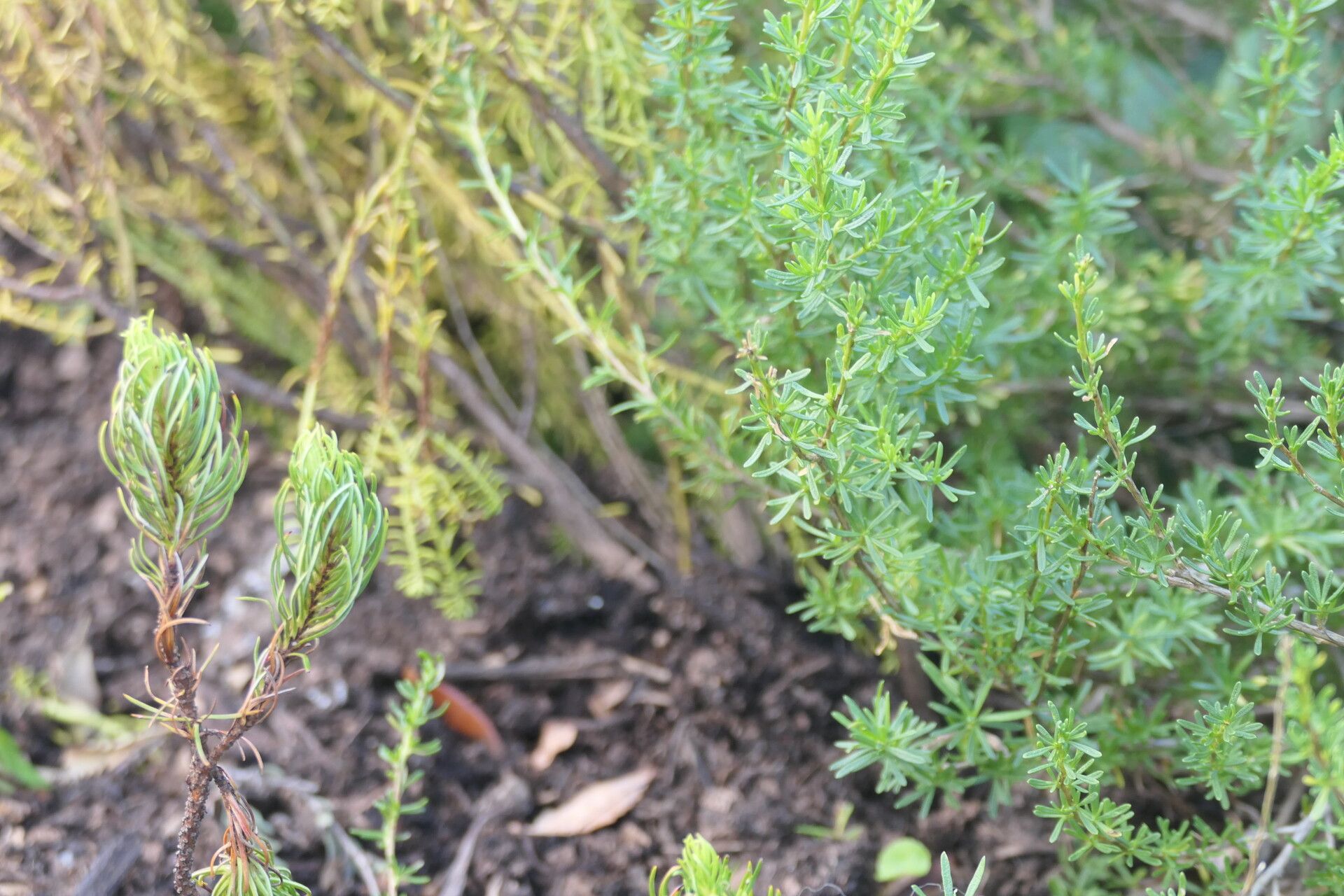
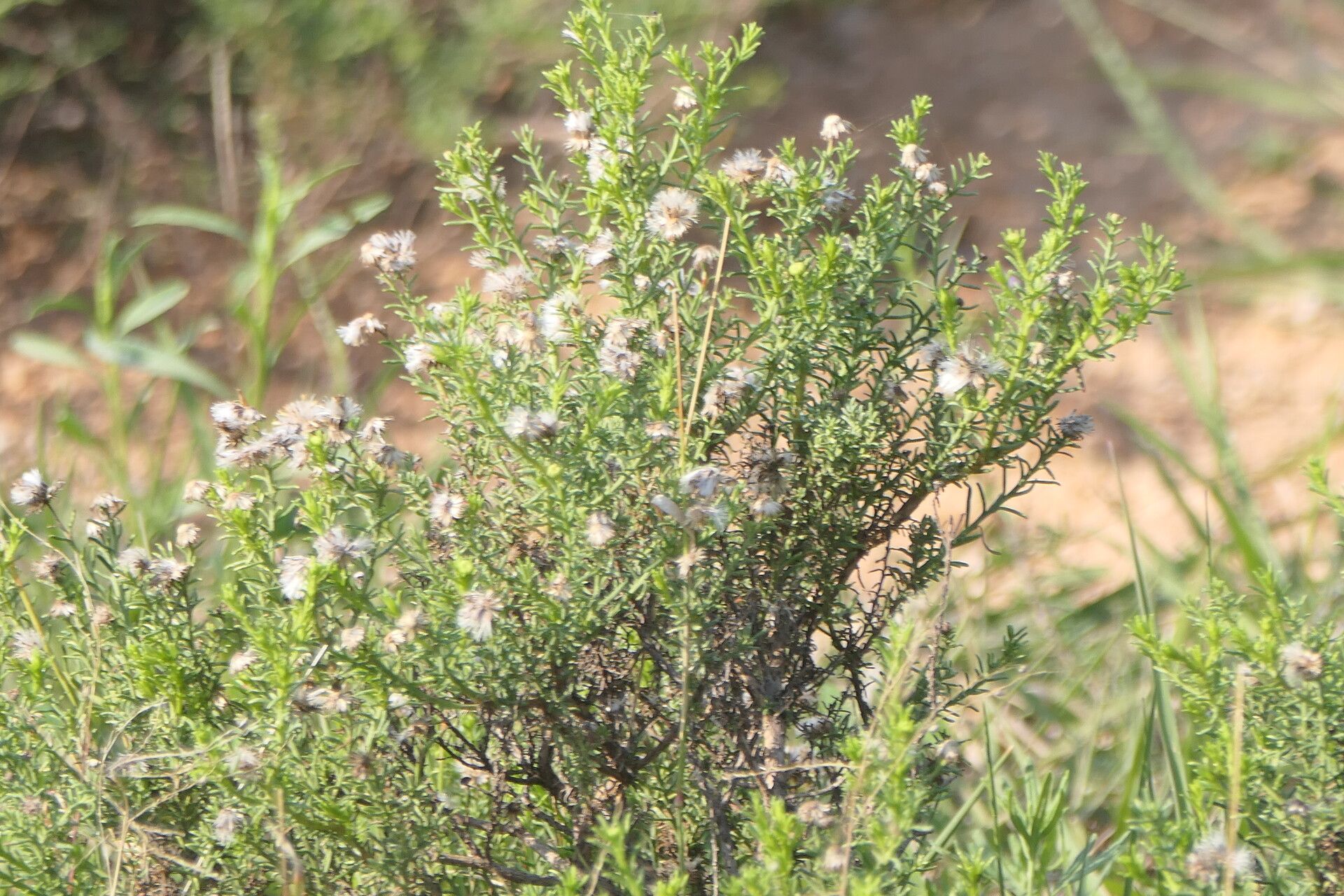
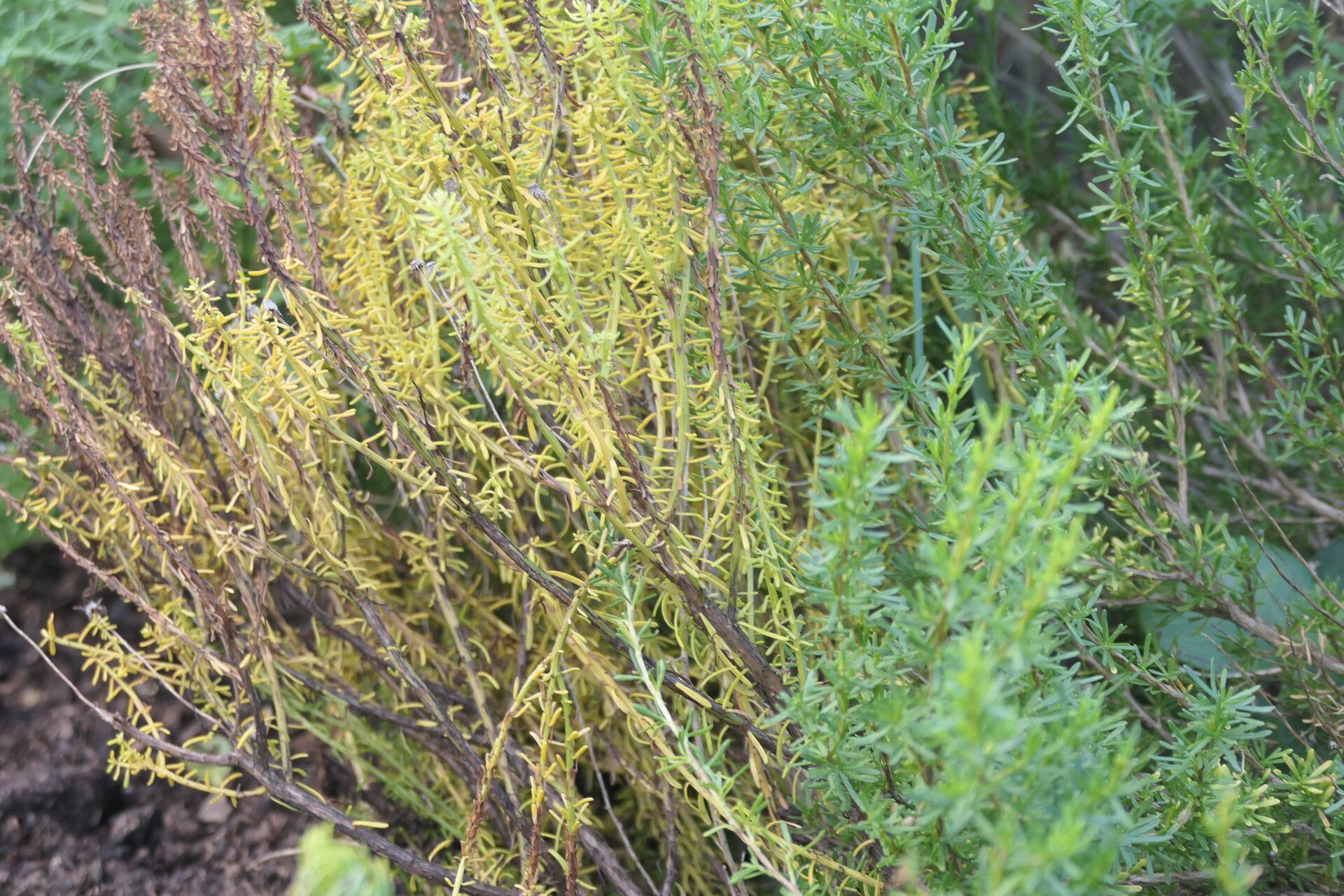
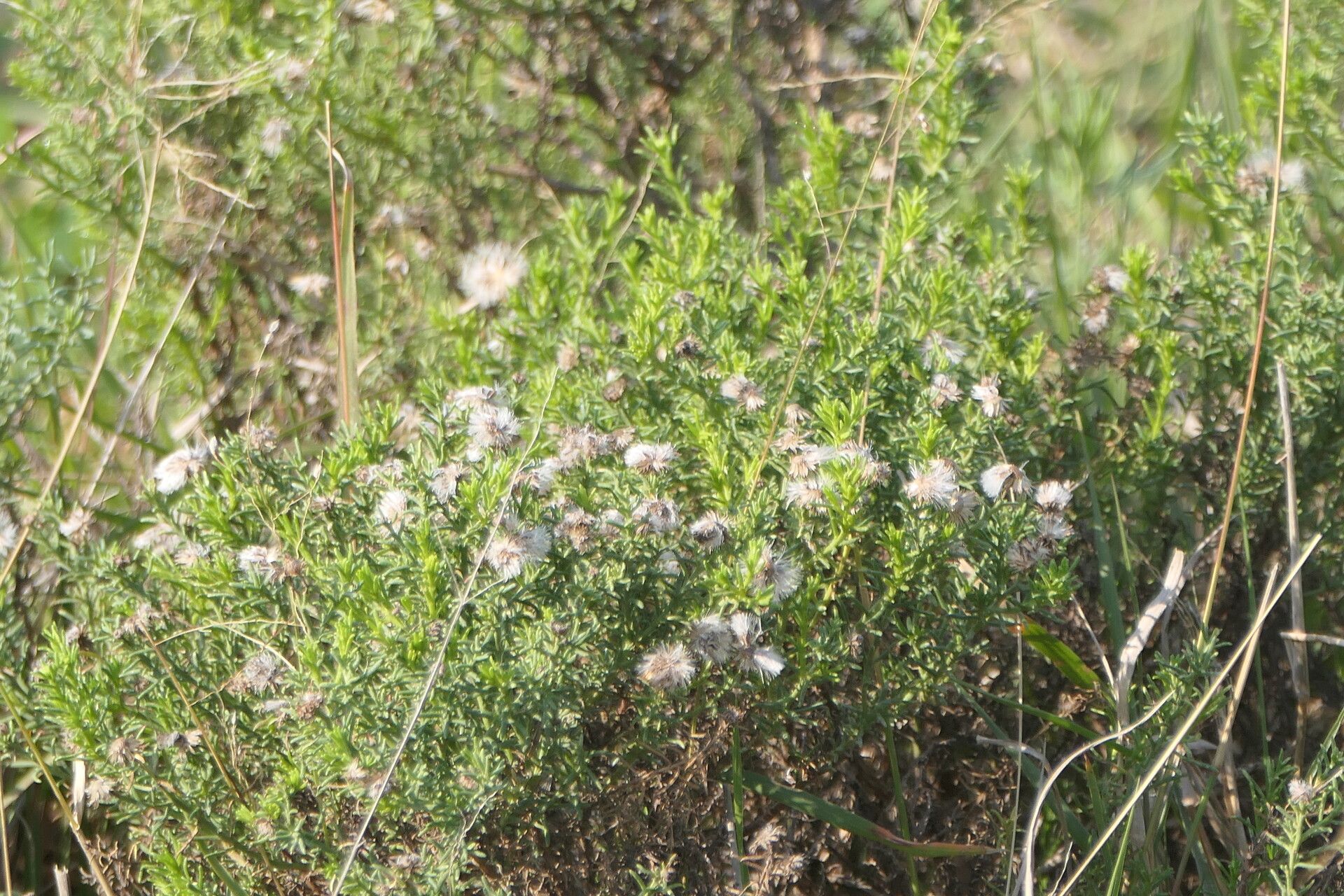
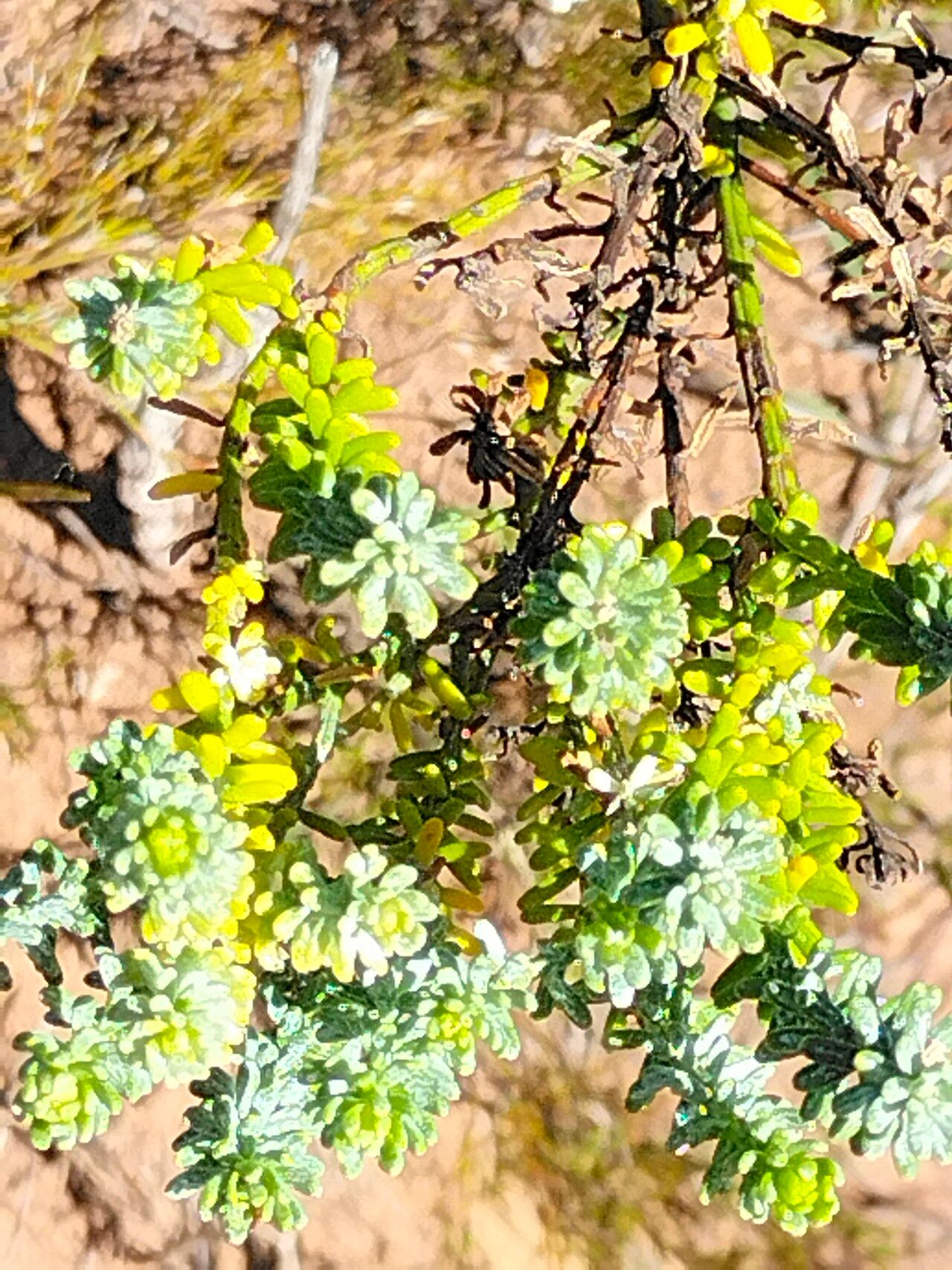
Chrysocoma ciliata is a shrub that grows to a height of 60 cm. The plant occurs throughout South Africa with the exception of Limpopo and also in Lesotho. In the Western Cape and the Eastern Cape it occurs along with the fynbos on rocky slopes and rocky plains.The plant has slender stems with dense leaves. The leaves are narrow or acicular with stiff hairs on the edges and stand semi-erect. The flower heads are yellow and are solitary on the tips of the branches without ribbon flowers. They are surrounded by rows of narrow bracts. The shrub blooms from September to January.
Bitter bush shows good resistance to disease and is generally not susceptible to illnesses. In terms of care, the plant is fairly low maintenance. When grown outdoors it needs only minimal watering, and larger specimens usually do not require pruning. Smaller plants, however, should be pruned after they have finished blooming. Bitter bush is suitable for anyone with an outdoor area, such as a garden or deck, and does not call for extensive care experience.
How to keep Chrysocoma Ciliata.
Light
Bitter bush is native to open habitats like sunny meadows and forest edges that offer plenty of light. It performs best in Full Sun but will also tolerate Partial Sun, adapting well to various light conditions.
Water
The bitter bush is perfect for arid climates due to its remarkable drought tolerance. It needs watering only every 2 to 3 weeks to flourish. As an evergreen plant, the bitter bush keeps its leaves year-round and conserves water efficiently. This makes it an excellent choice for gardens in areas with low rainfall.
Temperature
Bitter bush shows strong adaptability to a variety of climate conditions, whether in very hot summers or in cold winters. However, it has an optimal temperature range for growth. If temperatures rise too high, the plant can experience heat and humidity stress that may cause it to die. In areas where temperatures approach the lower limit of its cold tolerance, it is important to provide insulation to protect the plant.
Fertilizer
Timing is important when fertilizing Bitter bush. Begin in early spring and continue monthly through early summer. Fertilizer encourages attractive blooms and supplies energy during both dormant and active growth periods.
Pruning
The bitter bush is a resilient shrub known for its drought tolerance and bright yellow flowers. To maintain its shape and encourage healthy growth, prune it in early spring. Be cautious not to prune too heavily, as this can impact its ability to flower. Regular light trimming helps improve air circulation and sunlight penetration, supporting optimal growth and vibrant blooms.
Botanical profile.
- Plant Type
- Shrub
- Life Cycle
- Perennial
- Genus
- Chrysocoma
- Family
- Asteraceae
- Hardiness Zone
- 9-11
- Mature Height
- 30 cm to 61 cm
- Mature Spread
- 30 cm to 49 cm
- Leaf Color
- Green
- Leaf Type
- Evergreen
- Flower Color
- Yellow
- Flower Size
- 1.02 cm to 1.52 cm
- Bloom Time
- Late summer, Early fall, Mid fall
- Planting Time
- Spring, Autumn
- Harvest Time
- Mid fall, Late fall, Early winter
- Native Area
- South Africa, Namibia, Lesotho
Other names.
Reader questions.
What are the sunlight requirements for a Bitter Bush?
Bitter Bush, or Chrysocoma ciliata, thrives best in Full Sun, requiring above 6 hours of sunlight daily. It can also tolerate Partial Sun, with about 3-6 hours of sunlight. It's essential to observe how sunlight moves through your garden to ensure you choose locations that provide the ideal balance of light and shade for the plant, promoting its health and growth.
How can artificial lighting support Bitter Bush growth indoors?
When natural sunlight is not sufficient, especially during winter or in less sunny spaces, artificial lighting can be a crucial solution for supporting Bitter Bush growth indoors. Adequate lighting prompts faster, healthier growth. LED lights, which can be tailored to provide specific light wavelengths needed by the plant, are recommended. Full sun plants typically require 30-50W/sq ft, partial sun plants need 20-30W/sq ft, and full shade plants benefit from 10-20W/sq ft of artificial light. The light source should be placed 12-36 inches above the plant, mimicking natural sunlight as closely as possible. Most indoor plants will thrive with 8-12 hours of artificial light per day.
What are common symptoms of inadequate sunlight in Bitter Bush?
Bitter Bush is sensitive to lighting and may show various symptoms when not receiving enough sunlight. These include smaller new leaves, leggy or sparse growth, faster leaf drop, and slower or no new growth, indicating the plant is in survival mode. Insufficient sunlight can also cause leaves to develop irregular color patterns, become paler or lead to chlorosis, where leaves lose their green color. Sunscald, leaf curling, wilting, and leaf scorching are symptoms of excessive sunlight. These symptoms reveal the plant's struggle in suboptimal lighting conditions, emphasizing the need for proper sunlight exposure.
How do you address light deficiency issues for Bitter Bush both indoors and outdoors?
To address light deficiency in Bitter Bush, a gradual approach is recommended. Indoors, gradually move plants to sunnier locations each week until they receive at least 6 hours of direct sunlight daily. Utilize a south-facing window and keep curtains open during daylight hours. Supplement with artificial light if needed, using desk or ceiling lamps for at least 8 hours a day or investing in professional plant grow lights. Outdoors, similarly, gradually acclimate your plants to sunnier spots to avoid sunburn. Reducing obstructions, such as by pruning trees that block light, or transplanting smaller plants to more sun-exposed locations during their dormant period, can also improve sunlight exposure. Some damage from insufficient sunlight may be irreversible, but new growth post-increased light exposure should be healthy.