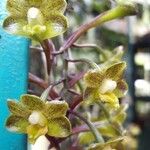
Chrysoglossum ornatum
Care Guide
💧 Water Every week
The Ornate Chrysoglossum, native to Southeast Asia, flourishes in the consistently moist soil found in tropical climates. It thrives with weekly watering to support its lush growth, though it can tolerate moderate drought. As an evergreen, it benefits from being outdoors, where it can receive sufficient humidity and rainfall.
☀️ Light Partial sun
Ornate chrysoglossum grows best when it gets substantial sunlight for part of the day, though it can also tolerate periods of intense sun or low light. Naturally occurring in locations with filtered light, it is vulnerable to poor health if exposed to prolonged insufficient or extreme sunlight.
What are the sunlight requirements for Ornate chrysoglossum?
Ornate chrysoglossum requires partial sun, about 3-6 hours of sunlight per day, but can also thrive in full sun or full shade conditions with more than 6 hours of sunlight. It's important to observe how sunlight moves through your garden to find spots that provide the right balance of light and shade, ensuring the plants' well-being. In its natural habitat, it is found in areas with filtered sunlight and can suffer from poor health if exposed to either insufficient or extreme sunlight for prolonged periods.
How can artificial lighting benefit indoor Ornate chrysoglossum plants?
Indoor Ornate chrysoglossum plants benefit from artificial lighting, especially when natural sunlight is insufficient, such as during winter or in less sunny spaces. Artificial lights, like LED, are recommended as they can be tailored to provide specific wavelengths needed by the plant. For full sun plants, 30-50W/sq ft is needed; partial sun plants require 20-30W/sq ft, and full shade plants need 10-20W/sq ft. The light source should be placed 12-36 inches above the plant for 8-12 hours per day to mimic natural daylight hours, promoting faster and healthier growth.
What are the signs of inadequate light for Ornate chrysoglossum?
Signs of inadequate light in Ornate chrysoglossum include small, mature leaves, leggy or sparse growth, faster leaf drop, slower or halted new growth, and lighter-colored or irregularly patterned new leaves. These symptoms indicate a struggle with light deficiency, leading to various health issues such as chlorosis (yellowing leaves due to chlorophyll breakdown), sunscald (damage from intense sunlight exposure), leaf curling (a defense mechanism against excessive sunlight), wilting (loss of turgor pressure causing droopiness), and leaf scorching (brown, dry, and crispy leaf edges from too much sun).
What steps can be taken to improve light conditions for Ornate chrysoglossum?
To improve light conditions for Ornate chrysoglossum, gradually adapt your plants to changing light conditions by relocating them to sunnier spots each week, with an aim of providing 3-6 hours of direct sunlight daily. For indoor plants that are large or not easily moved, consider supplementing with artificial light, such as desk lamps or professional plant grow lights, for at least 8 hours daily. Outdoors, carefully transition plants to brighter areas to avoid sunburn. If certain parts of the plant are shadowed, pruning obstructive branches or moving smaller plants to sunnier locations with good drainage can also help. Remember, while parts of the plant affected by insufficient sunlight might not recover, new growth should be healthy with improved light exposure.
🌡️ Temperature 20–37.8°C
Ornate chrysoglossum grows best in its native habitat when temperatures generally fall between 68 and 100 °F (20 to 38 ℃). If ambient temperatures move outside this range, suitable adjustments should be made to support the plant's healthy growth.
What are the optimal growing conditions for Ornate Chrysoglossum?
Ornate Chrysoglossum thrives in its native environment where temperatures typically range from 68 to 100 °F (20 to 38 °C). As a tropical plant, it requires a warm environment to grow healthily. During winter, if temperatures drop below 0°C, it is recommended to bring the plant indoors and maintain indoor temperatures above 20°C. Placing the plant near a south-facing window ensures ample sunlight. To keep the plant in good condition, regularly mist it or use a humidifier to maintain high humidity levels. If the plant must overwinter outdoors, ensure it is in a sheltered spot that receives sunlight and consider using a temporary greenhouse or wrapping it in plastic film or fabric to protect it from colder temperatures.
What should I do if the Ornate Chrysoglossum is exposed to temperatures below its ideal range?
Ornate Chrysoglossum is not tolerant of low temperatures and grows best when the temperature is above 20°C. Protection is crucial during winter to keep it above 0°C. Exposure to temperatures below -5°C may result in water-soaked necrosis, wilting, and drooping of the leaves. To remedy this, trim off any frostbitten areas and bring the plant indoors to a warmer environment. Place it near a south-facing window for ample sunlight but avoid placing it near heaters or air conditioning vents as this could cause the air to become too dry.
What steps should be taken if the Ornate Chrysoglossum experiences high temperatures?
During the summer, it's important to ensure the Ornate Chrysoglossum remains below 38°C. Should temperatures exceed 43°C, the plant's growth will stall, and its leaves will begin to wilt, becoming more susceptible to root rot and sunburn. To combat this, trim away any sunburned or dried parts of the plant. Move it to a shaded location, especially to protect it from the midday and afternoon sun. It's also beneficial to water the plant in the morning and evening to maintain moisture for both the plant and its environment.
💨 Humidity
🪴 Soil 6-7
🌱 Fertilizer
Proper fertilization is essential for Ornate chrysoglossum's health and appearance. Fertilize Ornate chrysoglossum in summer, applying fertilizer every month throughout the season. Nutrients drive growth and help maintain the plant's components. Fertilization improves Ornate chrysoglossum's flowering display, ensuring the best blooms.
🪴 Pot & Repot
✂️ Pruning
To ensure the healthy growth of ornate chrysoglossum, it's important to use effective pruning techniques. Key methods include removing dead leaves and thinning out dense areas to improve airflow. The best time for pruning is from early spring to late winter, which promotes healthy regrowth and enhances the plant's appearance. Regular pruning not only reduces the risk of disease but also supports vigorous growth. For more tailored advice, be sure to consult local horticultural resources.
🌿 Propagating
🐛 Diseases & pets
☠️ Toxicity
Characteristics
- Plant Type
- Herb
- Life Cycle
- Perennial
- Genus
- Chrysoglossum
- Family
- Orchidaceae
- Hardiness Zone
- 9-11
- Mature Height
- 61 cm
- Mature Spread
- 20 cm to 30 cm
- Leaf Color
- Green, Dark Green
- Leaf Type
- Evergreen
- Flower Color
- Yellow
- Flower Size
- 2.03 cm
- Bloom Time
- Late spring, Summer
- Planting Time
- Spring, Summer
- Harvest Time
- Fall, Early winter
- Native Area
- Sri Lanka, India, Malaysia, Indonesia, Cambodia, Vietnam, Myanmar, Vanuatu, Philippines, Laos, Fiji, Thailand, China