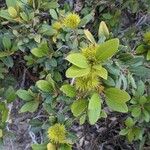
Chrysolepis sempervirens
Bush chinquapin · Bush golden chinquapin · Sierra chinkapin · California chinquapin
Description
Source: leafsnapChrysolepis sempervirens, commonly known as the bush chinquapin or evergreen chinquapin, is a species of flowering plant in the family Fagaceae. It is native to western North America, ranging from British Columbia to California. Typically growing as a shrub or small tree, it can reach heights of up to 20 feet. The plant features dark green, glossy, leathery leaves with toothed edges and a pointed tip. In late spring or early summer, the bush chinquapin produces small yellow-green flowers. These flowers eventually give way to edible nuts enclosed within spiny burrs. Native American tribes have used these nuts for food and medicinal purposes for centuries. Chrysolepis sempervirens prefers well-drained soils and can tolerate both sun and shade. It is commonly found in dry forests, woodlands, chaparral habitats, and on rocky slopes. Overall, Chrysolepis sempervirens is an attractive evergreen shrub or tree with year-round ornamental value due to its glossy foliage. Additionally, its edible nuts contribute to its ecological and cultural significance, having been an important resource for Native American tribes within its native range from British Columbia to California.
Care Guide
💧 Water Every 7 days
☀️ Light Partial sun
Bush chinquapin is native to habitats like forest understories and rocky areas, where it grows in natural shade. It favors partial sun but can tolerate both full sun and full shade, showing its versatile and hardy character.
🌡️ Temperature 10–35°C
💨 Humidity
🪴 Soil 6-7
🌱 Fertilizer
Fertilize your Bush chinquapin in early spring to encourage healthy growth. Regular fertilizing improves its overall health, producing vigorous growth, greater tolerance to harsh conditions, and better resistance to diseases and pests. Follow a consistent fertilization schedule for your Bush chinquapin to maintain vibrant foliage with rich color and a full, lush appearance.
🪴 Pot & Repot
✂️ Pruning
The bush chinquapin boasts dense foliage and evergreen leaves, requiring only minimal pruning in early spring. To promote healthy growth and reduce the risk of disease, remove any dead branches and thin out areas to improve air circulation. Use clean, sharp tools to help maintain the plant's vitality and ensure effective sunlight exposure and airflow.
🌿 Propagating
🐛 Diseases & pets
☠️ Toxicity
Characteristics
- Plant Type
- Tree
- Life Cycle
- Perennial
- Genus
- Chrysolepis
- Family
- Fagaceae
- Hardiness Zone
- 6-9
- Mature Height
- 1.83 m to 3.66 m
- Mature Spread
- 0.91 m to 3.05 m
- Leaf Color
- Dark Green
- Leaf Type
- Evergreen
- Flower Color
- Yellow
- Flower Size
- 0.51 cm to 1.02 cm
- Bloom Time
- Early summer, Mid summer
- Planting Time
- Spring
- Harvest Time
- Early fall, Mid fall