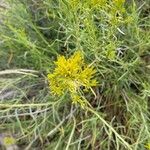
Chrysothamnus viscidiflorus
Yellow rabbitbrush · Sticky-leaf rabbitbrush · Douglas rabbitbrush · Yellowbrush · Douglas' rabbitbrush
Description
Source: leafsnapChrysothamnus viscidiflorus, commonly known as yellow rabbitbrush, is a perennial shrub native to western North America. It typically reaches a height of 1-2 meters and features narrow, needle-like leaves that are green-gray in color. In late summer and early fall, the plant produces bright yellow flowers that attract pollinators such as bees and butterflies. Yellow rabbitbrush is well adapted to dry environments and can thrive in various habitats, including sagebrush steppe, grasslands, and rocky slopes. It has been used for medicinal purposes by Native American tribes for centuries. The plant's deep root system makes it valuable for soil stabilization on disturbed sites such as roadsides or mining areas. Additionally, it provides crucial habitat for wildlife, including birds and small mammals. In summary, Chrysothamnus viscidiflorus is an ecologically significant native species that also offers aesthetic value with its bright yellow flowers during the fall season.
Care Guide
💧 Water Every 7 days
Green rabbitbrush is well-suited for arid environments, thriving even with infrequent rainfall due to its ability to store moisture efficiently. In domestic care, water the plant every 2-3 weeks, allowing the soil to dry out between waterings. Outdoors, green rabbitbrush prefers well-draining soil that mimics its natural low-humidity habitat.
How should I water my Green rabbitbrush?
Watering your Green rabbitbrush is easy since it's not particular about the watering tool you use. You can use a watering can, hose, or even a cup. Make sure to apply the water directly to the soil, ensuring equal moisture in all areas. Using filtered water is recommended to avoid harmful particles found in tap water. Additionally, using water at or slightly above room temperature is best to avoid shocking the plant. Remember, the Green rabbitbrush usually responds well to any water you give it.
What should I do if I give my Green rabbitbrush too much water or not enough water?
When it comes to outdoor plants, especially newly planted ones or plant seedlings, they are susceptible to not getting enough water. It's important to remember to water them consistently for a few months, particularly when they are small or just planted. Once the roots are established, Green rabbitbrush can mostly rely on rain for hydration. When Green rabbitbrush is planted in pots, overwatering is a common issue. If you accidentally overwater your Green rabbitbrush, it's crucial to take immediate action. First, stop watering the plant right away to minimize the impact of overwatering. Then, carefully remove the plant from its pot and inspect the roots. If there is no sign of root rot, you can put the plant back in its container. However, if you notice any root rot, trim away the affected roots and consider applying a fungicide to prevent further damage. Finally, repot the Green rabbitbrush in well-draining soil. On the other hand, if your Green rabbitbrush is underwatered, simply increase the frequency of watering. Underwatering is usually easy to fix. When a plant is underwatered, its leaves may droop, dry out, and fall off. However, once it receives enough water, the leaves will quickly regain their fullness. Therefore, it's essential to adjust your watering schedule as soon as you notice signs of underwatering.
How frequently should I water my Green rabbitbrush?
Most outdoor plants can thrive with natural rainfall. However, if your area has a lack of rainfall, it's important to water your plants adequately. During the spring and fall, watering every two weeks should be sufficient. In the summer, more frequent watering is necessary due to higher water needs. In the winter, when plant growth slows down, it's best to water sparingly or not at all unless your Green rabbitbrush is young or newly planted. In that case, watering more frequently can help it establish and grow into a more adaptable and drought-tolerant plant. For potted plants, there are two ways to determine watering frequency. The first option is to follow a predetermined watering schedule, such as once a week or once every other week. However, this may not always work since it doesn't account for the specific growing conditions of your Green rabbitbrush. Watering frequency can also change with the season. During summer, when water needs are highest, a predetermined schedule may not be sufficient. Alternatively, you can base your watering frequency on soil moisture. It's generally best to wait until the top two to four inches of soil in the pots have completely dried out before watering again.
How much water does my Green rabbitbrush require?
To water your Green rabbitbrush effectively, you don't always need to use a lot of water. If only a few inches of soil have dried since the last watering, giving the plant about five to ten ounces of water each time will promote healthy growth. You can also base the amount of water on the soil moisture. Take note of how many inches of soil have dried out between waterings. To ensure the plant receives sufficient moisture, water enough to dampen all the dry soil layers since the last watering. If over half of the soil has dried out, consider giving more water than usual. In such cases, continue adding water until you see excess water draining from the pot's drainage holes. If your Green rabbitbrush is planted in a rain-abundant area outdoors, it may not require extra watering. When the plant is young or establishing, it needs 1-2 inches of rain per week. Once it has matured, it can survive purely on rainwater, except during hot weather with no rainfall for 2-3 weeks. In those cases, give the plant a thorough watering to prevent stress.
How do I know if I'm giving enough water to my Green rabbitbrush?
Overwatering is a common problem for the Green rabbitbrush, and there are signs you should look for. An overwatered Green rabbitbrush will have yellowing leaves and may drop some leaves. Overwatering can also cause the plant to shrivel and promote root rot. On the other hand, an underwatered Green rabbitbrush will wilt and have brown or brittle leaves. Whether you see signs of overwatering or underwatering, you should intervene to restore the plant's health.
☀️ Light Full sun
Green rabbitbrush needs a large number of sunlight hours to grow well, originating from native habitats with ample daylight. The plant depends on that solar energy during every stage of its development to do well. However, too much or too little sun can harm its health and cause growth problems.
What are the sunlight requirements for Green Rabbitbrush (Chrysothamnus viscidiflorus)?
Green Rabbitbrush requires more than 6 hours of sunlight daily to ensure healthy growth. It is native to environments where daylight exposure is abundant, utilizing ample amounts of solar energy in all its growth stages. However, both too much and too little sun can disrupt its health, leading to various growth issues. Understanding your garden's light and shade patterns is essential for choosing the best spots for your plants.
How can artificial lighting be used for Green Rabbitbrush?
For indoor Green Rabbitbrush plants or in environments where natural sunlight is insufficient, especially during winter or in less sunny spaces, artificial lighting can be crucial. LED lights are recommended because they can be customized to provide specific light wavelengths needed by the plants. For full sun plants, 30-50W/sq ft of artificial light is needed; for partial sun plants, 20-30W/sq ft; and for full shade plants, 10-20W/sq ft. The light source should be placed 12-36 inches above the plant to mimic natural sunlight, and most plants will require 8-12 hours of light per day.
What are the symptoms of inadequate sunlight for Green Rabbitbrush?
If Green Rabbitbrush is not receiving enough sunlight, it may exhibit symptoms such as small new leaves, leggy or sparse growth, faster leaf drop, slower or halted growth, lighter-colored new leaves, chlorosis, sunscald, leaf curling, wilting, and leaf scorching. These symptoms indicate insufficient light for photosynthesis and overall plant health, requiring adjustments in light exposure.
What solutions can be applied to address inadequate sunlight for Green Rabbitbrush?
To address inadequate sunlight for Green Rabbitbrush, gradually increasing natural sunlight exposure is key. For indoor plants, move them to a sunnier location each week, aiming for at least 6 hours of direct sunlight daily, and use artificial light if needed. For outdoor plants, adjust their location gradually to prevent sunburn. Prune trees or other obstructions that block sunlight, and consider transplanting smaller plants to sunnier spots during their dormant period, ensuring good drainage. These steps will promote healthier growth and mitigate symptoms associated with insufficient light.
🌡️ Temperature 0–32.2°C
Green rabbitbrush is native to habitats that commonly experience temperatures ranging from 32 to 90°F (0 to 32°C). The plant favors a temperate climate and tolerates considerable temperature variation. If seasonal adjustments are required, they should be directed at keeping temperatures within that range.
What is the native temperature range for Green Rabbitbrush?
Green Rabbitbrush (Chrysothamnus viscidiflorus) thrives in environments that regularly experience temperatures between 32 to 90°F (0 to 32°C). It is native to temperate climates and is capable of enduring significant temperature fluctuations. To maintain the health of this plant, seasonal adjustments should focus on keeping within this temperature range. It's highly cold-tolerant and does not require extra frost protection measures, but it is recommended to water the plant generously before the first freeze in autumn to keep the soil moist and prevent drought and water scarcity during winter and early spring.
How does low temperature affect Green Rabbitbrush and what are the solutions?
Green Rabbitbrush is extremely cold-tolerant, capable of withstanding temperatures above -35°C (-31°F). If temperatures fall below this threshold, there might not be apparent damage during the winter; however, in spring, branches may become brittle, dry, and may fail to produce new shoots. To address this issue, it's advised to prune away any dead branches that have not produced new leaves in the spring.
How does high temperature affect Green Rabbitbrush and what are the solutions?
Green Rabbitbrush struggles with high temperatures, particularly when the thermometer climbs above 32°C (90°F). Under such conditions, the plant may lose a significant amount of its leaves, or in extreme cases, it could wither and die. To mitigate heat damage, trim away sunburned and dried parts of the plant. Moving the plant to a shaded area during midday and afternoon sun or using a shade cloth can provide necessary protection. Additionally, watering the plant in the morning and evening helps keep the soil moist and supports the plant's health during hotter periods.
💨 Humidity
🪴 Soil 6-7
🌱 Fertilizer
The timing of fertilizing Green rabbitbrush is important. Apply fertilizer in early spring and continue once a month until early summer. Fertilizer encourages attractive blooms and supplies energy during both dormant and active growth phases.
🪴 Pot & Repot
✂️ Pruning
Green rabbitbrush is a resilient shrub known for its vibrant yellow flowers. To maintain its health and appearance, it should be pruned during its dormant period, which is from early to late winter. Focus on removing dead branches and thinning out older growth to improve air circulation. Always use sharp, clean tools to prevent disease and promote the plant's health and structure.
🌿 Propagating
🐛 Diseases & pets
☠️ Toxicity
Characteristics
- Plant Type
- Shrub
- Life Cycle
- Perennial
- Genus
- Chrysothamnus
- Family
- Compositae
- Hardiness Zone
- 3-7
- Mature Height
- 1.52 m
- Mature Spread
- 30 cm to 61 cm
- Leaf Color
- Green
- Leaf Type
- Evergreen
- Flower Color
- Yellow
- Flower Size
- 0.20 cm to 0.51 cm
- Bloom Time
- Mid summer, Late summer, Early fall
- Planting Time
- Spring, Autumn
- Harvest Time
- Early fall, Mid fall