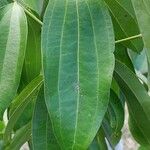
Cinnamomum verum
Cinnamon · True cinnamon tree · Ceylon cinnamon tree · Ceylon cinnamon · True Cinnamon
Description
Source: leafsnapCinnamomum verum, called true cinnamon tree or Ceylon cinnamon tree, is a small evergreen tree belonging to the family Lauraceae, native to Sri Lanka. The inner bark of several other Cinnamomum species is also used to make cinnamon, but C. verum has a subtler flavor that makes it preferred for certain recipes. C. verum is also an excellent health booster, due to its components that serve as protection against some chronic health conditions.
Care Guide
💧 Water
The true cinnamon tree flourishes in humid environments, requiring consistent moisture, although it can endure mild droughts. It should be watered every 1-2 weeks. Being an evergreen, the true cinnamon tree benefits from mulching, which helps retain soil moisture and regulate root temperature, ensuring optimal hydration during its growth cycles.
How should I water my True cinnamon tree?
Watering your True cinnamon tree is a straightforward task. You can use various watering tools such as cans, hoses, or even cups to keep the soil moist. It's important to water the soil directly and make sure all areas are evenly moistened, enabling all parts of the root system to receive adequate water. Consider using filtered water, as tap water might contain harmful particles. It's also advisable to use water that is at or slightly above room temperature to avoid shocking the tree. However, the True cinnamon tree is generally adaptable to different water types.
What do I need to do if I give my True cinnamon tree too much or too little water?
Proper watering is important for outdoor plants, especially if they are newly planted or seedlings. When the tree is still small or recently planted, make sure to water it regularly for a few months. Once the roots are established, the True cinnamon tree can rely on rain most of the time. If you have planted your True cinnamon tree in pots, overwatering is more likely to happen. If you accidentally overwater your tree, take immediate action to rectify the situation. Stop watering the plant right away to minimize the overwatering effects. Then, remove the tree from its pot and inspect the roots. If there is no root rot, you can return the plant to its container. However, if you find any signs of root rot, trim the affected roots and consider applying a fungicide to prevent further damage. Repot your True cinnamon tree in soil that drains well. On the other hand, underwatering is a simpler issue to fix. If you notice that the leaves of your True cinnamon tree are drooping, drying out, or falling off, it is a sign of underwatering. Simply water the plant more frequently, and the leaves will quickly regain their fullness. Adjust your watering schedule as soon as you notice underwatering occurring.
How frequently do I need to water my True cinnamon tree?
If your outdoor plants receive regular rainfall, they can grow normally without additional watering. However, if your area doesn't get much rain, you should water your plants every 2 weeks in spring and fall, and more frequently in summer. In winter, when plants grow slower and require less water, you should water them less often or not at all. For young or newly planted True cinnamon trees, watering more often can help them establish and become drought tolerant. When it comes to potted plants, there are two main ways to determine how often to water your True cinnamon tree. One way is to follow a set watering schedule, such as once a week or every other week. However, this approach may not take into account the specific conditions of your plant's environment. Another option is to water based on soil moisture. It's generally best to wait until the top two to four inches of soil, about ⅓ to ½ the depth of the pot, have completely dried out before giving more water. Keep in mind that during summer, when the plant's water needs are highest, a predetermined watering schedule may not be sufficient.
How much water does my True cinnamon tree require?
When watering your True cinnamon tree, you may be surprised to learn that it generally does not require a large amount of water. If only a few inches of soil have dried since your last watering, giving it about five to ten ounces of water each time will promote healthy growth. You can also determine the amount of water needed based on soil moisture. Keep track of how many inches of soil have dried out between waterings. To ensure your True cinnamon tree receives enough moisture, provide sufficient water to dampen all the dry layers of soil. If more than half of the soil has dried out, it may be necessary to give more water than usual. In such cases, continue watering until excess water drains from the pot's drainage holes. If your True cinnamon tree is located in an area that receives ample rainfall, additional watering may not be necessary. When the tree is young or still establishing itself, make sure it receives 1-2 inches of rain per week. As it grows and becomes more established, it can rely solely on rainwater, unless there is a period of hot weather with no rainfall for 2-3 weeks. In such circumstances, providing a thorough watering will help prevent stress to the tree.
How can I know if I am giving enough water to my True cinnamon tree?
The True cinnamon tree is more commonly affected by overwatering, and there are certain signs to watch out for. If your True cinnamon tree is overwatered, you may notice yellowing leaves and leaf drop. Excessive watering can also cause the plant's overall structure to shrink and can lead to root rot. On the other hand, if your True cinnamon tree is underwatered, it will start to droop and the leaves may turn brown or become brittle. Whether you see signs of overwatering or underwatering, it's important to take action and restore your True cinnamon tree's health.
☀️ Light Full sun
The true cinnamon tree does best with direct, unshaded sunlight for most of the day, which promotes its growth and overall vigor. While it can tolerate some shade, that can hinder its ideal development. Its native habitat generally has plenty of sun. Both excessive and insufficient light can negatively affect the tree's health.
What are the sunlight requirements for a True cinnamon tree?
The True cinnamon tree requires full sun exposure, thriving best when it receives unobstructed sunlight for most of the day. Full sun exposure means the plant should get above 6 hours of sunlight daily, whereas partial sun pertains to about 3-6 hours of sunlight. It’s important to watch how sunlight moves through your garden to ensure plants get the right balance of light and shade. Although the tree can survive some shade, it may not grow optimally. Its native habitat is characterized by abundant sunlight, and both exceeding or insufficient light could negatively impact the tree's health.
How does artificial lighting support plant growth?
Indoor plants, including the True cinnamon tree, require adequate lighting to grow well, especially in conditions where natural sunlight is limited or when they are kept in less sunny spaces. Artificial lighting comes as a crucial solution, providing the necessary spectrum of light for optimal growth. LED lights are particularly recommended because they can be tailored to offer specific wavelengths needed by plants. Full sun plants need 30-50W/sq ft of artificial light, partial sun plants require 20-30W/sq ft, and full shade plants should have 10-20W/sq ft. The artificial light sources should be placed 12-36 inches above the plant to imitate natural sunlight effectively, and the lighting should be on for about 8-12 hours per day to mimic natural daylight hours.
What are the symptoms of inadequate light in True cinnamon trees?
True cinnamon trees may display several symptoms when exposed to inadequate light. These include smaller new leaves, leggy or sparse growth, faster leaf drop, cessation or slowing of new growth, and the appearance of lighter-colored new leaves. Chlorosis, or the yellowing of leaves due to the breakdown of chlorophyll, can occur, as can sunscald, where intense light damages leaves and stems. Leaves may also curl or twist as a defense mechanism under extreme sunlight, and wilting or leaf scorching might occur due to overexposure to sunlight, leading to increased water loss and reduced photosynthesis.
What solutions are available to optimize sunlight exposure for True cinnamon trees?
Several strategies can be employed to ensure True cinnamon trees receive optimal sunlight. Indoors, plants can be gradually moved to sunnier locations each week until they achieve at least 6 hours of direct sun daily, with south-facing windows being ideal for maximum exposure. Artificial lighting, such as desk lamps or grow lights, can supplement sun exposure for large or immovable plants. Outdoors, gradually relocating plants to brighter spots can help them adapt without getting sunburned. Reducing obstructions, like pruning trees that cast shade, or transplanting to sunnier locations, can significantly improve sunlight access. It's important to remember that parts of the plant that suffered due to inadequate light might not recover, but new growth after adjusting light conditions will be healthy.
🌡️ Temperature 20–37.8°C
The true cinnamon tree does best in temperatures of 68 to 100°F (20 to 38°C). Native to warmer regions, it favors a hot climate. When seasons change, you may need to adjust conditions to recreate the warmth of its natural habitat, taking care with extreme cold.
What are the optimal temperature conditions for a True cinnamon tree?
The True cinnamon tree thrives best in temperatures ranging from 68 to 100°F (20 to 38°C). Originating from warmer climates, it has a preference for hot environments. To ensure its health, it is crucial to maintain temperatures above 20°C, especially during winter, to facilitate its growth. Additionally, steps should be taken to prevent the plant from freezing, by keeping the minimum temperature above the freezing point and providing protection or moving it indoors when the temperature drops to -5°C (25°F) or lower.
How does low temperature affect the True cinnamon tree and what are the solutions?
The True cinnamon tree has a moderate tolerance to low temperatures but performs best within a temperature range of 20°C to 38°C. During winter, it's essential to keep the temperature above 5°C. Exposure to temperatures below 1°C may result in leaf discoloration, with leaves darkening and potentially showing signs of water-soaked necrosis, wilting, and drooping. As the condition worsens, the leaves may turn brown. To combat these issues, frost-damaged parts should be trimmed away, and the plant should be moved to a warmer indoor environment or protected with a makeshift greenhouse. Ensuring the plant is placed near a south-facing window for ample sunlight or using supplemental lighting if natural light is inadequate is beneficial.
What should be done if a True cinnamon tree is exposed to high temperatures?
During the summer, it is important to keep the True cinnamon tree's environment below 38°C. Exposure to temperatures above 43°C can inhibit the plant's growth, cause the leaves to lighten in color, and make it susceptible to sunburn. If such conditions occur, sunburned and dried parts of the plant should be trimmed away. Relocating the plant to an area that offers shade during the peak afternoon sun and ensuring the soil remains moist with morning and evening watering can help mitigate the adverse effects of high temperatures.
💨 Humidity high (>60%)
This plant needs special care because it loves high humidity levels of 60-80% or more. The best way to achieve this is by placing a humidifier near the plant. Daily misting is also essential! Make sure the room has good ventilation.
🪴 Soil 6-7
🌱 Fertilizer
For the True cinnamon tree, use natural organic materials such as compost, grass clippings, or manure. You may also use a slow-release granular fertilizer or commercial fertilizer, but apply it sparingly. Work the organic fertilizer into the soil before planting. Generally, one to two fertilizer applications per growing season are enough for a bountiful harvest.
🪴 Pot & Repot 2-3 years
When repotting a True cinnamon tree, pick a pot 1-2 inches (2.5–5.1 cm) larger that has good drainage. Use a well-draining potting mix. Repot in spring or fall, making sure the root ball sits slightly below the rim of the pot. Water thoroughly after repotting and place the tree in a warm spot with indirect sunlight.
✂️ Pruning
The true cinnamon tree is an aromatic evergreen known for its flavorful bark. To promote healthy growth, prune the tree from early to late winter. This helps remove dead branches and improve air circulation. It's important to maintain a strong central leader for a balanced structure. Additionally, using clean tools is essential to minimize damage and enhance the tree's health and productivity.
🌿 Propagating
🐛 Diseases & pets
☠️ Toxicity
Characteristics
- Plant Type
- Tree
- Life Cycle
- Perennial
- Genus
- Cinnamomum
- Family
- Lauraceae
- Hardiness Zone
- 10-12
- Mature Height
- 10.06 m to 14.94 m
- Mature Spread
- 4.57 m to 9.14 m
- Leaf Color
- Green, Bronze
- Leaf Type
- Evergreen
- Flower Color
- White, Yellow, Green
- Flower Size
- 0.25 cm to 0.51 cm
- Bloom Time
- Early spring, Winter
- Planting Time
- Spring, Summer, Autumn
- Harvest Time
- Mid spring, Late spring, Early summer
- Native Area
- Sri Lanka, India, Malaysia, Indonesia, Myanmar