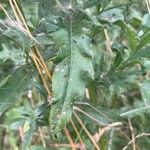
Cirsium altissimum
Roadside thistle · Tall thistle · Blue Thistle
Description
Source: leafsnapCirsium altissimum is a North American species of plants in the tribe Cardueae within the family Asteraceae. Common name is tall thistle or roadside thistle. The species is native to the eastern and Central United States, with a range extending from Massachusetts west to North Dakota and south to Texas and the Florida Panhandle.Cirsium altissimum is, as the name implies, a tall herb, sometimes reaching as much as 400 cm (160 inches or 13 1/3 feet). It is a biennial or perennial, blooming only once before dying. Leaves are toothed or shallowly lobed, with fine spines along the edge. Sometimes there is only one flower head but more often more, with pink or purple (rarely white) disc florets but no ray florets. Flowers bloom June to October. The species grows in prairies, open woodlands, and disturbed sites.
Care Guide
💧 Water
Tall thistle thrives in conditions similar to its native habitat, which includes regular rainfall. Although it has a moderate tolerance to drought, it should be watered weekly to keep the soil moist and well-drained. Typically cultivated outdoors, tall thistle needs careful watering during its active growing season to support optimal blooming.
How should I water my Tall thistle plant?
To care for the Tall thistle, it is important to use filtered water at room temperature. Tap water may contain harmful particles that can affect the plant's health. The Tall thistle thrives in warm environments, so it is best to avoid using cold water as it may shock the plant. Additionally, overhead watering should be avoided to prevent issues with the foliage. Instead, gently water the soil with filtered room temperature water until it is completely soaked. This helps to moisturize the roots and supports their growth and nutrient absorption.
What should I do if I give too much or too little water to my Tall thistle?
Overwatering and underwatering can harm your Tall thistle plant, but overwatering is more common. When given too much water, the stems and leaves may wilt and turn yellow. Prolonged overwatering can cause diseases like root rot, mold, and mildew, which can be fatal. Underwatering is less likely as the Tall thistle plant can tolerate some drought. However, it can still happen, resulting in brittle and brown leaves. It's important to recognize the signs of overwatering early to prevent irreversible damage. Reduce watering immediately if you notice these signs and consider replacing poorly draining soil with a loose, well-draining potting mix. If you notice signs of underwatering, simply water more regularly until the plant recovers.
How often should I give water to my Tall thistle?
If your Tall thistle plant is in a pot, the best way to determine if it needs water is by checking the soil. Stick your finger into the soil and if the top two to three inches are dry, it's time to water it. If your Tall thistle is planted in the ground outdoors, you can use the same method to test the soil. Once again, if you find that the first few inches of soil are dried out, it's time to water it. Typically, during the spring and early fall, you'll need to water this plant about once a week using this method. However, during extremely hot weather, you may need to water it two or more times per week. It's worth mentioning that mature, well-established Tall thistles can tolerate drought well.
How much water does my Tall thistle plant need?
When watering your Tall thistle, don't hold back on the amount of water you give. Make sure the top few inches of soil are dry before watering, and then give it a good, thorough soaking. The water should flow through the drainage holes at the bottom of the pot, so if you don't see any excess water draining, you may not have given enough water. However, be careful not to let the water accumulate in the soil, as that can harm the plant. If there's no water draining through the pot, it could mean that the soil doesn't drain well, which is not good for the plant's health. If the plant is outside, 1 inch of rain per week should be enough.
How do I give water to my Tall thistle at different stages of growth?
The water needs of the Tall thistle can change depending on its growth stages. In the first few years of its life or after transplanting, it requires more water than usual. During these stages, the Tall thistle focuses on sprouting new roots that will support future growth, and to nourish these roots effectively, they require more moisture. However, after a few seasons, the Tall thistle will need less water. Another stage that demands increased watering is during the bloom period when flower development utilizes a significant amount of moisture. Therefore, additional water may be necessary for your Tall thistle during this time.
☀️ Light Full sun
Tall thistle grows best when given uninterrupted sunlight for most of the day, though it can endure periods of reduced light. Native to open areas, it needs ample light to support healthy development, and a lack of light can limit its growth. Conversely, excessive light exposure can also cause stress to the plant.
What are the sunlight requirements for Tall thistle?
Tall thistle requires full sun, which means it needs more than 6 hours of sunlight, but it can also tolerate partial sun, about 3-6 hours of sunlight. Observing how sunlight moves through your garden can help in choosing spots that offer a good balance of light and shade, ensuring the plant's well-being. This plant is native to open habitats and thrives best when exposed to plenty of sunlight throughout the day, though it can manage with less intense light exposure as well.
How does artificial lighting benefit indoor Tall thistle plants?
Indoor Tall thistle plants require adequate lighting for optimal growth, especially when natural sunlight is insufficient. Artificial lights, such as LED lights, are vital for promoting faster, healthier growth by providing the specific wavelengths of light that the plants need. Full sun plants should have 30-50W/sq ft of artificial light, partial sun plants 20-30W/sq ft, and full shade plants 10-20W/sq ft. The light source should be placed 12-36 inches above the plant, mimicking natural sunlight, and most plants will need 8-12 hours of light per day.
What are the symptoms of light deficiency in indoor Tall thistle plants?
When Tall thistle is grown indoors with inadequate light, it may display several symptoms indicating light deficiency. These include smaller new leaves, leggy or sparse growth, faster leaf drop, slower or no new growth, and lighter-colored new leaves. Addressing these symptoms early by adjusting the light exposure can help ensure the plant's health and vitality.
How can overexposure to sunlight affect Tall thistle?
Overexposure to sunlight can harm Tall thistle, leading to symptoms like chlorosis, where leaves lose their green color and turn yellow, sunscald characterized by pale or necrotic areas on the plant tissue, leaf curling as a defense mechanism against water loss, wilting due to increased transpiration, and leaf scorching with brown, dry edges on leaves. It is crucial to monitor the plant's exposure to sunlight and provide shade if necessary to prevent these issues.
What solutions can help improve light conditions for Tall thistle?
Improving light conditions for Tall thistle involves both indoor and outdoor strategies. Indoors, gradually move the plant to sunnier locations until it receives at least 6 hours of direct sunlight, use a south-facing window, and consider artificial light for additional support. Outdoors, move plants gradually to avoid shock and ensure they adapt to increased light. Reducing obstructions like overhanging branches can also increase sunlight exposure. For plants in the ground, consider transplanting to a sunnier spot during the plant’s dormant period for better growth.
🌡️ Temperature 0–35°C
Tall thistle is naturally adapted to conditions with temperatures between 68 and 95 degrees Fahrenheit (20 to 35 degrees Celsius). To mimic its native environment, vary the temperature within that range across the seasons.
What are the ideal temperature conditions for growing Tall Thistle?
Tall thistle is best suited to environments where the temperature ranges between 68 to 95 degrees Fahrenheit (20 to 35 degrees Celsius). It is adapted to these temperatures across different seasons and exhibits strong resistance to cold. Although special frost protection measures are generally not required during winter, in regions where temperatures are expected to drop below -35°C, protective measures such as covering the plant with soil or straw are recommended. Additionally, to combat potential drought and water scarcity in winter and early spring, it's advisable to water the plant abundantly before the first freeze in autumn, ensuring the soil is moist as it enters a frozen state.
How does low temperature affect Tall Thistle and what are the solutions?
Tall thistle is remarkably cold-tolerant, thriving best at temperatures above 20°C and capable of withstanding winters where temperatures stay above 0°C. When temperatures plummet below -35°C, the plant may not exhibit immediate distress during winter; however, it might lead to decreased sprouting or even failure to sprout in the following spring. To mitigate this, it's advisable to remove any parts of the plant that have failed to sprout as spring arrives.
How does high temperature affect Tall Thistle and what are the remedies?
During the summer, it is crucial to ensure that Tall thistle does not endure temperatures above 35°C. Exposure to temperatures exceeding 38°C can cause the leaves to lighten in color, curl, become prone to sunburn, and in severe cases, cause the plant to wilt and dry out entirely. To counteract these effects, sunburned and dried parts of the plant should be trimmed away. Moving the plant to a shaded area or using a shade cloth to protect it from the midday and afternoon sun is recommended, alongside watering the plant in the morning and evening to maintain soil moisture.
💨 Humidity
🪴 Soil 5-6
🌱 Fertilizer
Tall thistle requires regular fertilization to encourage flowering but does not tolerate excessive amounts. It needs light, frequent applications of fertilizer throughout its entire life cycle, especially during the peak of active growth and while it is flowering. You should continue feeding your Tall thistle until it stops blooming.
🪴 Pot & Repot
✂️ Pruning
Tall thistle is a herbaceous perennial known for its height, spiny leaves, and purple flowers. To keep its shape, it should be pruned from early to late spring. Removing seed heads helps control its spread, and always using clean tools minimizes the risk of disease. Regular pruning encourages healthier growth and more robust blooms.
🌿 Propagating
🐛 Diseases & pets
☠️ Toxicity
Characteristics
- Plant Type
- Herb
- Life Cycle
- Biennial, Perennial
- Genus
- Cirsium
- Family
- Asteraceae
- Hardiness Zone
- 3-9
- Mature Height
- 0.91 m to 3.05 m
- Mature Spread
- 49 cm
- Leaf Color
- Green
- Leaf Type
- Semi-evergreen
- Flower Color
- Pink, Purple
- Flower Size
- 2.54 cm to 5.08 cm
- Bloom Time
- Late summer, Early fall, Mid fall
- Planting Time
- Spring, Summer
- Harvest Time
- Fall