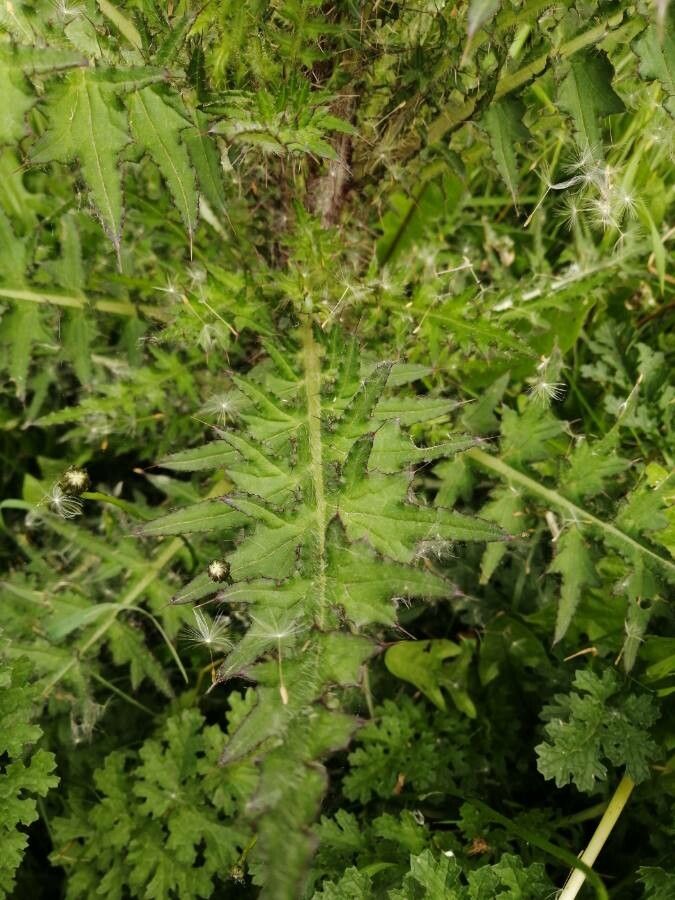
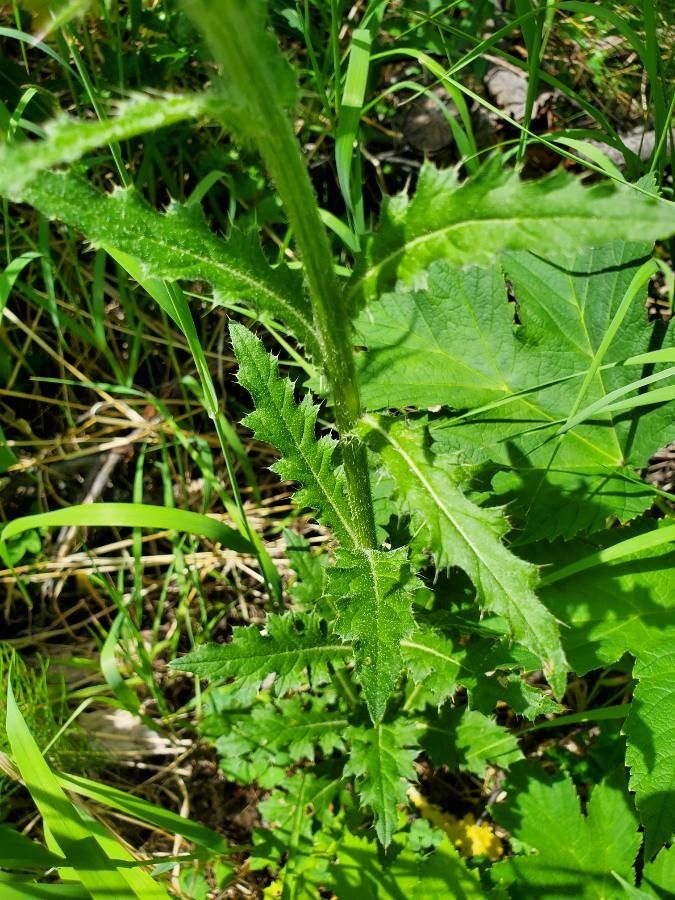
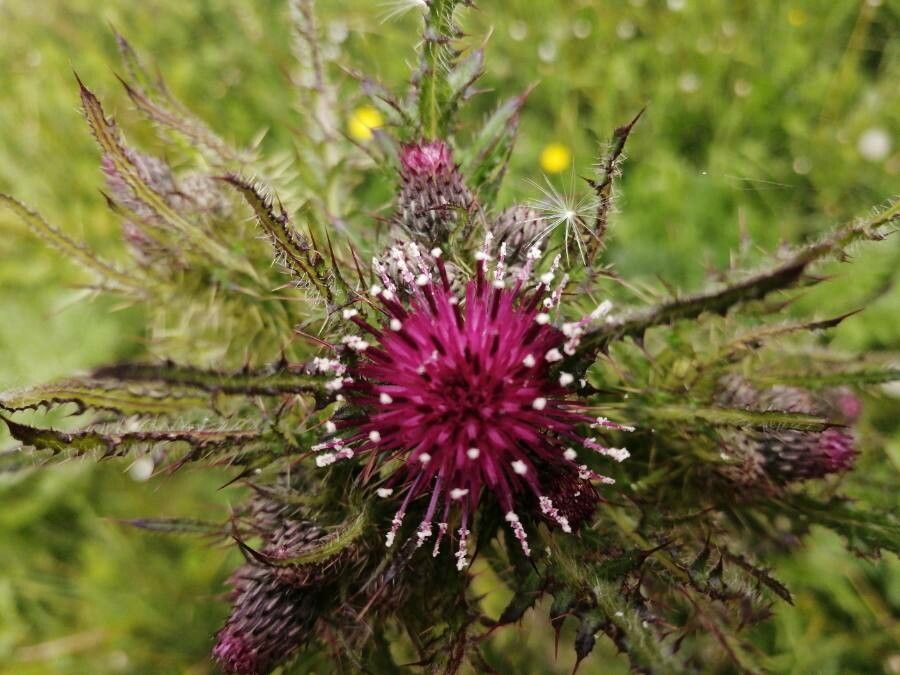
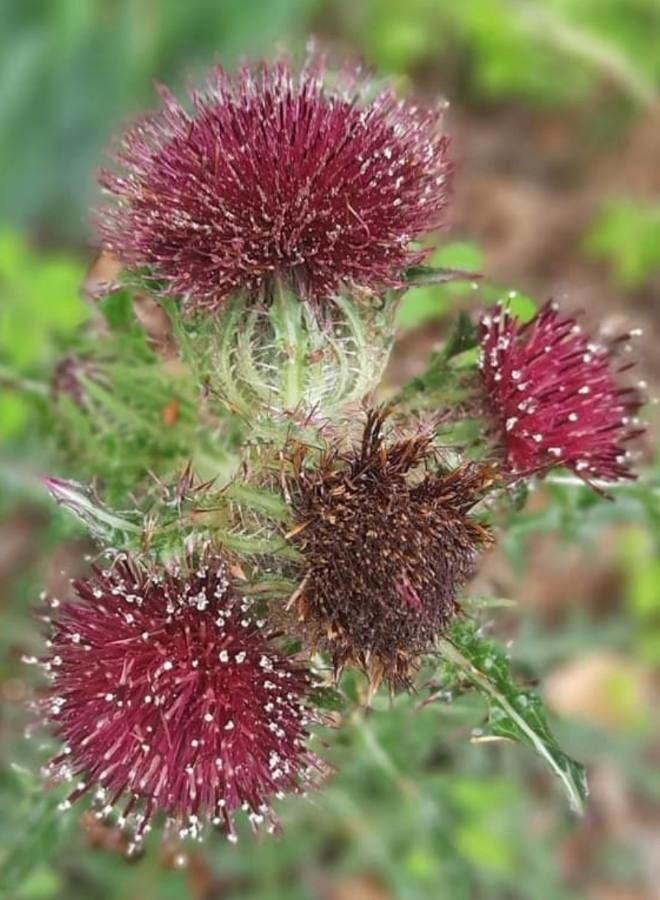
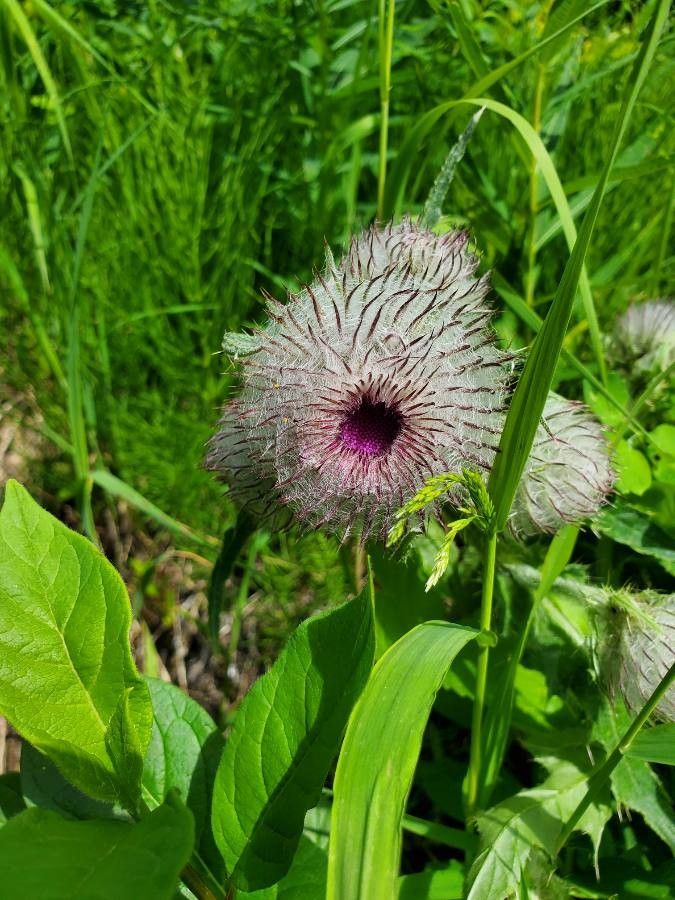
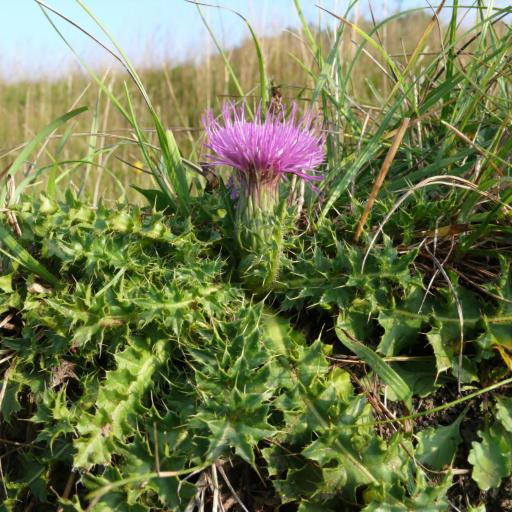
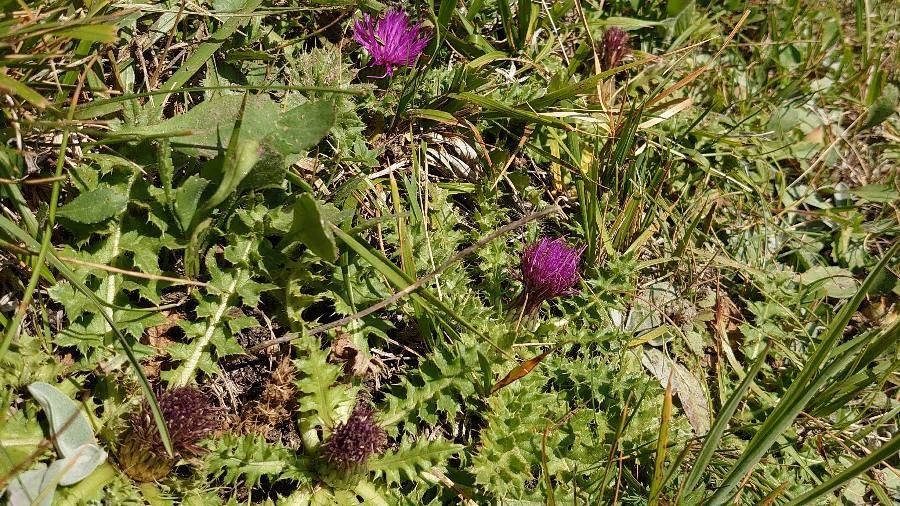
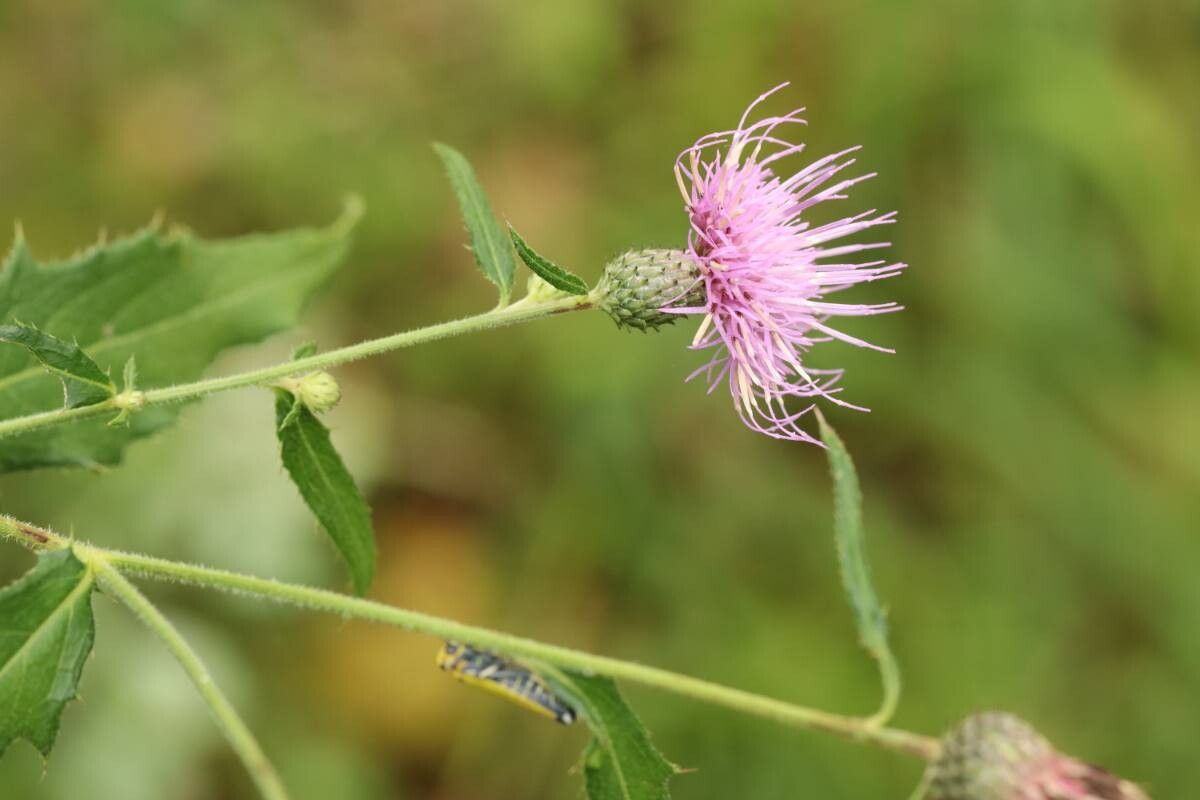
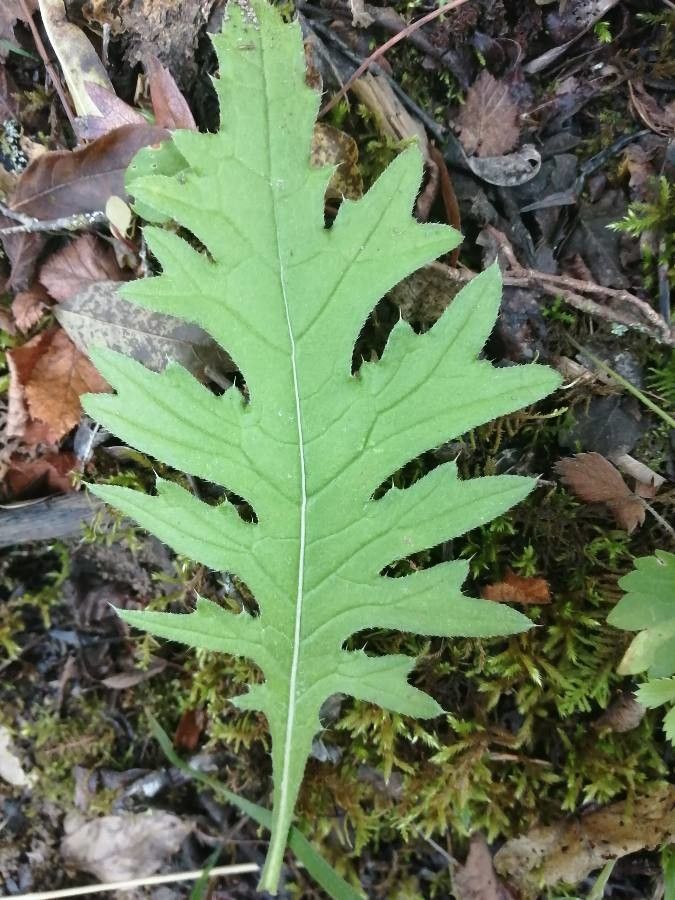
Cirsium edule, the edible thistle or Indian thistle, is a species of thistle in the genus Cirsium, native to western North America from southeastern Alaska south through British Columbia to Washington and Oregon, and locally inland to Idaho. It is a larval host to the mylitta crescent and the painted lady.Cirsium edule is a tall herbaceous perennial plant, reaching 1–2 m (39–79 in) in height. The leaves are very spiny, lobed, 10–30 cm long and 2–5 cm broad (smaller on the upper part of the flower stem). The inflorescence is 3–4 cm diameter, purple, with numerous disc florets but no ray florets. The achenes are 4–5 mm long, with a downy pappus which assists in wind dispersal. It is monocarpic, growing as a low rosette of leaves for a number of years, then sending up the tall flowering stem in spring, with the plant dying after seed maturation.Edible thistle is used by Native Americans for its edible roots and young shoots. The roots are sweet, but contain inulin, which gives some people digestive problems. VarietiesCirsium edule var. edule - Oregon, Washington Cirsium edule var. macounii (Greene) D.J.Keil - Oregon, Washington, British Columbia, Alaska Cirsium edule var. edule wenatchense D.J.Keil - Washington
Edible thistle has moderate resistance to disease but can be prone to problems like leaf spot. Its vulnerability to insect pests varies by variety, though most tend to be less resistant to pests. For care, Edible thistle requires regular watering and fertilizing, along with frequent pruning of yellowing leaves. It is important to address pests and diseases as they appear and to harvest the plant promptly. Edible thistle is best suited to people who can invest some time and energy in regular maintenance.
How to keep Cirsium Edule.
Light
Edible thistle is native to habitats that receive plenty of sunlight, such as open fields and sunny meadows. It prefers full sun but can also withstand partial sun.
Temperature
For Edible thistle, moderate temperatures are preferred, roughly the same range most people find comfortable. It does best in conditions that are neither very hot nor very cold. The primary concern with high temperatures is sunburn, so providing some shade in summer is recommended to avoid excessive heat. When temperatures fall, Edible thistle goes dormant. If you want continuous growth, you need to keep temperatures higher through the winter. Frost can harm the plant and should be avoided.
Fertilizer
To maximize the yield and flavor of Edible thistle, provide sufficient nitrogen throughout the entire growth cycle, including pre-planting and at harvest. Plants that are well watered and fertilized develop plentiful, healthy leaves and have reduced bitterness. Before planting, enrich the soil with organic matter such as compost or manure, ideally 2 to 8 weeks beforehand.
Pruning
Edible thistle features spiky foliage and vibrant purple flowers. To help them thrive, it is important to prune them from early to late spring. The key techniques involve removing dead stems and cutting back older ones. This promotes healthy growth, improves airflow, and reduces the risk of pests, ultimately enhancing both the plant's vigor and appearance.
Botanical profile.
- Plant Type
- Herb
- Life Cycle
- Perennial
- Genus
- Cirsium
- Family
- Asteraceae
- Hardiness Zone
- 6-9
- Mature Height
- 0.52 m to 2.13 m
- Mature Spread
- 30 cm to 61 cm
- Leaf Color
- Green
- Leaf Type
- Deciduous
- Flower Color
- Pink
- Flower Size
- 2.03 cm to 4.06 cm
- Bloom Time
- Summer
- Planting Time
- Spring, Autumn
- Harvest Time
- Late summer, Early fall, Mid fall
Other names.
Reader questions.
What is the Botanical Name of Edible Thistle?
The botanical name of Edible Thistle is Cirsium edule. This plant belongs to the genus Cirsium, which includes various thistle species known for their edible qualities.