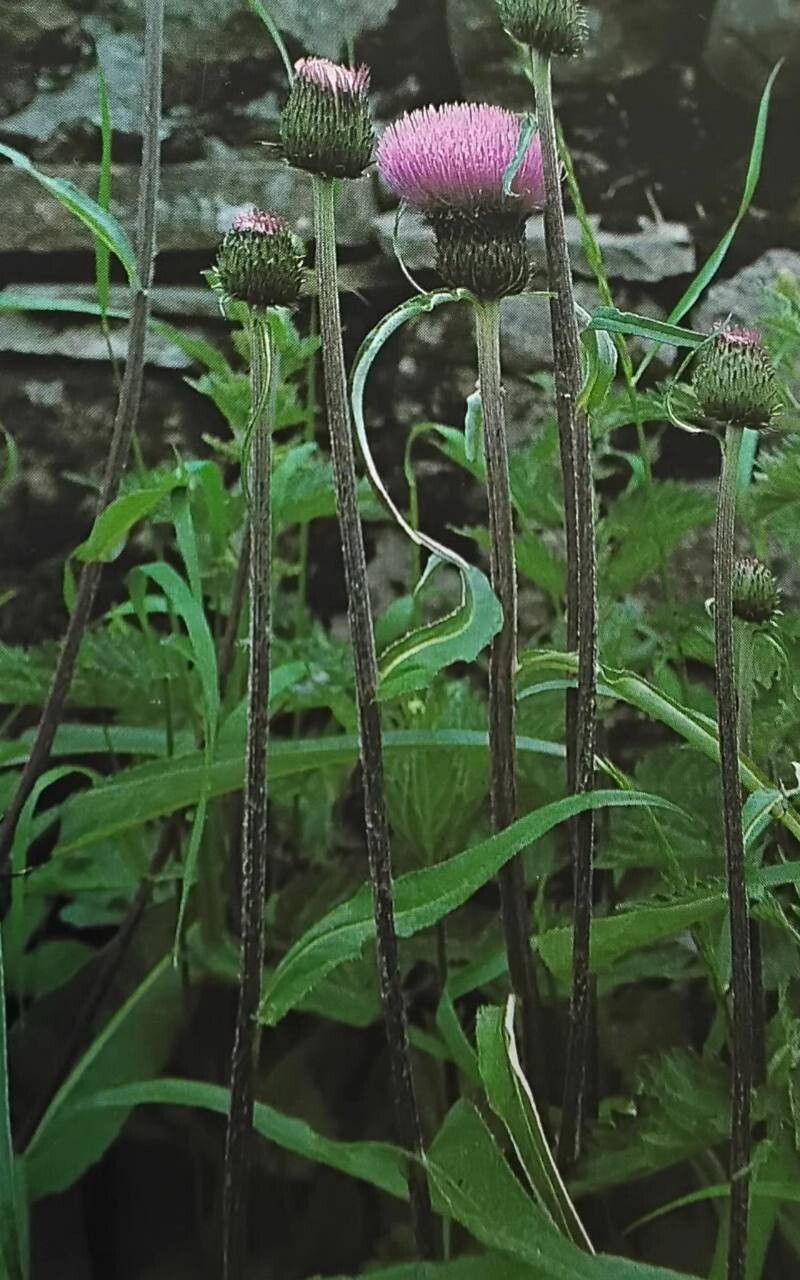
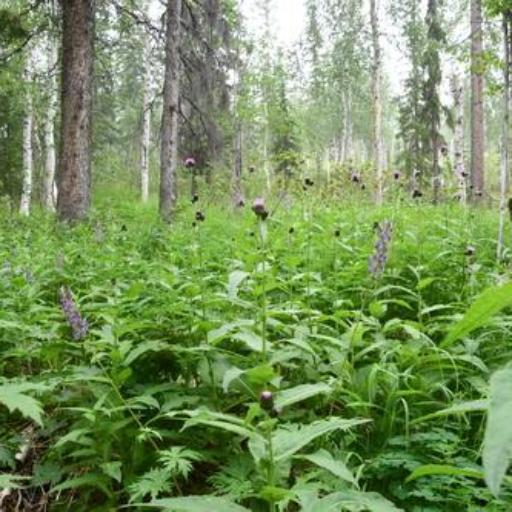
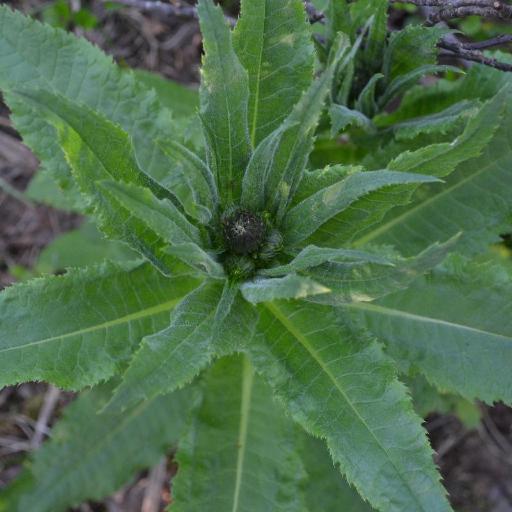
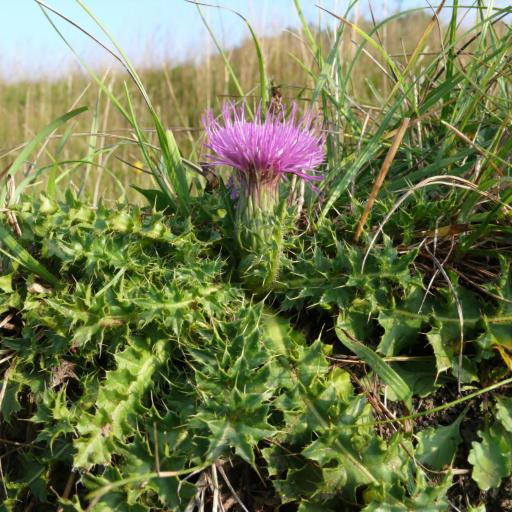
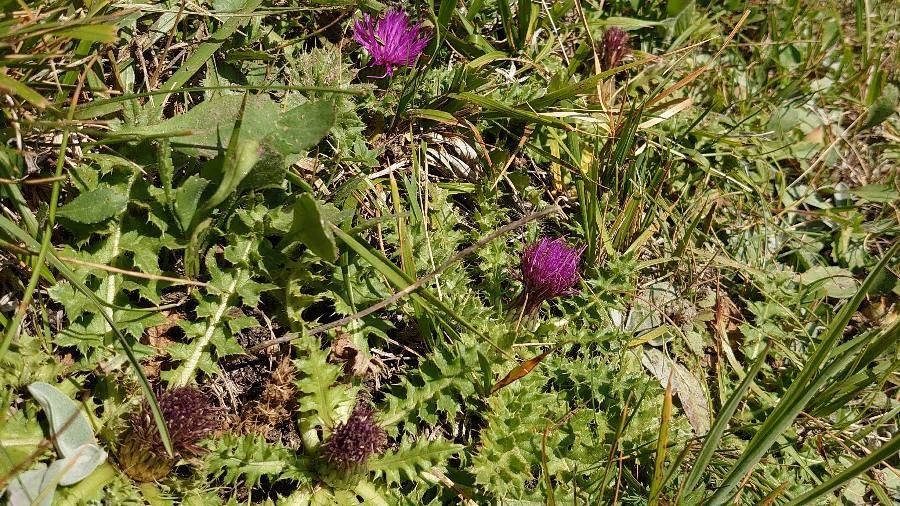
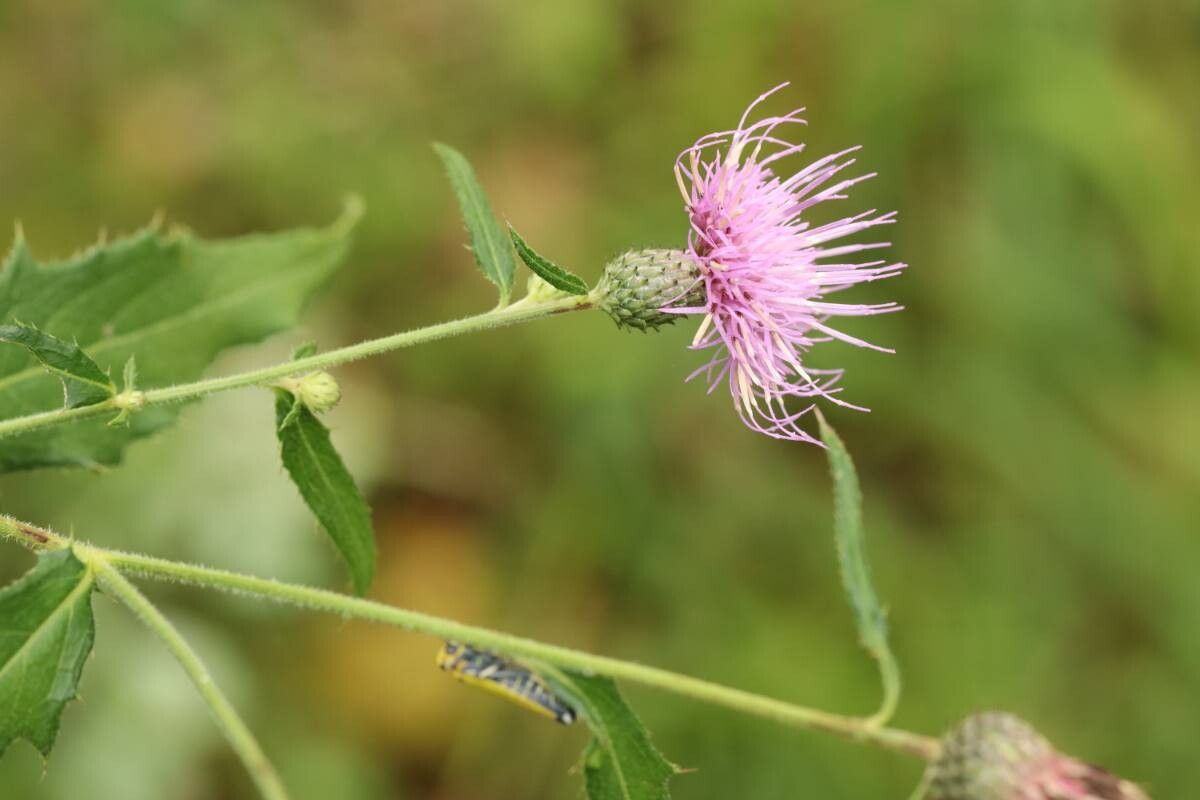
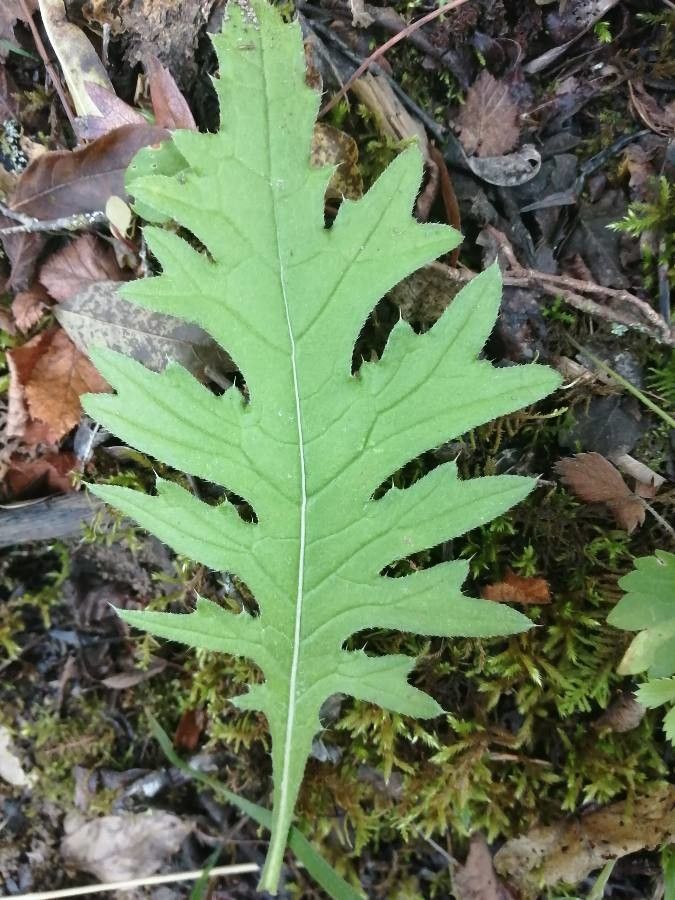
Cirsium helenioides, the melancholy thistle, is an Asian and Arctic species of plants in the tribe Cardueae within the family Asteraceae. The species is native to Greenland (but considered extinct from Greenland since 1960), Iceland, Norway, Sweden, Finland, Russia, Xinjiang, Kazakhstan.Cirsium helenioides is a perennial plant herb up to 120 cm (48 inches) tall, usually not branched, blooming only once before dying. Leaves are green on top, woolly underneath, with thin spines along the edges. There is one flower head per plant, with purple (occasionally white) disc florets but no ray florets.
The melancholy thistle is fairly disease-resistant and generally not prone to illnesses. However, it can be vulnerable to pests and diseases present in its surroundings. These outbreaks are usually not serious. For care, this plant needs a moderate level of maintenance. It should be pruned regularly to preserve a good appearance and support healthy growth. Fertilizing can also help encourage flowering. The melancholy thistle is suitable for anyone with outdoor space, such as a garden or patio, and does not demand extensive care experience. It may need more attention when grown indoors.
How to keep Cirsium Helenioides.
Light
Melancholy thistle favors sites that receive sun for most of the day, though it can tolerate places with only occasional sunlight. Its natural habitats are generally sunny. Both excessive and insufficient light can potentially impede its growth.
Temperature
Melancholy thistle can tolerate a wide spectrum of temperature conditions, though its range may still be constrained by various combinations of moisture and heat. It grows best in warm summer conditions with sufficient rainfall or watering. Extended periods of cloudy, rainy weather or prolonged high temperatures can raise the chance of Melancholy thistle dying. In winter, adequate protection from cold can increase the plant's chances of survival.
Fertilizer
The best time to fertilize a Melancholy thistle is in early spring, when it is coming out of dormancy and starting active growth. Fertilizing supplies essential nutrients for healthy development. Although Melancholy thistle has relatively low fertilizer requirements, applying fertilizer annually can improve its survival and encourage better, longer-lasting flowers.
Botanical profile.
- Plant Type
- Herb
- Life Cycle
- Perennial
- Genus
- Cirsium
- Family
- Asteraceae
- Hardiness Zone
- 3-8
- Mature Height
- 1.07 m
- Mature Spread
- 91 cm
- Leaf Color
- Green
- Leaf Type
- Deciduous
- Flower Color
- Purple, Lavender
- Flower Size
- 3.05 cm to 5.08 cm
- Bloom Time
- Summer
- Planting Time
- Spring, Summer
- Harvest Time
- Late summer, Early fall, Mid fall
- Native Area
- Sweden, Austria, Czech Republic, Slovakia, Montenegro, Poland, Croatia, Slovenia, Belarus, Ukraine, Serbia, Russia, Lithuania, Norway, Germany, Italy, Spain, Switzerland, Denmark, Estonia, Finland, Ireland, United Kingdom, Romania, Latvia, Belgium, France
Other names.