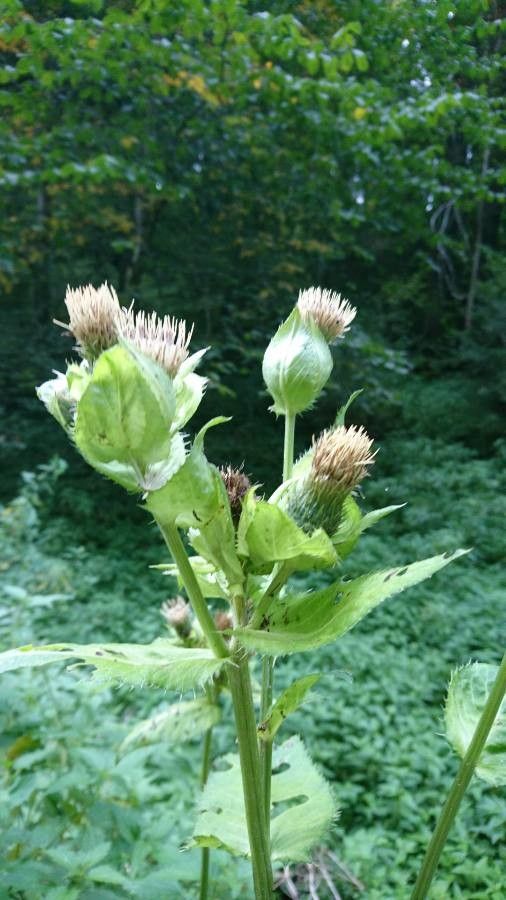
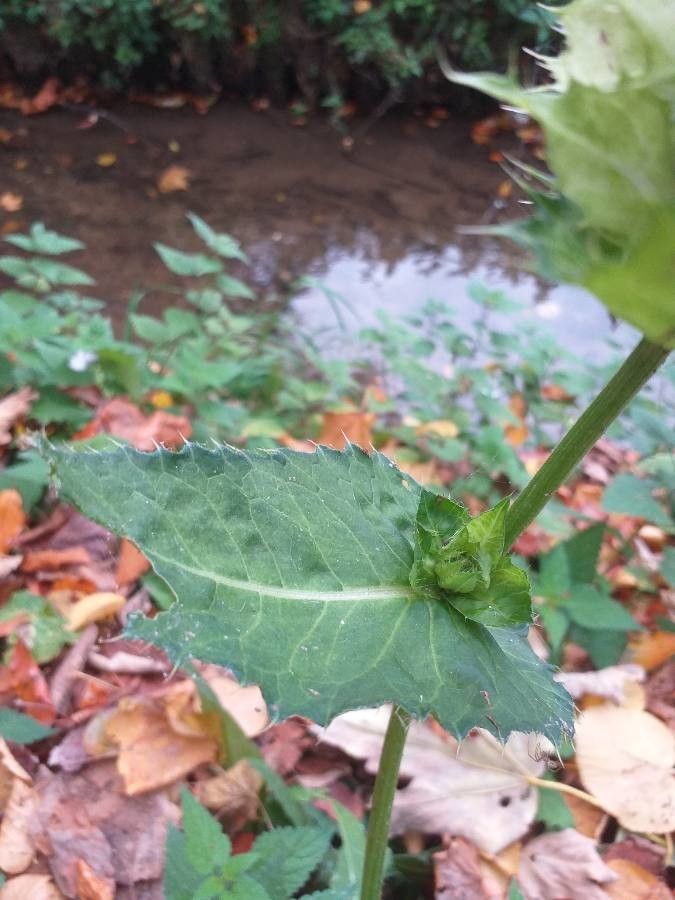
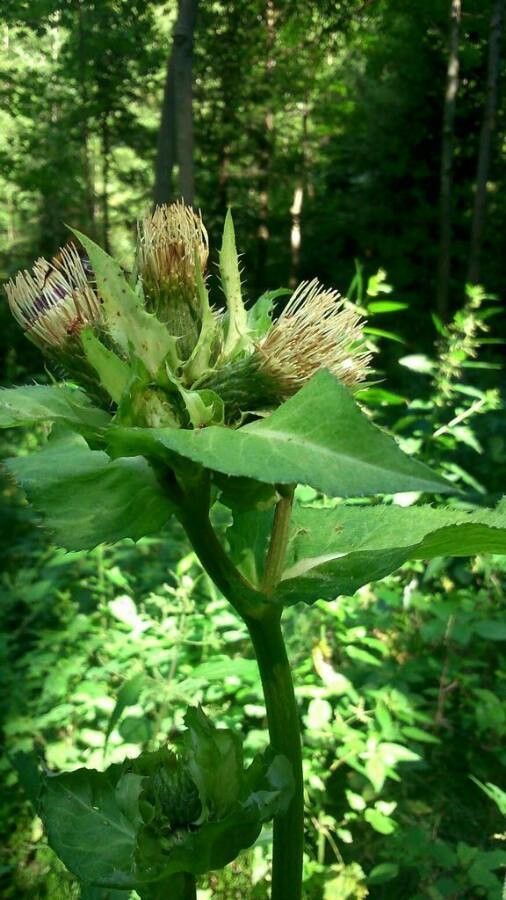
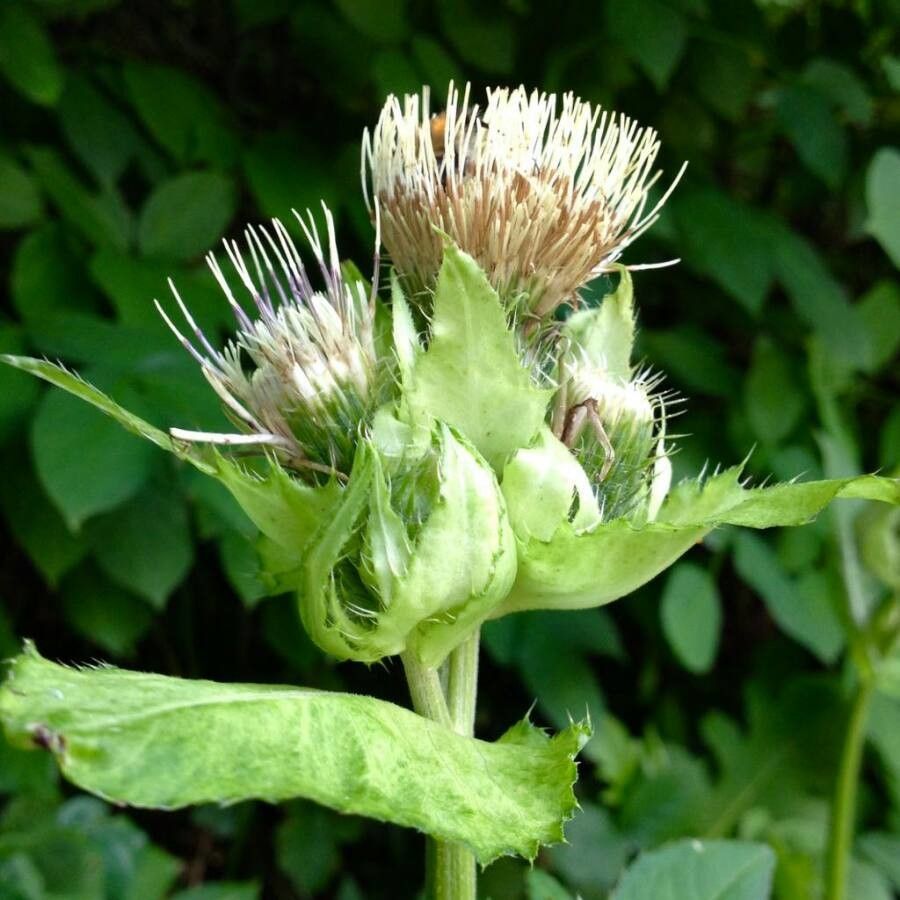
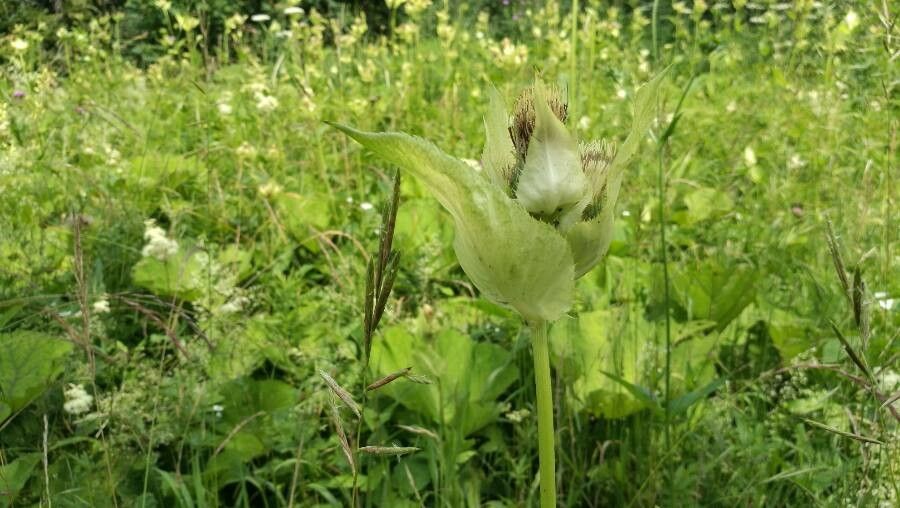
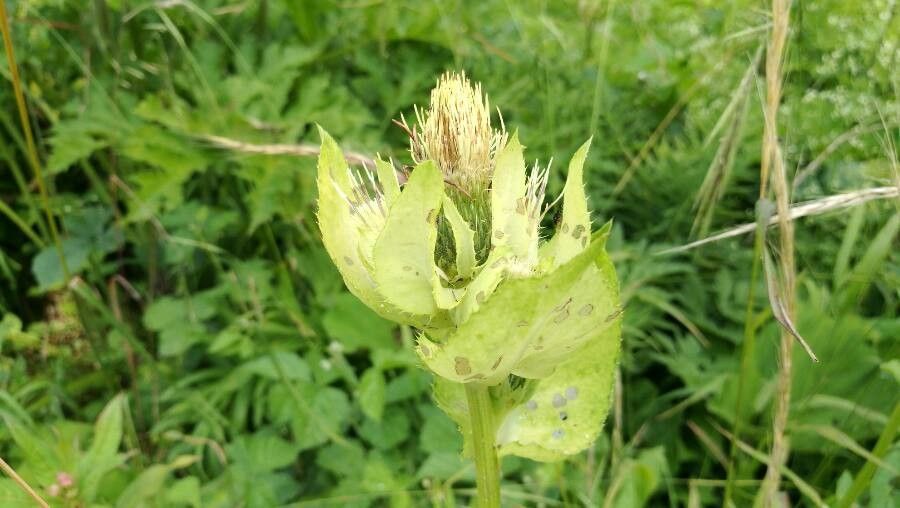
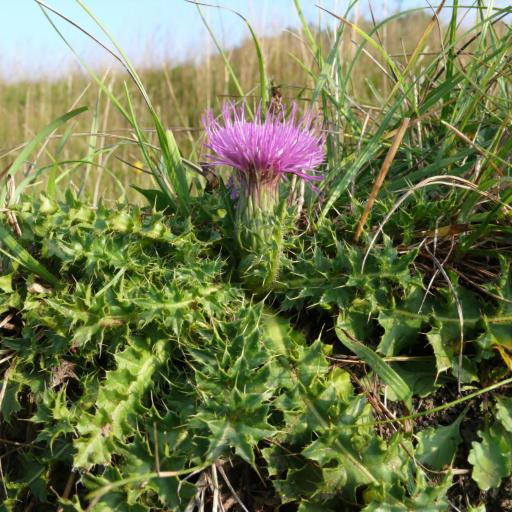
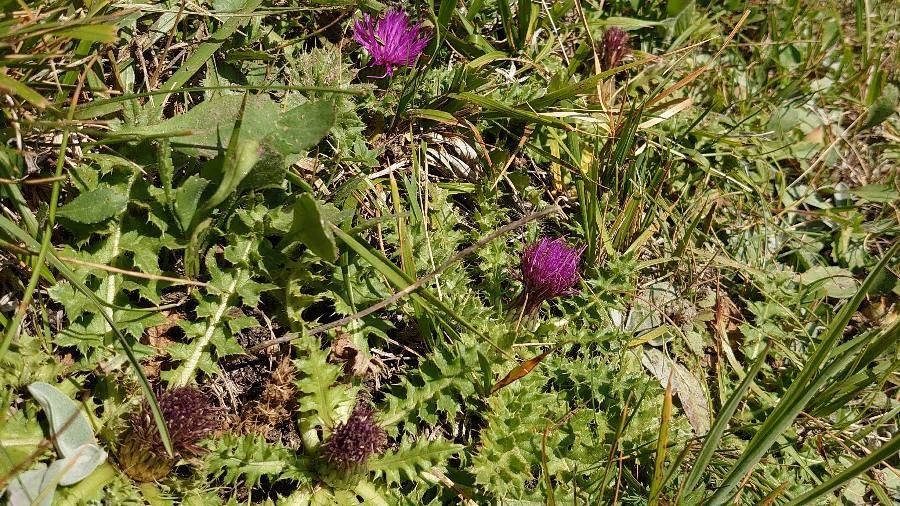
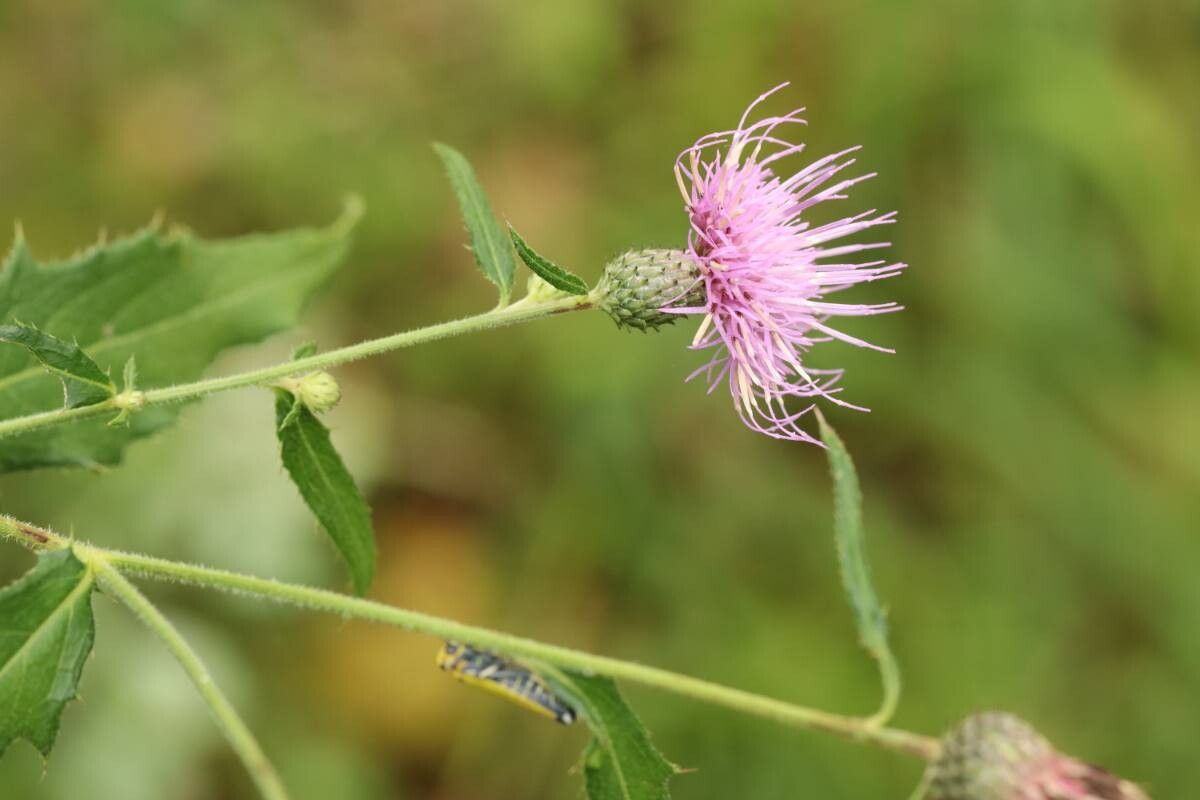
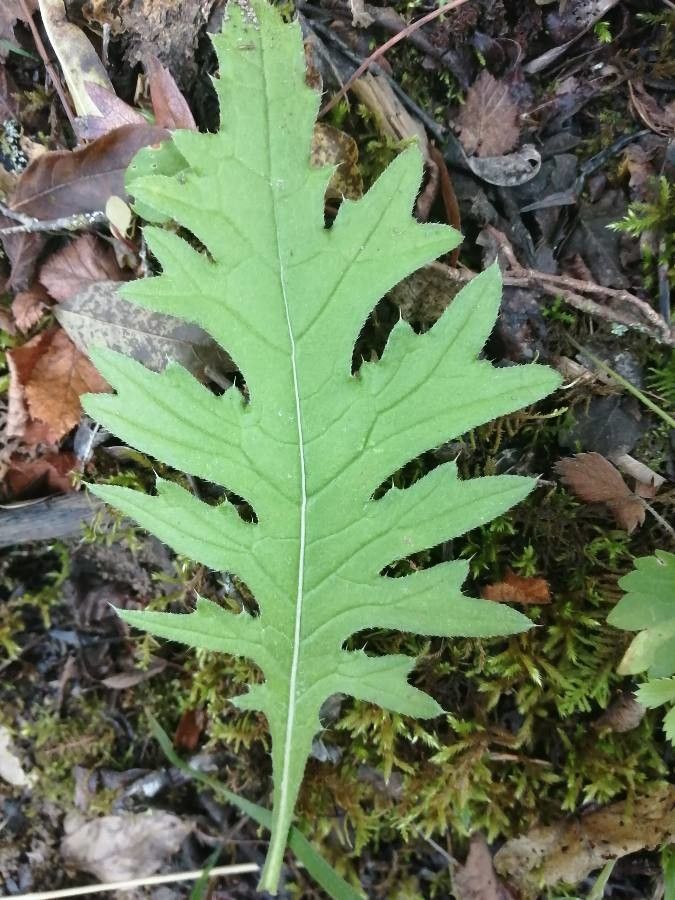
Cirsium oleraceum, commonly known as the cabbage thistle, is a perennial herbaceous plant belonging to the Asteraceae family. Native to Europe and Asia, it thrives in meadows, pastures, and open woodlands. The plant can reach up to 1.5 meters in height and features spiny leaves on its stem. The leaves of Cirsium oleraceum are deeply lobed with spiny edges and are arranged in a rosette at the base of the stem. The plant produces pink or purple flowers that form dense clusters at the top of each stem. The cabbage thistle has been used for medicinal purposes for centuries due to its anti-inflammatory properties. Historically, humans have also consumed its young shoots, which can be cooked like asparagus or added raw to salads. Cirsium oleraceum contributes to biodiversity by providing food for pollinators such as bees and butterflies. However, it can become invasive if not properly managed, as it spreads rapidly through seed dispersal. Overall, Cirsium oleraceum is a fascinating plant with medicinal and culinary uses. It also plays a vital role in supporting biodiversity in the ecosystems where it naturally grows.
Botanical profile.
- Plant Type
- Herb
- Life Cycle
- Perennial
- Genus
- Cirsium
- Family
- Asteraceae
- Hardiness Zone
- 6-9
- Mature Height
- 0.4 m to 1.22 m
- Mature Spread
- 10 cm to 49 cm
- Leaf Color
- Green
- Leaf Type
- Deciduous
- Flower Color
- White, Cream
- Flower Size
- 2.54 cm to 4.06 cm
- Bloom Time
- Early summer, Mid summer
- Planting Time
- Spring, Summer, Autumn
- Harvest Time
- Mid summer
- Native Area
- Sweden, Austria, Czech Republic, Slovakia, Montenegro, Bulgaria, Poland, Croatia, Slovenia, Belarus, Ukraine, Serbia, Russia, Lithuania, Norway, Hungary, Germany, Italy, Kazakhstan, Spain, Switzerland, Denmark, Estonia, France, United Kingdom, Romania, Latvia, Belgium, Moldova, Netherlands
Other names.