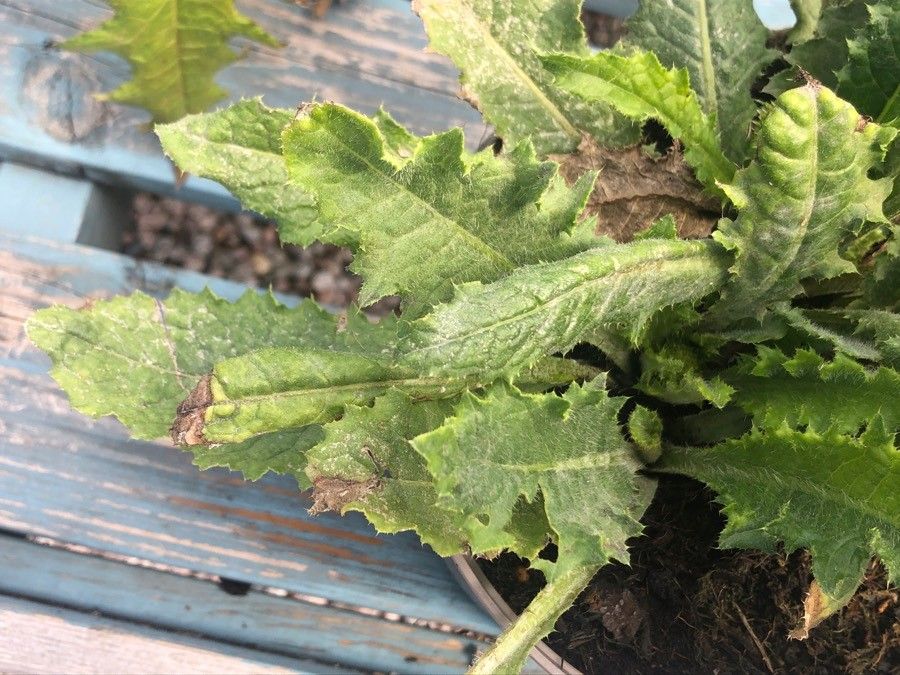
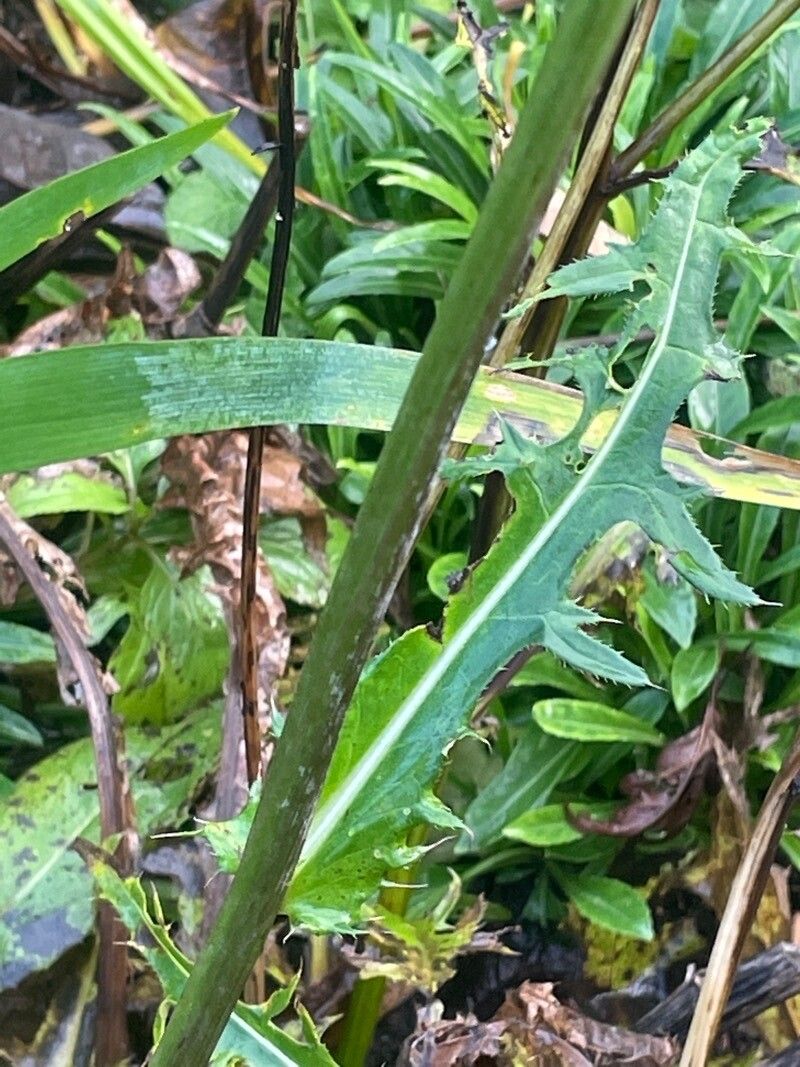
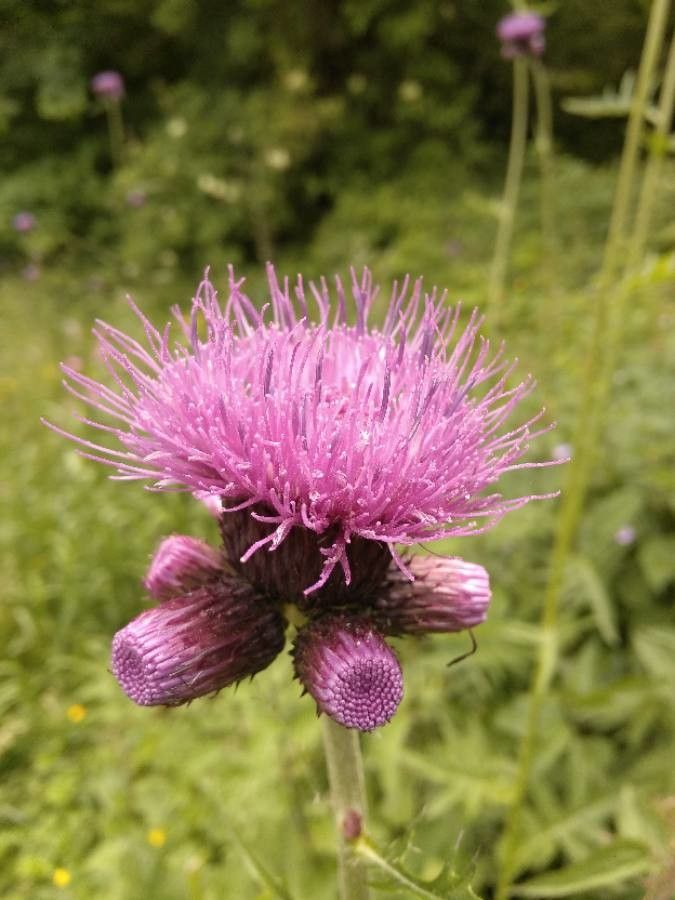
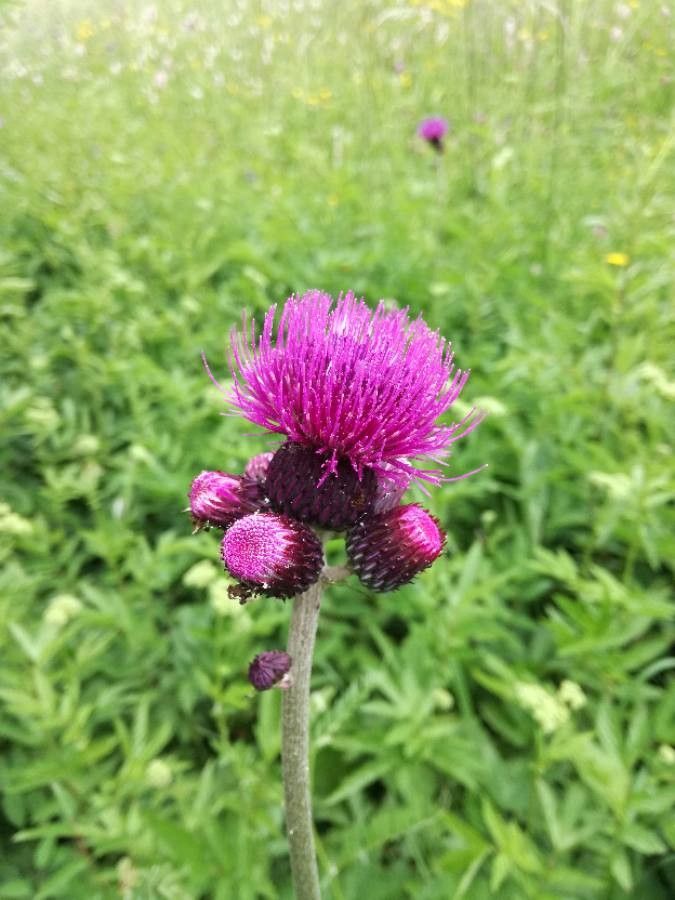
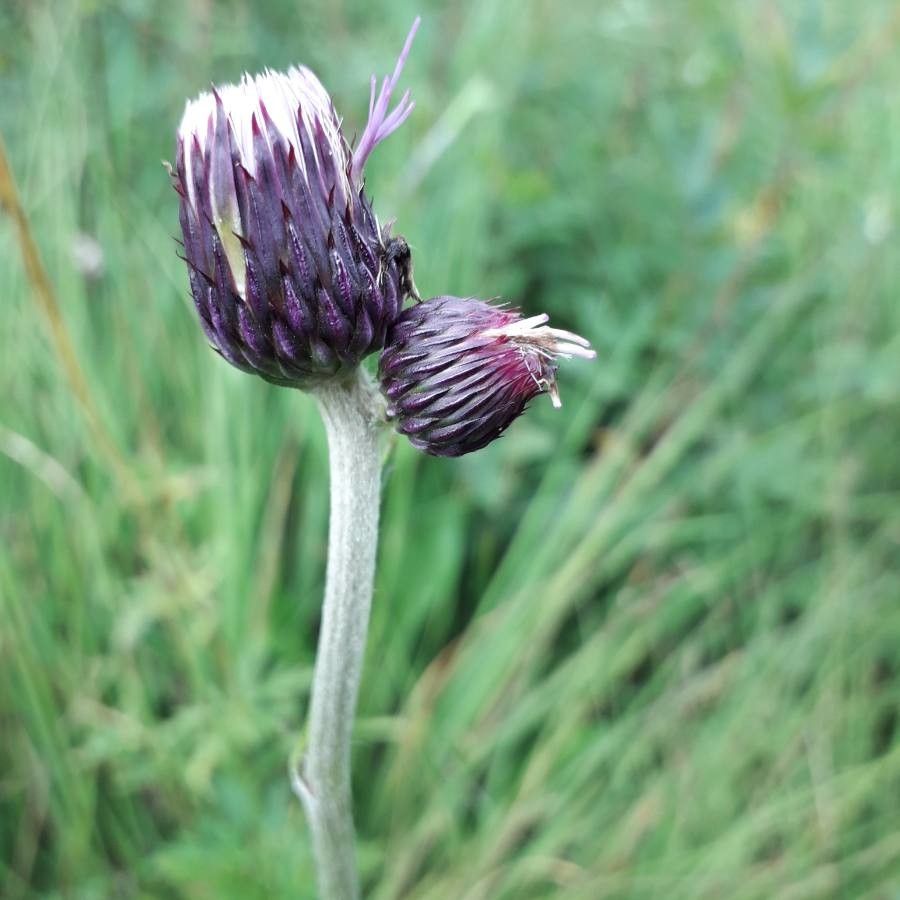
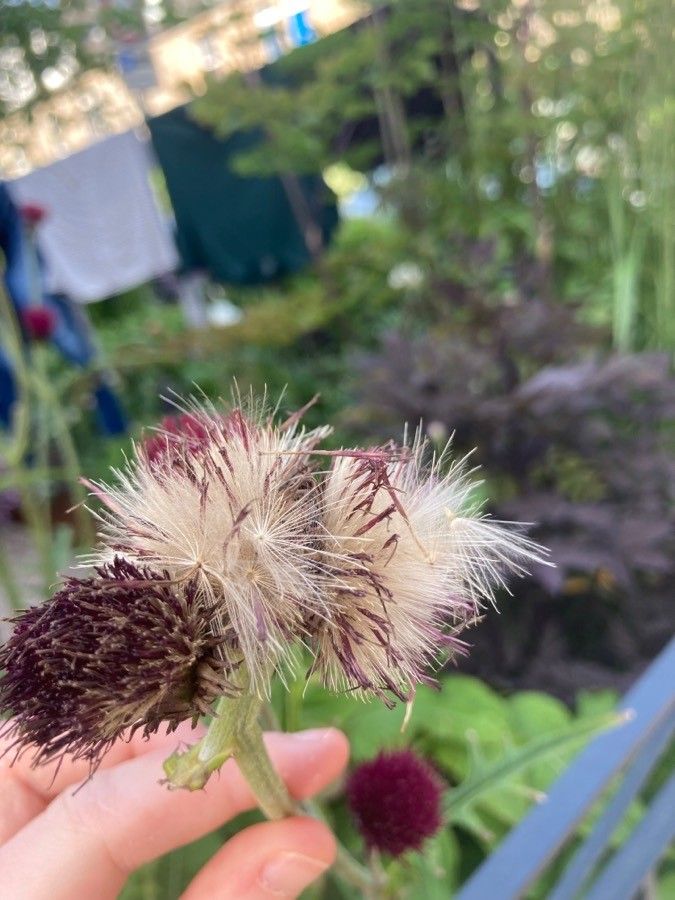
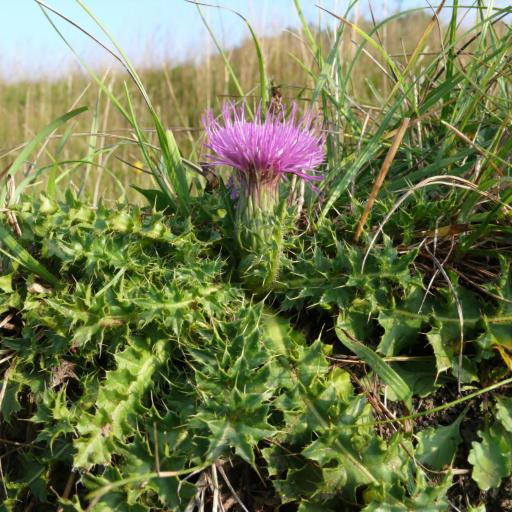
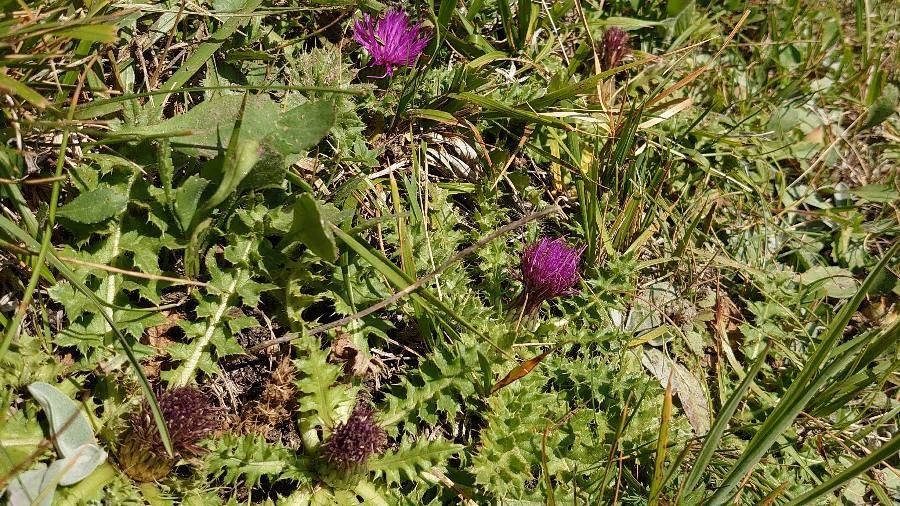
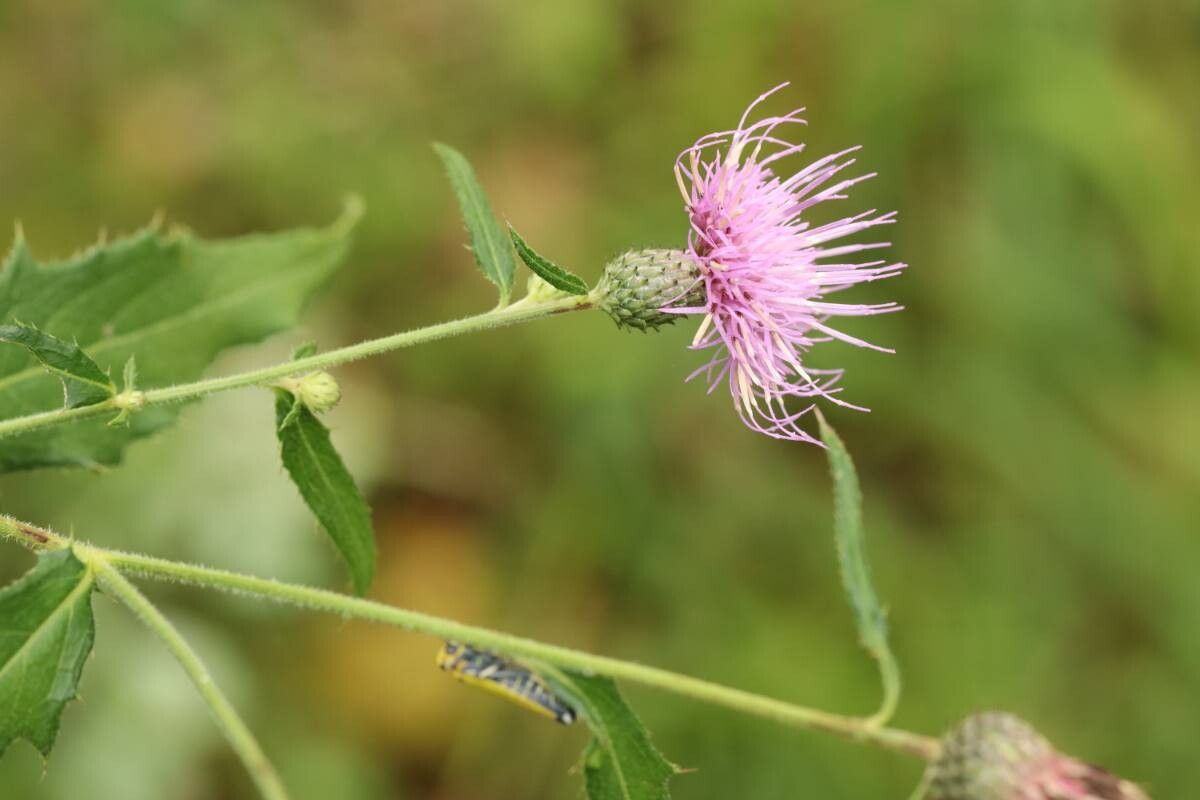
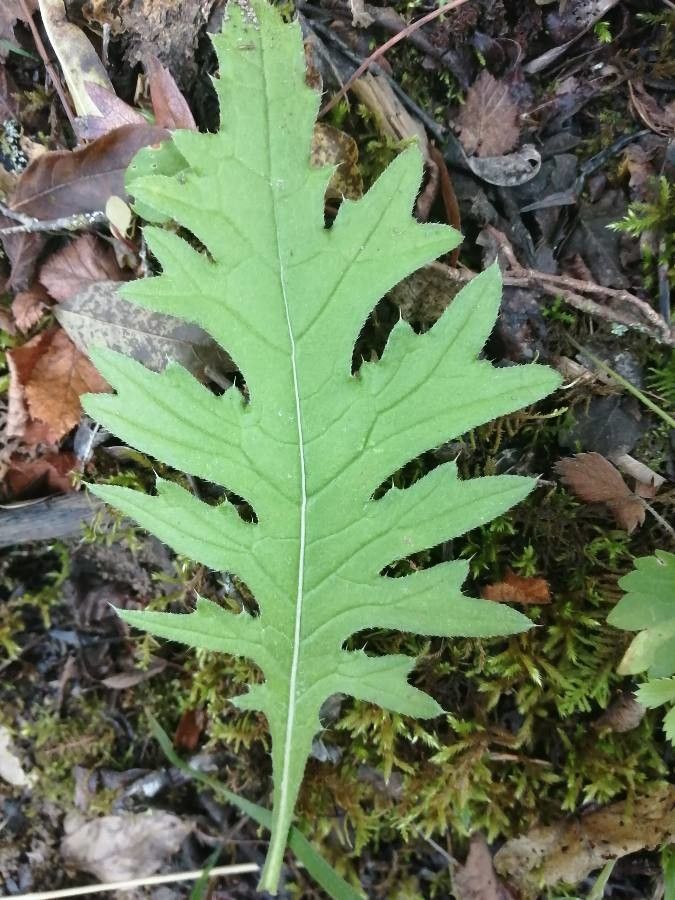
Cirsium rivulare is a species of flowering plant in the family Asteraceae, native to eastern and western Europe, adventive in Britain, and naturalised in Sweden and Belgium.Growing to 1.5 m (4.9 ft) tall, this erect herbaceous perennial is a clump-forming thistle, with narrow grey-green prickly leaves and small purple globular flowerheads in early to midsummer. The Latin specific epithet rivulare means "brook loving". The plant prefers moist conditions but can tolerate some dryness. The cultivar Cirsium rivulare 'Atropurpureum', with deep crimson flowers, has received the Royal Horticultural Society's Award of Garden Merit. It is very hardy down to at least −20 °C (−4 °F) (RHS rating H7), and thrives in full sun.
Brook thistle is fairly resistant to disease and generally does not tend to suffer from illnesses. Nonetheless, it can be vulnerable to pests and diseases present in its surroundings. Such infections are usually not severe. Regarding care, this plant requires moderate maintenance. Regular pruning is necessary to maintain a good appearance and support healthy growth. Fertilizing can also help encourage flowering. Brook thistle is suitable for anyone with outdoor space, such as a garden or patio, and does not demand extensive care experience. It may need more attention when grown indoors.
How to keep Cirsium Rivulare.
Light
Brook thistle performs best with ample daily sunlight, which is associated with its growth and well-being. Its native environment is open, exposed sites, implying a liking for abundant unobstructed light. Both insufficient and excessive light can harm the plant's vigor and development.
Water
Brook thistle thrives in moist environments and requires consistent soil moisture, though it should not be waterlogged. Watering once a week is sufficient, and it benefits from rainwater during its growing season, which enhances its vitality. As an herbaceous perennial, brook thistle is well-suited to outdoor conditions similar to those found near stream banks.
Temperature
Brook thistle is native to habitats with temperatures ranging from 41 to 95 °F (5 to 35 °C). It does best in mild seasons but can tolerate cold winters. In severe climates, providing shelter over winter is recommended.
Fertilizer
The best time to fertilize a Brook thistle is in early spring, as it comes out of dormancy and begins active growth. Fertilizing supplies essential nutrients needed for healthy development. Even though Brook thistle requires relatively little fertilization, applying fertilizer once a year can improve its chances of survival and encourage stronger, longer-lasting blooms.
Pruning
Brook thistle is characterized by its deep-red flowers and requires careful pruning from early to late spring to promote new growth. To maintain its health, prune any faded stems and remove damaged leaves. Regular trimming helps prevent overgrowth and keeps the plant looking its best. Using clean tools during pruning minimizes the risk of disease, further enhancing the ornamental appeal of the brook thistle.
Botanical profile.
- Plant Type
- Herb
- Life Cycle
- Perennial
- Genus
- Cirsium
- Family
- Asteraceae
- Hardiness Zone
- 5-9
- Mature Height
- 1.52 m
- Mature Spread
- 61 cm
- Leaf Color
- Green, Silver
- Leaf Type
- Deciduous
- Flower Color
- Purple
- Flower Size
- 3.05 cm
- Bloom Time
- Summer
- Planting Time
- Spring, Summer, Autumn
- Harvest Time
- Late summer, Early fall, Mid fall
- Native Area
- Austria, Czech Republic, Slovakia, Montenegro, Poland, Croatia, Slovenia, Belarus, Ukraine, Serbia, Russia, Lithuania, Hungary, Germany, Spain, Switzerland, Albania, United Kingdom, Romania, France
Other names.
Reader questions.
How should I water my Brook thistle plant?
To properly water the Brook thistle, it is best to use filtered water at room temperature. Tap water may contain harmful particles that can affect the plant's health. The plant prefers slightly warm water because it is native to warm environments and cold water can be shocking. Avoid watering from overhead as it can cause issues with the foliage. Instead, pour the filtered room temperature water directly onto the soil until it is completely soaked. This method benefits the plant by keeping the roots moisturized and allowing them to continue spreading and absorbing nutrients from the soil.
Why is it necessary to add fertilizer to my Brook thistle?
Fertilization is important for the Brook thistle for several reasons. It provides key nutrients needed for the plant to grow both above and below ground. However, the Brook thistle has relatively low fertilization needs and can sometimes survive without it. Still, annual fertilization is highly beneficial as it helps keep the plant alive and encourages the growth of better and longer-lasting flowers. Therefore, those who want their Brook thistle to look its best should regularly fertilize it each year.
What are the sunlight requirements for Brook thistle?
Brook thistle requires full sun, which means it needs more than 6 hours of sunlight daily to thrive. It's important to observe your garden's sunlight patterns to provide the perfect balance of light and shade for the plant, ensuring its health. In its native habitat, Brook thistle is accustomed to abundant daily sunlight, found in open, unobstructed areas. Both insufficient and excess exposure to sunlight can significantly impact the plant's vitality and development.
What is the ideal temperature range for Brook thistle?
Brook thistle is indigenous to environments where temperatures range between 41 to 95°F (5 to 35°C). It thrives best in moderate seasons and has strong cold resistance, allowing it to tolerate cold winter temperatures without the need for special frost protection measures. However, in harsh climates where winter temperatures are expected to drop below -25°C, it is important to provide protection by covering the plant with materials such as soil or straw.
What should I do if I give my Brook thistle too much water or too little water?
Caring for your Brook thistle requires proper watering. While both overwatering and underwatering can harm the plant, overwatering is more common. Overwatering causes wilting, yellowing leaves, and can lead to root rot, mold, and mildew. On the other hand, underwatering is less likely but can result in brittle, brown leaves. It's important to recognize signs of overwatering early to prevent irreparable damage, so adjust your watering schedule and consider using well-draining potting mix if needed. If your Brook thistle shows signs of needing more water, simply increase your watering until the signs go away.
When should I fertilize my Brook thistle plant?
The best time to fertilize a Brook thistle is in the late winter to early spring when the plant is transitioning from dormancy to active growth. Fertilizing at this time promotes healthy growth and sets the plant up for a successful season. Fertilizing in the fall is also acceptable, but it is not recommended to fertilize in the summer or winter.
How can artificial lighting benefit indoor Brook thistle plants?
Artificial lighting is crucial for the growth of indoor Brook thistle plants when natural sunlight is insufficient, especially during winter or in less sunny spaces. LED lights are recommended as they can be customized to provide specific wavelengths needed by the plant. For full sun plants, 30-50W/sq ft of artificial light is needed, partial sun plants require 20-30W/sq ft, and full shade plants need 10-20W/sq ft. The light source should be placed 12-36 inches above the plant to mimic natural sunlight, ensuring the plant receives 8-12 hours of light per day.
How should Brook thistle be cared for during winter?
During the winter, it is recommended to water Brook thistle abundantly before the first freeze in autumn, ensuring the soil remains moist and enters a frozen state. This helps prevent drought and water scarcity for the plant during winter and early spring. In climates where temperatures are expected to fall below -25°C, protecting the plant with coverings such as soil or straw can help shield it from extreme cold.
How frequently should I water my Brook thistle?
If you have a potted plant, the most precise way to determine if your Brook thistle needs water is by sticking your finger into the soil. If the top two to three inches of soil are dry, it's time to water. For outdoor plants in the ground, you can use a similar method. When the top few inches of soil are dry, it's time to water. Normally, during spring and early fall, you'll need to water this plant about once every week. In extremely hot weather, you may need to water two or more times per week. However, mature and well-established Brook thistles can tolerate drought well.
When should I not add fertilizer to my Brook thistle plant?
To keep your Brook thistle healthy, it's best to only fertilize it in late winter and early spring. This plant doesn't require much fertilization, so one feeding per year is enough. Fertilizing during spring, summer, and fall can cause problems from overfertilization, unless you missed fertilizing in spring, in which case you can feed it in fall. During the winter, when the Brook thistle is dormant and not growing, there's no need to fertilize.
What are the signs of insufficient or excessive light exposure in Brook thistle?
Signs of insufficient light in Brook thistle include smaller new leaves, leggy or sparse growth, faster leaf drop, slower or no new growth, and lighter-colored new leaves. Excessive light can cause chlorosis, sunscald, leaf curling, wilting, and leaf scorching. These symptoms indicate either a lack of or too much sunlight, affecting the plant's ability to photosynthesize and maintain overall health.
What are the symptoms of Brook thistle under low and high temperature stress?
Under low temperature stress, especially when it falls below -25°C, Brook thistle may experience decreased or even no sprouting during springtime, despite its cold tolerance. In high temperature conditions, particularly above 35°C, symptoms include leaves becoming lighter in color, prone to curling, susceptibility to sunburn, and, in severe cases, wilting and drying out of the entire plant. Solutions include removing unsprouted parts in spring after cold stress, and for heat stress, trimming sunburned parts, providing shade during peak sun hours, and keeping the soil moist with morning and evening watering.