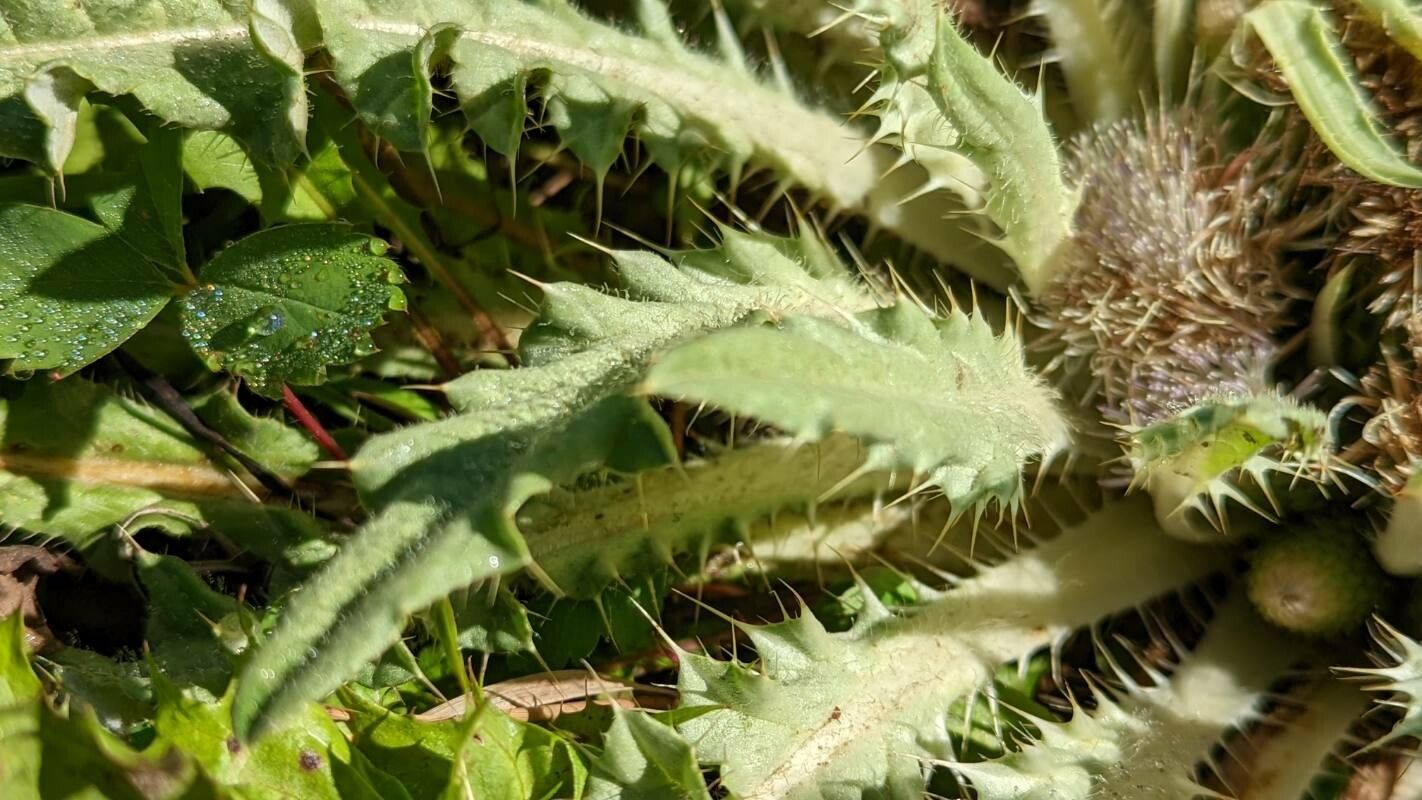
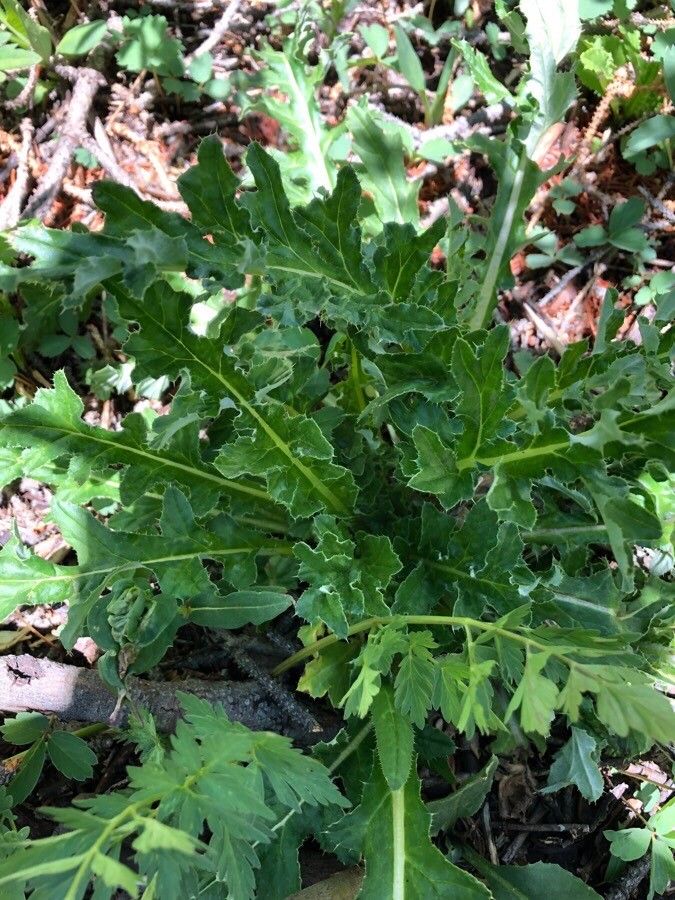
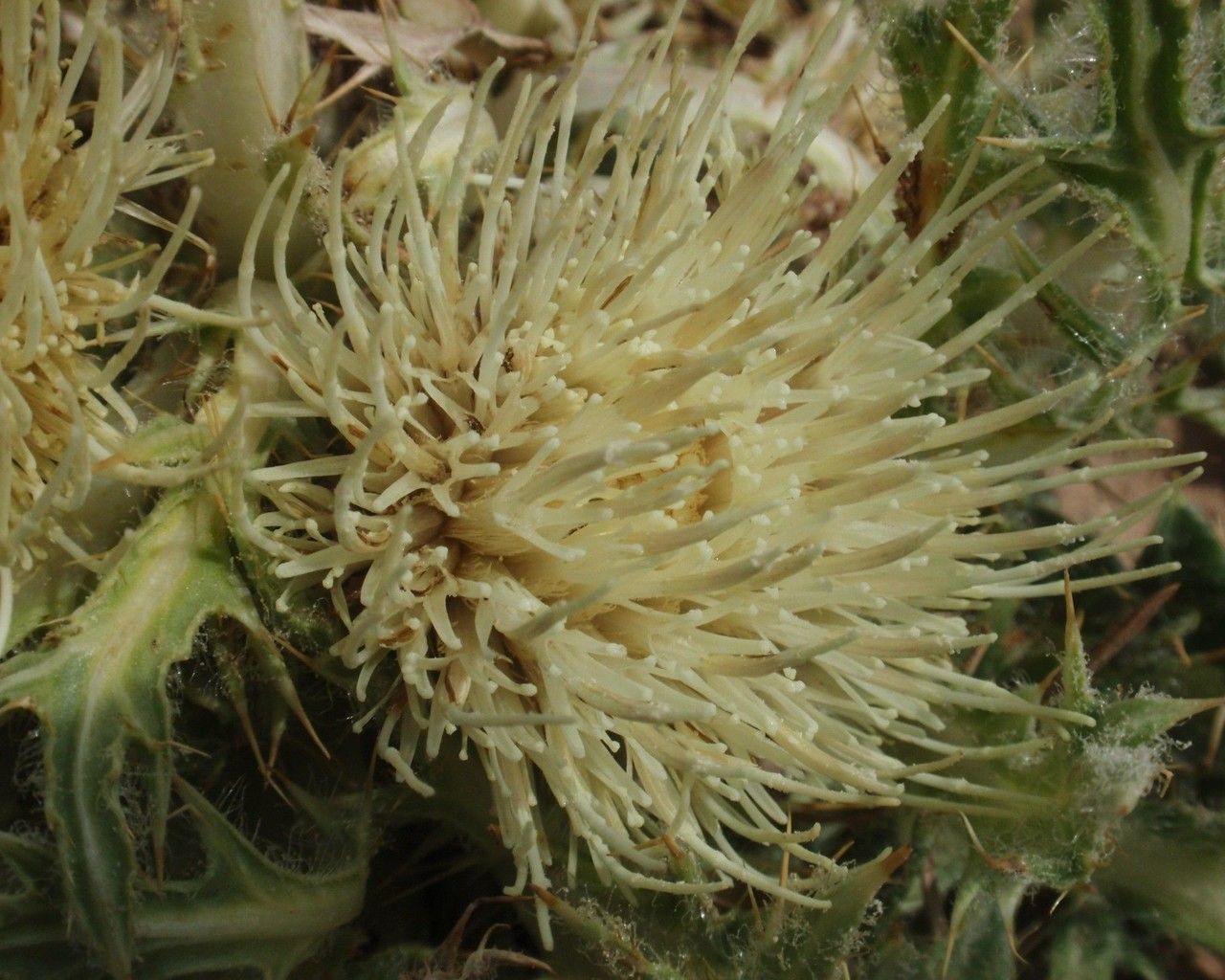
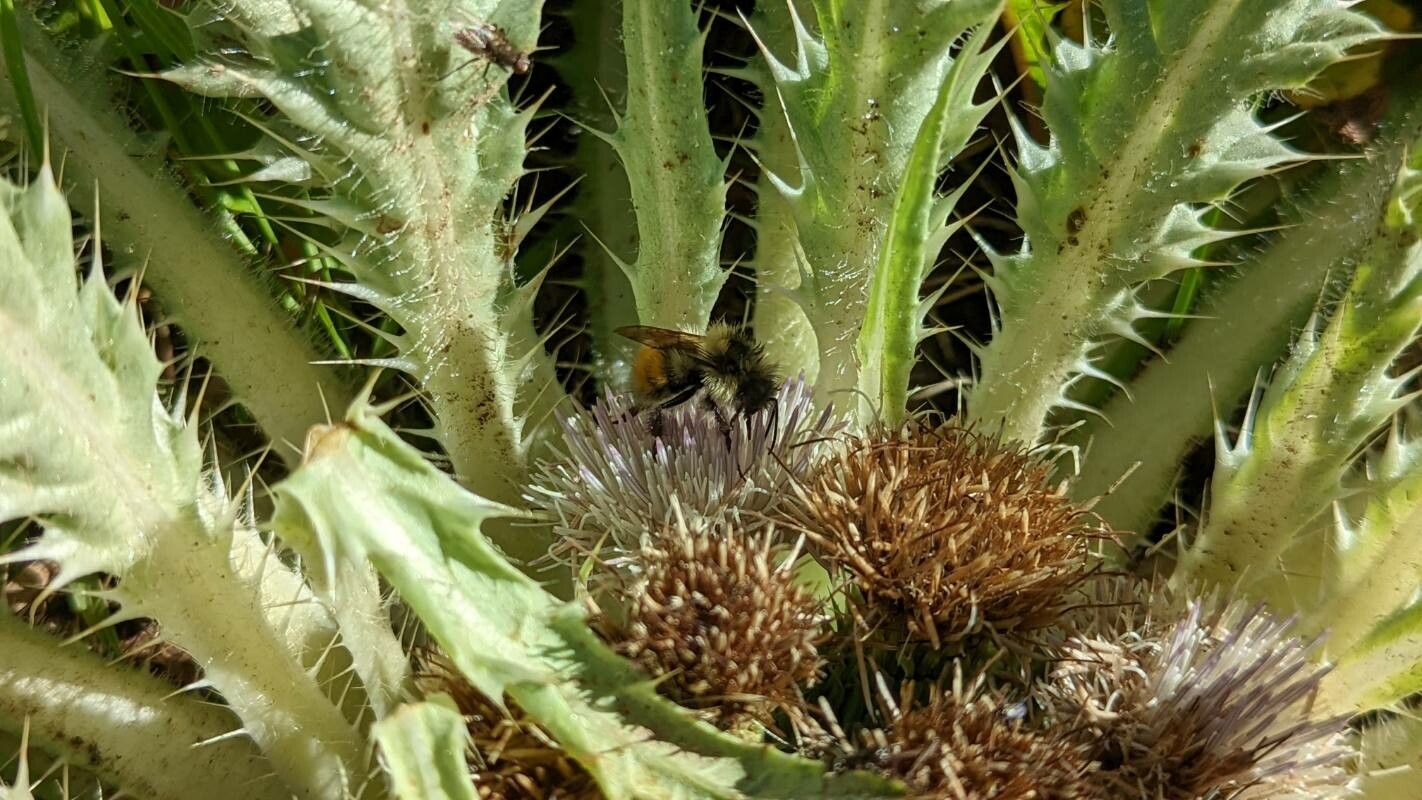
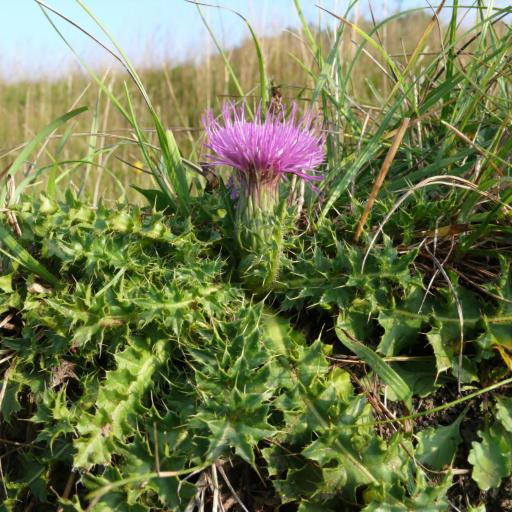
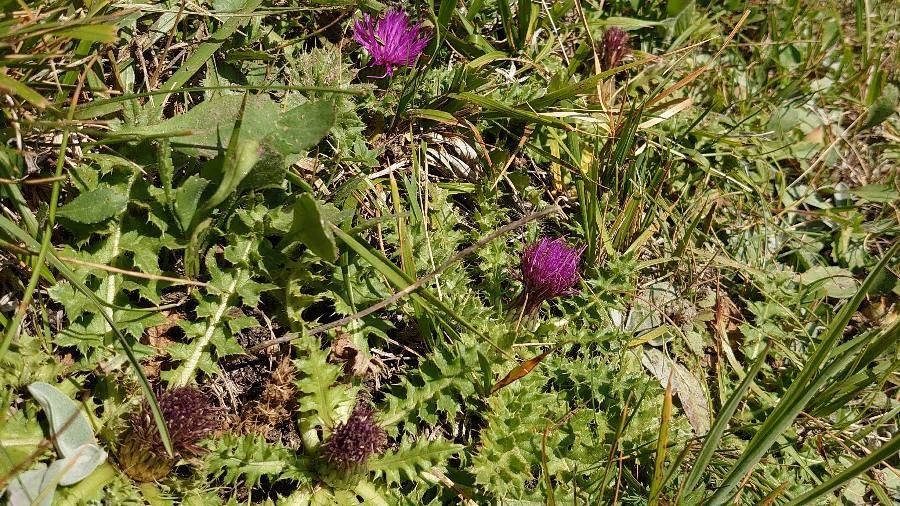
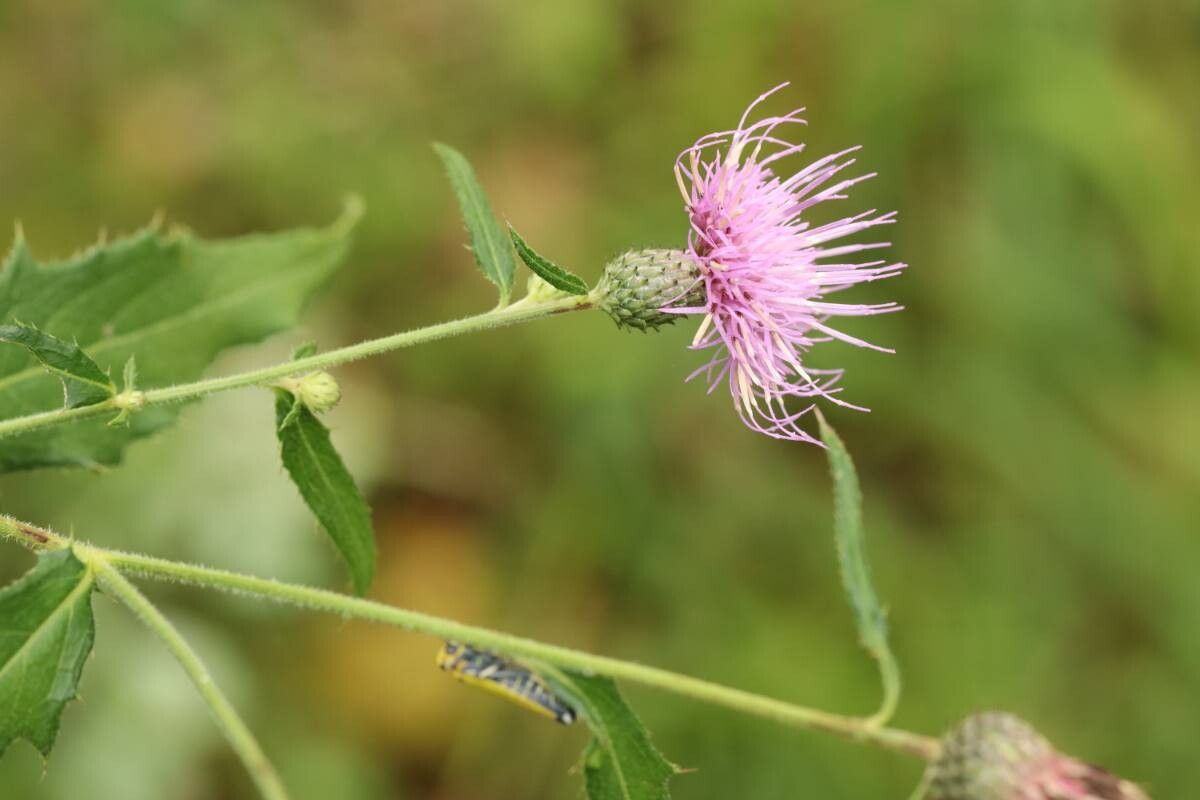
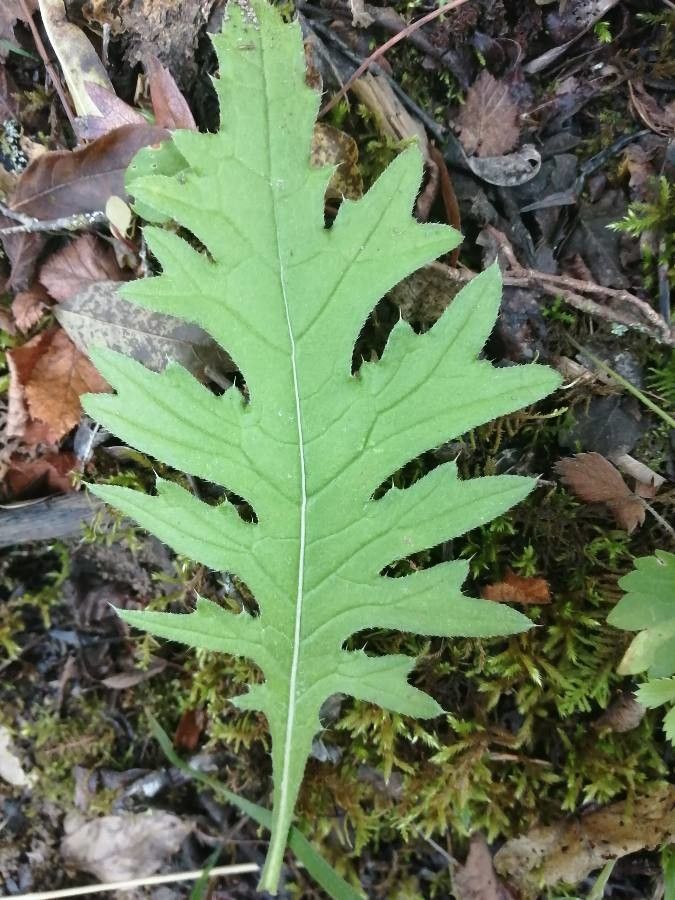
Cirsium scariosum is a species of thistle known by the common names meadow thistle, elk thistle and dwarf thistle. It is native to much of western North America from Alberta and British Columbia south to Baja California. There are also isolated populations on the Canadian Atlantic Coast, on the Mingan Archipelago in Québec.Cirsium scariosum is a variable species growing in a variety of habitat types. It is made up of several geographic races, most of which have been previously classified as species. The races intergrade but their morphologies can also be quite different. This is generally a biennial or perennial herb. It takes three main forms, a stemless, flat rosette with a cluster of flower heads in the center, a mounding form with a short, erect stem, or a fully erect form reaching up to 200 cm (79 in) in height. When there is a stem it is usually fleshy, ridged, and woolly in texture. The leaves are sharply toothed or cut into toothed lobes, lined with spines, and up to 40 centimetres (16 inches) at their longest near the base of the plant. The inflorescence holds several flower heads, each up to 4 centimeters long and 5 cm wide. The flower head is lined with phyllaries which may have spines and teeth and filled with white to purple disc florets but no ray florets. The fruit is a compressed achene a few millimeters long topped with a pappus which may be 3 centimeters in length. VarietiesCirsium scariosum var. americanum - California, Colorado, Idaho, Nevada, Oregon, Utah, Wyoming, Baja California Cirsium scariosum var. citrinum - California, Baja California Cirsium scariosum var. coloradense - Arizona, Colorado, New Mexico, Utah, Wyoming Cirsium scariosum var. congdonii - California, Nevada Cirsium scariosum var. robustum - California, Oregon Cirsium scariosum var. scariosum - Quebec, Alberta, British Columbia, California, Colorado, Idaho, Montana, Oregon, Utah, Washington, Wyoming Cirsium scariosum var. thorneae - Utah, Nevada, Idaho, Colorado Cirsium scariosum var. toiyabense- Nevada, Oregon, Idaho
Meadow thistle has strong disease resistance and is usually not prone to illnesses. However, it can be vulnerable to pests and diseases present in its environment. These infections are typically mild. For care, this plant requires moderate maintenance. It should be pruned regularly to keep a good appearance and healthy growth. Fertilizing can also help encourage flowering. Meadow thistle is suitable for anyone with outdoor space, such as a garden or patio, and does not demand extensive care experience. It may need more attention when grown indoors.
How to keep Cirsium Scariosum.
Light
Meadow thistle comes from bright, open habitats and thrives in full sun. It can tolerate partial sun but prefers direct sunlight for optimal growth. This plant, which can be annual or biennial, is known for its sun-loving nature.
Water
Meadow thistle thrives in consistently moist soil and needs to be watered weekly to maintain the right level of hydration without becoming waterlogged. When moving it from indoors to outdoors, it is especially important to water it adequately during its active growing season to support both its foliage and flowering.
Temperature
Meadow thistle is native to temperate climates and primarily thrives at temperatures between 68 and 95℉ (20 to 35 ℃). Seasonal adjustments to warmer or cooler conditions may be made if necessary.
Fertilizer
Meadow thistle requires regular feeding to encourage flowering but is sensitive to excess. It needs small, frequent applications of fertilizer throughout its life, especially during the main phase of active growth and while it is flowering. You should feed your meadow thistle until it stops blooming.
Pruning
Meadow thistle, known for its spiny leaves and purple flowers, thrives in meadow environments. To promote healthy growth and improve airflow, prune the plant by cutting it back to ground level from early to late spring. Regular pruning also helps prevent pests and diseases, while enhancing the blooms. For more detailed care instructions, consult your local horticultural guidelines.
Botanical profile.
- Plant Type
- Herb
- Life Cycle
- Biennial, Perennial
- Genus
- Cirsium
- Family
- Asteraceae
- Hardiness Zone
- 8
- Mature Height
- 0.13 m to 1.07 m
- Mature Spread
- 30 cm to 61 cm
- Leaf Color
- Green, Light Green
- Leaf Type
- Semi-evergreen
- Flower Color
- White
- Flower Size
- 2.03 cm to 4.06 cm
- Bloom Time
- Summer
- Planting Time
- Spring, Summer, Autumn
- Harvest Time
- Late summer, Early fall, Mid fall
- Native Area
- Mexico
Other names.
Reader questions.
What are the sunlight requirements for Meadow Thistle?
Meadow Thistle (Cirsium scariosum) thrives in bright, open environments and requires full sun, which means it needs more than 6 hours of sunlight daily, to grow optimally. It can tolerate partial sun, or about 3-6 hours of sunlight, but it prefers direct sunlight for the best growth. It's important to watch how sunlight moves through your garden to choose spots that offer a good balance of light and shade, ensuring the plant's happiness.
What is the native climate for Meadow thistle?
Meadow thistle, scientifically known as Cirsium scariosum, is native to temperate climates. It flourishes best in temperatures that range between 68 to 95°F (20 to 35°C). This plant can make seasonal adjustments to both warmer and cooler conditions if necessary, showcasing strong cold resistance. Special frost protection measures are generally not required during winter due to its resilience to cold. However, in cases where winter temperatures are anticipated to fall below -10°C, it's crucial to protect the plant by covering it with soil or straw and to water it abundantly before the first freeze in autumn. This ensures the soil remains moist and enters a frozen state, aiding in the prevention of drought and water scarcity for the plant during the colder months and early spring.
How can artificial lighting be used for indoor Meadow Thistle plants?
Indoor Meadow Thistle plants require adequate lighting, especially when natural sunlight is insufficient. Using artificial lights, like LED lights, can be a vital solution. These lights should be chosen based on the type that provides specific wavelengths needed by the plant. For full sun plants, 30-50W/sq ft of artificial light is needed; partial sun plants require 20-30W/sq ft, and full shade plants need 10-20W/sq ft. The light source should be placed 12-36 inches above the plant to mimic natural sunlight and turned on for 8-12 hours per day to mimic the length of natural daylight hours for your plant species.
How does Meadow thistle react to low temperatures?
Meadow thistle is remarkably tolerant of cold. While it thrives best when temperatures remain above 0°C, it can withstand colder conditions effectively. However, when temperatures fall below -10°C, there might not be any noticeable changes during the winter, but a decrease in sprouting or even no sprouting at all might be observed during spring. To manage this, it is recommended to remove any parts of the plant that have failed to sprout in spring as a solution to encourage new growth.
What are some common symptoms of insufficient lighting in indoor Meadow Thistle?
When Meadow Thistle doesn't receive adequate light indoors, it may exhibit several symptoms, including smaller new leaves, leggy or sparse growth, faster leaf drop, slower or no new growth, and lighter colored or chlorotic new leaves. Excessive sunlight can lead to symptoms like sunscald, leaf curling, wilting, and leaf scorching, indicating damage from intense light exposure.
How should Meadow thistle be cared for in high temperatures?
During the summer months, it's important to ensure that the Meadow thistle's surrounding temperature does not exceed 35°C. High temperatures beyond 38°C may cause the leaves to become lighter, curl, and become susceptible to sunburn. In severe cases, the plant may wilt and dry out completely. To mitigate these symptoms, sunburned and dried-up parts should be trimmed away. Moving the plant to a shaded location or using a shade cloth to protect it from the midday and afternoon sun can be beneficial. Additionally, watering the plant in the morning and evening will help keep the soil moist, thereby supporting the plant's health during high temperatures.
What are solutions for light deficiency in Meadow Thistle?
To combat light deficiency in Meadow Thistle, progressively move plants to sunnier locations each week until they receive at least 6 hours of direct sunlight daily. For indoor plants, consider placing them near a south-facing window or using artificial lighting, like a desk or ceiling lamp for at least 8 hours daily or investing in professional grow lights. For outdoor plants, adapt them by gradually moving to sunnier spots to avoid sunburn. If obstructions like trees block sunlight, prune them or consider transplanting smaller plants to sunnier locations during their dormant period for improved sunlight exposure.