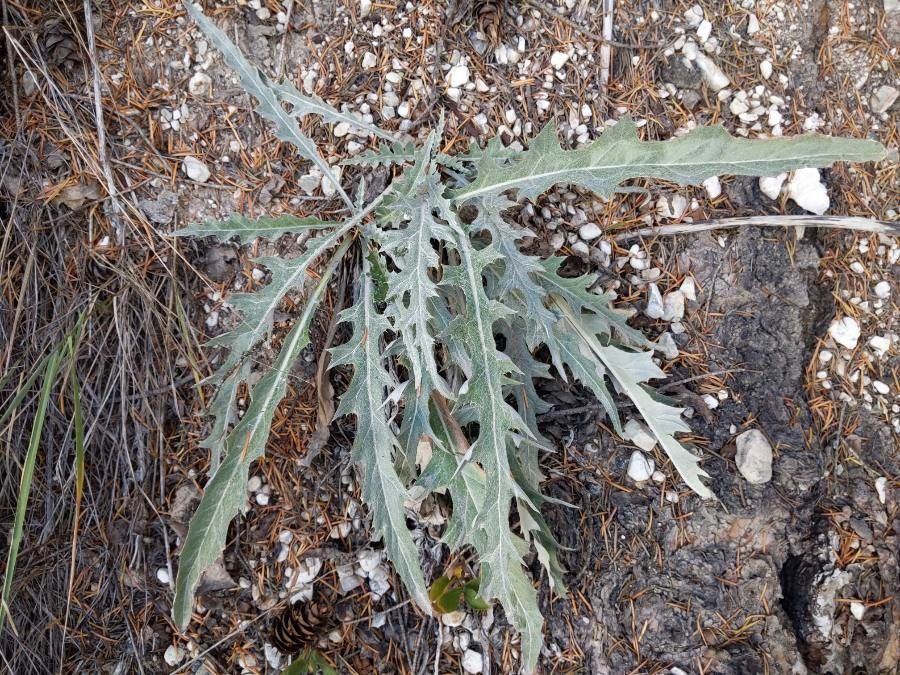
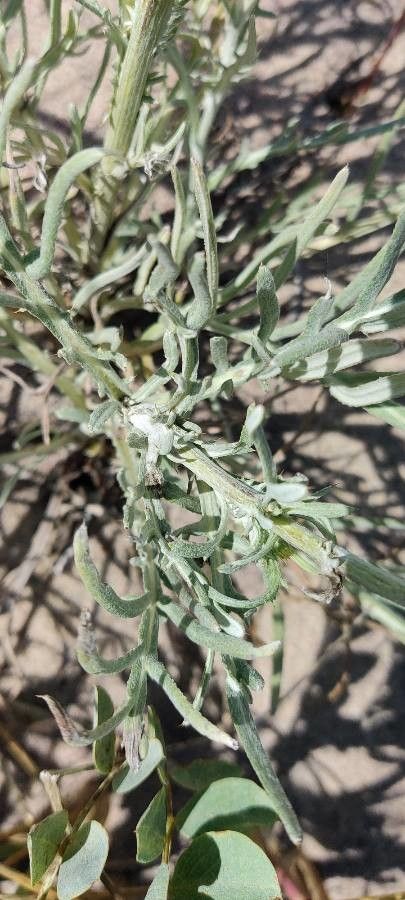
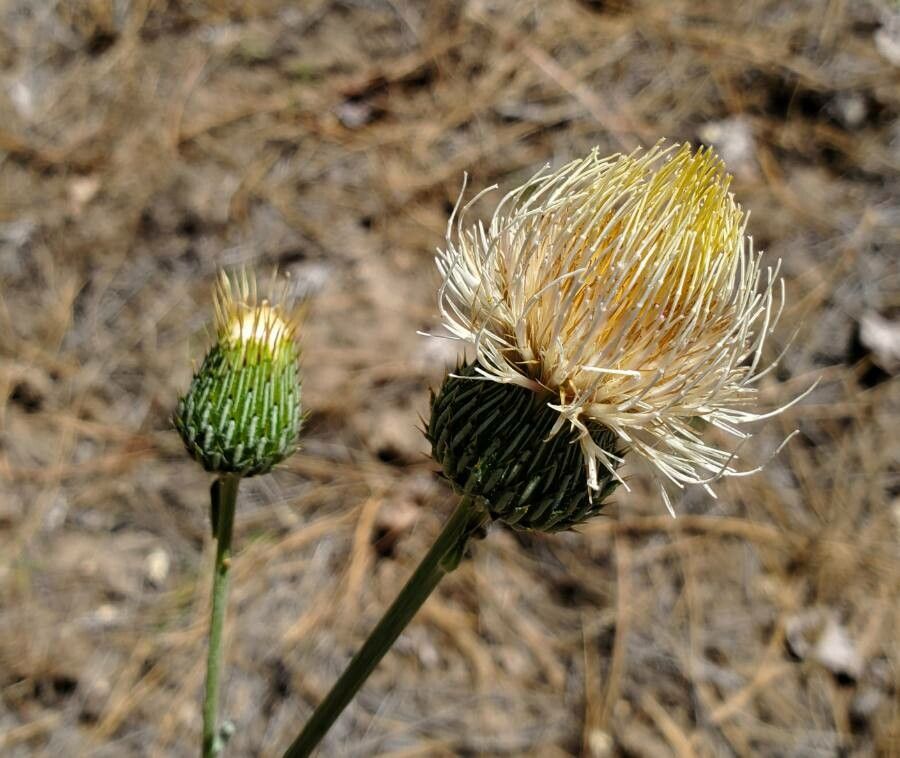
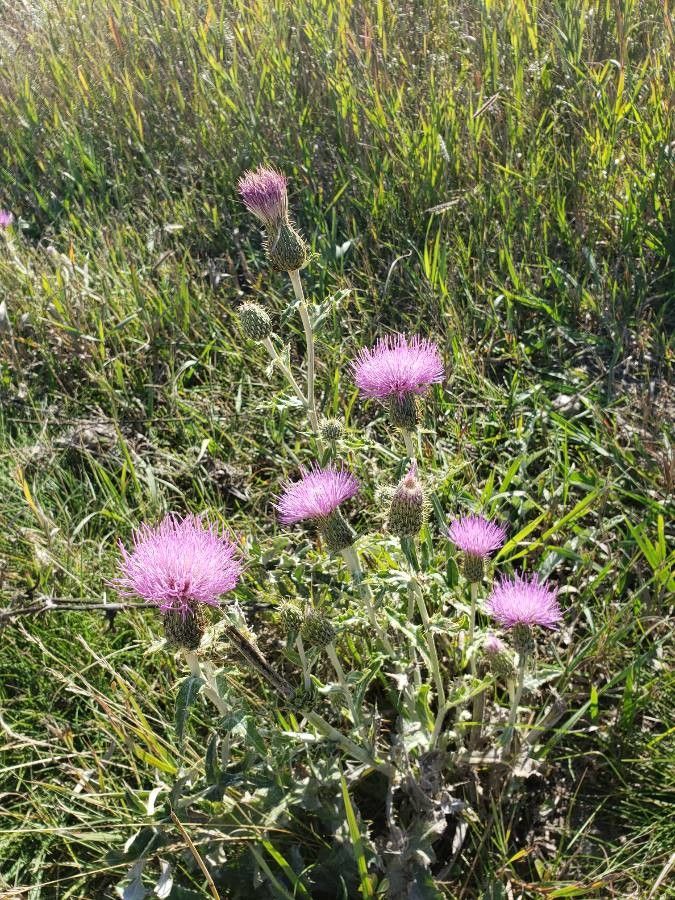
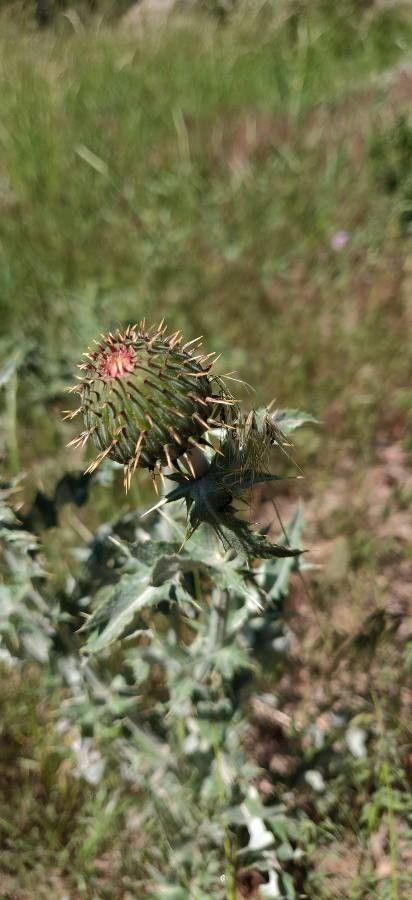
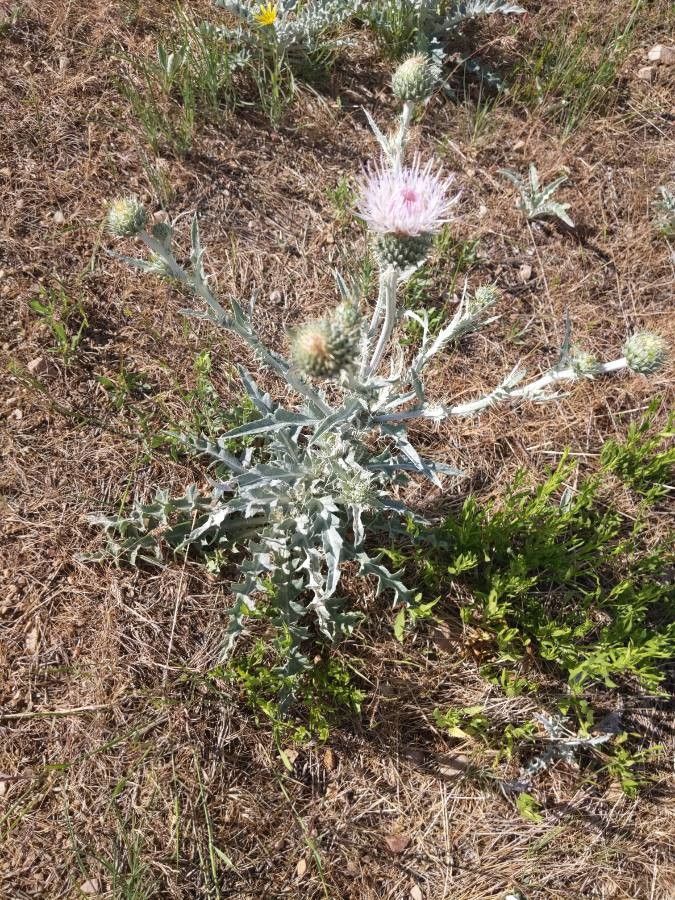
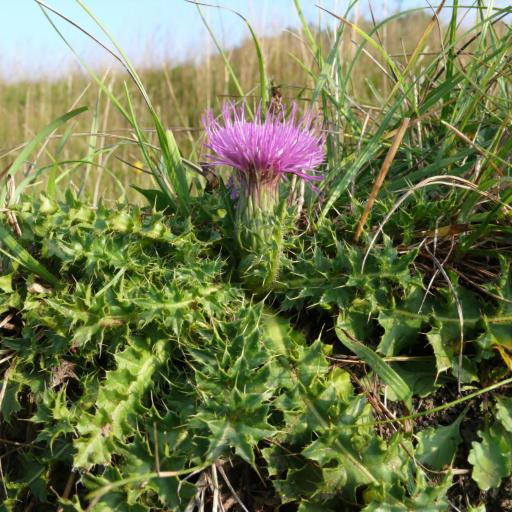
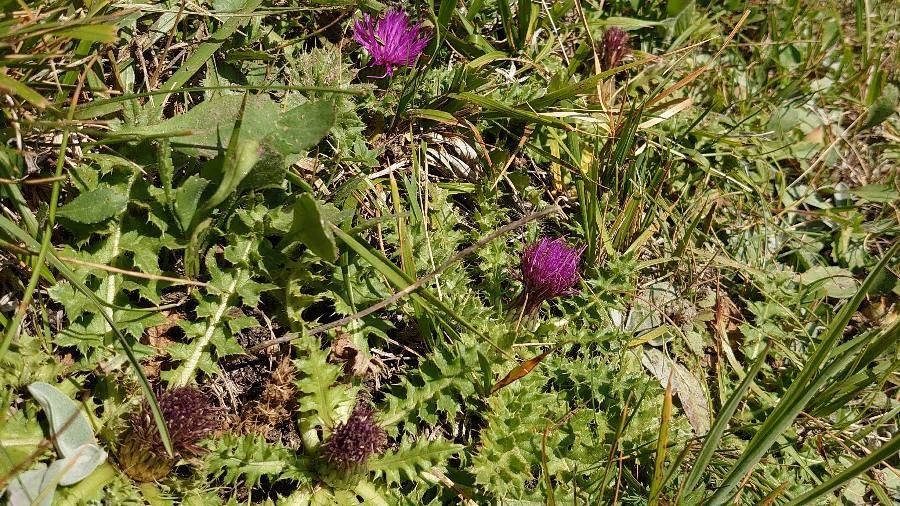
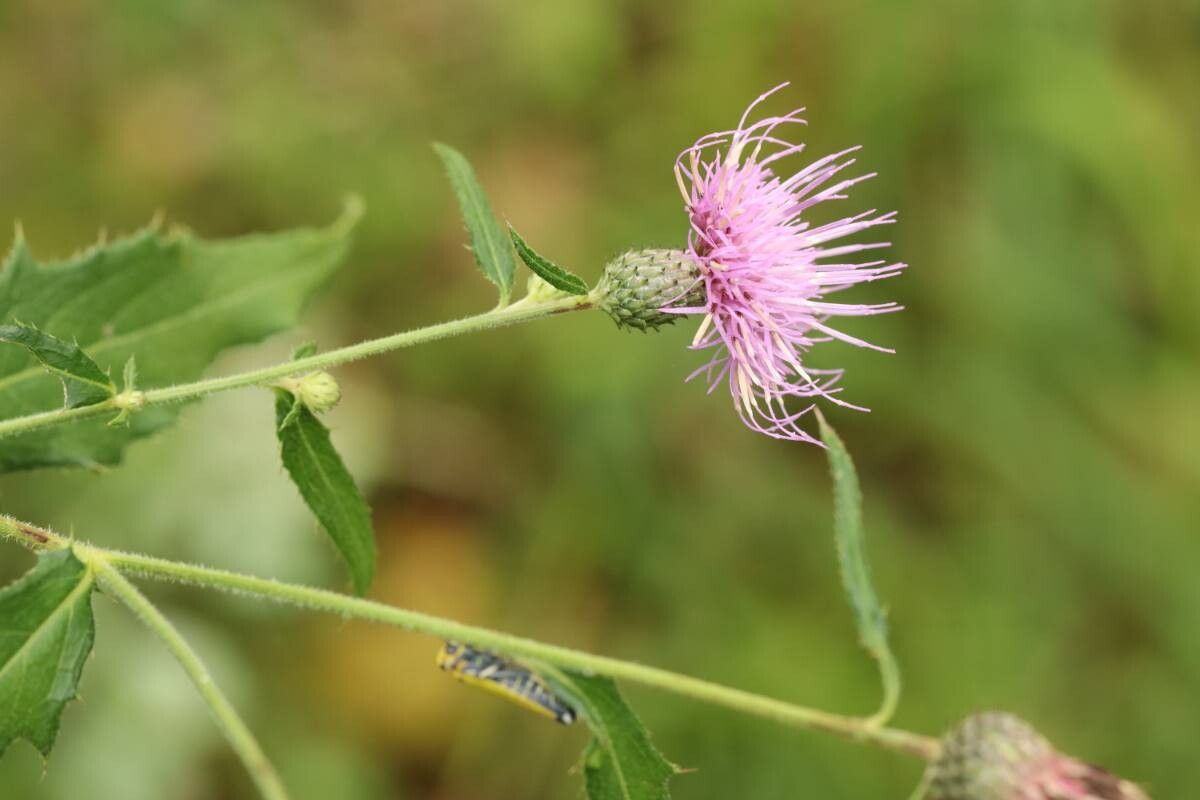
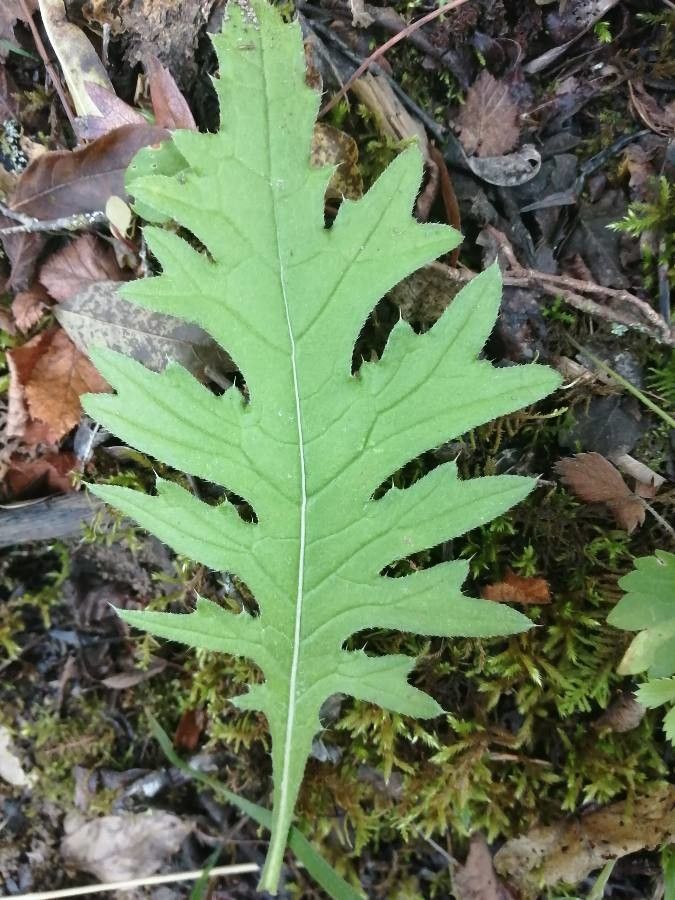
Cirsium undulatum is a species of thistle known by the common names wavyleaf thistle and gray thistle. It is native to much of central and western North America from British Columbia east to Manitoba and south as far as the State of Durango in Mexico. It has also been found outside of its native range as an introduced species.Cirsium undulatum is widespread and found in many habitat types. It is a perennial herb exceeding 200 cm (79 in) in height. The stem branches a few times toward the top of the plant if at all. The leaves are very wavy along the edges and usually cut into shallow toothed lobes. The longest near the base of the plant are up to 30 centimetres (12 inches) long. The inflorescence holds one or more flower heads each up to 5 centimetres (2.0 inches) long and wide. The head is lined with spiny phyllaries of different shapes. The flowers in the head are white to lavender to pink and up to 5 centimetres (2.0 inches) long. The fruit is an achene a few millimeters long with a pappus which may be up to 4 centimeters in length.Cirsium undulatum has been shown to have its seed production reduced by an exotic weevil Larinus planus which was released to control Canada thistle.
Wavyleaf thistle has good resistance to disease and is generally not prone to illnesses. However, it can be vulnerable to pests and diseases present in its environment. These infections are typically not serious. Regarding care, this plant needs moderate maintenance. It should be pruned regularly to maintain an attractive appearance and healthy growth. Fertilizing can also help encourage flowering. Wavyleaf thistle is suitable for anyone with outdoor space, such as a garden or patio, and does not demand a lot of care experience. It may need more attention when grown indoors.
How to keep Cirsium Undulatum.
Light
The wavyleaf thistle is best suited to strong, intense sunlight. It has no particular tolerance for other levels of sunlight intensity. Native to habitats with abundant sun exposure, both too much and too little sunlight can affect its optimal growth and health.
Water
Wavyleaf thistle thrives best with moderate weekly watering, striking a balance between its need for moisture and its natural drought tolerance. Although it is well-suited for outdoor growth, it’s important to factor in natural rainfall during its active growing season. Consistent hydration is necessary for maintaining the plant’s health and vigor, which may increase its overall water requirements.
Temperature
Wavyleaf thistle is native to areas where temperatures range from 68 to 95 °F (20 to 35 ℃), emphasizing its preference for warmer climates. It is recommended to gradually acclimate the plant to seasonal changes to preserve its growth.
Fertilizer
The best time to fertilize a Wavyleaf thistle is in early spring, when it is coming out of dormancy and starting active growth. Fertilizing supplies essential nutrients for healthy development. While Wavyleaf thistle has relatively low fertilizer requirements, applying fertilizer once a year can improve its survival and encourage better, longer-lasting flowers.
Botanical profile.
- Plant Type
- Herb
- Life Cycle
- Perennial, Biennial
- Genus
- Cirsium
- Family
- Asteraceae
- Hardiness Zone
- 4-10
- Mature Height
- 0.61 m to 1.52 m
- Mature Spread
- 30 cm to 46 cm
- Leaf Color
- Green, Blue
- Leaf Type
- Semi-evergreen
- Flower Color
- White, Pink, Purple
- Flower Size
- 2.54 cm to 5.08 cm
- Bloom Time
- Late spring, Early summer, Mid summer
- Planting Time
- Spring, Autumn
- Harvest Time
- Mid summer
- Native Area
- Mexico
Other names.
Reader questions.
How should I water my Wavyleaf thistle?
To properly water the Wavyleaf thistle, opt for filtered water at room temperature. Tap water may contain harmful particles. Since the Wavyleaf thistle thrives in warm conditions, avoid using cold water which may shock the plant. It is also advised to refrain from overhead watering, as it can lead to foliage issues. Instead, gradually apply filtered room temperature water to thoroughly soak the soil. This method helps to moisturize the roots and facilitate their spread through the soil, enabling the plant to gather necessary nutrients.
How much sunlight is required for Wavyleaf thistle?
Wavyleaf thistle thrives in conditions where it can receive more than 6 hours of sunlight. This strong affinity towards full sun originates from its natural habitat, which is abundant in sunlight exposure. To ensure the plant's optimal development and health, it's crucial to find spots in the garden that provide a perfect balance of light and shade, mimicking its native environment.
What is the preferred temperature range for Wavyleaf thistle?
Wavyleaf thistle thrives in warmer climates, with a preferred temperature range of 68 to 95°F (20 to 35°C). This plant is endemic to regions that fall within this temperature bracket, so it's crucial to gradually acclimatize it to seasonal changes to sustain its growth. Despite its strong cold resistance, allowing it to withstand cooler temperatures without requiring special frost protection methods, suitable care should still be taken when temperatures are expected to drop below -30°C.
What do I do if I give too much or too little water to my Wavyleaf thistle?
Taking care of your Wavyleaf thistle means finding the right balance when it comes to watering. Both overwatering and underwatering can harm your plant, but overwatering is more common. When your Wavyleaf thistle gets too much water, its stems and leaves may wilt and turn yellow. Extended overwatering can also lead to diseases like root rot, mold, and mildew, which can be fatal for your plant. While underwatering is less likely, it can still happen, and you'll notice brittle, brown leaves as a sign. To prevent irreversible damage, it's important to spot the signs of overwatering early. If you do, reduce your watering immediately and consider improving the soil drainage by replacing it with a loose, well-draining potting mix. On the other hand, if you notice signs of underwatering, simply water more regularly until the signs disappear.
What should I do if my Wavyleaf thistle isn't getting enough sunlight?
If your Wavyleaf thistle isn't receiving adequate sunlight, particularly when grown indoors or during periods with less natural sunlight, consider supplementing with artificial lighting. LEDs are a great option, offering customizable wavelengths to suit your plant's needs. For full sun plants like the Wavyleaf thistle, aim for 30-50W/sq ft of artificial light, maintaining a distance of 12-36 inches above the plant. Ensure the artificial light duration replicates natural daylight hours, typically 8-12 hours per day, for optimal growth.
How should Wavyleaf thistle be cared for in winter?
During winter, Wavyleaf thistle generally does not require special frost protection due to its strong cold resistance. However, if temperatures are forecasted to plummet below -30°C, it is essential to protect the plant from the cold. This can involve covering the plant with soil or straw to insulate it. Furthermore, watering the plant heavily before the first freeze of autumn is recommended. This practice ensures that the soil remains moist and enters a frozen state, which helps prevent drought and water scarcity for the plant during the cold months and early spring.
How many times should I water my Wavyleaf thistle?
If your Wavyleaf thistle plant is in a pot, the most accurate way to determine if it needs water is by inserting your finger into the soil. If the top two to three inches of soil feel dry, it's time to water it. The same method can be used if you have the plant growing outdoors in the ground. Once again, when the first few inches of soil have dried out, it's time to water it. Typically, during the spring and early fall, you'll need to water the plant about once a week using this method. However, during extremely hot weather, you may need to increase the watering frequency to twice a week or more. Nevertheless, mature and well-established Wavyleaf thistles have an impressive ability to withstand periods of drought.
What are the symptoms of inadequate sunlight for Wavyleaf thistle?
Symptoms of inadequate sunlight in Wavyleaf thistle include smaller new leaves, leggy or sparse growth, faster leaf drop, and cessation of new growth, indicating the plant is in survival mode. Additionally, leaves might appear lighter in color or suffer from chlorosis, indicating insufficient chlorophyll and essential nutrients. Other symptoms include sunscald, leaf curling, wilting, and leaf scorching, all of which compromise the plant's health and its ability to photosynthesize efficiently.
What are the symptoms of Wavyleaf thistle being exposed to low temperatures?
Wavyleaf thistle is known for its cold tolerance, flourishing best when temperatures stay above 20°C. In winter, it's crucial to ensure the temperature does not dip below 0°C. Exposure to temperatures below -30°C might not result in noticeable changes during the winter. However, there may be a decreased rate of sprouting or an absence of sprouting during the spring. If such symptoms are observed, the solution is to remove any parts of the plant that have failed to sprout in the spring.
How much water should I give my Wavyleaf thistle?
To properly water your Wavyleaf thistle, make sure to give it enough water without being too hesitant. When the top two to three inches of soil are dry, it's time to water thoroughly. Provide enough water to saturate the soil entirely, allowing any excess water to drain through the pot's drainage holes. If you don't see excess water draining, you may be providing too little water. However, you should also avoid letting water accumulate in the soil, as it can harm the plant. On the other hand, if water doesn't flow through the pot, it might indicate poorly draining soil, which is not ideal for the plant's health. If the plant is outside, one inch of rain per week should be enough.
How can I address insufficient sunlight for my Wavyleaf thistle?
To address insufficient sunlight for Wavyleaf thistle, gradually increase exposure to natural light by moving it to a sunnier location each week, ensuring it gets at least 6 hours of direct sunlight daily. For indoor plants, consider artificial lighting solutions, such as keeping a lamp on for at least 8 hours a day or investing in grow lights. Outdoors, gradually transition plants to sunnier spots to prevent sunburn. Pruning surrounding foliage can also help reduce obstructions. If necessary, transplant smaller plants during their dormant period to a location with better sunlight and drainage.
What happens when Wavyleaf thistle is exposed to high temperatures?
Wavyleaf thistle should ideally be kept under 35°C during the summer months. Exposure to temperatures exceeding 41°C can lead to the leaves of the plant becoming lighter in color, curling, and being prone to sunburn. In severe cases, the entire plant may wilt and dry out. To mitigate these effects, it's advisable to trim away the sunburned and dried parts of the plant. Moving the plant to a shaded location or employing a shade cloth to protect it from the midday and afternoon sun can also be beneficial. It is also recommended to water the plant in the morning and evening to maintain soil moisture.