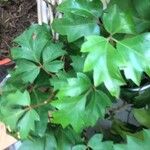
Cissus alata
Grape-ivy · Venezuela treebine · Treebind · Venezuela treebind
Description
Source: leafsnapCissus alata, commonly known as the "Princess Vine" or "Peruvian Grape Ivy," is a flowering plant in the grape family Vitaceae. It is native to South America, particularly to Peru and Brazil. The plant has a climbing habit and can grow up to 10 feet tall with support. Its leaves are glossy green, with toothed edges, and are shaped like hearts or arrowheads. Cissus alata is a popular ornamental plant due to its attractive foliage and ease of care. It can be grown indoors as well as outdoors in warm climates, making it an ideal choice for adding greenery to your home or garden. The Princess Vine prefers bright but indirect light and well-draining soil that is kept moist but not waterlogged. It can tolerate some drought but will thrive with regular watering during the growing season. In addition to its ornamental value, Cissus alata has been used for medicinal purposes by indigenous people in South America for centuries. Its leaves have traditionally been used as an anti-inflammatory agent for treating wounds, bruises, sprains, and other ailments. Overall, Cissus alata is an attractive climbing vine that adds beauty both indoors and outdoors. Additionally, its medicinal properties, utilized by indigenous people throughout history, make it not only aesthetically pleasing but also practically useful beyond mere decoration.
Care Guide
💧 Water Every 7 days
Grape ivy, native to tropical regions, thrives in environments with high humidity and consistently moist, well-drained soil. To mimic its natural conditions and encourage lush foliage and robust growth, water it weekly and mist the leaves regularly.
How should I water my Grape ivy plant in the best way?
To ensure excellent root development in your plants, consider using a garden hose at the base of the plant. It's important to avoid spraying the leaves directly, as this can be detrimental. If your plants are outdoors and exposed to direct sunlight, the leaves will likely need more water. One option for moistening the roots is to use bubblers for each plant. Additionally, when adding or removing plants, soaker hoses that cover the entire garden or bed can help ensure that the roots are deeply watered. After watering, make sure to drain any excess water and allow the soil to dry before watering again. To prevent diseases, it's recommended to water at ground level. On a sunny day, you may want to consider spraying the entire bush with water. Whether your grape ivy is potted or in the ground, keep in mind that it prefers deep watering rather than light sprinkling.
What do I need to do if I give too much or too little water to Grape ivy?
If you overwater your Grape ivy, its leaves will turn yellow, drop off, and wilt. The plant will look dull and unhealthy, with mushy stems. To address these signs, adjust your watering schedule. Additionally, wilting can also indicate under watering, which is characterized by crispy and dry leaves. In this case, check the soil moisture level and provide a thorough watering if needed. Although enough water will help the Grape ivy recover, the damaged root system may cause the plant to continue having dry, yellow leaves for a few days. Once it returns to normal, the yellowing will stop. When growing Grape ivy indoors, always check the soil moisture level and avoid overwatering. If you notice black spots, allow the soil to dry out for a few days before watering again. Overwatering can lead to root rot, so transplanting the plant into a different pot may be necessary if you observe discolored and slimy roots. Preventing root rot is important, so avoid excessively soggy soil. When planting Grape ivy outdoors, make sure to dig deeper and if the soil feels too dry, it may indicate under watering, so provide adequate water to help the plant recover.
How often do I need to water my Grape ivy?
The Grape ivy prefers deep and infrequent watering, especially when planted in pots. In pots, the soil dries out faster due to limited water storage, so it's best to soak them with a gallon of water each time. If you live in a cold region, watering is needed every 3 to 5 days. Water in the morning when the soil is dry, whether you have the plant indoors or outdoors. You can check if watering is necessary by feeling the soil - if the top 2-3 inches are dry, it's time to water. During hot days, monitor the soil moisture daily as heat can quickly dry it out. For garden irrigation in hot climates, water once a week when the top 2-3 inches of soil are too dry. Avoid adding additional water if there is already ample rainfall, as this can lead to root rot. During the growing season (spring and fall), add about 3 to 4 inches of mulch when the plant is outdoors to preserve more water. Sandy soil drains faster, so water more frequently, while clay soil requires less frequent watering to avoid root rot (2-3 days between watering is ideal). Keep track of watering dates on a calendar and be mindful of drooping leaves, as this may indicate the need for watering.
How much water does my Grape ivy plant need?
The Grape ivy typically needs about a gallon of water on its schedule. For potted plants, it's best to water them deeply until you see water dripping from the bottom of the pot. Allow the soil to dry before watering again. To determine the amount of water you've given the plant in a week, you can use a water calculator or a moisture meter. During the flowering period, provide plenty of water but let the moisture evaporate to prevent root rot. If the Grape ivy is planted outdoors with enough rainfall, it may not need extra watering. However, when it's young or newly planted, make sure it receives 1-2 inches of rain per week. As it grows, it can rely on rainfall alone. Only when the weather is extremely hot or there is no rainfall for 2-3 weeks should you consider giving the Grape ivy a full watering during the cooler part of the day to avoid heat damage. Additional watering will be necessary during prolonged dry spells.
Should I water my Grape ivy more or less depending on the time of year or the weather?
The Grape ivy needs to be watered outdoors, primarily relying on rainwater. However, during dry periods, the plant may require additional watering. In the spring and fall, it is important to keep the soil moist but not soggy, as alternating between dry and moist conditions benefits the growth of the Grape ivy. During the summer, hot weather and lack of rainfall can cause water to evaporate quickly, so more frequent watering is necessary to maintain moisture. In contrast, the Grape ivy requires less water during winter. It is beneficial to use well-draining soil, like terracotta, as it helps with evaporation when the plant is dormant and loses its leaves. Once the Grape ivy starts growing and leafing out in spring, it can rely on fall and winter rains for survival. Proper drainage is crucial for the plant's health, especially during winter, as both excessive water and drought can be harmful. When planted in pots, the Grape ivy has limited root growth, so regular and thorough watering is important, especially in summer. Deep watering once or twice a week is recommended, avoiding shallow sprinkles that only reach the leaves. Even during dormancy in fall and winter, the Grape ivy should not be allowed to dry out completely. On the other hand, overwatering should be avoided, as sitting in water for too long can be detrimental, particularly during winter when poorly drained soil can cause the plant to die. Applying mulch can help reduce stress, conserve water, and promote healthy blooms.
☀️ Light Partial sun
Grape ivy thrives in locations that receive plenty of filtered light. Excessive direct sun can darken and cause its leaves to wither, while too little light can slow its growth. This trait is seen in its natural habitat, where it grows under a canopy that filters the sunlight.
What are the sunlight requirements for Grape Ivy?
Grape Ivy requires about 3-6 hours of sunlight daily, falling under the category of partial sun. It's important to observe how sunlight moves through your garden throughout the day to find spots that offer a perfect balance of light and shade. This balance ensures the plants are happy and healthy, providing them with an environment similar to their natural habitat in filtered light conditions.
How does Grape Ivy react to different light conditions?
Grape Ivy thrives in environments with ample dispersed light but can suffer if exposed to too much direct sunlight, which may darken and wither its leaves. Conversely, not enough light can slow its growth. In its natural habitat, Grape Ivy grows under a cover that filters sunlight, making its light requirements quite specific. In situations where natural sunlight is insufficient, artificial lighting can be a viable solution to promote healthy growth. Indoor plants benefit from LED lights that can mimic the essential wavelengths of sunlight, requiring specific wattages based on whether the plant prefers full sun, partial sun, or full shade conditions.
What are the symptoms of improper lighting for Grape Ivy?
Grape Ivy can show various symptoms when it doesn't receive the appropriate amount of light. Insufficient light may cause smaller leaves, leggy or sparse growth, faster leaf drop, slower or no new growth, lighter-colored new leaves, chlorosis, sunscald, leaf curling, wilting, and leaf scorching. These symptoms indicate that the plant is either not getting enough light or is being exposed to too much direct sunlight, both of which can affect its health and growth.
How can I address lighting issues for my Grape Ivy?
To address lighting issues for Grape Ivy, whether indoor or outdoor, gradually adapt your plants to the optimal light conditions they require by shifting them to sunnier spots each week, aiming for 3-6 hours of direct sunlight daily. If the plant is too large or not easily movable, consider using artificial light sources to provide the necessary light exposure. Remember that sudden changes in light intensity can harm plants, so it’s crucial to make these adjustments gradually. If parts of the plant have already been affected by insufficient light, focus on providing the right conditions for new growth, as the affected areas may not recover fully. Additionally, reducing obstructions and even transplanting smaller plants to sunnier locations can help ensure they receive ample sunlight.
🌡️ Temperature 20–37.8°C
Grape ivy is native to temperate regions and generally does best in temperatures from 68 to 100°F (20 to 38°C). As seasons change, it is important to keep temperatures within this range so the plant can grow healthy and lush.
What is the native region and ideal temperature range for grape ivy?
Grape ivy is native to temperate regions and thrives best in temperatures ranging from 68 to 100°F (20 to 38°C). It is a heat-loving plant, and maintaining the temperature within this range throughout different seasons is crucial for its healthy and lush growth.
How should grape ivy be cared for in autumn and winter?
In autumn, it is recommended to bring outdoor-grown grape ivy indoors and place it near a bright window while keeping it at a certain distance from heaters to avoid damage. During winter, maintaining temperatures above 20°C is beneficial to the plant's growth, and it's essential to protect the plant from temperatures approaching 5°C, which are detrimental to its health.
What are the symptoms and solutions for grape ivy exposed to low temperatures?
Grape ivy prefers warm temperatures and is not tolerant of low temperatures. It thrives when the temperature is above 20°C and should be kept above 5°C during winter. Symptoms of exposure to temperatures below 1°C include leaves lightening in color and, after frost damage, turning brown or black with wilting and drooping. The solution is to trim off the frost-damaged parts and immediately move the plant to a warm environment indoors, near a south-facing window for ample sunlight, while avoiding places near heaters or air conditioning to prevent dry air.
What are the symptoms and solutions for grape ivy exposed to high temperatures?
During summer, grape ivy should be kept below 38°C to avoid high-temperature stress. Symptoms of exposure to temperatures exceeding 43°C include lightening of leaf color and increased susceptibility to sunburn. Solutions include trimming away the sunburned and dried-up parts, moving the plant to a shaded location during midday and afternoon sun, and ensuring the soil remains moist by watering in the morning and evening.
What is the botanic name of grape ivy?
The botanic name of grape ivy is Cissus alata.
💨 Humidity
🪴 Soil 6-7
🌱 Fertilizer
Fertilization is essential for Grape ivy care. Regularly feeding it during the growing season preserves the energy required for its showy leaves and supports overall growth. Failing to fertilize can lead to unhealthy leaves, reduced ornamental value, and stunted or weak growth that is more susceptible to breaking.
Why should I add fertilizer to my Grape ivy?
Grape ivy requires regular fertilization because it has showy leaves that need a lot of energy to grow and stay healthy. The challenge is that the plant must also find enough energy to support the growth of its stems, branches, roots, and other important structures. If you neglect fertilization, two things are likely to happen. First, the leaves will lose their natural color and texture, making the plant look unhealthy and less attractive. Second, the plant's overall growth will slow down or become weak, making it more susceptible to breakage.
When should I fertilize my Grape ivy?
Grape ivy does not require a set feeding schedule when first planted. Instead, it benefits from occasional feedings. One easy way to fertilize your Grape ivy is to apply fertilizer when watering the plant on occasion. During the growing season, this plant also needs a good amount of water. It is recommended to feed the plant once every two to three weeks, consistently while it is producing new growth.
When is it best not to put fertilizer on my Grape ivy plant?
For most of the year, you can fertilize your Grape ivy on a regular schedule. This includes the spring, summer, and early fall when the plant is actively growing. However, during the winter, it's important to refrain from fertilizing the plant. During this time, the Grape ivy goes into a dormant phase with little to no new growth. Since the plant is conserving energy during this period, there is no need for fertilization.
What kind of plant food should I use for my Grape ivy?
When fertilizing a Grape ivy, it is important to use a specific blend of nutrients in relatively low amounts. An ideal fertilizer for this plant should have an N-P-K ratio of 3-1-2. However, a general-purpose fertilizer with an even blend of nutrients can also work well in some cases. Regardless of the fertilizer type, it is important to keep the ratio number representing the volume of each nutrient at 3 or lower. You have the option of using either granular or liquid-based fertilizer. If you choose a liquid-based fertilizer, it is recommended to dilute its strength by half. Granular fertilizer doesn't have many downsides, but using liquid fertilizer, especially when watering the Grape ivy, is often the most sensible choice.
How can I give nutrients to my Grape ivy plant?
One of the easiest ways to fertilize a Grape ivy is to feed it whenever you water it. To do this, gather your fertilizer and a water container, such as a watering can. Dilute the fertilizer by mixing it with water. Then, pour the diluted fertilizer water onto the soil around the plant, making sure it reaches the roots. Alternatively, you can use a granular fertilizer. Simply sprinkle some of the granular fertilizer onto the soil where your Grape ivy is planted. Granular fertilizers are typically slow-release, so you won't need to fertilize as frequently as with a liquid fertilizer. In either case, it's helpful to water the plant while you feed it.
🪴 Pot & Repot 2-3 years
Repot Grape ivy in early spring, selecting a pot only slightly larger than the current container with adequate drainage. Use a well-draining potting mix and position the root ball at the same level as before. Carefully loosen any root-bound roots. After repotting, water thoroughly and place the plant in a warm, shady spot. Prune regularly to keep size in check and to encourage new growth.
✂️ Pruning
Grape ivy is a robust climbing plant characterized by its glossy, evergreen leaves. To maintain its health, shape, and promote better air circulation, it is important to prune dead stems and any excess growth in early spring. Regular pruning helps prevent the plant from becoming leggy and encourages denser foliage and stronger development.
🌿 Propagating
🐛 Diseases & pets
☠️ Toxicity
Characteristics
- Plant Type
- Vine
- Life Cycle
- Perennial, Annual
- Genus
- Cissus
- Family
- Vitaceae
- Hardiness Zone
- 10-12
- Mature Height
- 1.83 m to 3.05 m
- Mature Spread
- 49 cm
- Leaf Color
- Green
- Leaf Type
- Evergreen
- Flower Color
- Green
- Flower Size
- 0.51 cm to 0.76 cm
- Bloom Time
- Summer, Early fall, Mid fall
- Planting Time
- Spring
- Harvest Time
- Fall, Early winter, Mid winter
- Native Area
- Colombia, Honduras, Mexico, Guatemala, Bolivia, Venezuela, Peru, Nicaragua, Ecuador, Costa Rica, Panama