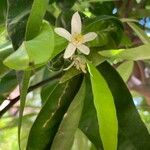
Citrus deliciosa
Willow-leaf mandarin · Mediterranean mandarin · Italian tangerine · Clementine · Clementine mandarin
Description
Source: leafsnapCitrus × deliciosa (thorny (Australia), amarillo, beladi, Willowleaf Mandarin, Mediterranean Mandarin) is a citrus hybrid mandarin orange with just under 6 % pomelo ancestry. It is related to the ponkan.It has been widely grown around the Mediterranean since it appeared in Italy (between 1810 and 1818), but was not found in the orient until it was exported there. It is one of the most commercially important citrus. Its sweet fruit is eaten, its rind oil is used to flavour food and drinks, and petitgrain oil is extracted from the pruned leaves. Flower (particularly petals) are also rich in essential oils.This species produce those which are perhaps the tastiest of all citrus fruits. That's why its scientific name is Citrus × deliciosa, which means delicious citrus.The production of Mediterranean mandarin has suffered a sharp decline since the middle of the 20th century because of the perishability of the fruits and the tendency for an alternating production with years of low production and years of excessive tree load, but consumers who require more intense citrus aromas and fragrances continue to enjoy this mandarin. Therefore, this mandarin has a commercial space for different markets that value the traditional cultivars. This is the case of the PGI "Citrinos do Algarve". These characteristics and its time of maturity, which implies being little affected by Ceratitis capitata, make Mediterranean mandarin recommended for organic farming.
🌳 The tasty mandarin orange not only pleases palates around the world but also has an unexpected use in beauty care. Its peel, dried in the sun and ground into a powder, is central to many skincare treatments. The oil from the mandarin peel is valued in aromatherapy for its calming and mood-enhancing properties. Even beyond the fruit, the mandarin's leaves have a less obvious role: they are used to make mandarin tea, which imparts a gentle citrus flavor.
🎭 Good fortune and auspiciousness
Care Guide
💧 Water
☀️ Light Full sun
The mandarin orange flourishes when exposed to an ample amount of light, appreciating a spot where it can soak up lots of sun, even though it can also withstand locations with less light. Its health could be compromised by either too much or too little light. As it comes from a habitat with abundant sunlight, the amount of sun exposure it gets plays a significant role in its overall health and growth phases.
🌡️ Temperature 20–37.8°C
The mandarin orange naturally thrives in warm temperate zones and needs temperatures between 20 and 38 ℃ (68 to 100.4 ℉) for the best growth. It is highly tolerant of temperature fluctuations, but sudden falls below 10 ℃ (50 ℉) may result in cold injury and diminish the yield of fruit.
💨 Humidity
🪴 Soil 6-7
🌱 Fertilizer
The Mandarin orange plant needs adequate nutrients for the best fruit yield. Apply fertilizer in the early spring to support new growth and blossom formation. Consistent fertilization aids the plant in maintaining its health, cultivating tastier fruit, and avoiding issues of nutrient lack such as yellowing leaves and underwhelming fruit output.
🪴 Pot & Repot 2-3 years
When rehousing Mandarin orange, select a container that is 1-2 inches (2.5-5 cm) bigger and has sufficient drainage. Opt for a potting mixture that drains well. Repotting should be done in spring or fall, making sure that the root cluster is slightly beneath the flower pot's brim. Fully hydrate the plant post-repotting and situate it in a warm location where it receives indirect sunlight.
✂️ Pruning
🌿 Propagating
🐛 Diseases & pets
☠️ Toxicity
Characteristics
- Plant Type
- Shrub, Tree
- Life Cycle
- Perennial
- Genus
- Citrus
- Family
- Rutaceae
- Hardiness Zone
- 9-11
- Mature Height
- 0.91 m to 3.05 m
- Mature Spread
- 6.1 m
- Leaf Color
- Green
- Leaf Type
- Evergreen
- Flower Color
- White
- Flower Size
- 1.52 cm
- Bloom Time
- Late spring, Early summer
- Planting Time
- Spring, Autumn
- Harvest Time
- Mid summer, Late summer, Fall, Winter
- Native Area
- Japan