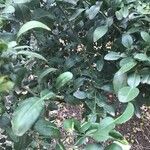
Citrus hystrix
Kaffir lime · Mauritius papeda · Makrut-lime · Papeda · Limau purut
Description
Source: leafsnapCitrus hystrix, commonly known as kaffir lime, is a small tropical tree in the Rutaceae family. Native to Southeast Asia, this tree is widely cultivated in Thailand, Indonesia, and Malaysia. It features a thorny trunk and branches, adorned with glossy green leaves that are highly aromatic. The fruit of the Citrus hystrix plant is small, bumpy, and green. Its intense citrus flavor makes it a popular ingredient in Southeast Asian cuisine, enhancing curries, soups, salads, marinades, and drinks. The leaves of Citrus hystrix are also prized for their culinary applications due to their distinctive flavor, which adds depth to various dishes. They are especially prominent in Thai cuisine for their aromatic qualities. Beyond its culinary uses, Citrus hystrix is valued for its medicinal properties, attributed to its high content of essential oils such as citronellal and limonene. These essential oils have been found effective against various ailments, including fever reduction and relief from respiratory issues like coughs and colds. In summary, Citrus hystrix is a highly valued tropical tree, appreciated not only for its culinary applications but also for its medicinal properties. Its unique flavors and natural remedies are cherished by people around the world.
💡 Kaffir lime is a versatile plant known for its culinary uses. While it does produce fruit, the leaves are more commonly used in cooking. Occasionally, the rinds and zest of the fruit are also used for flavoring dishes. Interestingly, the juice of the fruit is often used for cleaning clothing. If you wish, you can grow kaffir lime in containers.
Care Guide
💧 Water Every 7 days
Kaffir lime, a plant native to humid Southeast Asia, thrives with consistent moisture but can tolerate short dry periods. It should be watered every 1-2 weeks, and it is important to use well-draining soil. Adding mulch can help retain moisture during hot weather, which supports the plant's growth cycle and enhances the health of its aromatic leaves and fruit.
How should I water my Kaffir lime plant?
Your Kaffir lime doesn't have specific preferences when it comes to watering methods. You can use any common tools like watering cans, hoses, or even cups. The important thing is to water the plant's soil. Make sure to evenly moisten all areas of the soil to provide sufficient water to the entire root system. It's best to use filtered water, as tap water may contain harmful particles for the plant. Also, try to use water at or slightly above room temperature, as extremely hot or cold water may shock the Kaffir lime. However, in general, the Kaffir lime is quite adaptable to any water you give it.
What should I do if I give my Kaffir lime tree too much water or too little water?
If you have outdoor plants, especially newly planted ones or seedlings, make sure to water them enough for a few months. Once the roots are established, Kaffir lime plants can rely on rain most of the time. When growing Kaffir lime in pots, be careful not to overwater. If you accidentally overwater your plant, stop watering it right away. Take the plant out of its pot and check for root rot. If there is no root rot, you can put the plant back in its pot. If there is root rot, trim the affected roots and apply a fungicide. Repot the plant in well-draining soil. If you underwater your Kaffir lime, simply water it more frequently. The leaves will droop and dry out, but they will return to fullness after sufficient watering. Adjust your watering frequency when you notice underwatering.
How frequently should I water my Kaffir lime tree?
If you live in an area with regular rainfall, most outdoor plants can thrive without additional watering. However, if your area lacks rainfall, it's important to water your plants adequately. During the spring and fall, watering every 2 weeks should be sufficient, but in the summer, more frequent watering is necessary. In the winter, when plants need less water, water sparingly or not at all. If you have a young or newly planted Kaffir lime, it may require more frequent watering to help it establish and grow. For potted plants like the Kaffir lime, there are two main approaches to determining watering frequency. The first is to follow a predetermined schedule, such as watering once a week or every other week. However, this may not always be effective as it doesn't consider the specific conditions of your plant's environment. Another approach is to check the soil moisture. Wait until the top two to four inches of soil, about ⅓ to ½ depth of the pots, have completely dried out before watering again. Adjust your watering frequency according to the season, as the plant's water needs will be highest during summer.
How much water does my Kaffir lime tree need?
When watering your Kaffir lime, you may be surprised to learn that it doesn't always need a lot of water. If only a few inches of soil have dried since the last watering, giving it about five to ten ounces of water each time can support healthy growth. You can also decide how much water to give based on the soil moisture. To ensure it gets enough moisture, water the soil layers that have become dry since the last watering. If more than half of the soil is dry, give more water until you see excess water draining from the pot's holes. If your Kaffir lime is in an area that receives ample rain outdoors, it may not need extra watering. When the plant is young or establishing, make sure it gets 1-2 inches of rain per week. As it grows and establishes, it can rely solely on rainwater, except in hot weather with no rain for 2-3 weeks. In that case, give it a full watering to prevent stress.
How do I know if I am giving enough water to my Kaffir lime plant?
Overwatering is a common problem for the Kaffir lime, and there are noticeable signs to watch out for. When a Kaffir lime is overwatered, its leaves turn yellow and it might even lose some leaves. Moreover, overwatering can cause the plant's overall structure to shrink and promote root rot. On the other hand, an underwatered Kaffir lime will start to droop and may have brown or brittle leaves. Regardless of the signs of overwatering or underwatering, it is important to take action and restore the health of your Kaffir lime.
☀️ Light Full sun
Kaffir lime grows best with plentiful sunlight and can tolerate moderate sun. Its native habitat consisted of areas with abundant light. For healthy development, ample sun is recommended. Too little light can inhibit growth, while too much may cause damage.
What are the sunlight requirements for Kaffir lime?
Kaffir lime plants flourish best when exposed to full sun for more than 6 hours a day but can also tolerate partial sun, receiving about 3-6 hours of sunlight daily. The plant's origin in environments with substantial sunlight makes significant sun exposure essential for healthy growth. Insufficient light can hinder growth, and excessive exposure can be detrimental. Observing the movement of sunlight through your garden and choosing the right balance of light and shade is crucial for ensuring the plants' well-being.
How can artificial lighting be used for Kaffir lime indoor plants?
Indoor Kaffir lime plants require adequate lighting, especially when natural sunlight is insufficient, such as in winter or less sunny spaces. Artificial lights, like LED lights tailored to provide specific wavelengths, offer a vital solution. For optimal growth, full sun plants need 30-50W/sq ft of artificial light, partial sun plants need 20-30W/sq ft, and full shade plants need 10-20W/sq ft. The light source should be placed 12-36 inches above the plant to mimic natural sunlight, and most plants need 8-12 hours of light per day to thrive.
What are the symptoms of insufficient sunlight for Kaffir lime?
Symptoms of insufficient sunlight in Kaffir lime include faster leaf drop, where plants shed older leaves early to conserve resources; lighter-colored new leaves, indicating a lack of chlorophyll and essential nutrients; and potential impact on flowering and fruiting. Other symptoms include leggy or sparse growth, chlorosis (yellowing of leaves), sunscald, leaf curling, wilting, and leaf scorching, which are all indicators of excessive sunlight exposure or insufficient sunlight.
What solutions can address insufficient sunlight for Kaffir lime?
To address insufficient sunlight for Kaffir lime, it's recommended to gradually move plants to sunnier locations each week until they receive at least 6 hours of direct sunlight daily. For indoor plants, using artificial light like desk or ceiling lamps for at least 8 hours daily can help, or investing in professional plant grow lights. Outdoors, relocate plants to better sunlight spots gradually to prevent sunburn. Reducing obstructions, pruning trees to allow more sunlight, and transplanting smaller plants during their dormant period to locations with ample sunlight and good drainage can also mitigate the issue.
🌡️ Temperature 20–37.8°C
The kaffir lime grows best within a temperature range of 68 to 100 ℉ (20 to 38 ℃), reflecting its native habitat. It flourishes in warm, humid conditions and is not tolerant of extreme cold or excessive heat. In winter, keep temperatures above 50 ℉ (10 ℃) to prevent leaf drop. In summer, provide shade and extra watering to ease heat stress.
What are the ideal growing conditions for Kaffir lime?
Kaffir lime (Citrus hystrix) thrives in a temperature range of 68 to 100°F (20 to 38°C), similar to its native growth environment, which is warm and humid. It does not tolerate extreme cold or heat well. During winter, it's important to maintain a temperature above 50°F (10°C) to prevent leaf drop. In summer, to reduce heat stress, providing shade and extra watering is beneficial. Kaffir lime loves heat, but it's crucial to avoid cold temperatures, as they can cause harm. In the autumn, if the plant is grown outdoors, it's recommended to bring it indoors and place it near a bright window but keep it away from heaters. Maintaining temperatures above 20°C during winter supports its growth, but temperatures nearing 5°C are harmful to the plant.
How should I care for my Kaffir lime in low temperatures?
Kaffir lime prefers warm conditions and does not do well in low temperatures, thriving best when the temperature is above 20°C. During winter, it's critical to keep it above 5°C. Falling below 1°C, the leaves may lighten in color, turning brown or black after frost damage, accompanied by wilting and drooping. To protect against cold, trim off the frost-damaged parts and move the plant indoors to a warm area. Position it near a south-facing window for ample sunlight, and avoid placing it near heaters or air conditioning vents to prevent the air from becoming excessively dry.
What should I do if my Kaffir lime experiences high temperatures?
During summer, it's advisable to keep Kaffir lime below 38°C, as exceeding 43°C may cause the leaves to lighten in color and increase susceptibility to sunburn. To manage this, trim away the sunburned and dried parts. Relocate the plant to a spot that offers shade during the midday and afternoon sun. Watering the plant in the morning and evening can help keep the soil moist, which is crucial for its health in high temperatures.
💨 Humidity normal (40-60%)
This plant will thrive in moderate humidity, which is probably the level in your home. However, misting it a few times a week can be very beneficial. Make sure the room has good ventilation.
🪴 Soil 5-6
🌱 Fertilizer
Use organic fertilizers (for example, fish emulsion or compost) instead of chemical fertilizers for Kaffir lime. Give young plants higher amounts of nitrogen and phosphorus in spring. Work compost or fertilizer into the soil either before planting or after planting. For mature plants, apply a balanced fertilizer in spring or one formulated for specific nutrient deficiencies. Nutrient deficiency results in small leaves, short or stunted branches, yellowing or bronze leaves, sour fruits, premature fruit drop, and fruit splitting.
Why should I put fertilizer on my Kaffir lime plant?
If the soil in your area is rich, fertilization may not be necessary. However, if the soil is lacking nutrients, a Kaffir lime tree will struggle to produce sufficient leaves, flowers, and fruits. To determine which nutrients are abundant in the soil and which are lacking, a soil test is the most effective method. Nutrient deficiencies in Kaffir lime trees can result in small leaves and stunted branches, yellowing or bronze-colored foliage, and fruits that are more acidic and therefore less flavorful. In some cases, certain nutrient deficiencies can lead to premature fruit drop or splitting.
When should I fertilize my Kaffir lime tree to get the best results?
To support the strong leaf and root development of young Kaffir lime for future growth, it is recommended to provide a higher nitrogen and phosphorus fertilizer. The best time to apply this fertilizer is during the spring of the first growing season. It is also beneficial to incorporate compost or another fertilizer into the soil before or right after planting. For mature plants, it is advisable to supplement with a balanced fertilizer or a fertilizer that addresses specific soil deficiencies in your area, as needed, during the spring and summer. Avoid fertilizing during the autumn or winter seasons.
When is it best to not use fertilizer on my Kaffir lime plant?
To ensure the health of your Kaffir lime tree, there are certain times when you should avoid fertilizing. For instance, after pruning, when the tree is dealing with a disease or insect infestation, or when it is under any other kind of stress. It's important to note that fertilizer is only effective in treating insufficient nutrients in the soil and cannot fix other issues that may be impacting the tree. In order to avoid mistakenly applying fertilizer when another factor may be causing the problem, it is crucial to accurately diagnose the issue. Additionally, it is best to refrain from fertilizing during the winter months or during particularly hot and dry periods in the summer.
What kind of fertilizer should I use for my Kaffir lime tree?
Kaffir lime types thrive in tropical locations rich in organic matter. To meet their nutrient requirements, fertilizer can be added. For fruit production, a high-phosphorus organic fertilizer like mushroom compost, bone meal, and poultry manure promotes the growth of delicious and well-formed fruits. When purchasing fertilizer, check the label for the NPK ratio (nitrogen, phosphorus, and potassium). Low nitrogen is usually the most common soil nutrient deficiency, but a soil test is the best way to identify any deficiencies and determine the need for additional supplementation.
How should I fertilize my Kaffir lime tree?
When using fertilizer, it's important to follow the instructions provided. It's better to use too little fertilizer than too much, so it's recommended to be conservative when adding fertilizers. Chemical fertilizers are usually highly concentrated, unlike organic fertilizers. For liquid fertilizers, they are typically diluted with water and then used to water the Kaffir lime plant. On the other hand, granular or dry fertilizers can be spread around the base of the plant, but avoid any direct contact with the plant itself. Generally, it is advised to use fertilizer once every 2-3 weeks during the growing season. Organic fertilizers can either be mixed into the soil before planting or spread as a layer over the top of the soil for both newly-planted and mature plants.
🪴 Pot & Repot 2-3 years
When repotting a Kaffir lime, choose a pot 1-2 inches (2.5–5.1 cm) larger with ample drainage. Use a well-draining potting mix. Repot in spring or fall, ensuring the root ball is slightly lower than the rim of the flower pot. Water thoroughly after repotting and place in a warm spot with indirect sunlight.
✂️ Pruning
Kaffir lime is prized for its aromatic leaves and fruit. To maintain the plant's health and productivity, prune it in early spring. Remove any dead branches and thin out dense areas to improve air circulation. Additionally, trimming the plant for a balanced structure can promote growth and increase fruit yield. To prevent the spread of disease, always sterilize your tools before use.
🌿 Propagating
🐛 Diseases & pets
☠️ Toxicity
As the majority of fruit trees, the peel and pulp of Citrus Hystrix contain chemical compounds called furanocoumarins. They can cause phytophotodermatitis. However, only one case of this skin inflammation has been registered.
Characteristics
- Plant Type
- Shrub
- Life Cycle
- Perennial
- Genus
- Citrus
- Family
- Rutaceae
- Hardiness Zone
- 10-12
- Mature Height
- 2.13 m to 10.97 m
- Mature Spread
- 2.13 m
- Leaf Color
- Green
- Leaf Type
- Evergreen
- Flower Color
- White
- Flower Size
- 1.02 cm to 2.03 cm
- Bloom Time
- Late spring, Early summer, Mid summer
- Planting Time
- Spring, Autumn
- Harvest Time
- Mid summer, Late summer, Fall
- Native Area
- Sri Lanka, India, Malaysia, Indonesia, Cambodia, Vietnam, Myanmar, Philippines, Bangladesh, Laos, Thailand, China