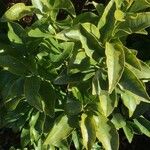
Citrus japonica
Kumquat · Meiwa kumquat · Cherry Orange · Oval-kumquat · Cumquat
Description
Source: leafsnapKumquats (; Chinese: 金桔), or cumquats in Australian English, are a group of small fruit-bearing trees in the flowering plant family Rutaceae. Their taxonomy is disputed. They were previously classified as forming the now-historical genus Fortunella or placed within Citrus, sensu lato. Different classifications have alternatively assigned them to anywhere from a single species, C. japonica, to numerous species representing each cultivar. Recent genomic analysis would define three pure species, Citrus hindsii, C. margarita and C. crassifolia, with C. x japonica being a hybrid of the last two. The edible fruit closely resembles the orange (Citrus sinensis) in color and shape but is much smaller, being approximately the size of a large olive. The kumquat is a fairly cold-hardy citrus.
🌳 Aside from being eaten, the kumquat's peel is rich in essential oils that are used in aromatherapy and perfumery. Its complex aroma carries sweet, tangy, and floral notes, making it popular for creating rich, evocative fragrances. Additionally, kumquat essential oil has potential for use as a natural antiseptic because of its antimicrobial properties.
🎭 prosperity
Care Guide
💧 Water Every 1-2 weeks
Kumquats flourish in humid subtropical climates, where they require moderate moisture and can tolerate short periods of dryness. Ideally, they should be watered every 1 to 2 weeks. This outdoor plant, appreciated for its edible fruit, thrives in well-draining soil to prevent root rot, as it is sensitive to overwatering.
How should I water my Kumquat plant?
Your Kumquat is not picky when it comes to watering. You can use any common watering tool like watering cans, hoses, or even cups. It is best to water directly on the soil and make sure to moisten all areas equally to nourish the entire root system. Filtering the water is advisable to avoid harmful particles from tap water. Using water at or slightly above room temperature is preferred, as extreme temperatures can shock the Kumquat. However, the Kumquat usually responds well to any type of water.
What should I do if I give my Kumquat too much or too little water?
For outdoor plants, especially newly planted ones or seedlings, lack of watering is a common issue. It's important to remember that you need to water them adequately for a few months, especially when the tree is small or recently planted. Once the roots are established, Kumquat plants can rely on rain most of the time. If your Kumquat is planted in pots, overwatering is more likely to happen. If you accidentally overwater your Kumquat, you should act promptly to fix the situation. First, stop watering the plant immediately to minimize the impact of overwatering. Then, remove the Kumquat from its pot to inspect its roots. If there are no signs of root rot, you can return the plant to its container. However, if there is root rot, trim the affected roots and consider using a fungicide to prevent further damage. Finally, repot the Kumquat in well-draining soil. In the case of underwatering, simply water the Kumquat plant more frequently. This is an easy fix, as the leaves of an underwatered plant will droop, dry out, and fall off. After sufficient watering, the leaves will quickly regain their fullness. Therefore, adjust your watering frequency as soon as you notice underwatering occurring.
How many times should I give water to my Kumquat plant?
Outdoor plants can usually rely on rainfall for growth. However, if your area lacks rain, you should water them adequately every 2 weeks in the spring and fall. In the summer, you'll need to water more frequently. In the winter, when growth slows down and plants need less water, water sparingly or not at all. Young or newly planted Kumquat plants require more frequent watering to help them establish and become drought tolerant. For potted plants, there are two main ways to determine how often to water your Kumquat. The first is to have a set watering schedule, either weekly or biweekly. However, this approach may not be suitable for your specific growing environment. Watering frequency can also change depending on the season. For example, a predetermined schedule may not be enough during the high-water needs of summer. An alternative approach is to monitor soil moisture. Wait until the top two to four inches of soil, or about ⅓ to ½ of the pot's depth, have dried out completely before watering again.
How much water does my Kumquat plant need?
When watering your Kumquat plant, remember that it doesn't always require a lot of water. If the soil has only dried a few inches since the last watering, giving it around five to ten ounces of water each time will promote healthy growth. To gauge the appropriate water volume, monitor the moisture of the soil. Take note of how many inches of soil have dried between waterings. To ensure your Kumquat receives adequate moisture, water enough to dampen all the dry soil layers since the last watering. If over half of the soil has dried, consider giving more water. In such cases, continue watering until you see excess water draining from the pot's holes. If your Kumquat plant is situated outdoors in a rainy area, it may not require additional watering. However, if it's young or newly planted, ensure it receives 1-2 inches of rain per week. As it grows and becomes established, it can rely solely on rainwater. Only when the weather is hot and no rainfall occurs for 2-3 weeks should you give it a full watering to prevent stress.
How do I know if I'm giving my Kumquat enough water?
Overwatering is a common problem for Kumquat plants, and there are clear signs to watch for. If your Kumquat is overwatered, its leaves will turn yellow and it might shed some of them. Overwatering can also cause the plant to shrink and lead to root rot. On the other hand, if your Kumquat is underwatered, it will start to wilt and its leaves may appear brown or feel brittle. Regardless of whether you notice signs of overwatering or underwatering, taking action to revive your Kumquat's health is necessary.
☀️ Light Full sun
Kumquat prefers direct, unobstructed sunlight and does well even under a partly cloudy sky. Native to sun-rich environments, the plant has an inherent need for strong light. Insufficient sunlight can slow its growth, while excess light may cause the leaf edges to become yellowish.
What are the sunlight requirements for a kumquat plant?
Kumquat plants require a significant amount of sunlight to thrive, with a preference for full sun exposure, which entails more than 6 hours of sunlight daily. However, they can also manage well under partial sun conditions, receiving about 3 to 6 hours of sunlight. It's crucial to observe how sunlight moves through your garden to find spots that ensure the right balance of light and shade for your plants, thus ensuring their health and happiness.
Can kumquat plants grow under artificial lighting?
Yes, kumquat plants can grow under artificial lighting, which becomes especially important when natural sunlight is insufficient, such as during winter or in less sunny indoor spaces. For optimal growth under artificial lights: LED lights are recommended for they can provide specific wavelengths needed by the plants. Full sun plants require 30-50W/sq ft, partial sun plants need 20-30W/sq ft, and full shade plants require 10-20W/sq ft of light. The light source should be placed 12-36 inches above the plant, mimicking natural sunlight, and plants should be exposed to artificial light for 8-12 hours per day to simulate natural daylight hours.
What symptoms indicate insufficient sunlight for a kumquat plant?
Symptoms of insufficient sunlight in kumquat plants include faster leaf drop, as plants shed older leaves to conserve resources in low light; lighter-colored new leaves, signaling a lack of chlorophyll and essential nutrients; leggy or sparse growth, where the spaces between leaves or stems lengthen, giving the plant a stretched-out appearance; and chlorosis, where leaves lose their green color, turning yellow because of the breakdown of chlorophyll. Excessive sunlight can lead to symptoms such as sunscald, characterized by pale or necrotic areas on the plant tissue; leaf curling, as a defense mechanism to reduce water loss; wilting, due to increased water loss; and leaf scorching, marked by brown, dry edges on leaves.
How can I address symptoms of insufficient or excessive sunlight in kumquat plants?
To address insufficient or excessive sunlight in kumquat plants, for indoor plants, gradually move them to a sunnier location until they receive at least 6 hours of direct sunlight daily, utilizing a south-facing window for maximum exposure. If the plant is large or not easily movable, consider using artificial light, keeping a lamp on for at least 8 hours daily or investing in professional plant grow lights. For outdoor plants, move them gradually to avoid sudden changes in light intensity that can cause sunburn. Reducing obstructions and transplanting to sunnier locations with ample sunlight and good drainage are also effective strategies. It's important to note that parts of the plant affected by insufficient sunlight may not recover, but new growth will be healthy with improved light exposure.
🌡️ Temperature 20–37.8°C
The kumquat requires warm, sunny conditions to thrive. Its native temperature-related habitat is in tropical to subtropical zones, with average temperatures of 20 to 38 ℃ (68 to 100.4 ℉). In winter, temperatures should not drop below 5 ℃ (41 ℉) to avoid cold damage. It is advisable to keep the plant in a warm, sheltered spot during the colder months.
What kind of weather does a kumquat need to grow well?
The kumquat thrives in warm and sunny weather, ideally situated in tropical to subtropical regions. It grows best when average temperatures are within the range of 20 to 38°C (68 to 100.4°F). To guard against cold damage during the colder months, it's essential to maintain temperatures above 5°C (41°F) and keep the plant in a warm and sheltered location. Kumquats are extremely heat-loving, and exposure to cold can harm them. Thus, during autumn, it is recommended to bring outdoor-grown kumquat plants indoors, placing them near a bright window but away from direct heat sources like heaters, ensuring temperatures stay above 20°C for optimal growth. Temperatures nearing 0°C are harmful to the plant.
What should I do if my kumquat is exposed to low temperatures?
If your kumquat is exposed to low temperatures, particularly during winter where it should remain above 0°C, and certainly not fall below -5°C, it's crucial to act promptly as cold can cause its leaves to lighten and lead to symptoms such as wilting and drooping, with frost damage turning leaves brown or black. To mitigate this, trim off the frost-damaged parts and move the plant immediately to a warmer environment inside your home. Placing the plant near a south-facing window can ensure it receives ample sunlight without being too close to heaters or air conditioning vents that might dry out the air excessively.
How should I care for my kumquat during high temperatures?
During summer, keeping the kumquat below 38°C is crucial to prevent stress and damage from high temperatures, as exceeding 43°C can lighten the leaves' color and increase susceptibility to sunburn. To care for a kumquat experiencing high temperatures, trim away any sunburned or dried-up parts, and relocate the plant to a cooler spot, preferably one that offers shade from the harsh midday and afternoon sun. To maintain moisture, watering the plant in the morning and evening is advisable, ensuring that the soil remains sufficiently moist without becoming waterlogged.
💨 Humidity high (>60%)
This plant needs special care because it loves high humidity levels of 60-80% or more. The best way to achieve this is by placing a humidifier near the plant. Daily misting is also essential! Make sure the room has good ventilation.
🪴 Soil 6-7
🌱 Fertilizer
Choose organic fertilizers (e.g., fish emulsion or compost) instead of chemical fertilizers for Kumquat. Supply higher nitrogen and phosphorus to young plants during spring. Incorporate compost or fertilizer before or after planting. For mature plants, supplement in spring with a balanced fertilizer or one targeted to specific deficiencies. Nutrient deficiency causes small leaves, short branches, yellow or bronze leaves, acidic fruits, premature fruit fall, and splitting.
Why should I use fertilizer on my Kumquat plant?
It might not be necessary to fertilize if the soil in your area is rich. However, if the soil lacks nutrients, Kumquat plants won't be able to grow enough leaves, flowers, and fruits. To figure out what nutrients are abundant or lacking, a soil test is the best method. If there is a nutrient deficiency in Kumquat plants, it can result in small leaves, short branches, yellowing or bronze leaves, and less tasty fruits due to increased acidity. In some cases, nutrient deficiency can even cause fruits to fall prematurely or split.
When should I fertilize my Kumquat tree?
To support strong leaf and root development in young Kumquat plants, it is recommended to provide them with higher nitrogen and phosphorus fertilizer. The best time to fertilize them is during the spring of their first growing season. Prior to or immediately after planting, it's a good idea to incorporate compost or another fertilizer into the soil. As for mature plants, supplement them every few years as needed during the spring and summer with a balanced fertilizer or one that addresses specific soil deficiencies in your area. It's important to avoid fertilizing Kumquat plants in the autumn or winter.
When should I not put fertilizer on my Kumquat?
To ensure the health of your Kumquat plant, do not fertilize it after pruning or when it is already dealing with disease, insects, or stress. Keep in mind that fertilizer only addresses nutrient deficiencies in the soil and cannot resolve other issues that may affect your Kumquat. Therefore, it is important to accurately diagnose the problem before adding fertilizer as another cause may be the culprit. Additionally, refrain from fertilizing the Kumquat during the winter or during excessively hot and dry periods in the summer.
What kind of fertilizer does my Kumquat plant need?
Kumquat plants typically thrive in tropical locations where there is abundant decaying organic matter in the environment. However, they may benefit from additional fertilizer to meet their macronutrient and micronutrient needs. When specifically growing Kumquat for fruit, using a high-phosphorus organic fertilizer like mushroom compost, bone meal, or poultry manure can help enhance the flavor and appearance of the fruits. When buying fertilizer, you will find a number (NPK) on the label, indicating the ratio of the three macronutrients: nitrogen, phosphorus, and potassium. While low nitrogen is a common nutrient deficiency in soil, conducting a soil test is the most effective way to determine which nutrients might be lacking and in need of supplementation.
How can I make my Kumquat plant grow better?
When choosing fertilizer, it is important to follow the instructions provided. It is generally better to use too little fertilizer than too much, so it is recommended to be conservative when adding fertilizers. This is especially true for chemical fertilizers, which are typically more concentrated compared to organic fertilizers. Liquid fertilizers are usually mixed with water and used to water the Kumquat plant. Granular or dry fertilizers can be spread around the base of the plant, making sure to avoid direct contact with any part of the plant. It is commonly advised to use fertilizers once every 2-3 weeks during the growing season. For organic fertilizers, they can be mixed into the soil prior to planting or spread as a layer over the top of the soil for newly-planted or mature plants.
🪴 Pot & Repot 2-3 years
When repotting Kumquat, choose a pot 1-2 inches (2.5–5.1 cm) larger with ample drainage. Use a well-draining potting mix. Repot in spring or fall, ensuring that the root ball is slightly lower than the rim of the flower pot. Water thoroughly after repotting and place in a warm spot with indirect sunlight.
✂️ Pruning
The kumquat is a small evergreen citrus tree known for its fragrant flowers and edible fruits. To encourage growth, remove dead branches, and improve air circulation, it’s best to prune the tree in early spring. Regular pruning also increases sunlight exposure, which enhances fruit quality and helps reduce pests. For additional tips, consult horticultural guides.
🌿 Propagating
🐛 Diseases & pets
☠️ Toxicity
Kumquat plants are safe to grow and eat. Citrus oil contained in fruits can irritate dogs’and cats’ stomachs and skin if eaten in excessive amounts.
Characteristics
- Plant Type
- Shrub
- Life Cycle
- Perennial
- Genus
- Citrus
- Family
- Rutaceae
- Hardiness Zone
- 9-11
- Mature Height
- 2.13 m to 4.88 m
- Mature Spread
- 1.83 m
- Leaf Color
- Green
- Leaf Type
- Evergreen
- Flower Color
- White
- Flower Size
- 0.51 cm to 0.76 cm
- Bloom Time
- Mid spring, Late spring, Early summer
- Planting Time
- Spring, Autumn
- Harvest Time
- Early spring, Mid summer, Late summer, Fall, Winter
- Native Area
- Vietnam, Laos, China