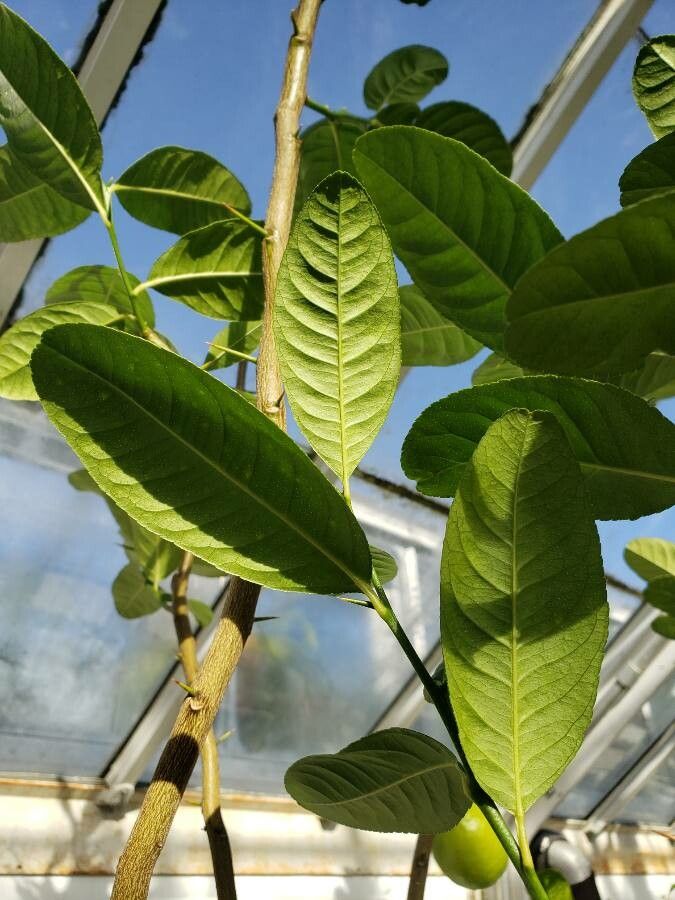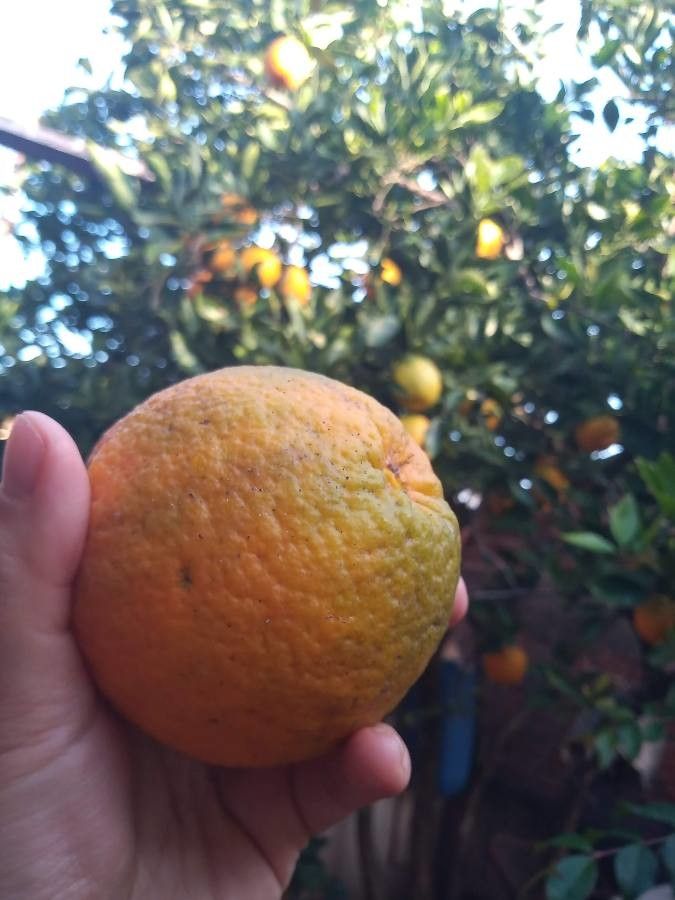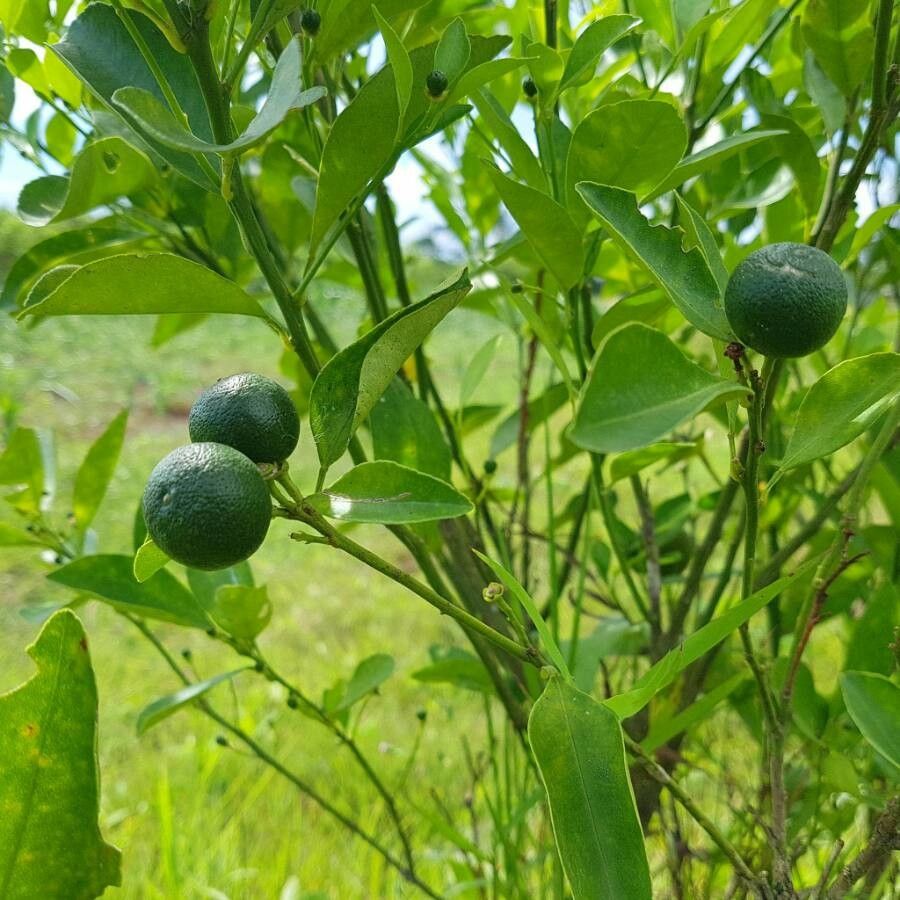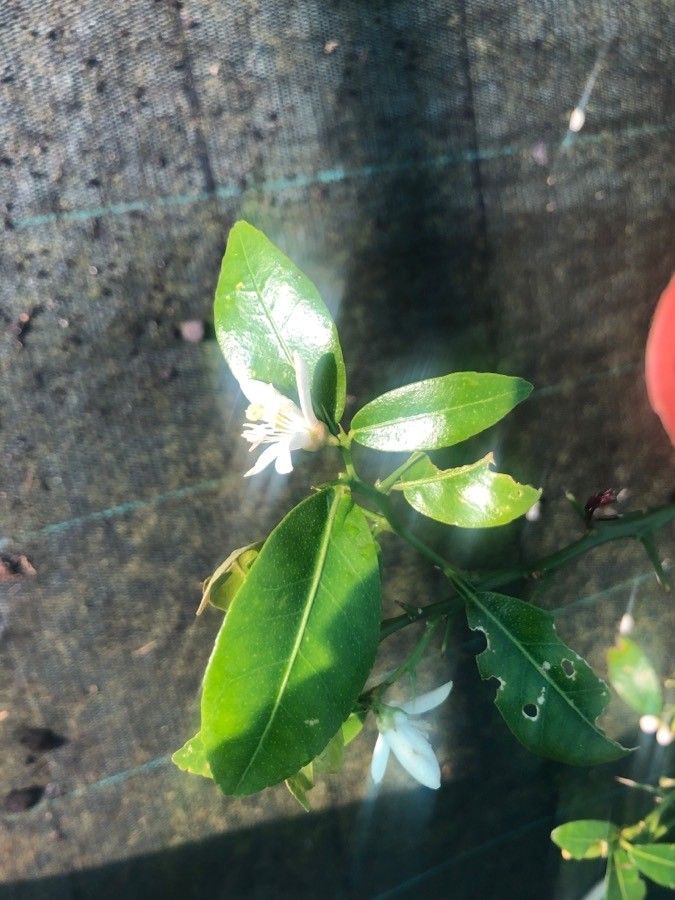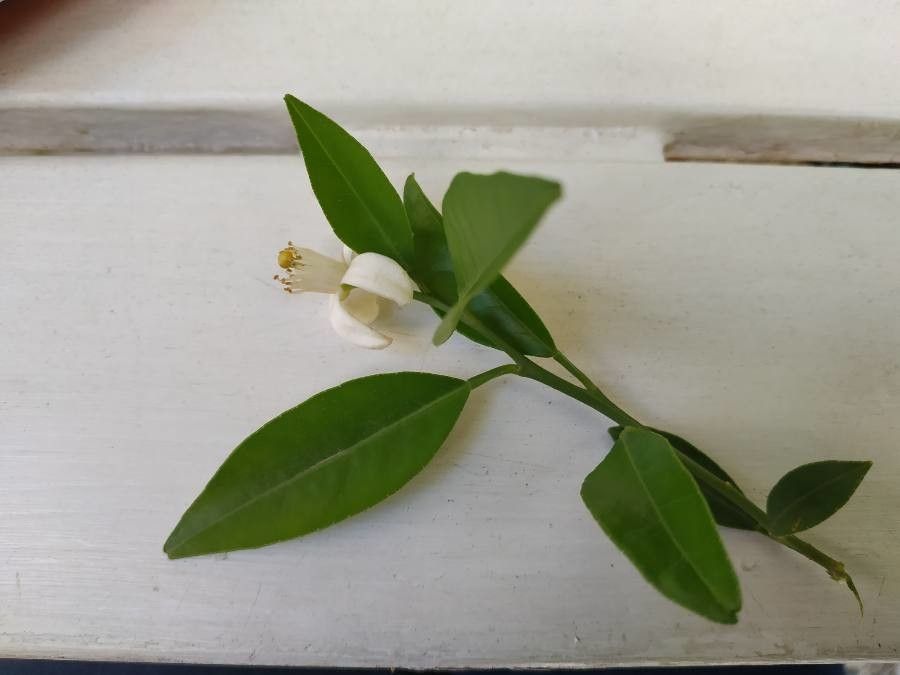
Citrus limetta, alternatively considered to be a cultivar of Citrus limon, C. limon 'Limetta', is a species of citrus, commonly known as mousami, musami, sweet lime, sweet lemon, and sweet limetta, it is a member of the sweet lemons. It is small and round like a common lime in shape. It is a cross between the citron (Citrus medica) and a bitter orange (Citrus × aurantium).It is native to southern regions of Iran and also cultivated in the Mediterranean Basin.
In Iran it is called limu shirin (لیمو شیرین, meaning 'sweet lemon' in Persian). In India, it is commonly called mausambi, mosambi, or musambi in Hindi (मुसंबी or मौसंबी) Mosambi (मोसंबी) in Marathi, Moushumi or mushumbi lebu (মৌসুমী বা মুসুম্বি লেবু) in Bengali, satukudi or satukodi (சாத்துக்குடி) in Tamil, musambi (ಮೂಸಂಬಿ) in Kannada, battayi (బత్తాయి) in Telugu, chinikaya (చీనీకాయ) in Rayalaseema, and musambi (മുസംബി) in Malayalam. In Bangladesh, it is called musambi or mosambi (মুসম্বি/মোসাম্বি, in Bengali). In Nepali, it is called mausam. In Pakistan, usually, it is called musami (موسمى, in Urdu). In the Sindh, it is known as mosami. Among Iraqi Armenians, it is called noumi (նումի). In France, it is sometimes called bergamot; it should not be confused with Citrus bergamia, the bergamot orange. In the Dominican Republic, it is called limón dulce, lima dulce, dulce limeta, or limettioides dulces, because of this sweetness in these two citrus fruits.It is a different fruit from the Palestinian sweet lime and from familiar sour limes such as the Key lime and the Persian lime. However, genomic analysis revealed it to be highly similar to the Rhobs el Arsa, and the two likely represent progeny of distinct crosses of the same citrus parents.The South Asian cultivars originated in Mozambique and were brought to South Asia by the Portuguese. The common name musambi and its variants trace their origin to Mozambique.
Citron has moderate resistance to disease but can be susceptible to problems like leaf spot. Its vulnerability to insect pests varies by variety, although most are relatively weak against pests. Regarding care, Citron needs regular watering and fertilizing, and yellow leaves should be pruned often. It is important to address pests and diseases when they appear and to harvest the plant promptly. Citron is suitable for those who can devote some time and energy to routine care.
How to keep Citrus Limetta.
Light
The citron plant necessitates substantial absorption of sunlight for its successful growth. Insufficient sun exposure could impede its robust development and induce its leaves to change color, whereas excessive sunlight could lead to leaf burn, particularly in young plants. This plant, which originates from environments characterized by clear skies and plentiful sunlight, has adapted to utilize the sun efficiently at each stage of growth.
Temperature
Citron is indigenous to areas with mild climates and does well in temperatures ranging from 20 to 35°C (68 to 95°F). It can adapt to changes in temperature, but ideally, this range should be kept for the best growth. Pay attention to seasonal temperature shifts and reposition the plant as necessary.
Fertilizer
Opt for organic fertilizers such as fish emulsion or compost instead of chemical ones for Citron. Young plants should be given a higher quantity of nitrogen and phosphorus during the spring. Integrate compost or fertilizer before or following the planting process. For mature plants, supplement with a balanced or specific fertilizer to correct nutritional deficiencies during spring. Nutritional deficiencies can lead to small leaves, shortened branches, yellow or bronze foliage, fruits with a high acid content, early fruit drop, and splitting.
Botanical profile.
- Plant Type
- Tree, Shrub
- Life Cycle
- Perennial
- Genus
- Citrus
- Family
- Rutaceae
- Hardiness Zone
- 10
- Mature Height
- 1.83 m to 7.62 m
- Mature Spread
- 0.91 m to 6.1 m
- Leaf Color
- Green
- Leaf Type
- Evergreen
- Flower Color
- White
- Flower Size
- 2.54 cm to 5.08 cm
- Bloom Time
- Late spring, Early summer, Mid summer
- Planting Time
- Spring, Autumn
- Harvest Time
- Early spring, Mid summer, Late summer, Fall, Winter
- Native Area
- Bhutan, India