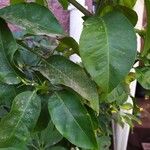
Citrus limon
لیمو · Lemon · Meyer lemon · Lemon-tree · Mandarin lime
Description
Source: leafsnapCitrus limon, commonly known as lemon, is a small evergreen tree that belongs to the Rutaceae family. Native to Asia, it is now widely cultivated around the world for its fruit. The lemon tree can reach heights of up to 6 meters and features a thorny trunk with dark green, ovate-shaped leaves. The fruit of the lemon tree is oval-shaped and turns bright yellow when ripe. It has a sour taste due to its high citric acid content and offers numerous health benefits, thanks to its rich vitamin C content. For optimal growth, lemon trees require well-drained soil, full sun exposure, and regular watering. They can be propagated through seeds or cuttings. Lemons are commonly used in cooking as an ingredient or garnish in a variety of dishes, including salads, drinks, desserts, and sauces. They are also valued in traditional medicine for their antibacterial properties. In conclusion, the Citrus limon plant is an important crop worldwide due to its culinary versatility and medicinal properties, making it an essential part of our daily lives.
💡 People with this birth flower are often charming and popular, which can sometimes lead to jealousy from others of the same gender. As a result, they may need to put in extra effort to earn their favor. This flower is part of the citrus family and blooms in the summer, producing mostly small white or yellow flowers that also act as a natural mosquito repellent.
🌳 Lemon does more than offer its characteristic tart flavor; it serves as an acidulant in culinary preparations worldwide. Its zest gives a distinct sourness to foods and beverages. Remarkably, the most acidic lemon can reach a pH of 2.0, comparable to the gastric acid in our stomachs, highlighting its potent chemical strength.
🎭 Cleansing, plenty, joy, affection
Care Guide
💧 Water Every 7 days
Lemons grow best in subtropical climates, where they need moderate watering and consistent moisture without becoming waterlogged. Ideally, water the lemon tree every 1 to 2 weeks, allowing the soil to dry out slightly between waterings. Lemons also prefer full sunlight and well-draining soil to ensure healthy growth and abundant fruit production.
When Should I Water My Lemon?
For optimal health and productivity of a Citrus limon, or lemon plant, understanding when to water is crucial. The soil dryness is a telltale sign; it's time to water when the soil feels dry beyond the first knuckle upon insertion of a finger. The lemon plant will also exhibit signs such as droopy leaves and a change in leaf color to a dull green or yellow when it's time for watering. Early morning or late evening is the ideal time to water, avoiding the hottest parts of the day. However, be cautious of overwatering as it can lead to root rot, while delaying watering can stress the plant, stunt growth, and diminish fruit yield.
How Should I Water My Lemon?
Watering your lemon plant effectively involves balance; both underwatering and overwatering can harm plant health. Techniques such as using a slow-release watering can with a long spout enables you to target the water directly to the roots instead of the foliage, which is less beneficial and can encourage fungal growth. Bottom-watering, where the plant absorbs water from a tray below, can also be effective. Tools like a moisture meter can help in assessing the soil's moisture levels to guide when to water. It's crucial to focus water at the base of the plant and its roots, rather than the foliage, and to avoid overwatering or allowing the plant to sit in standing water.
How Much Water Does Lemon Really Need?
Lemons require a consistent amount of water to maintain moist but not waterlogged soil, particularly due to their shallow root system. The exact amount of water required can vary with factors such as pot size, root depth, and plant size. Typically, lemons in small pots might need around 0.5 to 1 liter of water per session, while those in larger pots or in the ground might require 1 to 2 liters. Signs of proper hydration include vibrant leaves and firm, upright stems. Regularly check for dampness in the soil but avoid over-saturation to prevent root rot and other moisture-related issues.
What Kind of Water is Best for Lemon?
Lemons thrive best when watered with rainwater or distilled water due to the absence of contaminants found in other types of water. However, if tap water is the only option, it's advisable to let it sit overnight to allow the chlorine to evaporate, as lemons are sensitive to chlorine and fluorine. Using room temperature water that is slightly acidic (pH 6-7) and free from harmful chemicals and excess minerals is ideal for the health of the lemon plant.
How Do Lemon's Watering Needs Change with the Seasons?
The watering needs of a lemon plant vary with the seasons. In spring, as the plant enters a growth phase, it requires more water. Summer brings peak growth and potentially high evaporation rates, necessitating regular, deep watering. Autumn signals a time to gradually reduce watering as the plant prepares for dormancy. Winter watering is minimal, focused on preventing the soil from drying out completely. Adjust watering practices based on soil moisture levels and environmental conditions to keep your lemon healthy year-round.
☀️ Light Full sun
The lemon does best with plentiful sunlight, which supports its health and growth. During its developmental phases it can cope with less sunlight. Its native habitat receives abundant sun. Still, too much light can cause leaf scorch, while too little can impede growth.
What are the sunlight requirements for a lemon plant?
Lemon plants thrive with abundant sun exposure, which is crucial for their overall health and growth. They require full sun, meaning over 6 hours of sunlight daily, but can also manage with partial sun, about 3-6 hours of sunlight, especially during their developmental phases. Their original habitat is characterized by ample sunlight exposure. However, it is essential to monitor the balance between light and shade to prevent issues such as leaf scorch from too much light or stunted growth from insufficient light.
How do indoor lemon plants benefit from artificial lighting?
Indoor lemon plants benefit significantly from artificial lighting, especially when natural sunlight is insufficient, such as in winter or in spaces that don't receive enough sunlight. Artificial lights, particularly LED lights, can be customized to provide specific wavelengths of light necessary for the plants' needs. For indoor plants, the amount of artificial light recommended varies by plant type: full sun plants require 30-50W/sq ft, partial sun plants need 20-30W/sq ft, and full shade plants need 10-20W/sq ft. The light source should be placed 12-36 inches above the plant, mimicking natural sunlight conditions, and provided for 8-12 hours per day to promote faster, healthier growth.
What are common symptoms of inadequate sunlight in lemon plants?
Lemon plants exhibit several symptoms when they do not receive adequate sunlight, including faster leaf drop, impact on flowering and fruiting, slower or no new growth, chlorosis, sunscald, leaf curling, wilting, and leaf scorching. These symptoms range from early leaf shedding and halted growth to physical damage such as bleached or necrotic areas on the plant, yellowing leaves due to chlorophyll breakdown, and curled or twisted leaves as a defense mechanism against excessive sunlight.
What solutions are recommended for lemon plants not receiving enough sunlight?
For lemon plants not getting enough sunlight, a gradual approach to increasing light exposure is recommended. This includes moving plants to sunnier locations each week until they achieve at least 6 hours of direct sunlight daily. Use south-facing windows and keep curtains open during the day for indoor plants. If the plant is large or not easily movable, consider artificial lighting, keeping lamps on for at least 8 hours daily or investing in grow lights. Outdoors, move plants gradually to prevent sunburn, and for ground-planted varieties, reduce obstructions like overhanging branches and consider transplanting during the plant's dormant period to locations with ample sunlight and good drainage. Note that parts of the plant affected by insufficient sunlight may not fully recover, but new growth should be healthy.
🌡️ Temperature 20–37.8°C
The native temperature range for lemon growth is generally 20 to 38 ℃ (68 to 100 ℉). These temperate woody plants favor a warm, humid climate but can tolerate cooler winter temperatures of about 10 ℃ (50 ℉). During warmer months, keeping the temperature between 26 to 32 ℃ (79 to 90 ℉) is recommended for optimal growth and fruit production.
What is the native growth environment for lemon plants?
Lemon plants, scientifically known as Citrus limon, thrive in a native growth environment with temperatures generally between 20 to 38°C (68 to 100°F). These temperate woody plants prefer a warm and humid climate, but they can tolerate cooler temperatures of around 10°C (50°F) during the winter months. For optimal growth and fruit production, it is recommended to keep the temperature between 26 to 32°C (79 to 90°F) during the warmer seasons. Lemon plants are extremely heat-loving and can be harmed by cold temperatures. During autumn, it is advisable to bring outdoor-grown lemon plants indoors and place them near a bright window, ensuring they are kept a certain distance from heaters to maintain favorable growth conditions.
How do low temperatures affect lemon plants, and what are the solutions?
Lemon plants prefer warm temperatures and do not tolerate low temperatures well. They thrive best when the temperature is consistently above a minimum suitable growth temperature, and during winter, it's crucial to keep them above a tolerable minimum temperature. Exposure to temperatures below the growth limit can cause the leaves to lighten in color, and following frost damage, the affected parts may turn brown or black with symptoms such as wilting and drooping appearing. To mitigate frost damage, it's advised to trim off the frost-damaged parts and immediately move the plant to a warm environment indoors for protection. Placing the plant near a south-facing window ensures ample sunlight, and it's also recommended to avoid placing the plant near heaters or air conditioning vents to prevent excessive dryness.
What should be done if a lemon plant is exposed to high temperatures?
During the summer months, it's important to ensure that lemon plants are kept below a certain maximum suitable growth temperature. If the temperature exceeds this tolerable maximum, the leaves may lighten in color, and the plant becomes more susceptible to sunburn. To address issues caused by high temperatures, it's recommended to trim away any sunburned and dried-up parts. Moving the plant to a location that provides shade from the midday and afternoon sun can help protect it. Additionally, watering the plant in the morning and evening can help keep the soil moist, further aiding in the plant's well-being during high temperatures.
💨 Humidity normal (40-60%)
This plant will thrive in moderate humidity, which is probably the level in your home. However, misting it a few times a week can be very beneficial. Make sure the room has good ventilation.
🪴 Soil 6-7
🌱 Fertilizer
Opt for organic fertilizers like fish emulsion or compost instead of chemical ones when caring for Lemon. Supplement young plants with high levels of nitrogen and phosphorus during spring. Ensure you incorporate the compost or fertilizer either before or after planting. For older plants, apply either balanced or specific fertilizers to correct any deficiencies during spring. The signs of nutrient deficiency include small leaves, short branches, yellow or bronze leaves, acidic fruits, fruit dropping prematurely, and splitting.
🪴 Pot & Repot 2-3 years
When repotting a lemon, pick a pot 1-2 inches (2.5–5.1 cm) larger with good drainage. Use a well-draining potting mix. Repot in spring or fall, making sure the root ball sits slightly below the rim of the flower pot. Water thoroughly after repotting and place it in a warm spot with indirect sunlight.
✂️ Pruning
Lemon trees are known for their vibrant yellow fruit and fragrant blossoms. To maintain their health and improve fruit yield, prune them in early spring. This helps remove dead or diseased branches, enhances air circulation, and allows more light to penetrate the tree. Regular pruning is essential for promoting vitality and managing the size of the tree.
🌿 Propagating
🐛 Diseases & pets
☠️ Toxicity
Characteristics
- Plant Type
- Shrub, Tree
- Life Cycle
- Perennial
- Genus
- Citrus
- Family
- Rutaceae
- Hardiness Zone
- 9-11
- Mature Height
- 2.13 m to 6.1 m
- Mature Spread
- 0.91 m to 2.44 m
- Leaf Color
- Green
- Leaf Type
- Evergreen
- Flower Color
- White
- Flower Size
- 1.52 cm to 2.03 cm
- Bloom Time
- Late spring, Early summer, Mid summer
- Planting Time
- Spring, Autumn
- Harvest Time
- Early spring, Mid summer, Late summer, Fall, Winter
- Native Area
- India