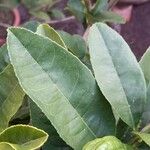
Citrus medica
فارسی · بالنگ · Lemon · Citron · Limette
Description
Source: leafsnapThe citron (Citrus medica) is a large fragrant citrus fruit with a thick rind. It is said to resemble a 'huge, rough lemon'. It is one of the original citrus fruits from which all other citrus types developed through natural hybrid speciation or artificial hybridization. Though citron cultivars take on a wide variety of physical forms, they are all closely related genetically. It is used in Asian cuisine, traditional medicines, perfume, and religious rituals and offerings. Hybrids of citrons with other citrus are commercially more prominent, notably lemons and many limes.
Care Guide
💧 Water
Originating from the lower Himalayas, citron thrives in a moderately humid environment with consistent moisture. It needs watering every one to two weeks. Usually grown outdoors, citron benefits from rainwater during its active growing season, which is essential for maintaining its health and vigor.
How should I water my Citron plant?
Your Citron plant is not too particular about how you water it, so you can use a variety of common watering tools. Watering cans, hoses, and even cups will all work fine when it's time to water your Citron. Regardless of the tool you choose, it's best to water directly on the soil. Make sure to evenly moisten all areas of the soil to provide water to all parts of the root system. Using filtered water is helpful because tap water may contain harmful particles. It's also beneficial to use water that is at or slightly above room temperature, as extremely hot or cold water can be a bit shocking to the Citron. However, the Citron usually responds well to any type of water you give it.
What should I do if I give my Citron tree too much water or too little water?
When caring for outdoor plants, especially new ones or plant seedlings, it's important to remember that they are more likely to lack water. Make sure to water consistently for a few months until the tree is established. Once the roots are developed, the plant can rely on rainfall. However, when growing Citron in pots, overwatering is a common issue. In case you accidentally overwater your Citron, take immediate action. Stop watering the plant to minimize the impact. Check the roots by removing the Citron from its pot. If there is no root rot, you can return the plant to its container. If there are signs of root rot, trim affected roots and consider using fungicide to prevent further damage. Repot the Citron in well-draining soil. On the other hand, underwatering can be easily resolved by increasing the frequency of watering. If you notice drooping, dried, or falling leaves, that's a sign of underwatering. Adjust your watering routine as soon as you detect this issue.
How often do I need to water my Citron plant?
Most outdoor plants can grow well with rainfall, but if your area lacks rain, here are some watering tips. During spring and fall, water your plants every 2 weeks. In the summer, you will need to water more frequently. In winter, when plant growth is slower and they need less water, water sparingly or not at all. If your Citron plant is young or newly planted, water it more often to help it grow and become drought tolerant. For potted Citron plants, there are two main ways to determine watering frequency. The first is setting a regular watering schedule, such as once a week or every other week. However, this may not consider the specific needs of your Citron in its unique growing environment. Another approach is to check the soil moisture. Wait until the top two to four inches of soil have fully dried out before watering again, usually about halfway up the pot. This method is more reliable, especially during the high water needs of summer.
How much water does my Citron plant require?
When watering your Citron plant, you may be surprised to learn that it does not always require a lot of water. Instead, if only a few inches of soil have dried since your last watering, you can promote healthy growth by giving it around five to ten ounces of water each time. Additionally, you can determine the amount of water based on the moisture level of the soil. Take note of how many inches of soil have dried out between waterings. To ensure your Citron gets the right amount of moisture, it is recommended to supply enough water to moisten all the dry soil layers since the last watering. If over half of the soil has dried out, it may be necessary to give more water than usual. In such cases, continue watering until you see excess water draining from the pot's drainage holes. If your Citron plant is located in an area that receives ample rain outdoors, it may not require additional watering. For young or newly established Citron plants, ensure they receive 1-2 inches of rain per week. As the plant matures and establishes, it can primarily rely on rainwater. However, in instances where there is no rainfall for 2-3 weeks and the weather is hot, consider giving your Citron a thorough watering to prevent it from experiencing stress.
How do I know if I'm giving enough water to my Citron plant?
Overwatering is a common problem for Citron plants. There are several signs you should look out for when this happens. An overwatered Citron will typically have yellowing leaves and may even drop some leaves. Overwatering can also cause the plant's structure to shrink and promote root rot. On the other hand, an underwatered Citron will begin to wilt and may have brown or brittle leaves. Regardless of whether you see signs of overwatering or underwatering, you should be ready to take action and restore your Citron's health.
☀️ Light Full sun
The citron plant necessitates substantial absorption of sunlight for its successful growth. Insufficient sun exposure could impede its robust development and induce its leaves to change color, whereas excessive sunlight could lead to leaf burn, particularly in young plants. This plant, which originates from environments characterized by clear skies and plentiful sunlight, has adapted to utilize the sun efficiently at each stage of growth.
What are the sunlight requirements for Citron plants?
Citron plants require a significant amount of sunlight to thrive, needing more than 6 hours of sunlight daily. The right balance of light and shade is crucial for their growth, as insufficient sunlight can inhibit growth and cause leaf discoloration, while too much sunlight can lead to leaf scorching, especially in young plants. Citron plants are accustomed to environments with clear skies and abundant sunlight, having evolved to optimally utilize the sun at every growth stage. Observing how sunlight moves through your garden and choosing spots that provide an appropriate balance of light and shade can ensure your plants' happiness and health.
What should I do if my Citron plant doesn't get enough natural light?
If your Citron plant is not receiving enough natural sunlight, especially during winter or in less sunny locations, artificial lighting can be a vital solution. It's important to select the right type of artificial light, like LED lights, which can provide the specific wavelengths your plants need. For indoor plants, you'll need an intensity of 30-50W/sq ft for full sun plants, 20-30W/sq ft for partial sun plants, and 10-20W/sq ft for full shade plants. The artificial light should be placed 12-36 inches above the plant to mimic natural sunlight and turned on for 8-12 hours per day, depending on the specific needs of your plant species.
How can I identify if my Citron plant is getting inadequate sunlight?
Signs of inadequate sunlight in Citron plants include smaller new leaves, leggy or sparse growth, faster leaf drop, slower or no new growth, lighter-colored new leaves, chlorosis (leaves turning yellow), sunscald (damage from intense sun), leaf curling, wilting, and leaf scorching. These symptoms can indicate that your Citron plant is not receiving the optimal amount of sunlight it requires for healthy growth. Adjusting the plant's exposure to sunlight or enhancing it with artificial lighting can help address these issues.
What are the solutions for Citron plants that don't receive enough sunlight?
For Citron plants not receiving enough sunlight, gradually increasing their exposure to sunlight is key. For indoor plants, move them to a sunnier location each week until they receive at least 6 hours of direct sunlight daily, and consider using south-facing windows or artificial light if the plant is large or not easily movable. For outdoor plants, moving them gradually to sunnier spots can help prevent sunburn. Reducing obstructions that block sunlight, such as pruning trees or relocating plants to sunnier areas, can also improve light availability. Transplanting smaller plants during their dormant period (late winter or early spring) to a location with more sunlight and better drainage can promote healthy growth. Remember that parts of the plant affected by insufficient sunlight may not recover, but new growth will be healthy following improved light exposure.
🌡️ Temperature 20–35°C
Citron is indigenous to areas with mild climates and does well in temperatures ranging from 20 to 35°C (68 to 95°F). It can adapt to changes in temperature, but ideally, this range should be kept for the best growth. Pay attention to seasonal temperature shifts and reposition the plant as necessary.
What temperatures are suitable for growing Citron?
Citron thrives in balmy climates, with optimal growth temperatures ranging between 68 to 95 °F (20 to 35 °C). It can adjust to temperature fluctuations, but maintaining this range is ideal. The minimum temperature during winter should stay above freezing to prevent damage. Also, when outdoor temperatures approach -5°C (25°F), it's advisable to bring the plant indoors or protect it with a temporary greenhouse or wrapping materials. Ideally, the temperature should be kept above 20°C during winter cultivation for optimal growth.
How does low temperature affect Citron and what can be done?
Citron has a moderate tolerance to low temperatures and is at its best between 20°C and 35°C. It should be kept above 5°C during winter to avoid damage. Exposure to temperatures below 1°C can cause the leaves to darken and, in severe cases, lead to water-soaked necrosis, wilting, drooping, and eventually, the leaves may turn brown. To counter this, trim away frost-damaged parts and relocate the plant to a warmer environment indoors or set up a makeshift greenhouse. Ensuring ample sunlight by placing the plant near a south-facing window or using supplemental lighting is also beneficial.
What happens when Citron is exposed to high temperatures and how can it be protected?
During the summer, it's crucial to keep Citron's temperature below 35°C. Temperatures above 41°C slow down the plant's growth, lighten the color of its leaves, and increase susceptibility to sunburn. To protect the plant, trim away sunburned and dried-up parts and relocate it to a shaded area, especially from the afternoon sun. It's also recommended to water the plant in the morning and evening to maintain soil moisture.
💨 Humidity normal (40-60%)
This plant will thrive in moderate humidity, which is probably the level in your home. However, misting it a few times a week can be very beneficial. Make sure the room has good ventilation.
🪴 Soil 5-6
🌱 Fertilizer
Opt for organic fertilizers such as fish emulsion or compost instead of chemical ones for Citron. Young plants should be given a higher quantity of nitrogen and phosphorus during the spring. Integrate compost or fertilizer before or following the planting process. For mature plants, supplement with a balanced or specific fertilizer to correct nutritional deficiencies during spring. Nutritional deficiencies can lead to small leaves, shortened branches, yellow or bronze foliage, fruits with a high acid content, early fruit drop, and splitting.
Why should I put fertilizer on my Citron plant?
If the soil in your area is rich, fertilization may not be needed. But if the soil lacks nutrients, a Citron tree will struggle to grow leaves, flowers, and fruits. Conducting a soil test is the best way to determine the nutrient levels. Nutrient deficiency in Citron can result in small leaves, short branches, yellow or bronze foliage, and less tasty fruits due to increased acidity. Additionally, certain nutrient deficiencies may cause early fruit drop or splitting.
When should I fertilize my Citron tree?
To promote healthy leaf and root development in young Citron plants, it is recommended to use fertilizers with higher nitrogen and phosphorus levels. Spring, specifically during the first growing season, is the best time to apply fertilizers. It is also advisable to mix compost or another type of fertilizer into the soil before or right after planting. For mature Citron plants, it is necessary to provide supplemental fertilization every few years, as required, during the spring and summer. In this case, using a balanced fertilizer or one that addresses specific soil deficiencies in your area is recommended. It is important to avoid fertilizing Citron plants in the autumn or winter.
When is the best time to not fertilize my Citron tree?
To ensure healthy growth of Citron, it is important to avoid fertilizing after pruning, during times of disease or insect infestation, or when the plant is already under stress. Fertilizer is beneficial only for addressing nutrient deficiencies in the soil, and cannot solve other problems that may be affecting the Citron. By accurately diagnosing the issue, you can prevent the unnecessary application of fertilizer when another factor might actually be responsible for the problem. Furthermore, it is best to refrain from fertilizing Citron during winter or during excessively hot and dry periods in the summer.
What kind of fertilizer does my Citron plant need?
Citron plants thrive in tropical locations with abundant decaying organic matter. To ensure optimal growth, they may benefit from fertilizers that provide essential macronutrients and micronutrients. When cultivating Citron for its fruit, it is recommended to use a high-phosphorus organic fertilizer like mushroom compost, bone meal, or poultry manure. Such fertilizers support the development of flavorful and well-formed fruits. When purchasing fertilizer, look for the NPK ratio (nitrogen, phosphorus, and potassium) indicated on the label. Nitrogen deficiency is a common issue in soil, but conducting a soil test can help identify specific nutrient deficiencies and guide additional supplementation.
How do I make my Citron plant grow better?
When using fertilizer, it is important to follow the instructions provided. It is better to use too little fertilizer than to use too much, so it is advised to be cautious when adding fertilizers. This is especially relevant for chemical fertilizers, as they tend to be highly concentrated compared to organic fertilizers. Liquid fertilizers are typically diluted with water and then used to water the Citron plant. On the other hand, granular or dry fertilizers can be spread around the base of the plant, making sure not to let any fertilizer come into direct contact with any part of the plant. The recommended frequency for applying fertilizer is once every 2-3 weeks during the growing season. For organic fertilizers, they can either be mixed into the soil before planting or spread on top of the soil for newly-planted or mature plants.
🪴 Pot & Repot 2-3 years
Repot your citron plant every 2 to 3 years, ideally in the spring. Choose a pot that is 2 to 3 inches larger and has proper drainage. After repotting, place the citron in a sunny spot and make sure it receives consistent watering. Careful attention during its recovery phase is essential for optimal growth.
✂️ Pruning
Citron plants are known for their large, fragrant fruits and thorny branches. To maintain healthy growth, it is best to prune them from early to late spring. During pruning, remove any dead or diseased branches and thin out crowded areas to enhance air circulation and light exposure. Regular pruning helps improve the plant's shape, health, and fruit yield. Always use clean, sharp tools for the best results.
🌿 Propagating
🐛 Diseases & pets
☠️ Toxicity
Characteristics
- Plant Type
- Tree, Shrub
- Life Cycle
- Perennial
- Genus
- Citrus
- Family
- Rutaceae
- Hardiness Zone
- 10
- Mature Height
- 1.83 m to 7.62 m
- Mature Spread
- 0.91 m to 6.1 m
- Leaf Color
- Green
- Leaf Type
- Evergreen
- Flower Color
- White
- Flower Size
- 2.54 cm to 5.08 cm
- Bloom Time
- Late spring, Early summer, Mid summer
- Planting Time
- Spring, Autumn
- Harvest Time
- Early spring, Mid summer, Late summer, Fall, Winter
- Native Area
- Bhutan, India