Citrus meyeri
Chinese dwarf lemon · Dwarf lemon · Meyer lemon
Description
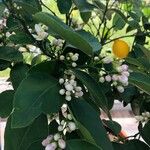
Source: leafsnapCitrus × meyeri, the Meyer lemon (Chinese: 梅尔柠檬 méi ěr níngméng), is a hybrid citrus fruit native to China. It is a cross between a citron and a mandarin/pomelo hybrid.Mature trees are around 6 to 10 ft (2 to 3 m) tall with dark green shiny leaves. Flowers are white with a purple base and fragrant. The fruit is rounder than a true lemon, deep yellow with a slight orange tint when ripe, and has a sweeter, less acidic flavor. The lemons contain a highly acidic pH of between 2 and 3. This acidity level allows for these lemons to be used as antibacterial and antiseptic cleaners. It was introduced to the United States in 1908 as S.P.I. #23028 by the agricultural explorer Frank Nicholas Meyer, an employee of the United States Department of Agriculture who collected a sample of the plant on a trip to China. Though it is given his name, this variety was established likely thousands of years before he introduced it to America.The Meyer lemon is commonly grown in China in garden pots as an ornamental tree. It became popular as a food item in the United States after being rediscovered by chefs such as Alice Waters at Chez Panisse during the rise of California cuisine starting in the 1970s. Popularity further climbed when Martha Stewart began featuring them in some of her recipes.
🌳 Lemon does more than offer its characteristic tart flavor; it serves as an acidulant in culinary preparations worldwide. Its zest gives a distinct sourness to foods and beverages. Remarkably, the most acidic lemon can reach a pH of 2.0, comparable to the gastric acid in our stomachs, highlighting its potent chemical strength.
🎭 Cleansing, plenty, joy, affection
Care Guide
💧 Water
☀️ Light Full sun
The lemon does best with plentiful sunlight, which supports its health and growth. During its developmental phases it can cope with less sunlight. Its native habitat receives abundant sun. Still, too much light can cause leaf scorch, while too little can impede growth.
🌡️ Temperature 20–37.8°C
The native temperature range for lemon growth is generally 20 to 38 ℃ (68 to 100 ℉). These temperate woody plants favor a warm, humid climate but can tolerate cooler winter temperatures of about 10 ℃ (50 ℉). During warmer months, keeping the temperature between 26 to 32 ℃ (79 to 90 ℉) is recommended for optimal growth and fruit production.
💨 Humidity
🪴 Soil 6-7
🌱 Fertilizer
Opt for organic fertilizers like fish emulsion or compost instead of chemical ones when caring for Lemon. Supplement young plants with high levels of nitrogen and phosphorus during spring. Ensure you incorporate the compost or fertilizer either before or after planting. For older plants, apply either balanced or specific fertilizers to correct any deficiencies during spring. The signs of nutrient deficiency include small leaves, short branches, yellow or bronze leaves, acidic fruits, fruit dropping prematurely, and splitting.
🪴 Pot & Repot 2-3 years
When repotting a lemon, pick a pot 1-2 inches (2.5–5.1 cm) larger with good drainage. Use a well-draining potting mix. Repot in spring or fall, making sure the root ball sits slightly below the rim of the flower pot. Water thoroughly after repotting and place it in a warm spot with indirect sunlight.
✂️ Pruning
🌿 Propagating
🐛 Diseases & pets
☠️ Toxicity
Characteristics
- Plant Type
- Shrub, Tree
- Life Cycle
- Perennial
- Genus
- Citrus
- Family
- Rutaceae
- Hardiness Zone
- 9-11
- Mature Height
- 2.13 m to 6.1 m
- Mature Spread
- 0.91 m to 2.44 m
- Leaf Color
- Green
- Leaf Type
- Evergreen
- Flower Color
- White
- Flower Size
- 1.52 cm to 2.03 cm
- Bloom Time
- Late spring, Early summer, Mid summer
- Planting Time
- Spring, Autumn
- Harvest Time
- Early spring, Mid summer, Late summer, Fall, Winter
- Native Area
- India