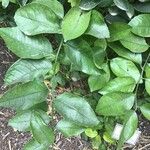
Citrus × aurantium
نارنج · نارنج سیاه · Sour orange · Seville orange · Bigarade
Description
Source: leafsnapBitter orange, Seville orange, bigarade orange, or marmalade orange is the citrus tree Citrus × aurantium and its fruit. It is native to Southeast Asia and has been spread by humans to many parts of the world. It is probably a cross between the pomelo, Citrus maxima, and the mandarin orange, Citrus reticulata.
💡 Bitter orange oil, extracted from the peel of the ripe fruit, is widely used in the perfume industry. The essential oil known as neroli, which is popular in aromatherapy, is steam-distilled from the flowers of the bitter orange tree. This distillation process also produces a by-product called orange blossom water. Neroli oil is believed to be named after a 17th-century princess from Nerola, Italy, who was known for her lavish use of this fragrant oil.
🌳 Bitter orange shows unexpected versatility with uses beyond simple consumption. Its peels are processed to produce essential oils like petitgrain and neroli, which are valued in perfumery. The essence is recognized for its calming effects. Additionally, because of its strong, pleasant aroma and insect-repellent qualities, the plant has been used in potpourris and as a natural method to ward off pests.
🎭 Affection, Augury, Fortune
Care Guide
💧 Water Every 1 week
Bitter orange comes from a subtropical climate and thrives in humid conditions. While it has moderate drought tolerance, it prefers consistent moisture and should be watered every 1-2 weeks. However, during dormancy, it is sensitive to overwatering, which can lead to root rot if moisture levels are not properly managed.
☀️ Light Full sun
The bitter orange plant flourishes when exposed to ample sunlight daily, yet it can also adjust to spaces with lower light exposure. However, insufficient light might have a negative impact on the plant's health. As its natural habitat is generally bathed in bountiful sunlight, similar lighting conditions are beneficial for its development.
🌡️ Temperature 20–37.8°C
The bitter orange thrives in balmy weather conditions ranging from 68 to 100 ℉ (20 to 38 ℃). It naturally grows in subtropical to tropical areas where the winter temperatures are above 50 ℉ (10 ℃). When it comes to cooler climates, it's recommended to relocate potted plants inside during the winter season.
💨 Humidity normal (40-60%)
This plant will thrive in moderate humidity, which is probably the level in your home. However, misting it a few times a week can be very beneficial. Make sure the room has good ventilation.
🪴 Soil 6-7
🌱 Fertilizer Every 90 days
Opt for organic fertilizers, like fish emulsion or compost, instead of synthetic ones for Bitter orange. Supply younger plants with more nitrogen and phosphorus during the spring season. Incorporate compost or fertilizer either before or after planting. For established plants, add balanced or specific fertilizer to address deficiencies in spring. Lack of nutrients can result in small leaves, shorter branches, leaves that are yellow or bronze, more acidic fruits, early fruit drop, and fruit splitting.
🪴 Pot & Repot 2-3 years
During the repotting of Bitter orange, select a container that is 1-2 inches (2.5-5 cm) wider, ensuring it has plentiful drainage. Opt for a potting mixture that drains well. Carry out the repotting process during spring or autumn, making sure the root ball is positioned marginally below the flower pot's edge. After you've finished repotting, water the plant abundantly, then situate it in a warm location where it can enjoy indirect sunlight.
✂️ Pruning
Bitter orange, known for its aromatic fruit and glossy leaves, benefits greatly from pruning in early spring. During this time, you should trim the tree to shape it, remove any dead wood, and manage vigorous shoots. This helps enhance sunlight exposure and air circulation, which in turn improves fruit quality and yield while reducing the risk of disease. Regular pruning is essential for maintaining a healthy plant.
🌿 Propagating
🐛 Diseases & pets
☠️ Toxicity
Avoid eating raw bitter oranges. They contain active ingredients that affect your blood circulatory and nervous systems. The plant is toxic to animals like dogs, cats, and horses. The fruit is edible.
Characteristics
- Plant Type
- Shrub
- Life Cycle
- Perennial
- Genus
- Citrus
- Family
- Rutaceae
- Hardiness Zone
- 9-11
- Mature Height
- 6.1 m to 9.14 m
- Mature Spread
- 6.1 m
- Leaf Color
- Green
- Leaf Type
- Evergreen
- Flower Color
- White
- Flower Size
- 2.03 cm to 3.56 cm
- Bloom Time
- Late spring, Early summer
- Planting Time
- Spring, Autumn
- Harvest Time
- Mid summer, Late summer, Fall, Winter
- Native Area
- Southeast Asia