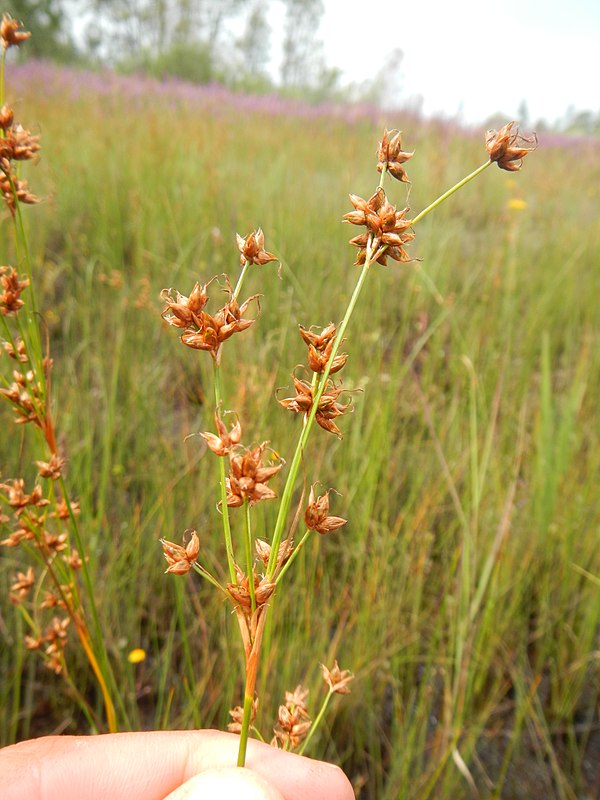
Cladium mariscoides
Smooth saw-grass · Smooth Sawgrass · Smooth Saw-sedge · Smooth Twig-rush · Twig-rush
Description
Source: leafsnapCladium mariscoides, called smooth sawgrass, is a plant species native to eastern North America. It has been reported from every US state along the Gulf and Atlantic seashores except Louisiana, as well as every Great Lakes state, plus Vermont, Kentucky and Tennessee. It also occurs in every Canadian province except Alberta, British Columbia and Prince Edward Island. The species generally occurs along the shores of wetlands, including coastal salt marshes.Cladium mariscoides is a perennial herb spreading by means of underground rhizomes. Culms are up to 100 centimetres (39 in) tall. Leaves are very narrow, less than 3 mm across. Spikelets are chestnut brown, born in a panicle with 1st and 2nd order branching but not 3rd order.
Care Guide
💧 Water
Smooth saw-grass flourishes in wetland habitats where there is consistent moisture and high humidity. It needs to be watered weekly, though it can tolerate moderate drought conditions. This plant is ideal for rain gardens, as it plays a crucial ecological role by filtering water and providing habitat for wildlife. Additionally, it is resilient to changing water levels.
☀️ Light Full sun
Smooth saw-grass is a sun-loving, perennial herbaceous species native to open habitats and commonly found in meadows and grasslands. It prefers full sun but can also tolerate partial sun.
What are the sunlight requirements for Smooth saw-grass?
Smooth saw-grass, botanically known as Cladium mariscoides, is a sun-loving perennial herbaceous plant that thrives in full sun, requiring above 6 hours of direct sunlight daily. It can also tolerate partial sun conditions, which means about 3-6 hours of sunlight. When choosing a location for your Smooth saw-grass, it is important to observe how sunlight moves through your garden, picking spots that offer an ideal balance of light and shade, to ensure your plants grow healthy and happy.
How can artificial lighting benefit indoor Smooth saw-grass plants?
For indoor Smooth saw-grass plants, especially in scenarios where natural sunlight is inadequate, artificial lighting becomes crucial for optimal growth. This is particularly true during winter or in spaces that do not receive enough sunlight. Artificial lights, such as LED lights, are recommended because they can be customized to provide specific wavelengths of light required by the plants, enhancing their growth and health. Full sun plants should have 30-50W/sq ft of artificial light, partial sun plants require 20-30W/sq ft, and full shade plants need 10-20W/sq ft. The light source should be placed 12-36 inches above the plant to mimic natural sunlight conditions, and most plants will benefit from 8-12 hours of light each day.
What are the key symptoms of inadequate light in Smooth saw-grass plants?
When Smooth saw-grass plants do not receive enough light, several symptoms can manifest, including the development of smaller new leaves, leggy or sparse growth due to longer spaces between leaves or stems, quicker drop of older leaves to conserve resources, delayed growth or complete halt in new leaf production indicating the plant is in survival mode, lighter-colored new leaves due to lack of chlorophyll, chlorosis or the yellowing of leaves as a result of chlorophyll breakdown, sunscald from intense sunlight exposure causing damage, leaf curling to reduce surface area exposed to sunlight, wilting due to increased water loss, and leaf scorching characterized by brown, dry edges on leaves from excessive sunlight.
How can I address lighting issues for my Smooth saw-grass plant?
To remedy lighting issues for Smooth saw-grass, consider the following solutions: For indoor plants, gradually move the plant to sunnier spots until it receives at least 6 hours of direct sunlight daily, preferring south-facing windows and keeping curtains open during the day. If moving the plant is not feasible or to supplement light, use artificial lights like desk lamps or professional grow lights for at least 8 hours daily. Outdoors, adapt your plants to sunlight gradually to prevent sunburn, and ensure they are placed in the best sunlight spots. If sunlight is obstructed, reduce obstruction by pruning or relocate the plant to a sunnier location with ample sunlight and good drainage during its dormant period, typically late winter or early spring. It's important to note that while parts of the plant affected by insufficient sunlight may not recover, new growth post adjustment will be healthy.
🌡️ Temperature 5–35°C
Smooth saw-grass can tolerate a wide range of temperatures, although its distribution may still be constrained by particular combinations of moisture and heat. It grows best in warm summer conditions when there is sufficient rainfall or irrigation. Long stretches of cloudy, rainy weather, as well as extended high temperatures, can raise the chance of Smooth saw-grass dying. In winter, protecting the plant from cold can increase its survival rate.
💨 Humidity
🪴 Soil 6-8
🌱 Fertilizer
Smooth saw-grass needs extra nutrients to encourage healthy new growth. In spring, applying compost around the base of the plant will supply the necessary nutrition. Fertilizing supports vigorous growth and helps the plant withstand diseases and pests.
🪴 Pot & Repot
✂️ Pruning
Smooth sawgrass is a plant that thrives in wetlands, characterized by its tall, grass-like structures with saw-toothed edges. To maintain its shape and remove damaged stems, it's best to prune it in early spring. This can also help promote healthier growth and improve air circulation. Make sure to use sharp, clean tools to minimize damage and reduce the risk of infection.
🌿 Propagating
🐛 Diseases & pets
☠️ Toxicity
Characteristics
- Plant Type
- Grass
- Life Cycle
- Perennial
- Genus
- Cladium
- Family
- Cyperaceae
- Hardiness Zone
- 4-9
- Mature Height
- 0.3 m to 1.07 m
- Mature Spread
- 20 cm to 49 cm
- Leaf Color
- Olive Drab, Dark Green
- Leaf Type
- Evergreen
- Flower Color
- White, Yellow, Red, Brown
- Flower Size
- 0.20 cm to 0.25 cm
- Bloom Time
- Early summer, Mid summer
- Planting Time
- Spring, Summer
- Harvest Time
- Late summer, Early fall