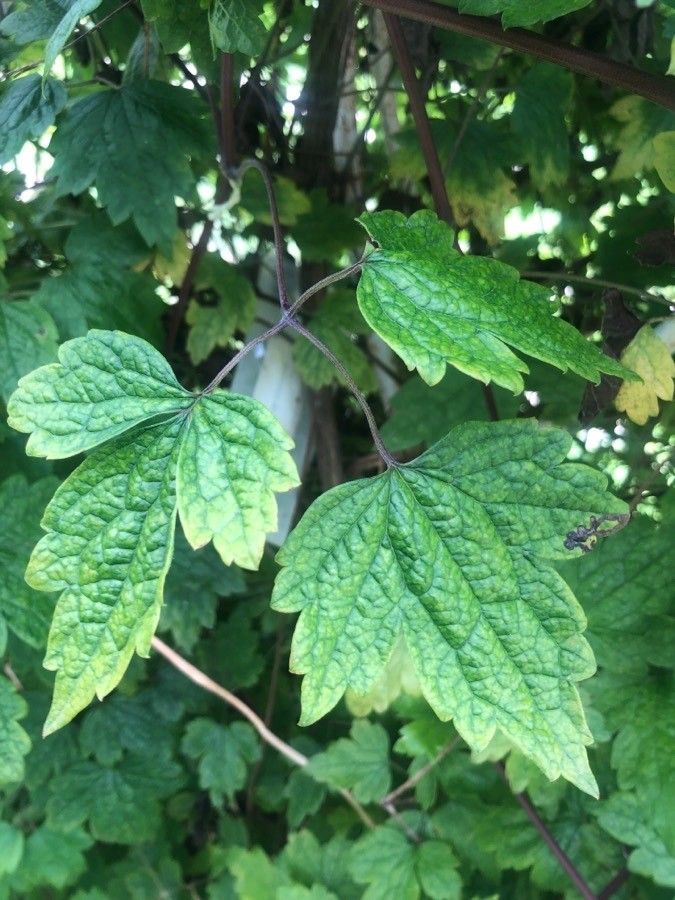
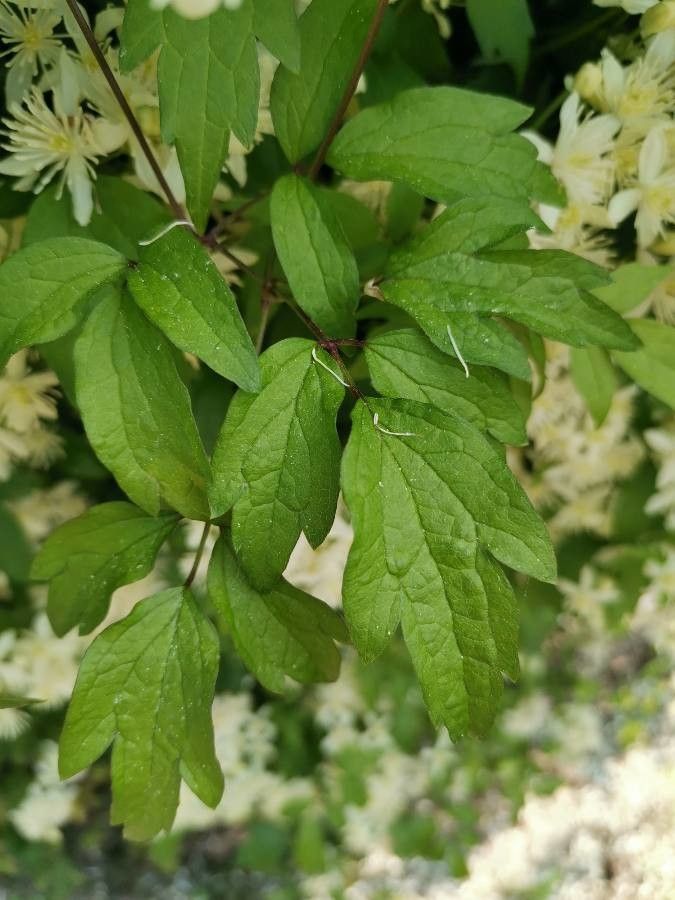
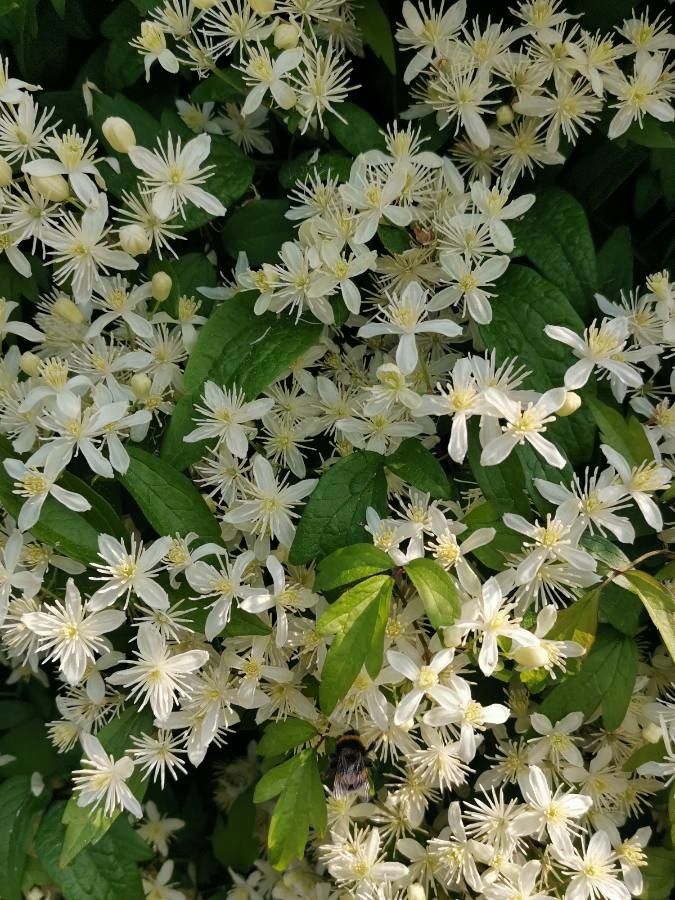
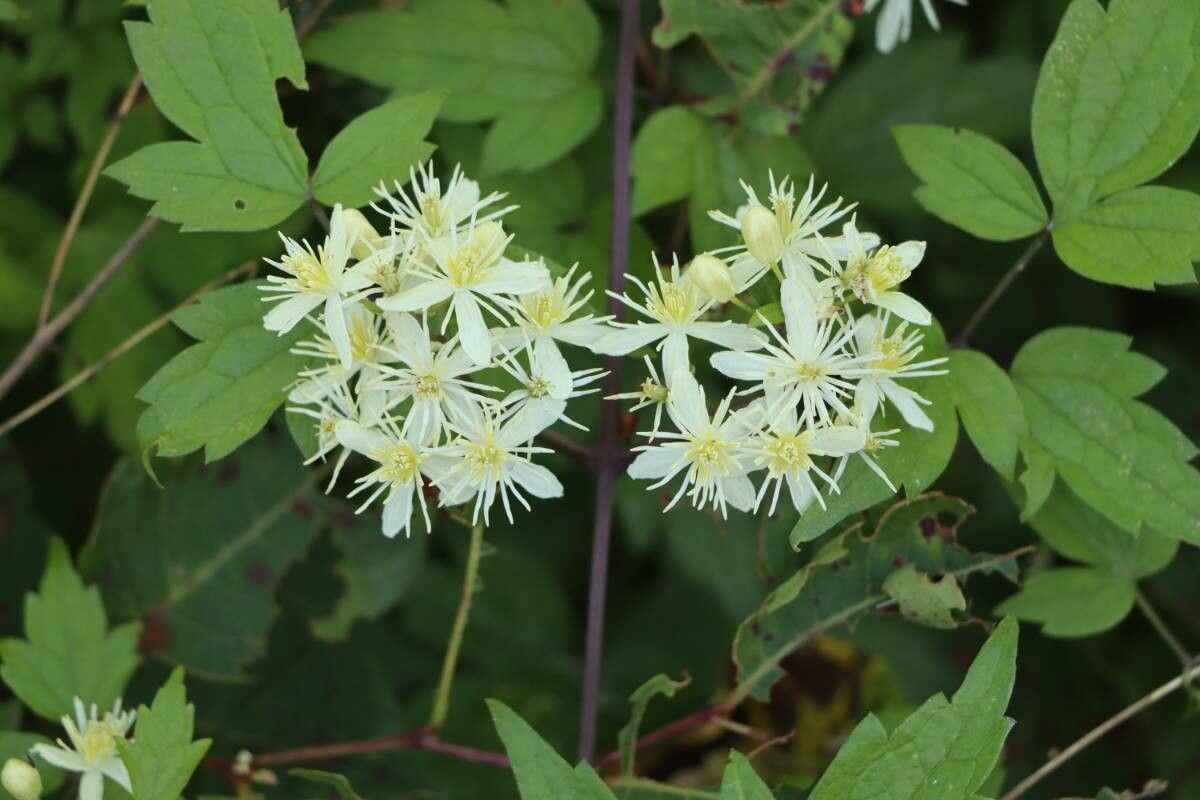
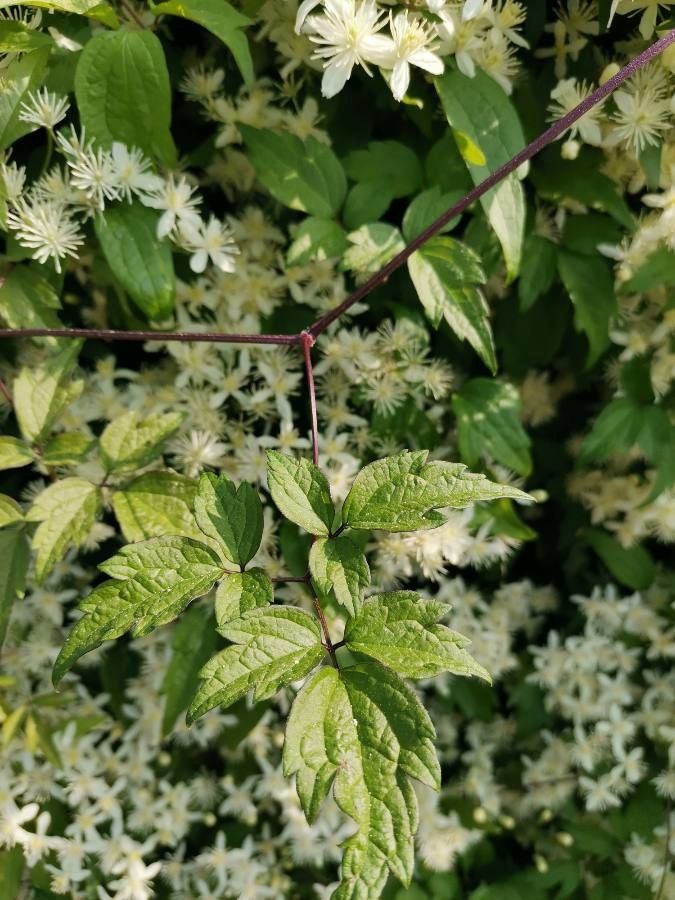
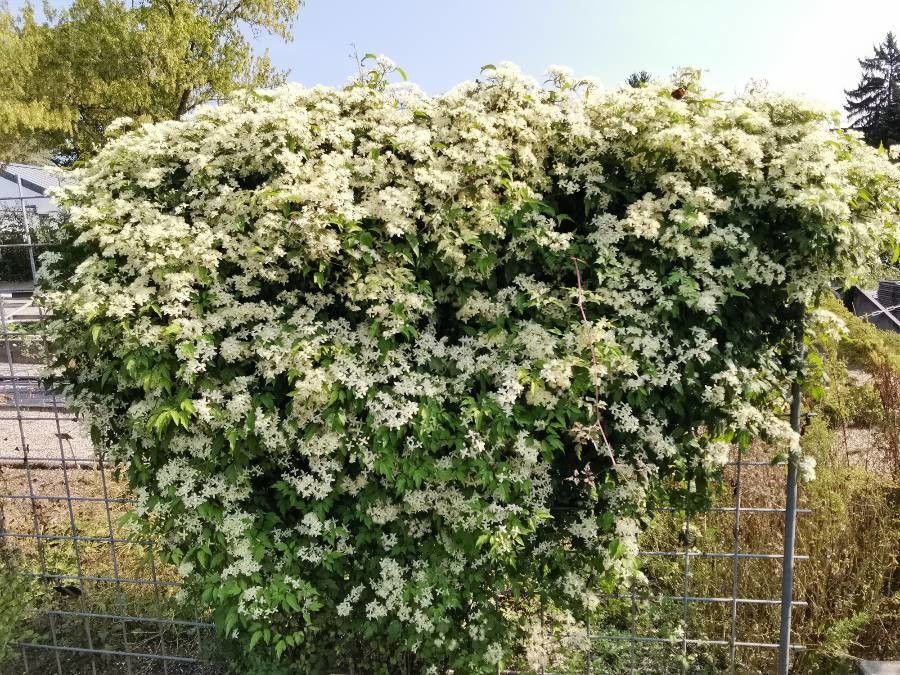
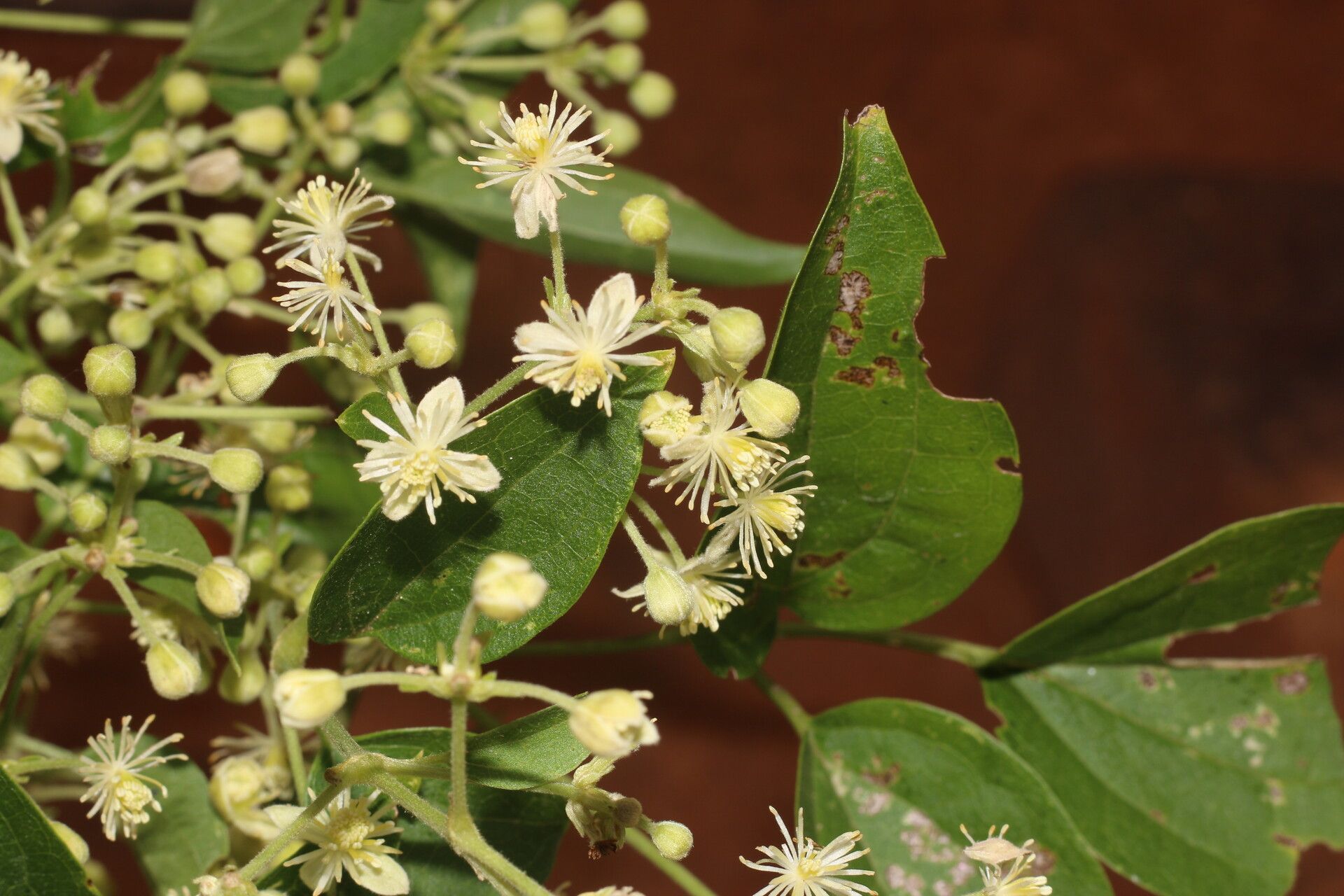
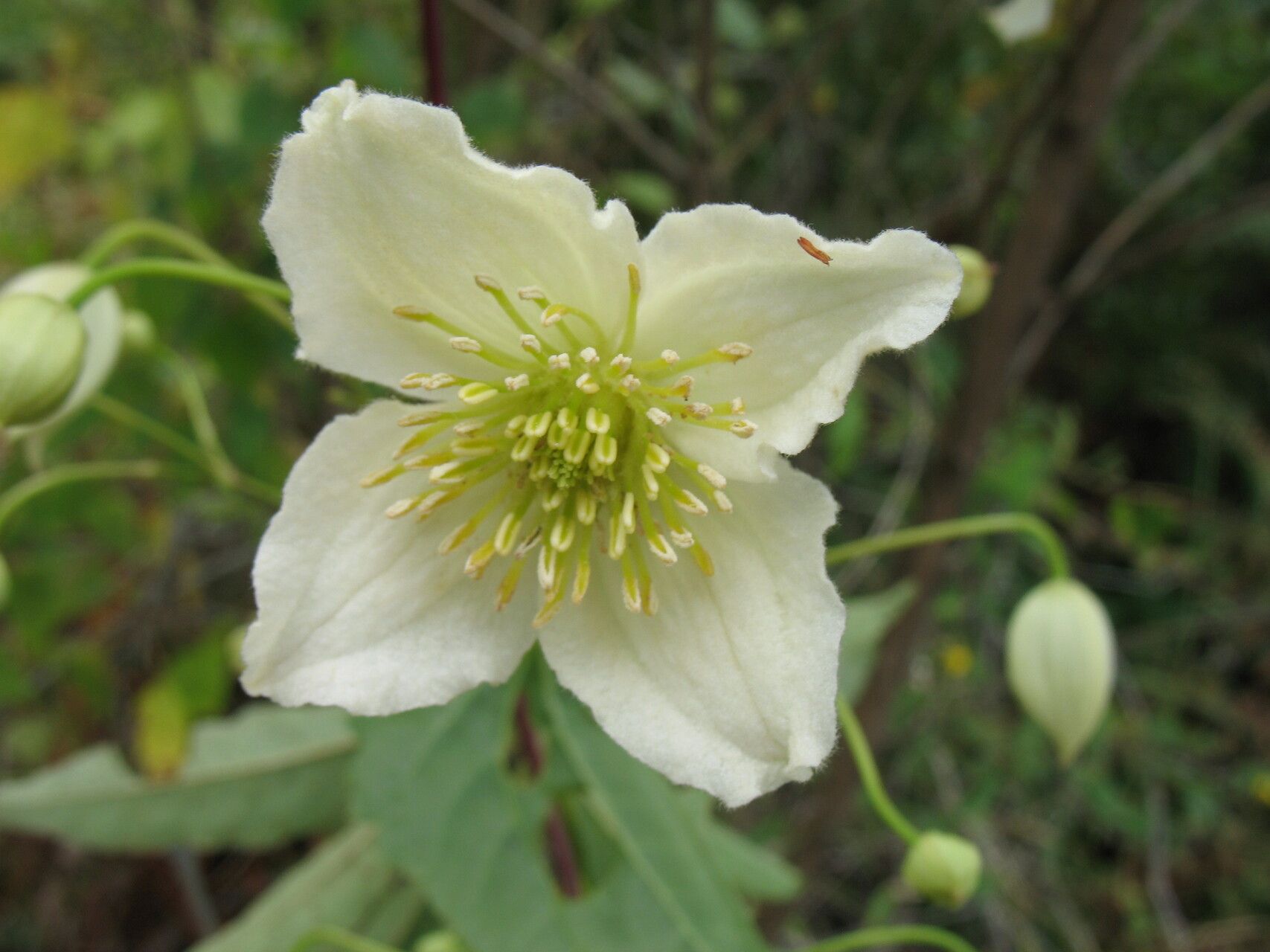
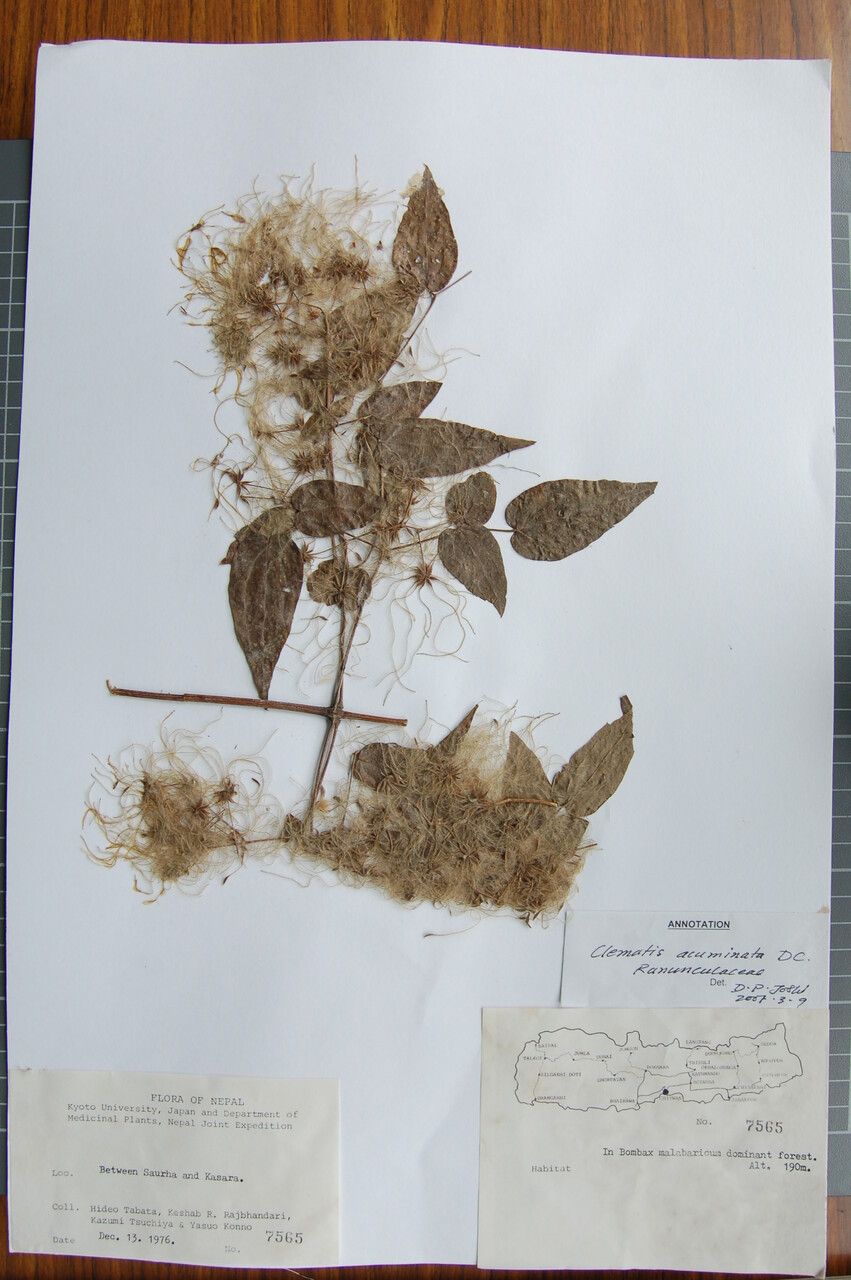
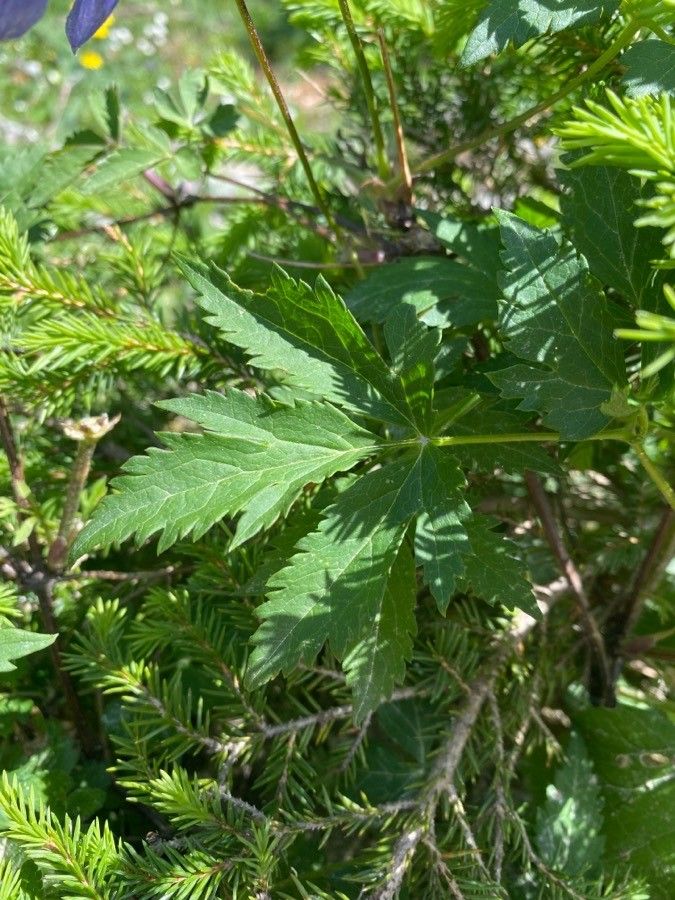
Virgin’s bower is resistant to disease and is generally not susceptible to illnesses. Regarding care, this plant is fairly low-maintenance. When grown outdoors it needs little watering, and mature plants usually don't require pruning. Smaller specimens, however, should be pruned after they have finished blooming. Virgin’s bowert is suitable for anyone with outdoor space, such as a garden or deck, and does not require extensive care experience.
How to keep Clematis Apiifolia.
Light
Virgin's bower grows best when it gets plenty of sunlight, taking full advantage of daylight. It can tolerate moderate light, though its growth will be somewhat slower. Plants that develop in bright conditions become more resistant to strong light, while insufficient light can impede healthy development.
Water
Virgin's bower thrives in humid environments and prefers consistently moist conditions. For optimal growth, it should be watered every three weeks. As a deciduous plant, virgin's bower sheds its leaves during dormancy and requires less water at that time.
Temperature
Virgin’s bower is very adaptable to a wide range of climates, from scorching summers to chilly winters. That said, it does have an ideal temperature range for growth. If temperatures rise too high, the plant is susceptible to heat and humidity stress, which can kill it. In areas where temperatures sit near the lower end of its cold tolerance, it’s important to provide insulation to protect the plant.
Fertilizer
Correct timing is essential for fertilizing Virgin’s bower. Apply fertilizer in early spring and continue every month until early summer. Fertilizer encourages attractive blooms and supplies energy during both dormant and active growth phases.
Pruning
To maintain your virgin's bower, prune it before it flowers or during late winter to early spring. Focus on removing weak branches and selectively trimming others. Avoid pruning in the summer to keep the foliage intact. Heavy pruning encourages growth, so consider cutting the plant back to one-third of its height for late-blooming varieties. This helps preserve strong branches, leading to longer blooms and more abundant flowers.
Botanical profile.
- Plant Type
- Vine
- Life Cycle
- Perennial
- Genus
- Clematis
- Family
- Ranunculaceae
- Hardiness Zone
- 6-9
- Mature Height
- 4.88 m
- Mature Spread
- 4.88 m
- Leaf Color
- Forest Green, Dark Green
- Leaf Type
- Deciduous
- Flower Color
- White, Cream
- Flower Size
- 1.52 cm
- Bloom Time
- Late summer, Early fall, Mid fall
- Planting Time
- Autumn, Winter
- Harvest Time
- Mid fall, Late fall, Early winter
- Native Area
- Koppen, Japan, South Korea, China
Other names.
Reader questions.
What are the sunlight requirements for Virgin's bower?
Virgin's bower flourishes best under full sun, requiring more than 6 hours of sunlight daily, but it can also tolerate partial sun, around 3-6 hours of sunlight. Adapting to various sunlight exposures, it maintains growth even with moderate light, albeit at a slower pace. Adequate exposure is crucial for its health and development, with too little light impeding its growth.
What is the botanical name of Virgin’s bower?
The botanical name of Virgin’s bower is Clematis apiifolia. This plant is recognized by its unique botanical identifier, distinguishing it from other species within the diverse genus Clematis.
How does artificial lighting affect indoor plants like Virgin's bower?
For indoor plants, including Virgin's bower, artificial lighting is essential when natural sunlight is not sufficient, especially in less sunny spaces or during winter. It promotes faster, healthier growth. LED lights are preferred due to their ability to be customized to the plant's needs. The requirement varies with full sun plants needing 30-50W/sq ft, partial sun plants 20-30W/sq ft, and full shade plants 10-20W/sq ft of artificial light. The light source should be placed 12-36 inches above the plant, for 8-12 hours daily, mimicking natural sunlight conditions.
What are some common symptoms of light deficiency in Virgin's bower?
Light deficiency in Virgin's bower can lead to several issues such as smaller new leaves, leggy or sparse growth, faster leaf drop, slower or halted new growth, and paler new leaves. Each of these symptoms suggests the plant is not receiving adequate sunlight, essential for its chlorophyll and nutrient needs. Conversely, excessive sunlight can cause chlorosis, sunscald, leaf curling, wilting, and leaf scorching, indicating the plant is getting too much light.
How can I address light-related issues in Virgin's bower?
For indoor Virgin's bower, gradually increasing sunlight exposure to at least 6 hours daily or using artificial lighting for at least 8 hours can enhance growth. Outdoor plants benefit from a gradual move to sunnier spots. Removing obstructions or transplanting to sunnier locations can help ground-planted specimens. Note that parts of the plant damaged by insufficient sunlight might not recover, but new growth should be healthy with improved light exposure.