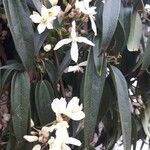
Clematis armandii
Armand clematis · Evergreen Arman · Evergreen Clematis
Description
Source: leafsnapClematis armandii is a species of flowering plant belonging to the buttercup family, Ranunculaceae. This vigorous evergreen climber can reach heights of 6 to 8 meters. It boasts glossy, dark green, leathery, lance-shaped leaves. The plant produces fragrant, star-shaped white flowers that appear in clusters from late winter to early spring. Native to China, Clematis armandii was introduced to Europe in the early 1900s as an ornamental plant. It thrives in well-drained soil and partial shade but can tolerate full sun if the soil remains moist. To support its climbing habit, the plant needs structures like trellises or fences. Alternatively, it can serve as ground cover or be trained into a shrub form with regular pruning. Clematis armandii is prized for its attractive foliage and fragrant flowers, which attract bees and butterflies. Additionally, it has medicinal properties and is used in traditional Chinese herbal medicine to treat ailments such as rheumatism, arthritis, coughs, and fever. Overall, Clematis armandii is an excellent addition to any garden. Its beautiful year-round foliage and stunning springtime white blooms make it an ideal choice for gardeners seeking a low-maintenance plant with high visual impact.
🌳 A lesser-known use of armand clematis is its fragrant flowers, which are sometimes employed in making perfumes and fragranced products. The evergreen vine's strong scent could contribute to the creation of natural fragrances and be used in aromatherapy, a field that invites further exploration.
Care Guide
💧 Water Every 7 days
The Armand clematis, native to the mountainous regions of China, thrives in moderately moist environments and is also drought-tolerant. It should be watered every three weeks, allowing the soil to dry out between waterings. As an evergreen plant, it keeps its foliage throughout the year, so controlling humidity is crucial for its optimal growth indoors.
☀️ Light Full sun
Armand clematis does best with plenty of sunlight, though it can tolerate less bright conditions. Native to areas with abundant sun, it grows most vigorously when exposed to full light. Too little sunlight can impede its development, while excessive light can stress the plant, so keeping a proper balance is important.
What are the sunlight requirements for Armand Clematis?
Armand Clematis requires full sun, which means it should receive above 6 hours of sunlight daily for optimal growth. However, it can also manage in partial sun conditions, with about 3-6 hours of sunlight. It's essential to watch how sunlight moves through your garden, ensuring you choose spots that provide a balance of light and shade tailored for the happiness of your plants. Originating from ample sunshine habitats, Armand Clematis's growth is healthiest when it achieves full light exposure, while too much or too little sunlight may either stress the plant or hinder its growth.
How can artificial lighting be used for Armand Clematis?
When natural sunlight is insufficient for Armand Clematis, particularly during winter or in less sunny spaces, artificial lights offer a vital solution for optimal growth. Indoor plants can flourish under artificial lighting, with LED lights being a popular choice because they can provide specific wavelengths needed by the plants. For full sun plants, 30-50W/sq ft of artificial light is recommended, partial sun plants require 20-30W/sq ft, and full shade plants need 10-20W/sq ft. The light source should be placed 12-36 inches above the plant to mimic natural sunlight, and most plants need 8-12 hours of light per day.
What are the symptoms of insufficient or excessive sunlight in Armand Clematis?
Armand Clematis may exhibit several symptoms in response to insufficient or excessive sunlight. Symptoms of light deficiency include small leaves, leggy or sparse growth, faster leaf drop, slower or no new growth, lighter-colored new leaves indicating a lack of chlorophyll. Excessive sunlight can lead to chlorosis, sunscald, leaf curling, wilting, and leaf scorching, characterized by brown, dry, and crispy leaf edges. These symptoms reflect the plant's struggle to adapt to its light environment, highlighting the importance of a balanced exposure.
How can you address light-related issues for Armand Clematis?
To optimize growth for Armand Clematis facing light-related issues, gradually move the plants to a sunnier location each week, aiming for at least 6 hours of direct sunlight daily if indoors. Use a south-facing window and keep curtains open for maximum sunlight. For outdoor plants, avoid sudden changes in light intensity to prevent sunburn. If obstructions block sunlight, consider pruning or transplanting smaller plants to sunnier locations. Though parts of the plant affected by insufficient sunlight may not recover, new growth will be healthy with increased light exposure. Using artificial light sources like desk or ceiling lamps, or investing in professional plant grow lights, can also help provide additional light.
🌡️ Temperature 15–32.2°C
Armand clematis comes from subtropical areas and therefore prefers a warm environment. The optimal temperature range is 59 to 90 °F (15 to 32 °C). In colder periods, raise the ambient temperature to match its preference.
What is Armand Clematis and where is it native to?
Armand clematis, scientifically known as Clematis armandii, is a plant native to subtropical regions. It thrives in a warm environment, preferring temperatures between 59 to 90 °F (15 to 32 °C). Despite being native to warmer areas, Armand clematis exhibits a strong resistance to cold, making it a versatile addition to many gardens.
How do you care for Armand Clematis in colder seasons?
During colder seasons, it's important to ensure that the Armand clematis's surrounding temperature is adjusted to meet its preference for a warmer climate. While special frost protection measures are generally not needed due to its strong cold resistance, if winter temperatures are expected to drop below -15°C, it becomes necessary to protect the plant. Wrapping the trunk and branches with non-woven fabric or cloth can provide adequate cold protection. Additionally, watering the plant abundantly before the first freeze in autumn helps keep the soil moist and prevents drought and water scarcity during winter and early spring.
What are the signs of low temperature damage in Armand Clematis and how can it be treated?
Armand clematis shows its tolerance for the cold by withstanding temperatures just above 15°C. However, during winter, keeping it above -10°C is recommended. If temperatures fall below -15°C, the plant may not show immediate damage, but its branches can become brittle and dry by spring, failing to produce new shoots. To treat these symptoms, pruning away any dead branches that have not produced new leaves in spring is recommended.
How does high temperature affect Armand Clematis and what are the solutions?
In the summer, it's crucial to ensure that the Armand clematis is kept below 32°C. Exposure to temperatures above 35°C can cause the plant's leaves to lighten in color, tips to become dry and withered, and increase susceptibility to sunburn. To mitigate these issues, trim away the sunburned and dried-up parts of the plant, move it to a location with shade from the midday and afternoon sun, or use a shade cloth. Additionally, watering the plant in the morning and evening helps keep the soil moist and the plant healthy.
💨 Humidity
🪴 Soil 6-7
🌱 Fertilizer
Proper timing matters for fertilizing Armand clematis. Begin feeding in early spring and continue once a month up to early summer. Fertilizer promotes attractive blooms and supplies energy during both dormant periods and times of active growth.
🪴 Pot & Repot Every 12 months
✂️ Pruning
To maintain healthy and attractive Armand clematis, pruning should be done before flowering or from late winter to early spring. Start by removing weak branches to improve nutrient flow. When pruning, be selective to encourage more beautiful flowers. While heavy pruning can stimulate new growth, avoid cutting back too much during the summer. Using proper pruning techniques will enhance blooming and improve the plant's overall vitality over time.
🌿 Propagating
🐛 Diseases & pets
☠️ Toxicity
Characteristics
- Plant Type
- Vine
- Life Cycle
- Perennial
- Genus
- Clematis
- Family
- Ranunculaceae
- Hardiness Zone
- 7
- Mature Height
- 4.57 m to 9.14 m
- Mature Spread
- 3.05 m to 4.57 m
- Leaf Color
- Green, Bronze, Brown
- Leaf Type
- Evergreen
- Flower Color
- White
- Flower Size
- 2.54 cm to 7.62 cm
- Bloom Time
- Mid spring, Late spring, Early summer
- Planting Time
- Spring, Autumn
- Harvest Time
- Mid summer
- Native Area
- Vietnam, Myanmar, China