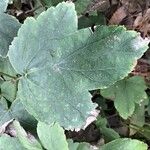
Clematis florida
Asian virginsbower · Cream clematis · Asian virgin's bower
Description
Source: leafsnapExtravagant ivory flowers with tufted violet centers bloom singly or in clusters on new growth during early summer, often offering a second display in late summer or early fall. These flowers are excellent for trellises, fences, rock walls, or trailing through a perennial border and perform well in containers. They are deciduous.
💡 In ancient times, beggars would sometimes intentionally injure themselves to appear more pitiful. Afterward, they would use Asian virginsbower leaves to prevent the wounds from swelling.
🌳 Unlike its usual horticultural uses, asian virginsbower has new functions. It is harvested for essential oils, valued in aromatherapy for its distinctive scent, and shows potential for anti-inflammatory and antioxidative applications. In ecological terms, asian virginsbower attracts pollinators such as bees and butterflies by providing nectar. Unexpectedly, it also acts as a natural indicator of zinc in soil, a breakthrough for environmental monitoring.
🎭 A heart both noble and beautiful
Care Guide
💧 Water Every week
Asian virginsbower thrives in warm, humid climates and prefers consistent moisture, needing weekly watering. It is moderately drought-tolerant and efficiently uses rainwater during its growing season. This makes it ideal for regions with regular rainfall. The plant is often found climbing over trellises.
☀️ Light Partial sun
The asian virginsbower prefers spots that get a fair amount of daylight but are not exposed to the sun's full intensity all day. During its growth stages it needs roughly the same amount of sunlight. In its native habitat this balance of light encouraged strong growth. Too little or too much sun can harm its health or cause leaf scorch.
What are the sunlight requirements for Asian virginsbower?
Asian virginsbower thrives in conditions that mimic its original habitat, requiring a balanced exposure to daylight without enduring the full intensity of the sun all day. It ideally appreciates partial sun, defined as about 3-6 hours of sunlight, while it can also adjust to full sun, which refers to more than 6 hours of sunlight. Observing how sunlight moves through your garden allows you to choose locations that ensure the plant's health by providing an optimal balance of light and shade.
What should I do if natural sunlight is insufficient?
When natural sunlight is insufficient, artificial lighting can be a lifesaver for indoor Asian virginsbower plants, especially during winter or in less sunny spaces. LED lights are recommended due to their ability to provide specific wavelengths needed by the plant. Full sun plants require 30-50W/sq ft of light, partial sun plants need 20-30W/sq ft, and shade plants need 10-20W/sq ft. Place the light source 12-36 inches above the plant to mimic natural sunlight conditions and ensure 8-12 hours of light per day, mimicking natural daylight hours.
What are the signs of improper lighting for Asian virginsbower?
Asian virginsbower exhibits several symptoms when lighting conditions are not met, including small new leaves, leggy or sparse growth, faster leaf drop, and slowed or halted new growth, pointing to insufficient light. On the flip side, symptoms like chlorosis, sunscald, leaf curling, wilting, and leaf scorching indicate excessive sun exposure. These symptoms demonstrate the plant's struggle in adapting to its light environment, emphasizing the importance of monitoring and adjusting light exposure to match its needs.
How can I address lighting issues for Asian virginsbower?
Addressing lighting issues for Asian virginsbower involves gradually acclimatizing the plant to its ideal light conditions. For indoor plants, moving them to sunnier spots incrementally each week or using artificial light like desk or ceiling lamps for at least 8 hours a day can help. Outdoors, moving plants gradually to sunnier locations can prevent sunburn, and trimming obstructions like branches can improve sunlight access. If necessary, transplant small plants during their dormant period to better-lit locations with ample sunlight and good drainage to promote healthy growth.
🌡️ Temperature 15–37.8°C
Asian virginsbower is native to mesic environments where temperatures usually range from 59 to 100.4 °F (15 to 38 ℃). It favors these moderate climates. Care may need to be adjusted for seasonal temperature shifts, particularly in winter.
What is the indigenous environment of Asian virginsbower?
Asian virginsbower is indigenous to mesic environments, thriving in moderate climates with temperatures typically ranging from 59 to 100.4 °F (15 to 38 °C). It shows strong cold resistance, making it adaptable to various environments without the need for special frost protection measures during winter. However, adjustments in care may be necessary with the changing seasons, especially to navigate through winter temperatures effectively.
How should I protect Asian virginsbower during very cold winters?
Despite its strong cold resistance, if winter temperatures are expected to drop severely, it's important to provide additional cold protection for Asian virginsbower. This can be done by covering the plant with insulating materials such as soil or straw. It is also recommended to water the plant abundantly before the first freeze of autumn, ensuring the soil remains moist and enters a frozen state. This pre-winter preparation helps prevent drought and water scarcity for the plant during the colder months and into early spring.
What are the signs and solutions if Asian virginsbower is exposed to low temperatures?
When exposed to low temperatures, especially below its tolerant limits, Asian virginsbower may not show noticeable changes immediately, but you might observe a decrease in sprouting or even no sprouting at all come spring. To address this issue, it's suggested to remove any parts of the plant that have failed to sprout in spring, indicating damage from the cold.
What are the signs and solutions if Asian virginsbower is exposed to high temperatures?
During summer, if the temperature exceeds the plant's tolerance, the leaves of Asian virginsbower may become lighter in color, begin to curl, become susceptible to sunburn, and in severe instances, the plant may wilt and dry out. To combat these high temperature stressors, trim away sunburned and dried-up parts, move the plant to a shaded location, or use a shade cloth to protect it from the midday and afternoon sun. Additionally, water the plant in the morning and evening to keep the soil moist and support its recovery.
💨 Humidity
🪴 Soil 6-7
🌱 Fertilizer
The best time to fertilize an Asian virginsbower is in early spring, when it is coming out of dormancy and starting active growth. Fertilization supplies important nutrients needed for healthy growth. Although Asian virginsbower has fairly low fertilizer requirements, applying fertilizer annually can improve its survival and encourage better, longer-lasting flowers.
🪴 Pot & Repot 2-3 years
Repot the Asian virginsbower every 2 to 3 years in the spring, using a deep container to accommodate its roots. After repotting, ensure that there is climbing support available, keep the soil consistently moist, and provide some shade to aid in its recovery. With consistent care, this plant will reward you with lush foliage and beautiful blooms.
✂️ Pruning
To keep Asian virginsbower healthy and thriving, it's best to prune it in early spring before new growth begins. Trim back last year's shoots to encourage more abundant flowering and to remove any damaged areas. Regular pruning helps manage the plant's size, increases the number of blooms, enhances air circulation, and reduces the risk of disease. However, avoid cutting back too heavily, as this can hinder flowering.
🌿 Propagating
🐛 Diseases & pets
☠️ Toxicity
Characteristics
- Plant Type
- Herb, Vine
- Life Cycle
- Perennial
- Genus
- Clematis
- Family
- Ranunculaceae
- Hardiness Zone
- 7-11
- Mature Height
- 2.13 m to 3.05 m
- Mature Spread
- 0.91 m to 2.13 m
- Leaf Color
- Green
- Leaf Type
- Evergreen
- Flower Color
- White
- Flower Size
- 3.05 cm to 11.43 cm
- Bloom Time
- Early summer, Mid summer
- Planting Time
- Spring
- Harvest Time
- Mid summer
- Native Area
- China