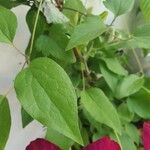
Clematis lanuginosa
Ningpo clematis · Clematis hybrid
Description
Source: leafsnapClematis lanuginosa, commonly known as the woolly clematis, is a deciduous climbing plant from the Ranunculaceae family. Native to China, Japan, and Korea, it earns its nickname from its hairy stems and leaves. This plant can reach up to 6 meters in height and showcases beautiful white or pale pink flowers that bloom in late summer or early autumn. The leaves of Clematis lanuginosa are either ovate or lanceolate in shape and have a velvety texture on the upper surface. Its large flowers, which can be up to 10 cm in diameter, feature four petals encircling a central cluster of yellow stamens. These sweetly fragrant flowers attract bees, butterflies, and other pollinators. This plant thrives in well-drained soil rich in organic matter but can tolerate some shade. It requires support for climbing, such as trellises or fences, but can also be grown as ground cover if pruned regularly. In traditional Chinese medicine, Clematis lanuginosa has been used for its anti-inflammatory properties. However, it is important to note that some parts of the plant are toxic if ingested. Overall, Clematis lanuginosa is an attractive ornamental climber suitable for gardens. Its beautiful flowers add color during the late summer and early autumn months while also providing habitat for pollinators such as bees and butterflies, making it an excellent addition to any garden.
Care Guide
💧 Water Every 7 days
The Ningpo clematis thrives when it receives consistent moisture, so it's best to water it weekly to maintain its health. It prefers well-drained soil and is quite adaptable to different climate zones. However, it does not tolerate drought or excessive humidity well, so these conditions should be avoided.
☀️ Light Partial sun
Ningpo clematis originates from habitats like forest understories or rocky sites where it grows in natural shade. It prefers partial sun but can tolerate full sun or deep shade, reflecting its versatility and hardiness.
🌡️ Temperature 5–35°C
Ningpo clematis is highly adaptable to a range of climate conditions, from very hot summers to cold winters. Nevertheless, it has an optimal temperature range for growth. If temperatures become too high, the plant is susceptible to heat and humidity stress, which can lead to its death. In areas where temperatures reach the lower boundary of its cold tolerance, it is necessary to apply insulation measures to protect the plant.
💨 Humidity
🪴 Soil 6-8
🌱 Fertilizer
The best time to fertilize a Ningpo clematis is in early spring, as it comes out of dormancy and starts active growth. Fertilizing supplies essential nutrients for healthy development. Although Ningpo clematis needs relatively little fertilizer, giving it fertilizer once a year can improve its survival and encourage better, longer-lasting flowers.
🪴 Pot & Repot
✂️ Pruning
For optimal growth and flowering, it is best to prune ningpo clematis before it blooms or between late winter and early spring. Start by removing any weak branches, then selectively trim to ensure better nutrient distribution. Avoid heavy pruning during the summer to preserve leaf cover. With the right pruning, the ningpo clematis will come out of dormancy and start to grow again.
🌿 Propagating
🐛 Diseases & pets
☠️ Toxicity
Characteristics
- Plant Type
- Vine, Herb
- Life Cycle
- Perennial
- Genus
- Clematis
- Family
- Ranunculaceae
- Hardiness Zone
- 4-9
- Mature Height
- 2.13 m to 3.05 m
- Mature Spread
- 0.91 m to 1.52 m
- Leaf Color
- Dark Green
- Leaf Type
- Deciduous
- Flower Color
- Purple, Lavender
- Flower Size
- 10.16 cm to 15.24 cm
- Bloom Time
- Late spring, Summer
- Planting Time
- Spring, Summer
- Harvest Time
- Late summer, Early fall, Mid fall
- Native Area
- China