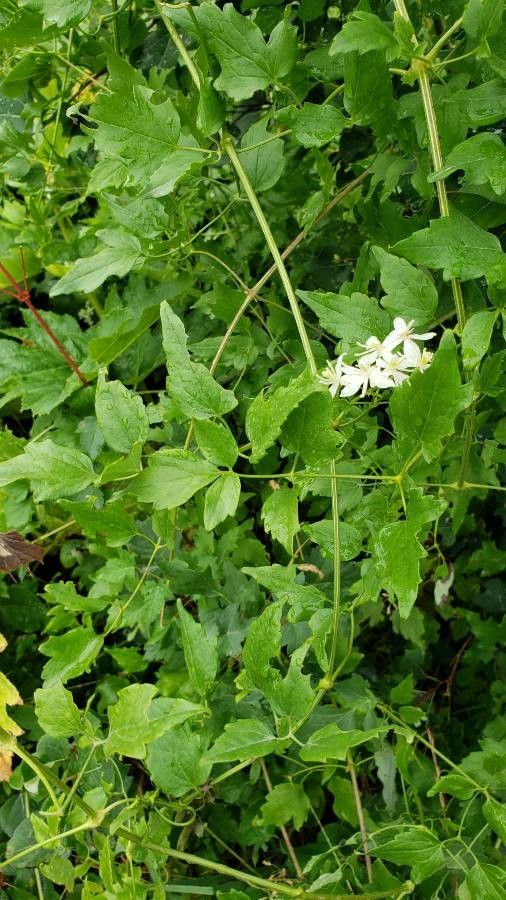
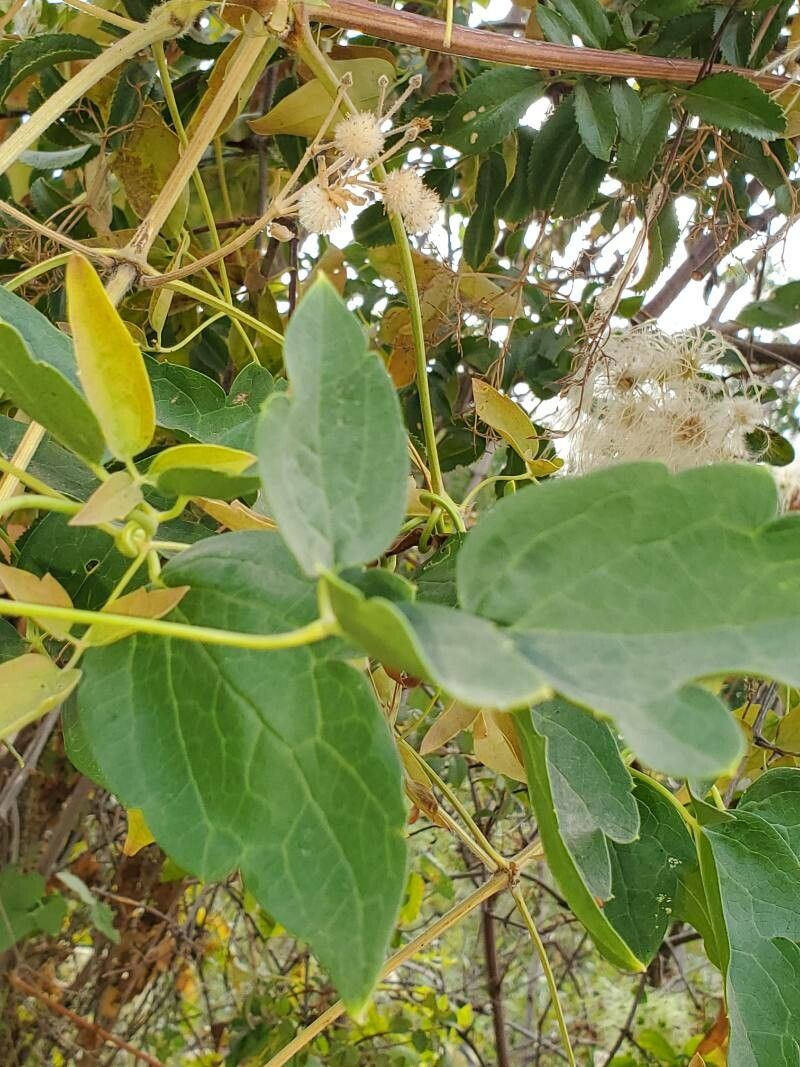
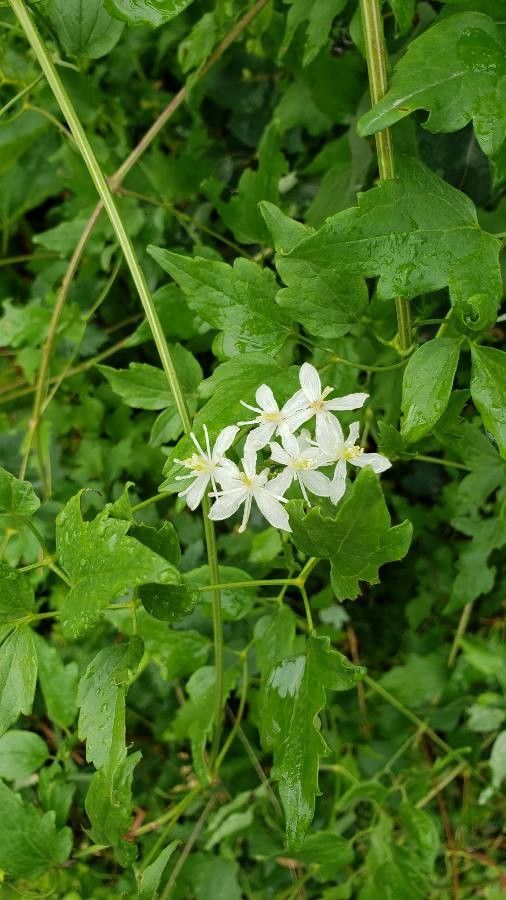
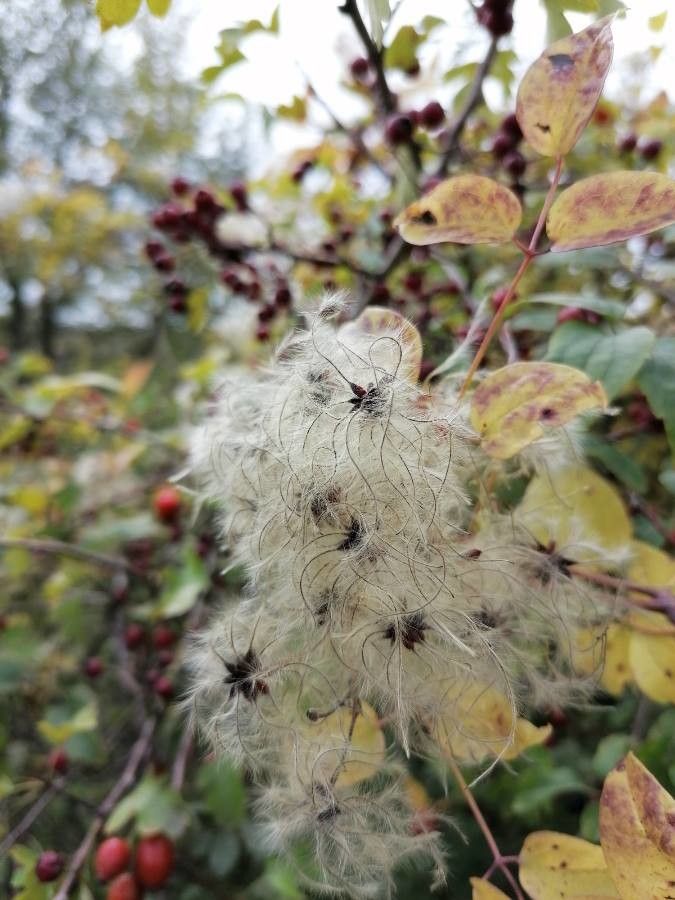
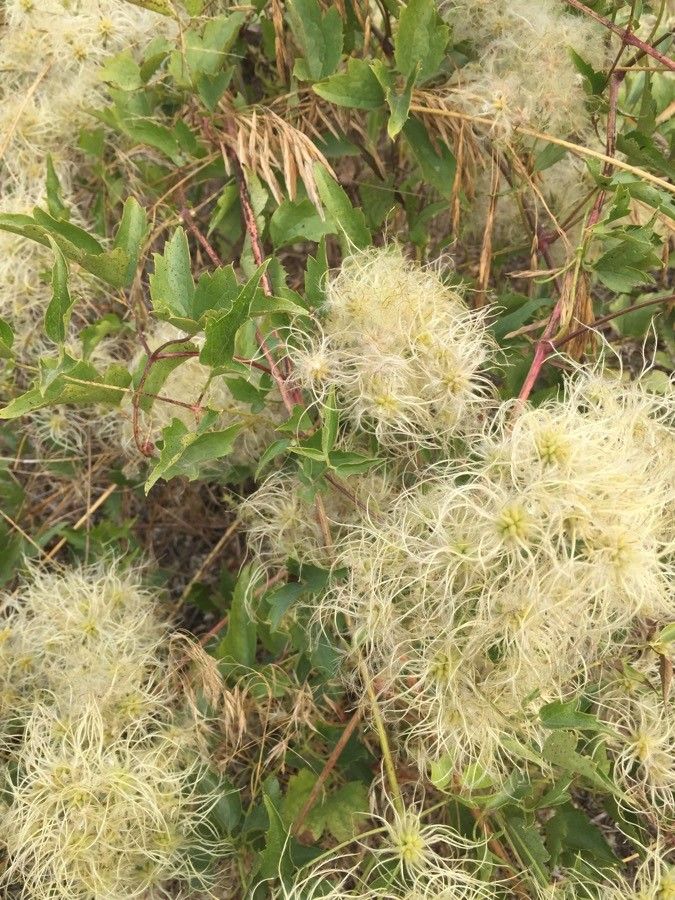
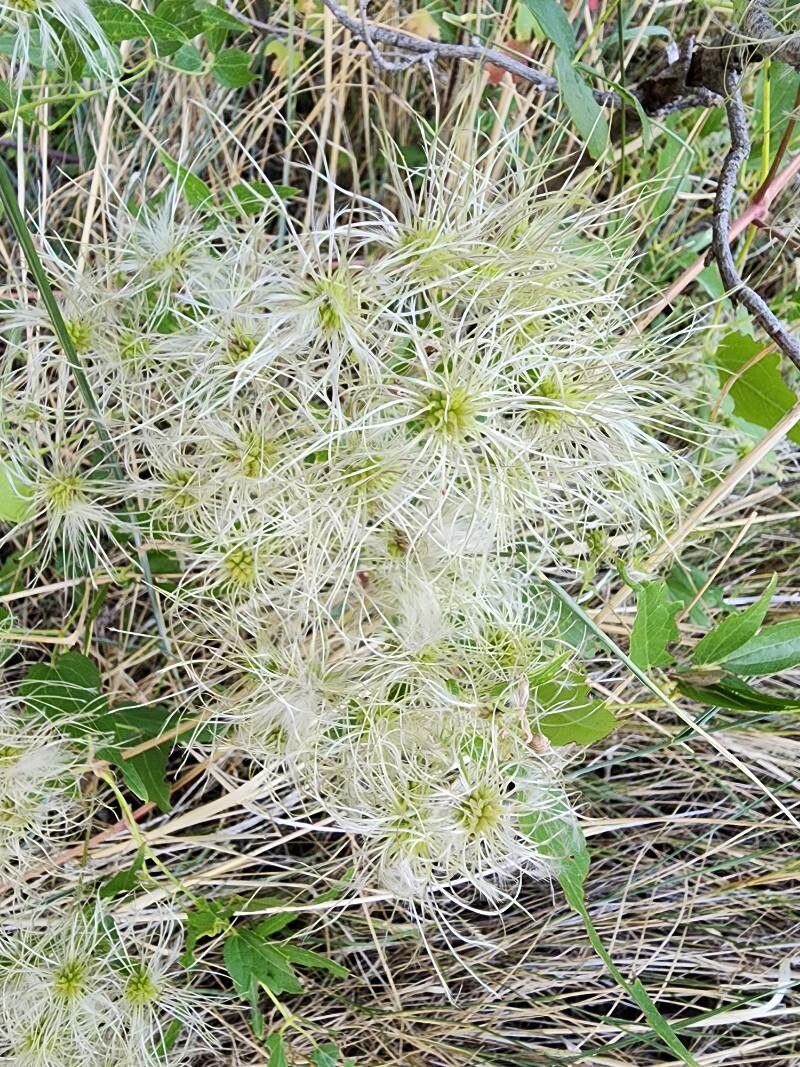
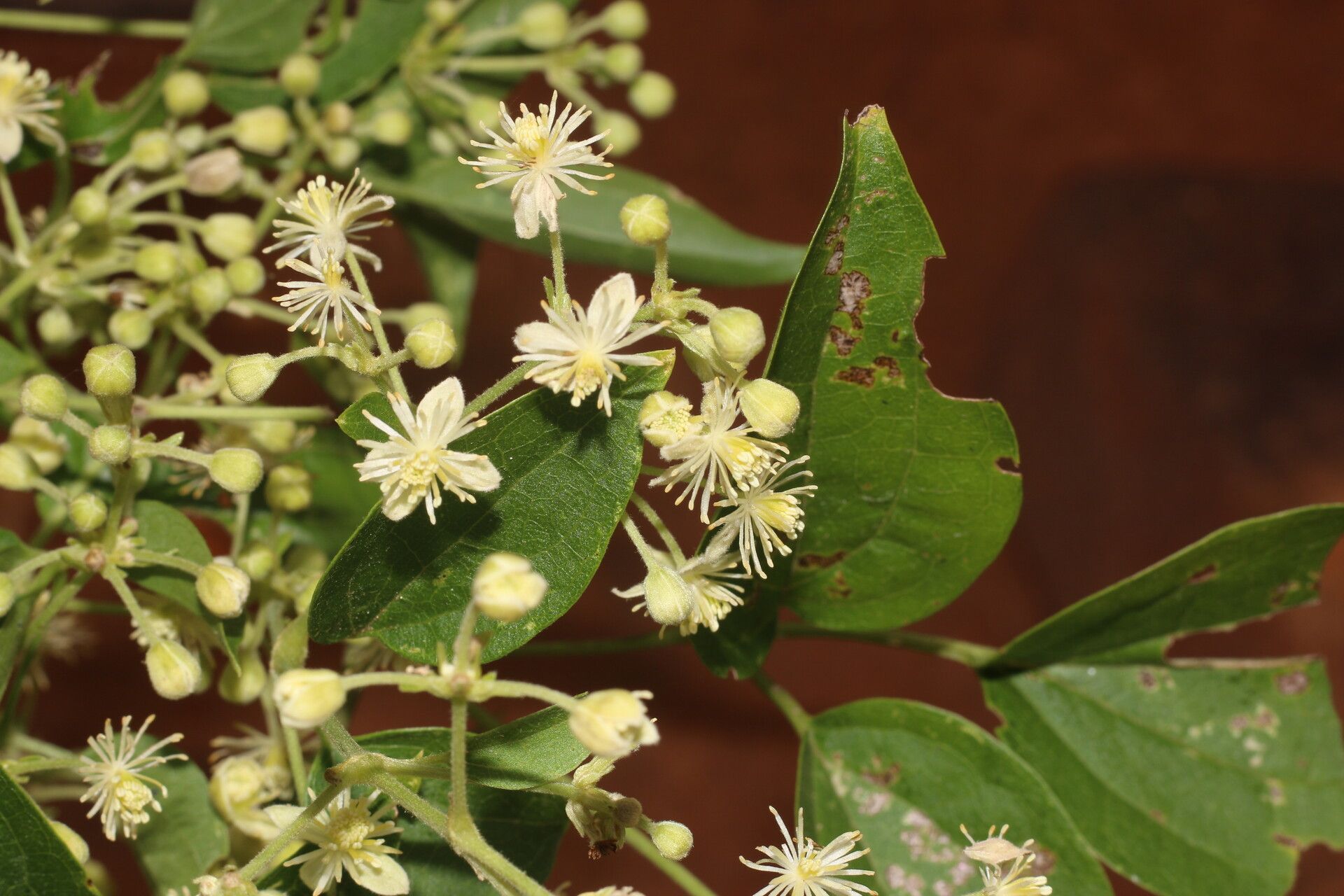
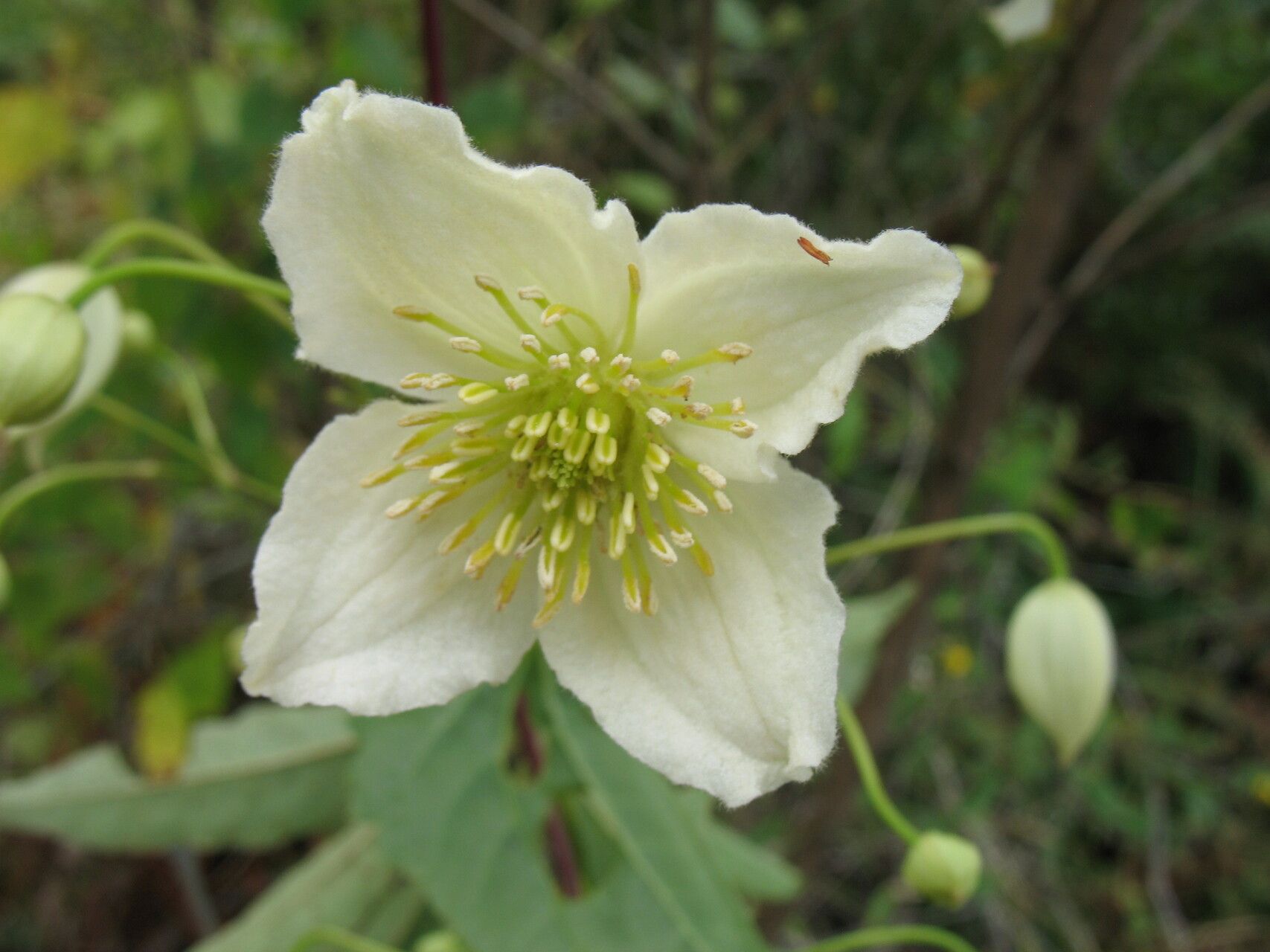
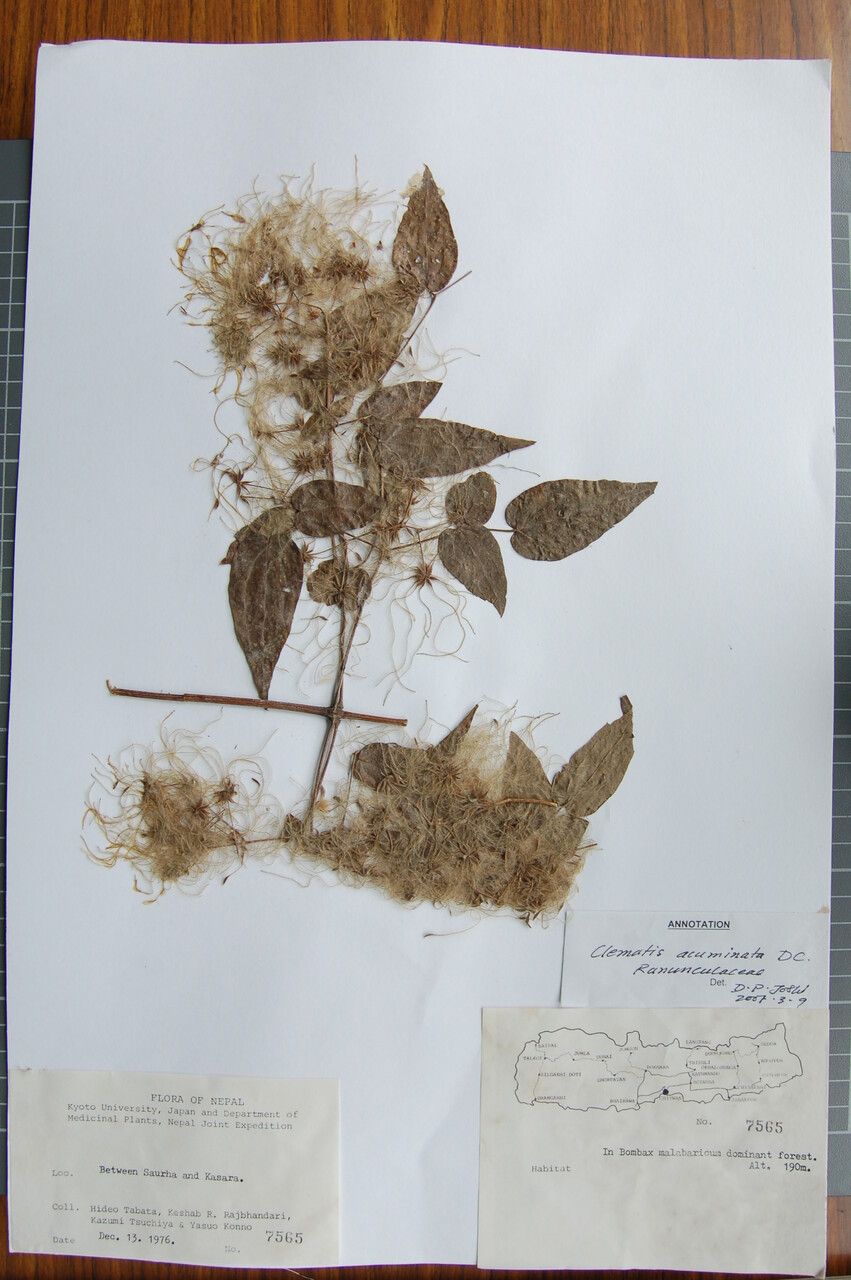
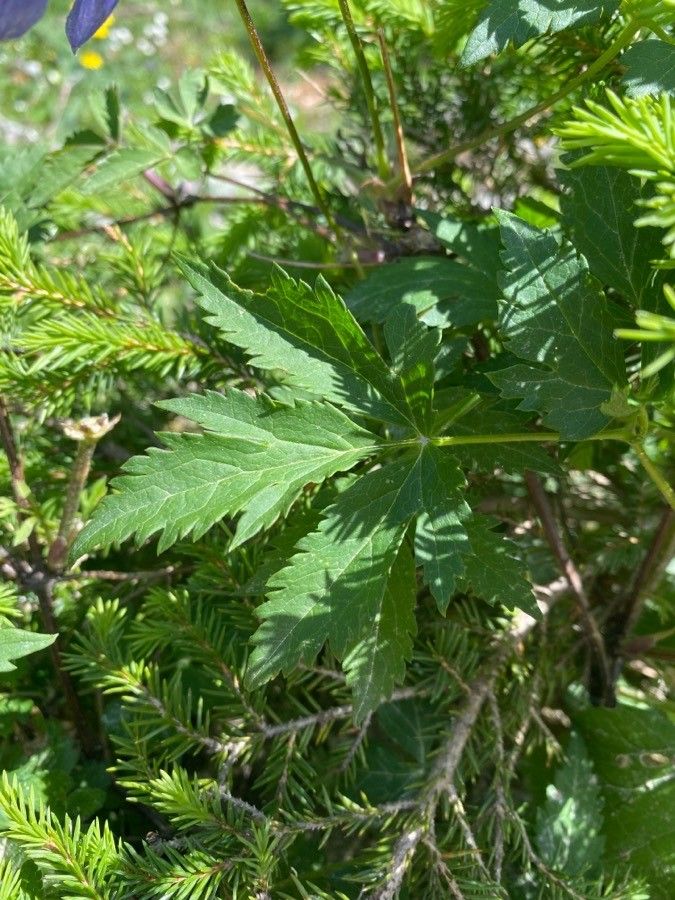
Clematis ligusticifolia is a climbing, spreading vine with showy flowers. It is also known as Old-man's Beard and Yerba de Chiva, and Virgin's bower, (though Old-man's Beard may also refer to C. vitalba, and Virgin's bower may also refer to C. lasiantha). It is native to North America where it is widespread across the western United States in streamside thickets, wooded hillsides, and coniferous forests up to 8,500 feet (2,600 m).It was called "pepper vine" by early travelers and pioneers of the American Old West. They used it as a pepper substitute to spice up food since real black pepper (Piper nigrum) was a costly and rarely obtainable spice. Like the rest of the genus Clematis, it contains essential oils and compounds which are extremely irritating to the skin and mucous membranes. Unlike Black Pepper or Capsicum, however, the compounds in clematis cause internal bleeding of the digestive tract if ingested internally in large amounts. The plants can be toxic if consumed in large enough amounts, and can be toxic to small animals. Native Americans used very small amounts of clematis for migraine headaches and nervous disorders. It was also used as an effective treatment of skin infections. A whole-plant hot water extraction was used to treat eczema, and a leaf compress is used to treat chest pain, sores, and boils.It is dioecious, with male and female flowers on separate plants.
Western white clematis is fairly disease-resistant and typically not vulnerable to illnesses. Still, it can be affected by pests and diseases present in its environment. Such infections are generally mild. Regarding care, this plant needs moderate maintenance. It should be trimmed regularly to preserve a neat appearance and healthy growth. Applying fertilizer can also encourage flowering. Western white clematis is appropriate for anyone with outdoor space, like a garden or patio, and does not demand extensive gardening experience. It may need more attention if cultivated indoors.
How to keep Clematis Ligusticifolia.
Light
Western white clematis does best with plenty of sunlight but also tolerates shadier conditions. Light is essential for its healthy growth and development. The plant’s native habitat reflects these light requirements. Excessive sun can cause the leaves to yellow, while too little light may produce poor flowering.
Water
Western white clematis thrives in moist environments, needing regular hydration without becoming waterlogged. To keep the plant healthy, it's best to water it weekly. Typically grown outdoors, this clematis does particularly well when soil moisture is carefully monitored, especially during the active growing season.
Temperature
The native growing conditions for the western white clematis favor temperatures from 41 to 89 ℉ (5 to 32 ℃). It does best within that range and can endure colder conditions, but temperatures above that range can result in reduced growth. In the hotter summer months, providing some shade is advised to prevent excessive heat stress on the plant.
Fertilizer
A single application of fertilizer in spring is typically enough for Western white clematis, though repeated feedings can increase growth. Feed about once every month to a month and a half. Fertilization improves the leaves’ appearance and function, encouraging even color and a healthy texture. It also promotes root development and nutrient uptake for the plant’s long-term health.
Pruning
You can prune Western white clematis either before it flowers or between late winter and early spring. To improve the plant's overall health and encourage nutrient concentration, remove any weak branches. Avoid doing excessive pruning in the summer. If you prune heavily in the winter, it will stimulate new growth. For late-blooming varieties, prune back to one-third of the plant's height, but leave half of the branches to ensure a longer blooming season.
Pot & Repot
Repot the Western white clematis in early spring, choosing a pot that is only slightly larger than the current one and that has adequate drainage. Use a well-draining potting mix and position the root ball at the same level it was before. Gently loosen any root-bound roots. After repotting, water thoroughly and keep the plant in a warm, shaded spot. Regular pruning will help control its size and encourage new growth.
Botanical profile.
- Plant Type
- Vine, Herb
- Life Cycle
- Perennial
- Genus
- Clematis
- Family
- Ranunculaceae
- Hardiness Zone
- 5-7
- Mature Height
- 4.88 m
- Mature Spread
- 5 cm to 15 cm
- Leaf Color
- Green
- Leaf Type
- Deciduous
- Flower Color
- White
- Flower Size
- 2.54 cm
- Bloom Time
- Late spring, Early summer, Mid summer
- Planting Time
- Spring, Summer, Winter
- Harvest Time
- Mid summer
- Native Area
- Mexico
Other names.
Reader questions.
What is the most effective way to water my Western white clematis?
To ensure the health of the Western white clematis, it is best to water it with filtered water at room temperature. Tap water may contain harmful particles, so using filtered water is preferable. Since the Western white clematis is accustomed to warm environments, it is advised to use room temperature or slightly warmer water to avoid shocking the plant. Additionally, overhead watering should be avoided as it can cause issues with the foliage. Instead, it is recommended to water the plant by applying filtered room temperature water directly to the soil until it becomes completely saturated. This helps to moisturize the roots and facilitate their spread through the soil, enabling them to collect the necessary nutrients.
Why should I put fertilizer on my Western white clematis?
The main structure of the Western white clematis is made up of its leaves, which are important for both appearance and function. By fertilizing your plant properly, you can ensure that the leaves have a consistent color and healthy texture. Fertilization also has benefits below the soil's surface, helping the clematis develop new roots and maintain existing ones. This means that fertilization not only keeps your plant healthy now, but also improves its ability to absorb nutrients from the soil in the future.
What are the sunlight requirements for Western White Clematis?
Western white clematis requires a significant amount of sunlight to thrive, with full sun exposure being above 6 hours of direct sunlight daily, and partial sun exposure being about 3-6 hours. Ensuring your garden has the right balance of light and shade is crucial for the happiness of your plants. Although this plant adapts well in less sunny conditions, sunlight is vital for its healthy growth and flowering. In its natural environment, the plant has adapted to thrive under an abundance of sunlight, but it's important to watch for overexposure, which might yellow the leaves, while too little light can lead to inadequate flowering.
What are the ideal growing conditions for Western white clematis?
The Western white clematis (Clematis ligusticifolia) thrives in temperatures ranging from 41 to 89 °F (5 to 32 °C), making this range its preferred temperature for optimal growth. It can tolerate colder temperatures without needing additional frost protection during winter. To help the plant withstand winter and early spring conditions, it's advised to water it generously before the first autumn freeze, ensuring the soil is moist when it enters a frozen state. During the hot summer months, providing some shade can protect the plant from excessive heat stress, as it struggles with temperatures above its preferred range, leading to reduced growth.
What should I do if I give too much water or too little water to my Western white clematis?
Overwatering can be a big problem for your Western white clematis, causing wilting, yellowing leaves, and potentially deadly diseases like root rot, mold, and mildew. Underwatering is less of an issue, as this plant can tolerate drought, but it can still cause brittle, brown leaves. It's important to detect signs of overwatering early and adjust your watering schedule accordingly. If you notice overwatering signs, reduce watering and check the soil's drainage. If it drains poorly, replace it with a well-draining potting mix. If you suspect underwatering, simply water more regularly until the signs subside.
When should I fertilize my Western white clematis for the best results?
If you grow your Western white clematis outdoors each year, it will start growing new leaves in early spring which indicates that it's time to fertilize. Usually, a single application of fertilizer is sufficient, but if you want to promote maximum growth, you can fertilize multiple times during the spring and early summer. In that case, you can feed your Western white clematis approximately once every month to a month and a half.
Can artificial lighting be used for Western White Clematis and how?
Yes, artificial lighting can be a vital solution for the growth of Western White Clematis indoors, especially when natural sunlight is insufficient. LED lights are a popular choice because they can provide specific wavelengths needed for plant growth. For full sun plants, 30-50W per square foot is recommended, for partial sun plants 20-30W per square foot, and for full shade plants 10-20W per square foot. The light source should be placed 12-36 inches above the plant to mimic natural sunlight and be kept on for 8-12 hours per day to simulate the natural daylight hours, ensuring optimal growth.
How does Western white clematis react to low temperatures?
Western white clematis is extremely cold tolerant, capable of enduring the winter months without significant changes in appearance. However, if the temperature falls below its growth threshold (not specifically stated here), the plant may survive winter but then exhibit brittleness and dryness in its branches come spring, failing to produce new shoots. The solution to this issue is to prune away any dead branches in spring to encourage healthy growth.
How often do I need to water my Western white clematis plant?
If your Western white clematis is planted in a pot, you can determine if it needs water by checking the soil. Simply stick your finger in the soil and if the top two to three inches are dry, it's time to water it. For those who have their Western white clematis planted in the ground, you can use the same method to test the soil. If the top few inches of soil feel dry, it's time to water the plant. Typically, during the spring and early fall, watering once a week should be sufficient. However, during extremely hot weather, watering twice or more per week may be necessary. It's worth noting that mature and well-established Western white clematis plants have a remarkable ability to withstand drought.
When is the best time to not add fertilizer to my Western white clematis plant?
During the late fall and winter, your Western white clematis goes into a dormant phase and stops producing new growth. It's best to avoid fertilizing it during this time. If you choose to fertilize in spring and summer, you should gradually reduce the amount as summer approaches because the growth of your Western white clematis will also slow down. Overall, it is not recommended to fertilize when the weather is unusually hot or the soil is extremely dry, as this can stress and harm your Western white clematis, eventually causing it to die prematurely.
What are the symptoms of inadequate lighting for Western White Clematis?
Symptoms of inadequate lighting in Western White Clematis include smaller new leaves, leggy or sparse growth, early leaf drop, slower or no new growth, and lighter-colored or irregularly patterned new leaves. These symptoms indicate the plant is struggling to adapt to low light conditions. Conversely, too much sunlight can cause chlorosis, sunscald, leaf curling, wilting, and leaf scorching, which reflects excessive sunlight exposure affecting the plant's ability to photosynthesize and maintain adequate hydration.
What should be done if a Western white clematis experiences high temperatures?
Western white clematis does not tolerate high temperatures well. Exposure to temperatures exceeding its maximum growth threshold can cause significant leaf drop and, in extreme cases, the plant may wither and die. To mitigate heat stress, sunburned and dried areas of the plant should be trimmed away. Relocating the plant to a shaded area or using a shade cloth to protect it from the midday and afternoon sun is advisable. Additionally, watering the plant during the cooler morning and evening hours can help keep the soil moist, further protecting the plant from heat damage.