Clematis napaulensis
Nepal clematis
Description
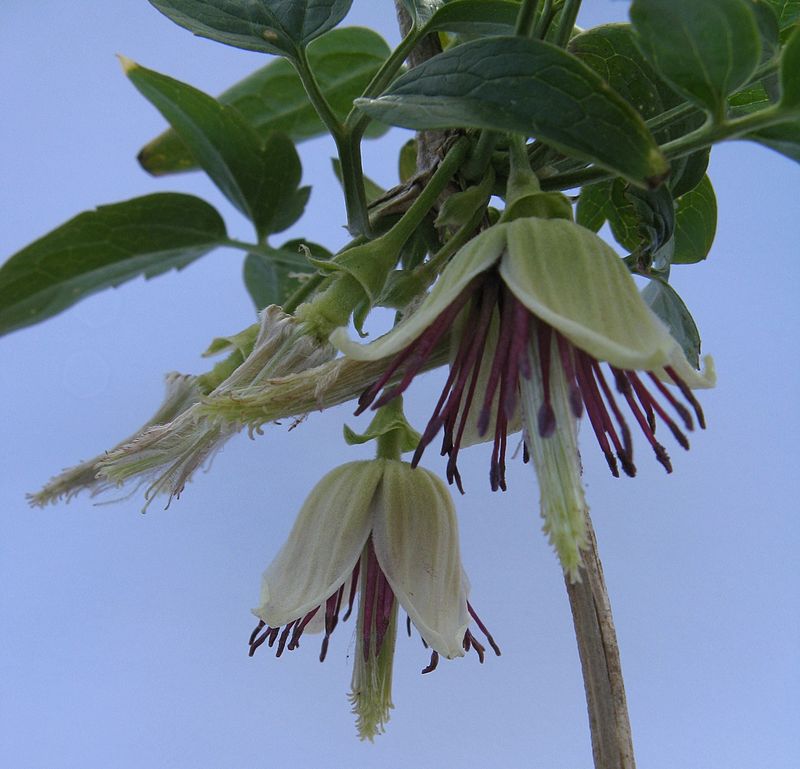
Source: leafsnapClematis napaulensis (syn. Clematis forrestii W.W.Sm.), the Nepal clematis, is a species of flowering plant in the buttercup family Ranunculaceae. It is native to China and the Indian subcontinent, including Nepal, whence the specific epithet napaulensis. The nodding flowers are up to 3 cm (1.2 in) across and scented. The short outer petals are cream-coloured, and they surround several long stamens with deep red anthers. They are followed by handsome large fruit clusters and fluffy seed-heads. The plant will not survive harsh winter climates, but grows well in warm or coastal areas where the temperature does not fall below −5 °C (23 °F). It prefers a sheltered position with the flowers in full sun. Like all clematis, the root-run does best in moist, shaded conditions.
Care Guide
💧 Water
Old man's beard flourishes in montane woodlands, where it thrives in conditions of consistent moisture without being waterlogged. To maintain its lush growth, it should be watered twice a week, especially during the growing season. This resilient plant can adapt to various climates and is highly valued for its ornamental qualities and vigorous climbing habit.
☀️ Light Partial sun
Old mans beard naturally occurs in environments like forest understories and rocky areas, where it grows in natural shade. It prefers partial sun but can adapt to full sun or full shade, which demonstrates its versatile and hardy nature.
What are the sunlight requirements for Old man's beard (Clematis napaulensis)?
Old man's beard (Clematis napaulensis) thrives under specific sunlight conditions to ensure its happiness and health. For partial sun exposure, it requires about 3-6 hours of sunlight per day. If you're aiming for full sun conditions, it should receive above 6 hours of sunlight daily. It's important to observe the movement of sunlight through your garden throughout the day, allowing you to choose spots that offer the perfect balance of light and shade suitable for these plants.
🌡️ Temperature 15–35°C
Old mans beard shows strong adaptability to a range of climate conditions, whether in scorching summers or chilly winters. Nonetheless, it requires an optimal temperature range for growth. If temperatures become too high, the plant is vulnerable to heat and humidity stress, which can lead to its death. In areas where temperatures near the lower limit of its cold tolerance, it is important to use insulation measures to protect the plant.
💨 Humidity
🪴 Soil 6-7
🌱 Fertilizer
Timing is important when fertilizing Old mans beard. Apply fertilizer in early spring and repeat monthly through early summer. Fertilizer encourages attractive blooms and supplies energy during both dormant and active growth periods.
🪴 Pot & Repot
✂️ Pruning
To enhance the blooming and growth of all varieties of Old Man's Beard, it is best to prune them before they flower or from late winter to early spring. Begin by removing any weak branches, and then selectively prune to promote better flowering. While heavy pruning can stimulate vigorous growth, be careful to avoid excessive pruning during the summer. Proper pruning will lead to more robust flowering and healthier branch development.
🌿 Propagating
🐛 Diseases & pets
☠️ Toxicity
Characteristics
- Plant Type
- Vine
- Life Cycle
- Perennial
- Genus
- Clematis
- Family
- Ranunculaceae
- Hardiness Zone
- 7-10
- Mature Height
- 10.06 m
- Mature Spread
- 3.05 m
- Leaf Color
- Green, Dark Green
- Leaf Type
- Deciduous
- Flower Color
- White
- Flower Size
- 2.03 cm to 3.05 cm
- Bloom Time
- Winter
- Planting Time
- Spring, Summer, Autumn
- Harvest Time
- Spring
- Native Area
- Nepal, India, Myanmar, Bhutan, China