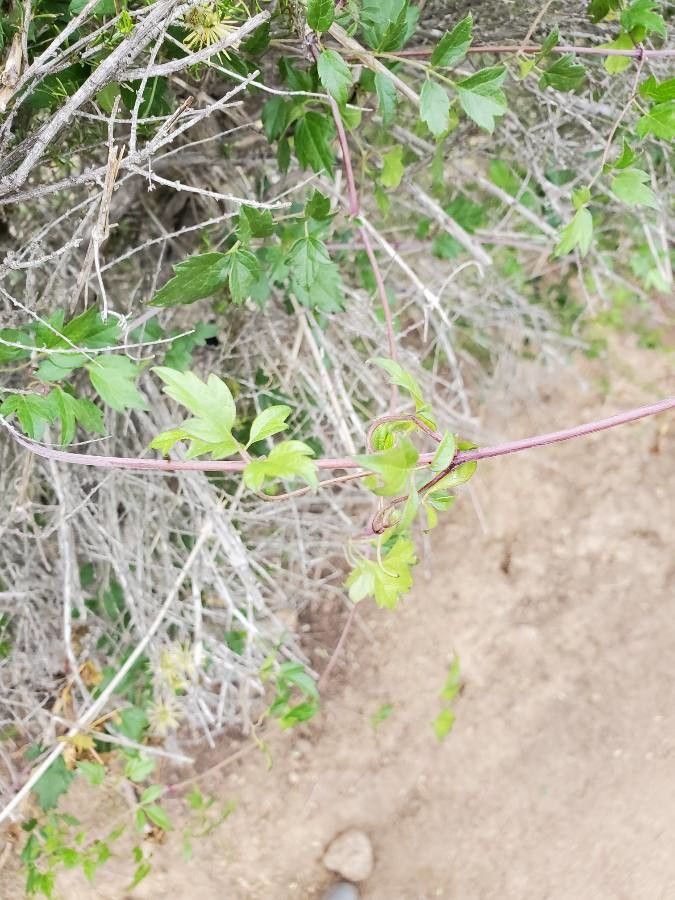
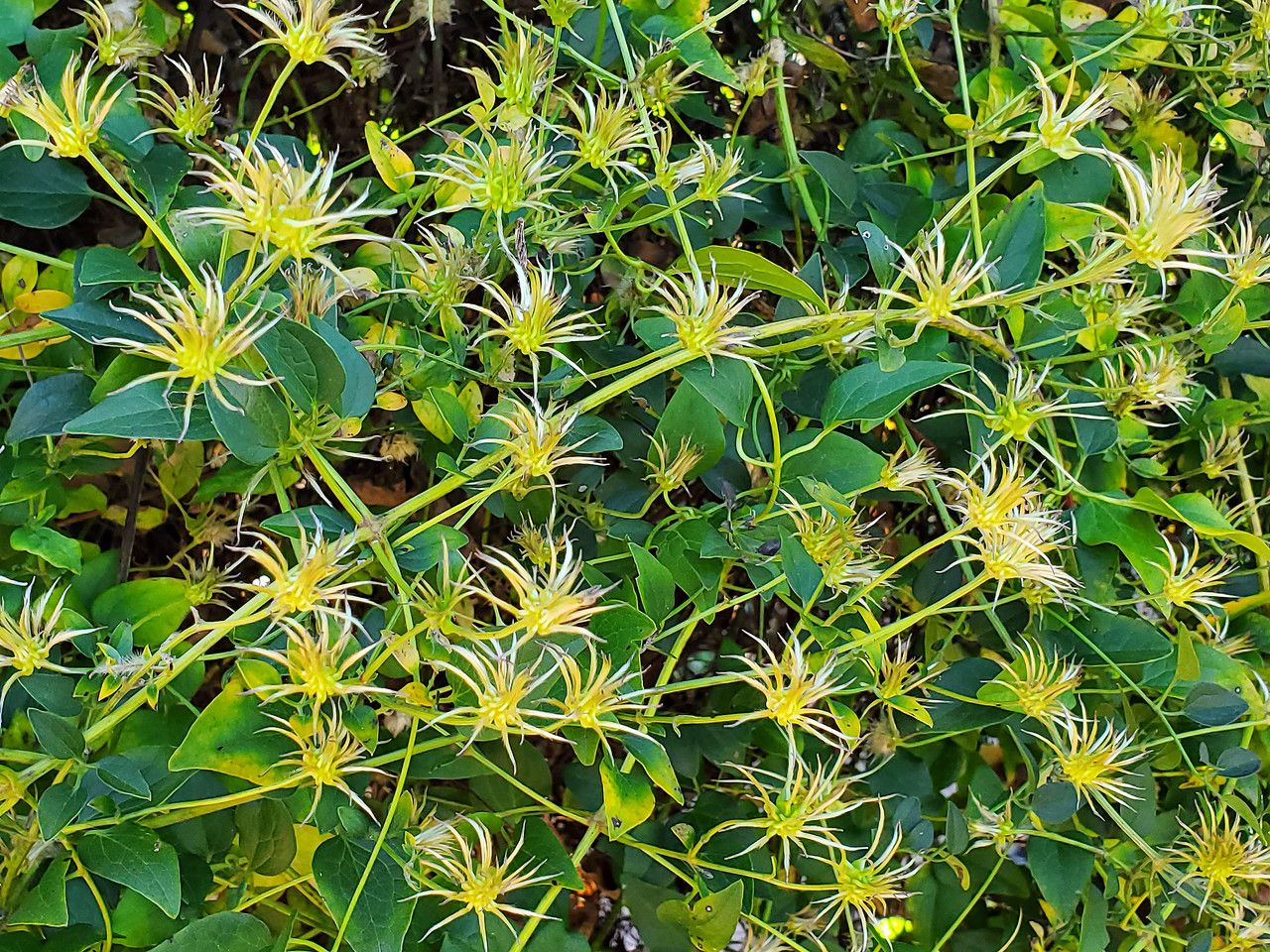
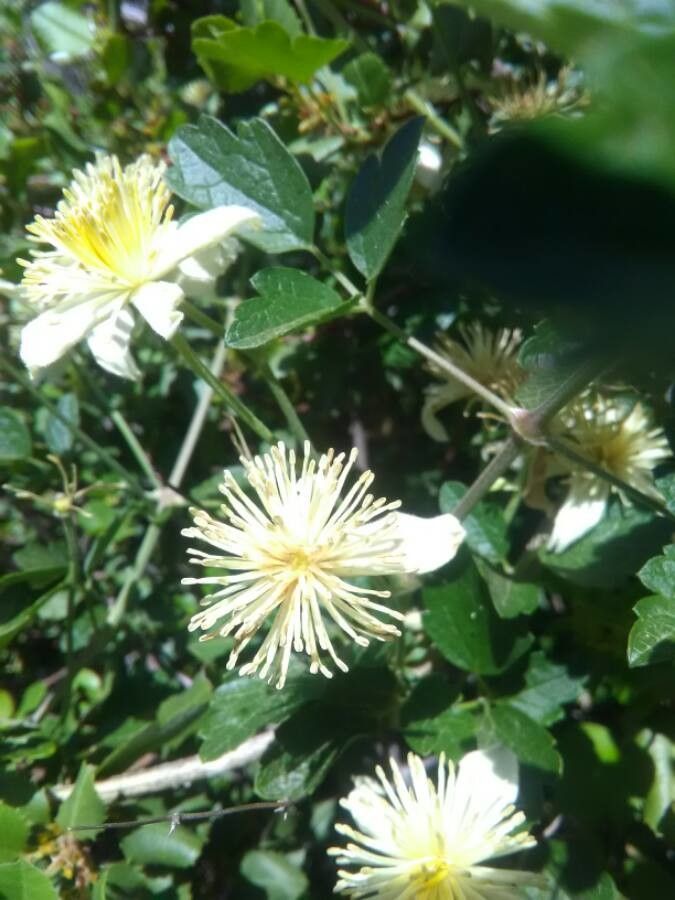
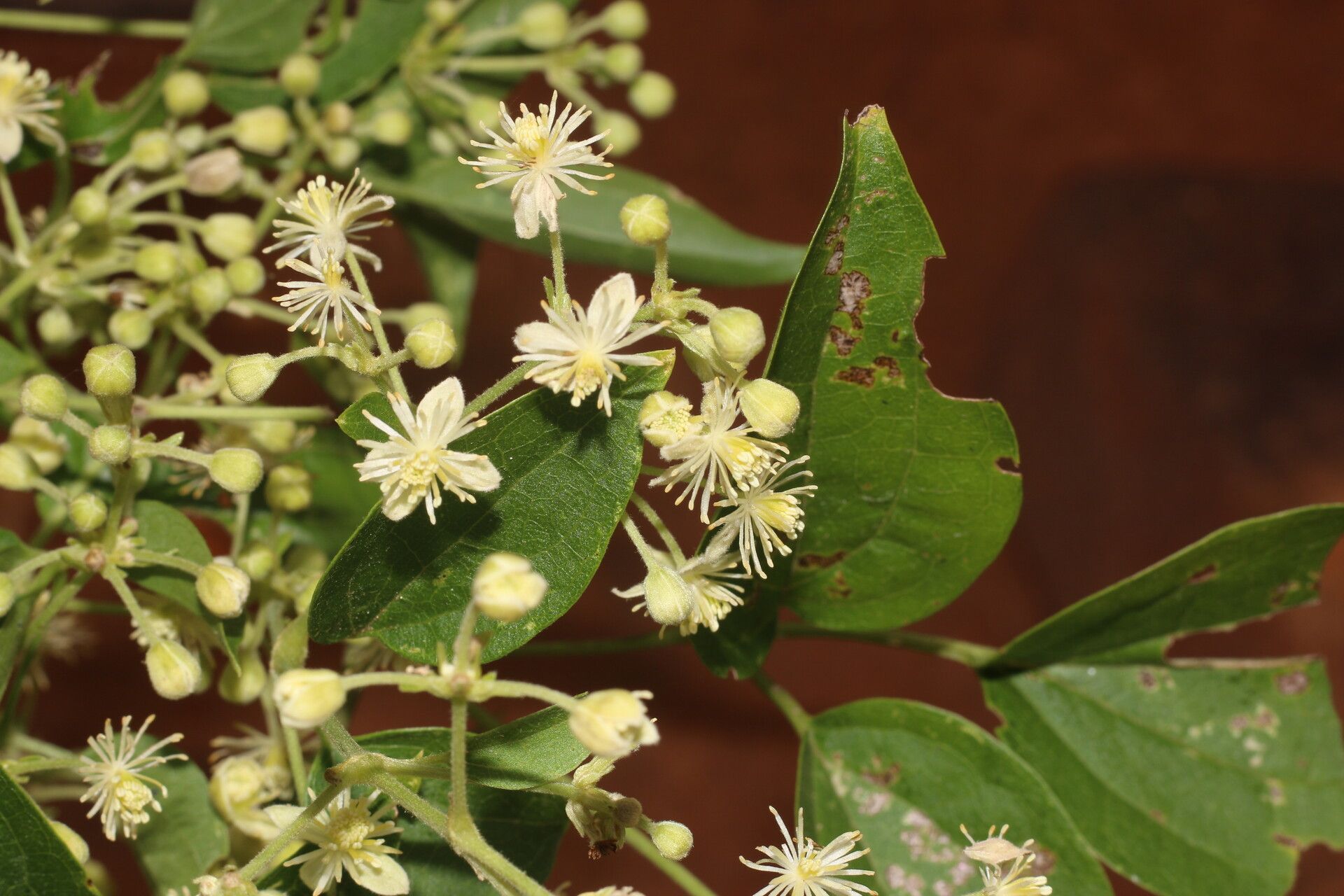
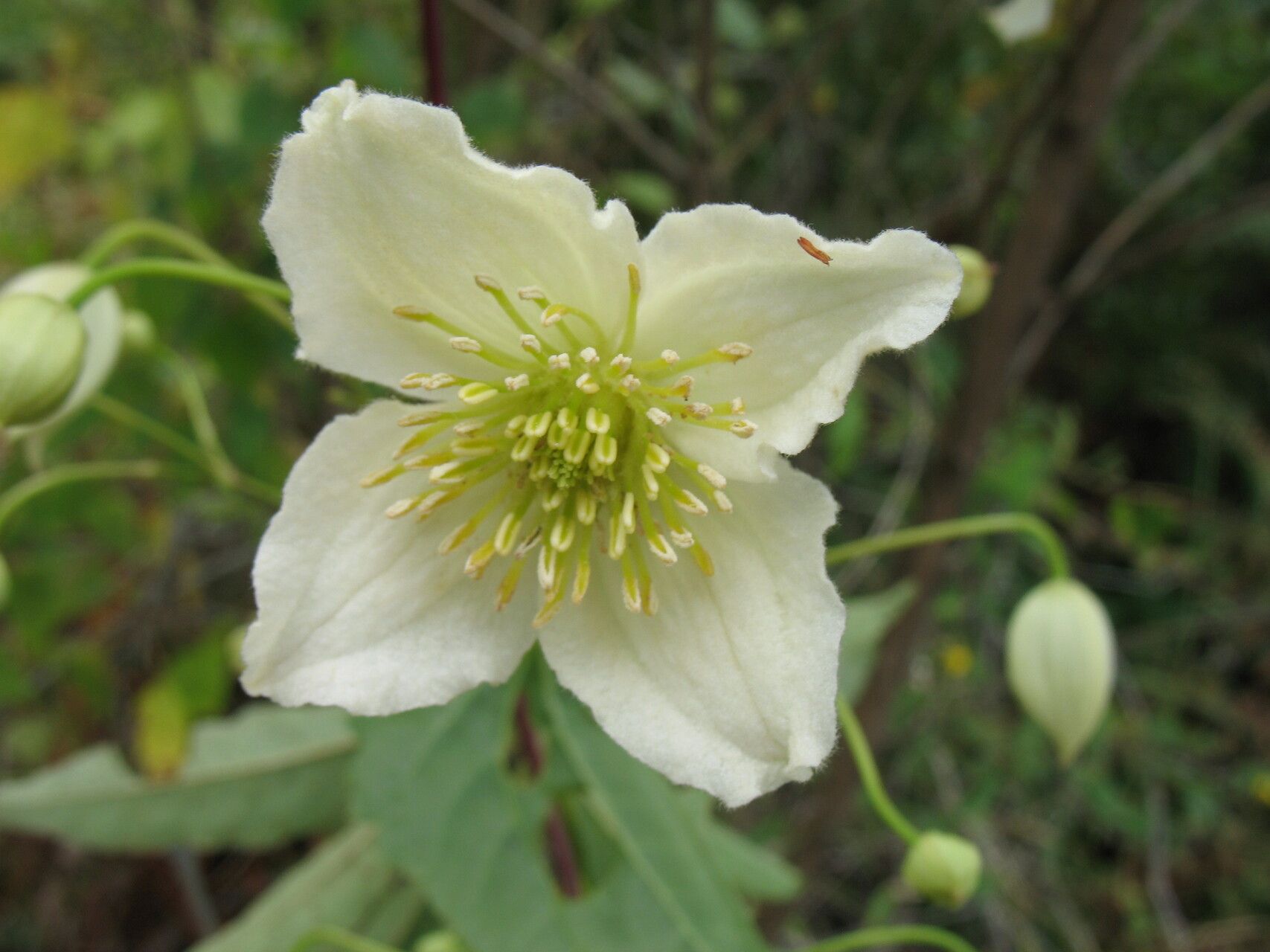
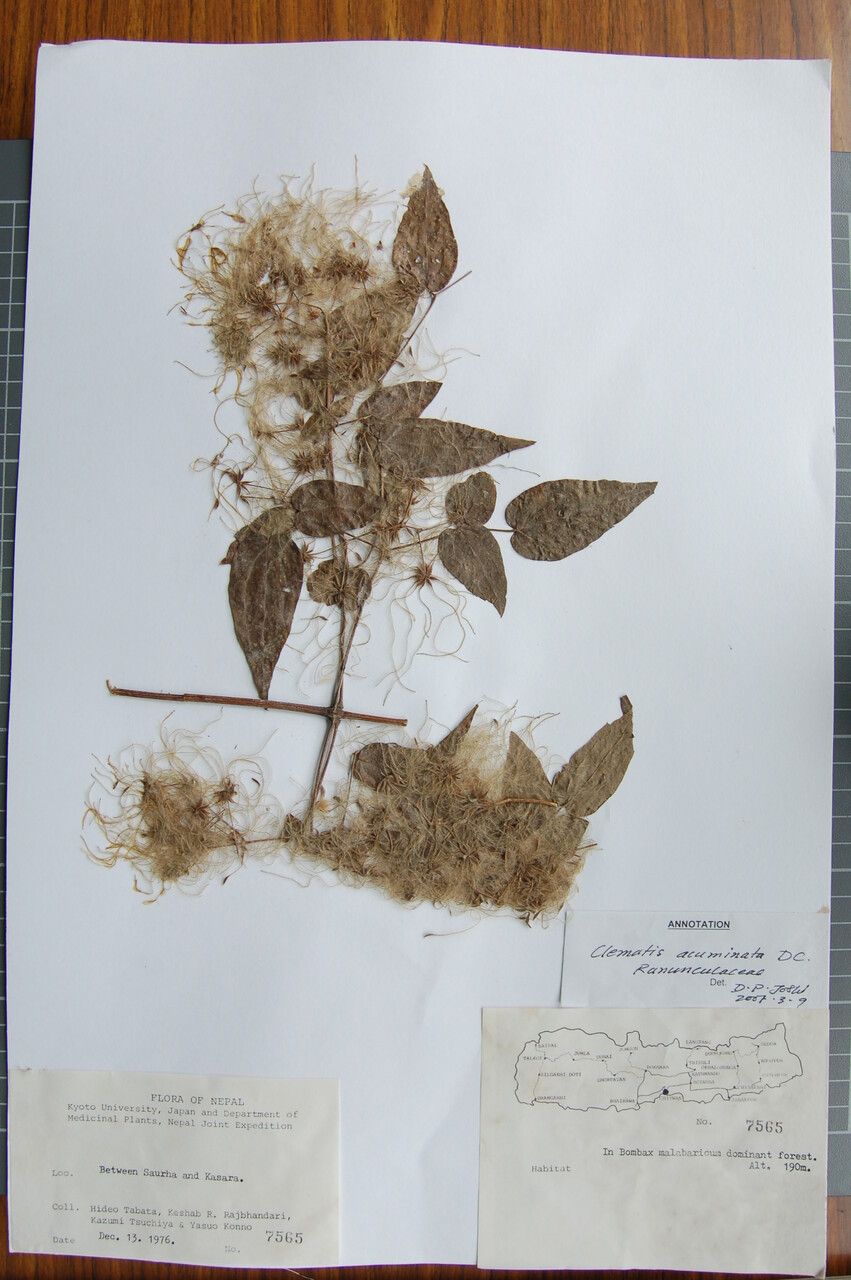
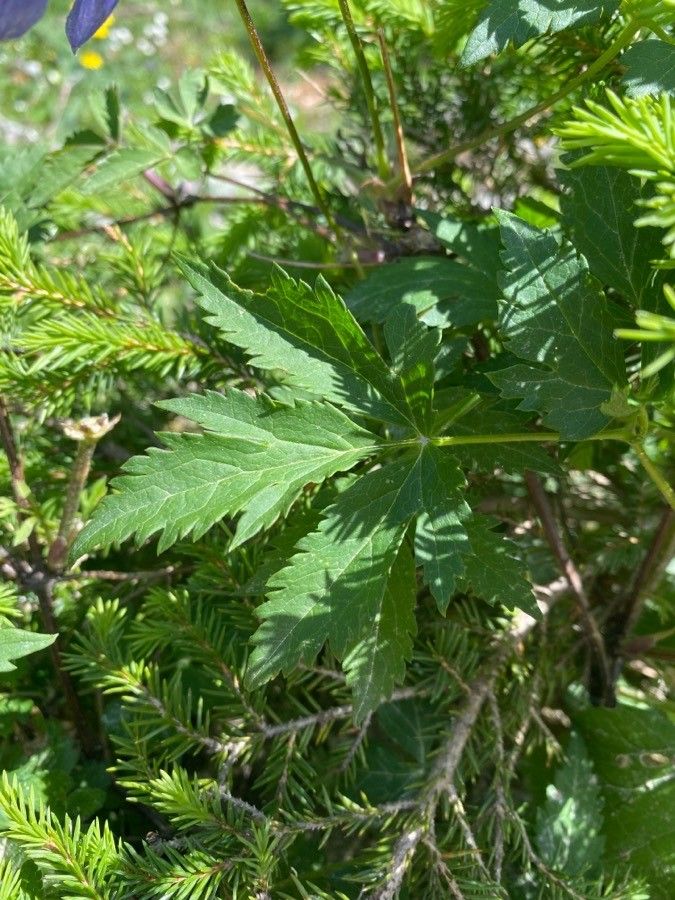
Clematis pauciflora is a species of clematis known by the common name ropevine. This flowering plant is native to the high desert and chaparral slopes of southern California and Baja California. It is a woody vine with nodes every few centimeters which produce leaves and flowers. The leaves are made up of several dark green lobed leaflets, each one to three centimeters wide. From each leaf-bearing node grows an inflorescence of one to three flowers with narrow petallike sepals in shades of light yellow. Most of the flower is made up of a spray of up to 50 stamens and almost as many similar-looking pistils. The fruit is an achene equipped with a long plume-like style. The specific epithet pauciflora is Latin for 'few-flowered'.
Ropevine clematis is fairly disease-resistant and is generally not susceptible to ailments. Regarding care, this plant is relatively low-maintenance. When grown outdoors it needs only light watering, and larger specimens typically do not require pruning, though smaller plants should be pruned after they finish blooming. Ropevine clematist is suitable for anyone with outdoor space like a garden or deck and does not demand much gardening experience.
How to keep Clematis Pauciflora.
Light
Ropevine clematis is native to habitats such as forest understories and rocky areas, where it grows in natural shade. It prefers partial sun but can adapt to full sun or full shade, showing its versatile, hardy nature.
Water
Ropevine clematis thrives in moist conditions and needs to be watered thoroughly whenever the soil dries out. In the spring, it requires a substantial amount of water, but it's important to ensure any excess water is properly drained to prevent root rot. It's crucial to keep an eye on the plant during rainy weather to avoid water accumulation.
Temperature
Ropevine clematis shows strong adaptability to a range of climate conditions, whether in blazing summers or frosty winters. Nevertheless, it has an optimal temperature range for growth. When temperatures rise too high, the plant becomes vulnerable to heat and humidity stress, which can lead to its death. In areas where temperatures reach the lower limit of its cold tolerance, it is important to provide insulation to protect the plant.
Fertilizer
Fertilize your Ropevine clematis in early spring to encourage healthy growth. Regular fertilization boosts the plant's overall health, producing vigorous growth, increased resilience to harsh conditions, and enhanced resistance to pests and diseases. Keep a consistent fertilization schedule for your Ropevine clematis to ensure vibrant, deeply colored foliage and a lush appearance.
Pruning
Ropevine clematis should be pruned either before flowering or from late winter to early spring. Start by removing any weak branches and selectively pruning to encourage better flowering. Avoid pruning during the summer months. Heavy pruning can stimulate new growth, but if you leave about half of the branches unpruned, you'll promote a longer blooming season and a greater abundance of flowers.
Botanical profile.
- Plant Type
- Shrub, Vine
- Life Cycle
- Perennial
- Genus
- Clematis
- Family
- Ranunculaceae
- Hardiness Zone
- 7-9
- Mature Height
- 2.13 m to 3.05 m
- Mature Spread
- 0.91 m to 2.13 m
- Leaf Color
- Green, Dark Green
- Leaf Type
- Evergreen
- Flower Color
- White
- Flower Size
- 3.05 cm to 5.08 cm
- Bloom Time
- Early spring, Mid spring
- Planting Time
- Spring, Summer
- Harvest Time
- Late spring, Early summer
- Native Area
- Mexico
Other names.
Reader questions.
What are the sunlight requirements for Ropevine Clematis?
Ropevine Clematis (Clematis pauciflora) thrives in an environment where it can receive varying amounts of sunlight. Specifically, the plant needs 'full sun' conditions, which means it requires more than 6 hours of direct sunlight daily. Alternatively, it can also grow well in 'partial sun' conditions, needing about 3-6 hours of sunlight. It's important to observe the way sunlight moves through your garden over the course of the day to find spots that offer a good mix of light and shade. This will help ensure that your Ropevine Clematis grows healthy and happy.
What is the botanical name of Ropevine Clematis?
The botanical name of Ropevine Clematis is Clematis pauciflora. It is a specific species of the Clematis genus, known for its unique characteristics and growth habits.