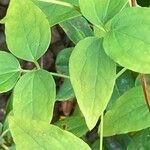
Clematis viorna
Leather-flower · Vasevine · Leather-flower vine · Vase-vine clematis · Viorna
Description
Source: leafsnapClematis viorna, commonly known as the leatherflower or vasevine, is a deciduous climbing plant that belongs to the buttercup family. Native to North America, it thrives in woodlands, thickets, and along stream banks. This plant can reach up to 10 feet in height and features slender stems covered in fine hairs. The dark green leaves of Clematis viorna have a glossy appearance and are divided into three leaflets with toothed edges. The plant's flowers are distinctive, with a vase-like shape that gives the plant its common name, "vasevine." These small, bell-shaped flowers bloom from late spring through early summer and can range in color from pinkish-purple to reddish-brown. Clematis viorna prefers moist soil conditions but can tolerate some drought once established. It grows best in partial shade but can also thrive in full sun if provided with adequate moisture. Due to its attractive foliage and unique flowers, this plant is often used as an ornamental vine for trellises or fences. In addition to its ornamental value, Clematis viorna has been used for medicinal purposes by Native Americans to treat various ailments such as headaches, fever, and rheumatism. However, this should only be done under the guidance of a healthcare professional due to potential side effects. Overall, Clematis viorna is an attractive climbing vine with unique vase-like flowers, making it a great addition to any garden or landscape design. Its potential medicinal value, when used properly under guidance from healthcare professionals, adds to its allure.
🌳 Vasevine is a climbing ornamental plant that enhances the beauty and appeal of pollinator and cottage gardens with its attractive foliage and cup-shaped flowers. It elegantly climbs and adorns trellises and walls, growing dense enough to create a natural screen. Its peak seasons are spring and summer, when its blossoms flourish, attracting bees, hummingbirds, and butterflies.
Care Guide
💧 Water Every 7 days
Vasevine thrives in moderate humidity and prefers soil that is consistently moist, though it can tolerate some drought. Watering it weekly mimics its natural habitat. When grown outdoors, it flourishes in various climate zones, benefiting from rainfall during its active growing season.
What is the best way to water my Vasevine?
To ensure excellent root development, consider placing a garden hose at the base of the plant. Avoid spraying water directly on the leaves. If the plant is outdoors and exposed to direct sunlight, the leaves may require more water. You can also use bubblers or soaker hoses to moisten the roots. When adding or removing plants, use soaker hoses that cover the entire garden or bed to help roots grow deeply. After watering, drain any excess water and allow the soil to dry before watering again. It's best to water at ground level to prevent diseases. On a sunny day, you may want to spray the entire bush with water. Whether your plant is potted or in the ground, remember that Vasevine prefers deep watering rather than light sprinkling.
What do I need to do if I give Vasevine too much/too little water?
A Vasevine that is overwatered may show yellowing, drooping, and wilting leaves. The plant may also appear dull and unhealthy, with mushy stems. In these cases, it is best to adjust your watering schedule. On the other hand, wilting can also be a sign of under watering. Under watering can cause the leaves to become crispy and dry, while overwatering leads to soft, wilted leaves. To determine watering needs, check the soil moisture and provide a full watering when it is dry. However, be aware that even with sufficient water, the plant may still have dry, yellow leaves due to root damage. Once the plant has recovered, the yellowing leaves will stop. Indoors, always check the moisture levels at the pot and avoid overwatering. Look out for black spots, which are a sign of moisture excess. In such cases, allow the soil to dry out by withholding water for a few days. Overwatering can cause root rot, so if you see discolored and slimy roots, it may be necessary to transfer the plant to a new pot. It is important to prevent root rot by not letting the soil become too soggy. When planting Vasevine outdoors, dig a bit deeper and if the soil feels excessively dry, it indicates under watering, so provide adequate water to promote recovery.
How frequently should I water my Vasevine?
The Vasevine prefers deep and infrequent watering. This is especially important when they are planted in pots because the water storage in pots is limited and the soil tends to dry out faster. If you live in a cold region, you should water the Vasevine every 3 to 5 days. It's best to water it early in the morning when the soil is dry, both indoors and outdoors. You can also determine if watering is needed by checking the moisture level of the soil. If the top 2-3 inches of soil are dry, it's time to give the plant a full watering. On hot days, it may be necessary to check the moisture level daily as the heat can quickly dry out the soil in the pot. If you have a garden, it will also require irrigation. In a hot climate, watering once a week is sufficient. Only water when about 2 to 3 inches of soil are too dry, indoors or outdoors. Take into account any rainfall and avoid overwatering to prevent root rot. Vasevine typically grows during spring and fall. Outdoors, it's recommended to add about 3 to 4 inches of mulch to help conserve water. Sandy soil drains faster, so plants in sandy soil will need more frequent watering. On the other hand, plants in clay soil can be watered less frequently, allowing the soil to dry out for 2-3 days without risking root rot. To keep track of watering, you can mark the date on a calendar and pay attention to any drooping leaves, as this could indicate that watering is needed.
How much water should I provide for my Vasevine?
The Vasevine plant generally needs about a gallon of water on a regular basis. For potted plants, water them deeply until water starts dripping from the bottom of the pot, then wait for the soil to dry before watering again. Use a water calculator or moisture meter to determine how much water you've given the plant each week. During the flowering period, provide plenty of water, but allow the moisture to evaporate afterwards to prevent root rot. If the Vasevine is planted outdoors and receives sufficient rainfall, it may not need additional watering. However, when the Vasevine is young or newly planted, ensure it receives 1-2 inches of rain per week. As the Vasevine grows, it can rely solely on rainfall, except during very hot weather or prolonged periods of no rainfall for 2-3 weeks. In such cases, consider giving the Vasevine a thorough watering during the cooler part of the day to protect it from heat damage. Additional watering will be necessary during extended dry spells.
Should I water my Vasevine more or less depending on the time of year or the weather?
The Vasevine prefers to be outdoors and relies on rain for hydration, except during consistently dry weather when watering is necessary. During the spring and fall growing seasons, the soil should be kept moist, but not overly wet, and alternating between dry and moist conditions will promote healthy growth. In the summer, hot weather can cause water to evaporate quickly, so if there is a lack of rainfall, more frequent watering is needed to keep the Vasevine moist. In winter, the Vasevine requires less water as it goes dormant. Placing it in well-draining soil, such as terracotta, helps the water evaporate faster. Once the Vasevine has leafed out and gone dormant, watering can be skipped, relying on the fall and winter rains to sustain it. After spring, you can encourage the Vasevine to grow and bloom by providing warmer temperatures. Good drainage is crucial at all times, especially in winter to prevent ponding. If the Vasevine is in a pot, it has limited root growth, so it should be well-watered, especially in summer. Shallow sprinkles that reach the leaves should be avoided as they can promote fungi growth and do not reach the roots' depth. Even during dormancy in fall or winter, the Vasevine should not be allowed to completely dry out. Overwatering should also be avoided, as the plants do not tolerate sitting in water for extended periods, which could lead to winter damage. Applying mulch is beneficial to reduce stress, conserve water, and promote healthy blooms.
☀️ Light Partial sun
The vasevine prefers locations that get a moderate amount of sunlight each day. It can, though, tolerate stretches of strong sun exposure. Its native habitat features comparable conditions. Maintaining a balance is crucial, because excessive or insufficient light can harm the plant's growth and general health.
What type of sunlight does Vasevine require?
Vasevine thrives in areas that get moderate sunlight daily, although it can tolerate periods of more intense sun exposure. This preference stems from its native growing conditions. It is crucial for the plant's growth and health to find a location that ensures a balance between too much and too little sunlight. When natural sunlight isn't sufficient, especially during winter or in less sunny spaces, artificial lighting can be an excellent alternative. Indoor plants benefit from artificial lights, such as LED lights, which can be customized to provide specific wavelengths of light. The amount of artificial light needed varies by plant type, with full sun plants requiring 30-50W per square foot, partial sun plants needing 20-30W per square foot, and full shade plants requiring 10-20W per square foot. Proper distance and duration of exposure to artificial light are key to mimicking natural sunlight conditions, enhancing plant growth and health.
What are the signs of improper lighting for a Vasevine?
Vasevine shows several signs when it's not receiving the proper lighting. Insufficient light can lead to smaller new leaves, leggy or sparse growth, accelerated leaf drop, halted growth, and pale new leaves indicating a lack of chlorophyll. Excessive sunlight can cause chlorosis, leaf curling, wilting, leaf scorching, and sunscald, damaging the plant's leaves or stems and negatively impacting its health. These symptoms indicate the plant's struggle with its light environment, whether it's too little or too much light.
How can I optimize Vasevine's light exposure?
To optimize Vasevine's light exposure, gradually adjust the plant to more sunlight by moving it to sunnier locations each week until it receives 3-6 hours of direct sunlight daily. This gradual adaptation helps avoid sunburn. If the plant is large or not easily movable, or if natural light is insufficient, consider using artificial lighting. Desk or ceiling lamps left on for at least 8 hours a day, or professional plant grow lights, can provide the necessary light. For outdoor plants, slowly moving them to optimal sunlight locations while avoiding drastic light intensity changes is essential. Should light obstruction be an issue, pruning surrounding trees or transplanting the plant during its dormant period to a site with better sunlight and drainage can greatly benefit the plant's health and growth. It's important to note that parts of the plant affected by inadequate sunlight might not recover, but new growth should be healthy after improving light exposure.
🌡️ Temperature 5–32.2°C
Vasevine is native to habitats with temperatures ranging from 41 to 90°F (5 to 32°C). The plant favors milder climates but can tolerate warmer conditions when gradually acclimated. To ensure its health, slowly adapt it to temperature shifts during hot summers or cold winters.
What is the native climate for Vasevine?
Vasevine is native to environments where temperatures fluctuate between 41 and 90°F (5 to 32°C). This plant thrives in milder climates but has the capability to adjust to warmer temperatures with proper acclimatization. Gradual exposure to heat changes is recommended during periods of intense summer heat or during cold winters to ensure the plant's health.
How do you protect Vasevine in cold winters?
Vasevine possesses strong resistance to cold and usually does not require special frost protection measures during winter. However, if temperatures are expected to fall below the plant's growth limit, it's important to protect it from the cold. This can be done by wrapping the trunk and branches with non-woven fabric or cloth. Additionally, watering the plant abundantly before the first freeze in autumn is advised to keep the soil moist and prevent drought and water scarcity for the plant during winter and early spring.
What are the symptoms of Vasevine being exposed to low temperatures?
Vasevine is tolerant to cold and fares best when temperatures are above its suitable growth minimum. In winter, it's critical to keep the plant above its tolerable growth minimum temperature. Exposure to temperatures below its growth limit may not show immediate changes during winter, but come spring, the branches may turn brittle and dry, failing to produce new shoots. The solution is to prune away any dead branches that haven't sprouted new leaves in the spring.
How does high temperature affect Vasevine, and what should you do?
During the summer, it's important to keep Vasevine below its suitable growth maximum temperature. If the temperature exceeds this maximum limit, the plant's leaves may lighten in color, tips can dry and wither, and the plant may become more susceptible to sunburn. To mitigate these effects, trim away the sunburned and dried-up parts. Moving the plant to a shadier location or using a shade cloth for protection during peak sunlight hours is beneficial. Additionally, watering the plant in the morning and evening will help keep the soil moist and support the plant's health.
💨 Humidity
🪴 Soil 6-7
🌱 Fertilizer
Timing is important for fertilizing Vasevine. Apply fertilizer in early spring and continue monthly until early summer. Fertilizer helps produce attractive blooms and supplies energy during both dormant and active growth phases.
Why should I give my Vasevine plant fertilizer?
To ensure your Vasevine produces beautiful blooms, it's important to fertilize it. Fertilizing in early spring is particularly effective in promoting excellent flowers during that season. Additionally, providing fertilizer during the fall planting process or late spring allows the Vasevine to store more energy in the ground for its dormant growth periods, which can then be utilized during active growth phases.
When should I fertilize my Vasevine?
To ensure effective fertilization of Vasevine, timing is crucial. Applying fertilizer too early while the plant is still dormant is ineffective, as it will be washed away by rainwater, which leads to waste and pollution. It is best to apply the first round of fertilizer in early spring and continue with monthly applications until early summer.
When is it not a good idea to fertilize my Vasevine?
To ensure the optimal growth of Vasevine, it is important to choose a fertilizer with a lower level of nitrogen compared to other nutrients. Excessive nitrogen can result in abundant foliage but fewer blooms. It is also advisable to avoid fertilizing Vasevine during the late autumn since this can promote excessive growth right before winter. Similarly, during hot and dry periods, fertilizing should be withheld as dry soil does not effectively deliver nutrients and can lead to stimulated growth that requires additional water which may not be available. It is best to apply fertilizer earlier in the season when temperatures are cooler. Lastly, it is crucial to be cautious about unintentionally providing Vasevine with a double-dose of fertilizer by considering the possibility of nearby plant or lawn fertilization being absorbed by the vine.
What kind of fertilizer does my Vasevine need?
To help your Vasevine thrive, it is recommended to use a fertilizer that contains a balanced mix of the main plant nutrients, with slightly more phosphorus. Alternatively, you can enrich the soil by incorporating organic materials like compost, worm castings, or manure. Advanced gardeners may choose to supplement with water-soluble fertilizers high in phosphorus when the flower buds start to appear. This will promote better flower development, leading to larger blooms that last longer. While fertilizers come in various forms, liquid or powdered fertilizers tend to be the most effective for Vasevine. Whichever you choose, make sure to dilute the fertilizer and apply it during watering.
How can I fertilize my Vasevine?
1. Always follow the specific fertilizer instructions for your Vasevine and do some research on how to use it properly. 2. To avoid over-fertilizing, it's crucial to determine the correct amount. Typically, you can use the age of the tree or the trunk's diameter as a guideline. 3. Estimate about one-tenth of a pound of fertilizer per year or per inch of trunk, with a maximum of one pound. 4. Granular and organic fertilizers like blood meal can be applied by sprinkling them around the base of the tree, extending to the drip line (the area under the outermost branches). Make sure the fertilizer doesn't touch the trunk. 5. Over time, the granules will break down and mix with the soil, where the roots can absorb them. 6. After fertilizing, spread about an inch of compost around the base of the tree and water it thoroughly.
🪴 Pot & Repot
✂️ Pruning
To keep vasevine thriving and healthy, it's important to prune it regularly, especially since it has unique bell-shaped flowers. Start the process in early spring by thinning and cutting back the stems, particularly targeting any dead or weak growth. This approach boosts blooming, improves airflow, prevents disease, and results in a healthier, more balanced plant.
🌿 Propagating
🐛 Diseases & pets
☠️ Toxicity
Characteristics
- Plant Type
- Vine
- Life Cycle
- Perennial
- Genus
- Clematis
- Family
- Ranunculaceae
- Hardiness Zone
- 4-8
- Mature Height
- 3.35 m
- Mature Spread
- 1.52 m
- Leaf Color
- Green
- Leaf Type
- Deciduous
- Flower Color
- Purple, Lavender
- Flower Size
- 2.54 cm to 7.62 cm
- Bloom Time
- Late spring, Early summer, Mid summer
- Planting Time
- Spring, Autumn, Winter
- Harvest Time
- Late summer, Early fall, Mid fall