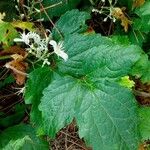
Clematis virginiana
Virgin's-bower · Devil's darning needles · White clematis · Devil's-Darning-Needles · Virginia Bower
Description
Source: leafsnapClematis virginiana (also known as devil's darning needles, devil's hair, love vine, traveller's joy, virgin's bower, Virginia virgin's bower, wild hops, and woodbine; syn. Clematis virginiana L. var. missouriensis (Rydb.) Palmer & Steyermark ) is a vine of the Ranunculaceae (buttercup family) native to North America from Newfoundland to southern Manitoba down to the Gulf of Mexico. The rationale for some of the common names is unclear, as they include examples normally applied to unrelated plants, including twining parasites (e.g. "devil's hair" for Cuscuta). The name "Love Vine" also is applied to alleged aphrodisiacs, such as Caribbean species of Cassytha, which are unrelated to Clematis, not being in the family Ranunculaceae.
💡 The devil's darning needles is a rapidly growing plant that can thrive and bloom in shady areas. It is an excellent choice for less sunny spots in your garden. However, it has the potential to produce a large number of seeds and may appear unexpectedly in different parts of your garden. To prevent its invasive spread, opt for male plants instead of female ones, as male plants do not produce seeds.
🌳 Virgin's bower, noted for its unexpected usefulness, was historically employed by some Native American tribes as an insect repellent, especially against gnats and mosquitoes. They would crush the leaves and spread the resulting paste on their skin. In addition to repelling insects, this adaptable flower is also prized in hair care, contributing conditioning properties to herbal shampoos and conditioners. Yet the process of extracting essential oils from virgin's bower for large-scale use remains largely uninvestigated, indicating scope for future research and commercial development.
🎭 Artifice, the beauty of inventiveness
Care Guide
💧 Water Every week
Devil's darning needles thrive best in evenly moist soil and need to be watered weekly. Although they can tolerate moderate drought, higher humidity significantly boosts their growth. Typically grown outdoors, this climbing plant benefits greatly from rainwater during its active season, mirroring the conditions of its native habitat along moist stream banks.
How should I water my Devil's darning needles?
To ensure the well-being of Devil's darning needles when watering, it is best to use filtered water at room temperature. Tap water may contain harmful particles, so filtering is important. The water should be at room temperature or slightly warmer because the plant thrives in warm environments and cold water can be a shock. It is recommended to avoid overhead watering, as it can cause foliage problems. Instead, water the plant by applying filtered room temperature water directly to the soil until it is fully soaked. This benefits the plant by moisturizing the roots and facilitating their spread to collect necessary nutrients.
What should I do if I give too much or too little water to my Devil's darning needles?
Both overwatering and underwatering can harm the health of your Devil's darning needles, but overwatering is more common. Too much water can cause wilting, yellowing leaves, and lead to diseases like root rot, mold, and mildew. While underwatering is less likely, it can cause brittle, brown leaves. It's important to spot signs of overwatering early as some diseases may not be fixable if left too long. Reduce watering if you see early signs of overwatering and check the soil's drainage. Replace poor-draining soil with a loose, well-draining potting mix. If underwatering is the issue, water more regularly until signs disappear.
How frequently should I water my Devil's darning needles?
If your Devil's darning needles plant is in a pot, the best way to determine if it needs water is to check the soil with your finger. If the top two to three inches of soil are dry, it's time to water it. If your plant is outdoors in the ground, you can use the same method. When the top few inches of soil have dried out, it's time to water. Typically, during spring and early fall, you'll need to water about once a week using this method. However, during extremely hot weather, you may need to water twice a week or more. It's worth noting that mature Devil's darning needles plants are quite resilient and can tolerate periods of drought.
How much water do my Devil's darning needles need?
When watering your Devil's darning needles, be generous with the amount of water you provide. Make sure the top two to three inches of soil are dry before watering and aim to thoroughly soak the entire soil. The water should be enough to cause excess water to drain out of the pot's drainage holes. If you don't see excess water draining out, you may have not given enough water. However, avoid letting water accumulate in the soil as it can harm the plant. Additionally, if water doesn't drain properly from the pot, it could indicate poorly draining soil, which is bad for the plant's health. For outdoor plants, about 1 inch of rain per week should be sufficient.
How much water should I give my Devil's darning needles at different stages of growth?
The water needs of Devil's darning needles can vary depending on different growth stages. In the first few years of its life or after transplanting, the plant requires more water. During these stages, it focuses on developing new roots for future growth, which require extra moisture. However, as it matures over the seasons, the plant will require less water. Another stage that may require additional watering is the bloom period, as flower development uses up a significant amount of moisture.
☀️ Light Full sun
Virgin's bower does best when it gets a high level of light throughout the day. It can tolerate conditions where light levels fluctuate, enabling healthy growth. Native to brightly lit habitats, this plant's growth can become stunted or weak with insufficient light, while too much light can stress it and may cause damage.
What are the sunlight requirements for Devil's darning needles?
Devil's darning needles requires full sun, defined as above 6 hours of sunlight daily, to thrive optimally. It can also survive in partial sun, which is about 3-6 hours of sunlight each day. It's important to watch how sunlight moves through your garden to find spots that offer a balance of light and shade, catering to the plant’s needs and ensuring its happiness.
How essential is lighting for the growth of Devil's darning needles?
Lighting is crucial for the growth of Devil's darning needles, as it thrives under a high degree of illumination. Originating from environments with ample light, its growth can become stunted or weak under inadequate light conditions. However, excessive light can stress the plant, potentially causing damage. Indoor plants may require artificial lighting for optimal growth, especially in spaces with insufficient natural sunlight. LED lights are popular for providing the specific wavelengths needed, with full sun plants requiring 30-50W/sq ft, partial sun plants 20-30W/sq ft, and full shade plants 10-20W/sq ft of artificial light.
What are the common symptoms of light deficiency in Devil's darning needles?
Symptoms of light deficiency in Devil's darning needles include small leaves, leggy or sparse growth, faster leaf drop, slower or no new growth, and lighter-colored new leaves. Insufficient sunlight disrupts the plant's natural growth processes, leading to these visible signs of stress.
What are the effects of too much sunlight on Devil's darning needles?
Excessive sunlight can cause several issues in Devil's darning needles, such as chlorosis (yellowing of leaves due to chlorophyll breakdown), sunscald (damage from intense sun exposure), leaf curling (a defense mechanism to reduce surface area exposed to sunlight), wilting (loss of turgor pressure causing drooping), and leaf scorching (brown, dry edges on leaves due to excessive light). These symptoms signify overexposure, impacting the plant's health and photosynthetic capacity.
How can I address light-related issues in Devil's darning needles?
To address light-related issues in Devil's darning needles, consider gradually moving the plant to a sunnier location to meet its full sun requirement of at least 6 hours of direct sunlight daily. For indoor plants, using artificial light sources such as desk or ceiling lamps for at least 8 hours daily or investing in professional plant grow lights can provide adequate light. Outdoor plants should be moved gradually to avoid shock from sudden changes in light intensity. If necessary, prune nearby trees to reduce obstructions and consider transplanting smaller plants during their dormant period to a location with better sunlight exposure and drainage.
🌡️ Temperature 0–35°C
The natural growing conditions for virgin's bower require temperatures of 10 to 25 ℃ (50 to 77 ℉). It can, however, tolerate temperatures from 0 to 35 ℃ (32 to 95 ℉). In summer, it is advisable to keep the plant in a cooler spot, with temperatures between 20 and 25 ℃ (68 to 77 ℉). In winter the plant can withstand temperatures as low as 0 ℃ (32 ℉), provided it is protected from frost.
What are the ideal growing conditions for Devil's darning needles?
Devil's darning needles thrive in temperatures ranging from 10 to 25°C (50 to 77°F), though they can tolerate a wider range from 0 to 35°C (32 to 95°F). During the warmer months, it's beneficial to relocate the plant to cooler areas where temperatures are between 20 to 25°C (68 to 77°F). In contrast, during winter, they can endure temperatures as low as 0°C (32°F) without the need for special frost protection. Nonetheless, in extremely cold winters where temperatures drop below its tolerance threshold, protective measures like wrapping the trunk and branches with non-woven fabrics are recommended. Additionally, watering the plant generously before the first freeze of autumn helps maintain soil moisture and prevents drought and water scarcity during the colder season.
How does Devil's darning needles respond to low temperatures?
Devil's darning needles is known for its cold tolerance, performing optimally when the temperature stays above its minimum growth threshold and kept above its winter tolerance level. However, if temperatures fall below its critical tolerance point, the plant might not exhibit immediate distress during winter. Yet, as spring arrives, the branches may appear brittle and dry, with an absence of new shoots. To remedy this, pruning dead branches that fail to produce new leaves in spring is advisable.
What should I do if Devil's darning needles experiences high temperatures?
During summer, it's important to ensure the temperature surrounding Devil's darning needles does not exceed its maximum growth preference. Exceeding this limit can lead to symptoms such as lighter leaf color, dry and withered tips, and increased susceptibility to sunburn. Countermeasures include trimming away sunburnt sections, relocating the plant to a shaded area during peak sun hours, or using a shade cloth for protection. Additionally, maintaining soil moisture by watering in the mornings and evenings can alleviate some of the stress caused by high temperatures.
💨 Humidity
🪴 Soil 6-7
🌱 Fertilizer
One application of fertilizer in spring is generally adequate for Virgin's bower, though repeated feedings can maximize growth. Feed every one to one and a half months. Fertilization improves the leaves' appearance and function, encouraging even color and a healthy texture. It also promotes root development and nutrient uptake for long-term plant health.
Why should I put fertilizer on my Devil's darning needles?
The main structure of the Devil's darning needles consists of its leaves. Fertilization is an impactful way to make sure these leaves look great and serve their purpose effectively. Proper fertilization helps maintain consistent leaf color and a healthy texture. It also supports root development, enabling the plant to generate new roots and maintain existing ones. By fertilizing, you not only keep your plant healthy in the present but also improve its ability to absorb nutrients from the soil in the future.
When should I fertilize my Devil's darning needles?
If you grow your Devil's darning needles outdoors, they will start new growth in early spring. This is when you should begin fertilizing. Usually, one application of fertilizer in the spring is enough. But if you want to maximize growth, you can fertilize multiple times throughout the spring and early summer. In that case, feed your Devil's darning needles every month to a month and a half.
When is it not a good idea to fertilize my Devil's darning needles?
During the late fall and winter, your Devil's darning needles go into a dormant phase and stop growing. It's important not to fertilize them during this time. In the spring and summer, if you choose to use fertilizer, start reducing the amount as summer approaches because the growth rate slows down. In general, it's not a good idea to fertilize your Devil's darning needles when it's very hot or the soil is very dry. Fertilizing in these conditions can stress the plant and cause it to die early.
What kind of fertilizer does my Devil's darning needles plant need?
Choosing the best fertilizer for Devil's darning needles is easy. These plants thrive on a general-purpose garden fertilizer with equal amounts of nitrogen, phosphorus, and potassium. Opt for a fertilizer with a 10-10-10 ratio or something similar for best results. Avoid high nitrogen fertilizers when unsure. Granular, slow-release fertilizers are recommended, as they are easy to apply to the soil. It's also beneficial to use organic soil amendments like compost as feed for Devil's darning needles.
How can I give my Devil's darning needles plant food?
To ensure proper fertilization for your Devil's darning needles, wait until its first leaves emerge in early spring. Apply a granular slow-release fertilizer with a balanced formula to the soil surrounding the base of the plant. You can repeat this process later in the season if desired. When reapplying fertilizer, focus on the soil at the base of the plant rather than applying it directly to the plant itself. Sometimes, you may need to move some leaves to access the soil above the roots. Additionally, it's recommended to water the plant before and after fertilizing.
🪴 Pot & Repot
✂️ Pruning
Devil's darning needles exhibit vigorous growth and striking flowers, which can be enhanced through early spring pruning. To improve the plant's health and flowering, remove dead or weak stems and ensure proper airflow. This practice not only enhances the plant's aesthetics but also controls its growth and promotes abundant blooms, aligning with the growth cycle of devil's darning needles.
🌿 Propagating
🐛 Diseases & pets
☠️ Toxicity
Characteristics
- Plant Type
- Vine, Herb
- Life Cycle
- Perennial
- Genus
- Clematis
- Family
- Ranunculaceae
- Hardiness Zone
- 3-9
- Mature Height
- 3.05 m to 6.1 m
- Mature Spread
- 0.91 m to 1.83 m
- Leaf Color
- Green
- Leaf Type
- Deciduous
- Flower Color
- White
- Flower Size
- 5.08 cm
- Bloom Time
- Early summer, Mid summer
- Planting Time
- Spring
- Harvest Time
- Mid summer